 SoHo Tailor Alteration Shop Finder for Sample Sale Finds
Neighborhood Guides
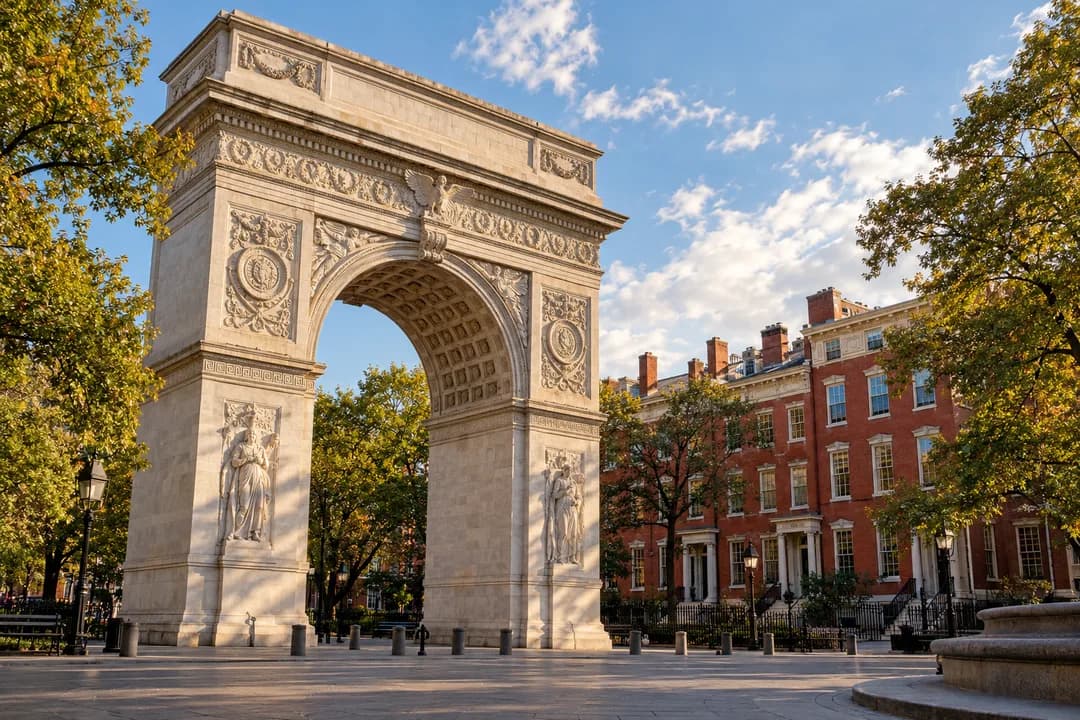
Greenwich Village Historic Walking Route: 10 Cultural Stops
Trace radical literary salons and queer civil rights history on this Greenwich Village trail from Washington Square Arch to the historic Stonewall Inn.
Greenwich Village preserves a fiercely independent architectural and cultural character distinct from any other neighborhood in Manhattan. Departing from the monumental marble Washington Square Arch at the foot of Fifth Avenue, New York, NY 10012, this historic walking route traces two centuries of bohemian counterculture, groundbreaking literature, and civil rights activism. Reaching the starting point is effortless via the West 4th Street Washington Square subway station serving the A, B, C, D, E, F, and M lines, or the R and W trains at 8th Street NYU. Unlike the rigid rectangular grid of Midtown, the Village retains the diagonal layout of eighteenth-century colonial estates and marshland paths. Strolling through these leafy residential streets allows visitors to admire Federal-style doorways, Greek Revival porticos, and hidden rear courtyard gardens that sheltered generations of radical thinkers. This bohemian enclave continues to draw curious urban explorers from around the globe who seek to experience the living intersection of American progressive history and timeless neighborhood charm.
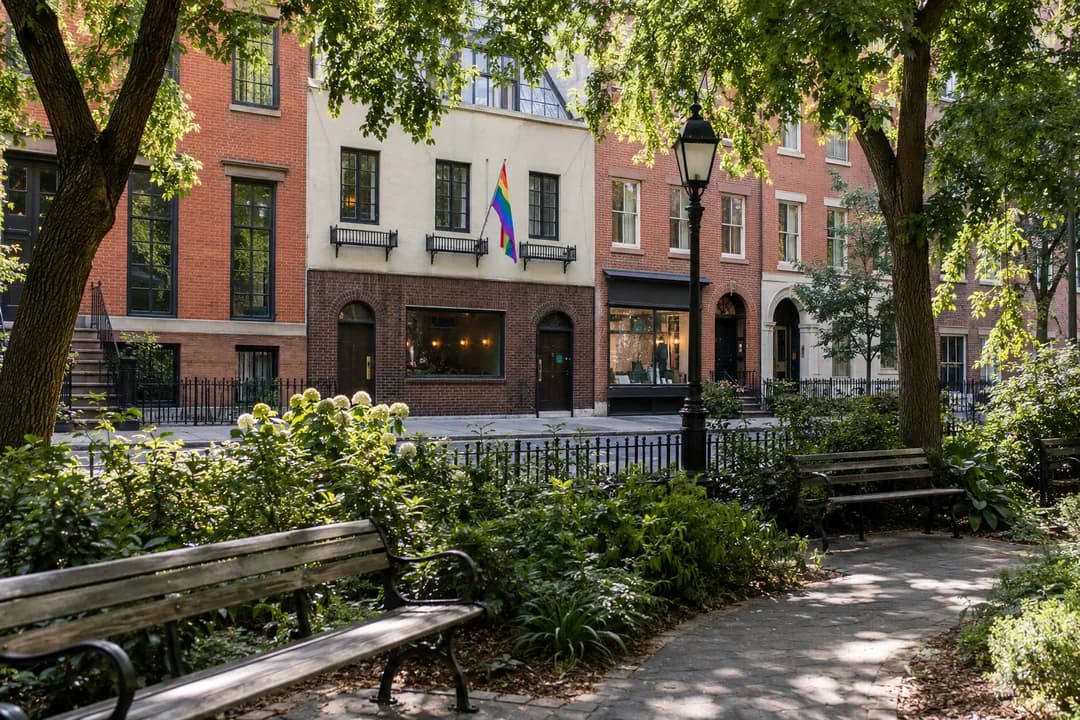
Washington Square Arch and University Place
Washington Square Park served as a colonial potter's field and public parade ground before transforming into New York's most fashionable residential quarter in the 1830s. The iconic triumphal arch, designed by celebrated architect Stanford White, was completed in 1892 in Tuckahoe white marble to commemorate the centennial of George Washington's presidential inauguration. Flanking the north side of the square along Washington Square North stand remarkably preserved Greek Revival row houses featuring red Flemish-bond brickwork, marble balustrades, and fluted Doric columns where Henry James, Edith Wharton, and Edward Hopper lived and created. On January 23, 1917, artists including Marcel Duchamp, John Sloan, and Gertrude Drick climbed the arch and proclaimed 'The Free and Independent Republic of Washington Square,' as recorded by the Washington Square Association. Today, the surrounding paved plazas resonate with acoustic jazz buskers, competitive outdoor chess matches, and student gatherings in the shadow of historic trees. Walking along these historic sidewalks under the canopy of London plane trees provides a direct sensory connection to the golden age of American literary realism and civic preservation.
MacDougal Street Salons and Minetta Tavern
Leaving the park and turning south onto MacDougal Street leads into the beating heart of the 1950s Beat Generation and the 1960s folk music revival. Passing 137 MacDougal Street brings you to the historic site of the Provincetown Playhouse, where playwright Eugene O'Neill premiered groundbreaking modernist American theater in 1918. A few paces further south at 113 MacDougal Street stands Minetta Tavern, founded in 1937 and named after the subterranean Minetta Brook that still flows beneath the Village pavement. During the mid-twentieth century, writers Ernest Hemingway, Ezra Pound, E. E. Cummings, and Dylan Thomas drank at the wooden bar beneath caricatures drawn on vintage wallpaper. The tavern maintains its atmospheric dark-wood booths, checkered tile floors, and classic bistro fare for evening diners, offering an authentic glimpse into the Village's literary tavern heritage.
Cherry Lane Theatre and Commerce Street Curve
Turning west onto Minetta Lane and continuing across Sixth Avenue to Commerce Street reveals one of the most picturesque curving intersections in North America. At 38 Commerce Street, New York, NY 10014, stands the Cherry Lane Theatre, recognized as New York's oldest continuously running off-Broadway theater. Housed inside an 1817 farm silo and former tobacco warehouse, poet Edna St. Vincent Millay and her fellow artists converted the structure into an experimental playhouse in 1924. The theater became a testing ground for twentieth-century theatrical avant-garde works by Samuel Beckett, Harold Pinter, and Edward Albee. Directly next door at 75 1/2 Bedford Street sits the narrowest house in New York City, measuring just nine and a half feet wide, where Edna St. Vincent Millay and later anthropologist Margaret Mead resided.
Chumley's Speakeasy and Bedford Street History
Walking south along Bedford Street to the corner of Barrow Street leads past 86 Bedford Street, the legendary site of Chumley's speakeasy. Established in 1922 by socialist organizer Lee Chumley during Prohibition, the bar operated behind an unmarked wooden door equipped with a secret escape tunnel exiting onto Pamela Court. Writers such as F. Scott Fitzgerald, William Faulkner, John Steinbeck, and James Baldwin frequented the clandestine rooms, establishing a tradition where publishers hung framed book jackets of regular patrons on the brick walls. The surrounding blocks between Bedford, Barrow, and Morton Streets display the architectural evolution of the Village, from modest two-story Federal clapboard residences constructed in the 1820s to ornate late-Victorian brick tenements with cast-iron fire escapes.
Stonewall National Monument and Christopher Street
Proceeding north along Bedford Street and turning west onto Christopher Street brings walkers to Christopher Park and the Stonewall Inn at 53 Christopher Street, New York, NY 10014. In the early morning hours of June 28, 1969, patron resistance to a routine police raid at the Stonewall Inn sparked six days of spontaneous demonstrations that catalyzed the modern LGBTQ+ civil rights movement worldwide. In 2016, President Barack Obama officially designated Christopher Park and the surrounding streets as the Stonewall National Monument, establishing the nation's first national park dedicated to LGBTQ+ history. Inside the park, George Segal's white lacquer bronze 'Gay Liberation' sculptures invite quiet contemplation, while the tavern across the street operates as an active community gathering space with historic exhibits.
Jefferson Market Library and Route Practicalities
The walking route concludes two blocks northeast at the intersection of Sixth Avenue and West 10th Street beside the Jefferson Market Library at 425 Sixth Avenue, New York, NY 10011. Erected in 1877 as the Third District Courthouse and designed by architects Frederick Clarke Withers and Calvert Vaux, this High Victorian Gothic masterpiece features a striking hundred-foot clock tower, stained glass windows, and carved stone gargoyles. Saved from demolition by passionate community activism in the 1960s, the building now serves as a beloved New York Public Library branch surrounded by a lush volunteer-tended community garden. This 1.5-mile route takes approximately two hours to complete at an unhurried pace, with prime walking hours occurring during late morning and early afternoon. After concluding your walk, enjoy authentic Italian espresso at Caffe Reggio at 119 MacDougal Street, operating since 1927. Tell the Karpo APP your neighborhood, companions, budget, and interest in cultural history to ask for suitable places and plans. Take time to pause in the volunteer garden to enjoy seasonal floral displays and view the historic nineteenth-century ironwork framing the library entrance courtyard. Count the ten exterior stops as the Arch, Washington Square North row houses, Provincetown Playhouse site, Minetta Tavern frontage, Cherry Lane Theatre, the narrow Bedford Street house, former Chumley's site, Christopher Park, Stonewall frontage, and Jefferson Market Library. Interior visits are separate choices. The two images are AI-generated illustrations rather than site photographs or evidence of access.
Ask Karpo for more information.
Keep reading
- SoHo Tailor Alteration Shop Finder for Sample Sale Finds
 Williamsburg Tailor Alteration Shop Finder for Bike Riders
 Upper West Side Tailor Alteration Shop Finder for Kids