 Flatiron Holiday Window Walk Planner for Remote Teams
Free Things to Do
UWS Historic Quarry Nature Walk: 4 Free Central Park Loops
Discover historic quarry nature walk trails across the Upper West Side. Inspect massive Central Park bedrock ridges and quiet rustic paths in Karpo APP.
Arriving at the Seventy-Second Street express subway station on the Upper West Side positions walkers just steps from one of the most remarkable geological showcases in urban North America: Central Park's ancient exposed bedrock. While the Upper West Side is famous for its stately residential avenues, embarking on a historic quarry nature walk eastward into the park reveals soaring outcrops of Manhattan schist, historic nineteenth-century quarry cuts, and glacial striations dating back hundreds of millions of years. Karpo APP provides a smart walking guide that plots seamless routes connecting neighborhood avenues to scenic park rock summits, ensuring a rewarding and educational outdoor excursion.
Head East Into Central Park Rock Formations
Walk east along Seventy-Second Street toward Central Park West, admiring the massive rusticated stone masonry supporting landmark buildings like the Dakota. Entering Central Park through Women's Gate brings you into Strawberry Fields, where shaded pathways wind past mature American elms and manicured lawns. Turning south toward the lake introduces walkers to their first encounters with exposed Manhattan schist, where dark metamorphic ridges break through the topsoil in dramatic, rolling waves. These natural rock outcrops were historically quarried during park construction in the 1850s to build retaining walls, culverts, and rustic stone bridges.
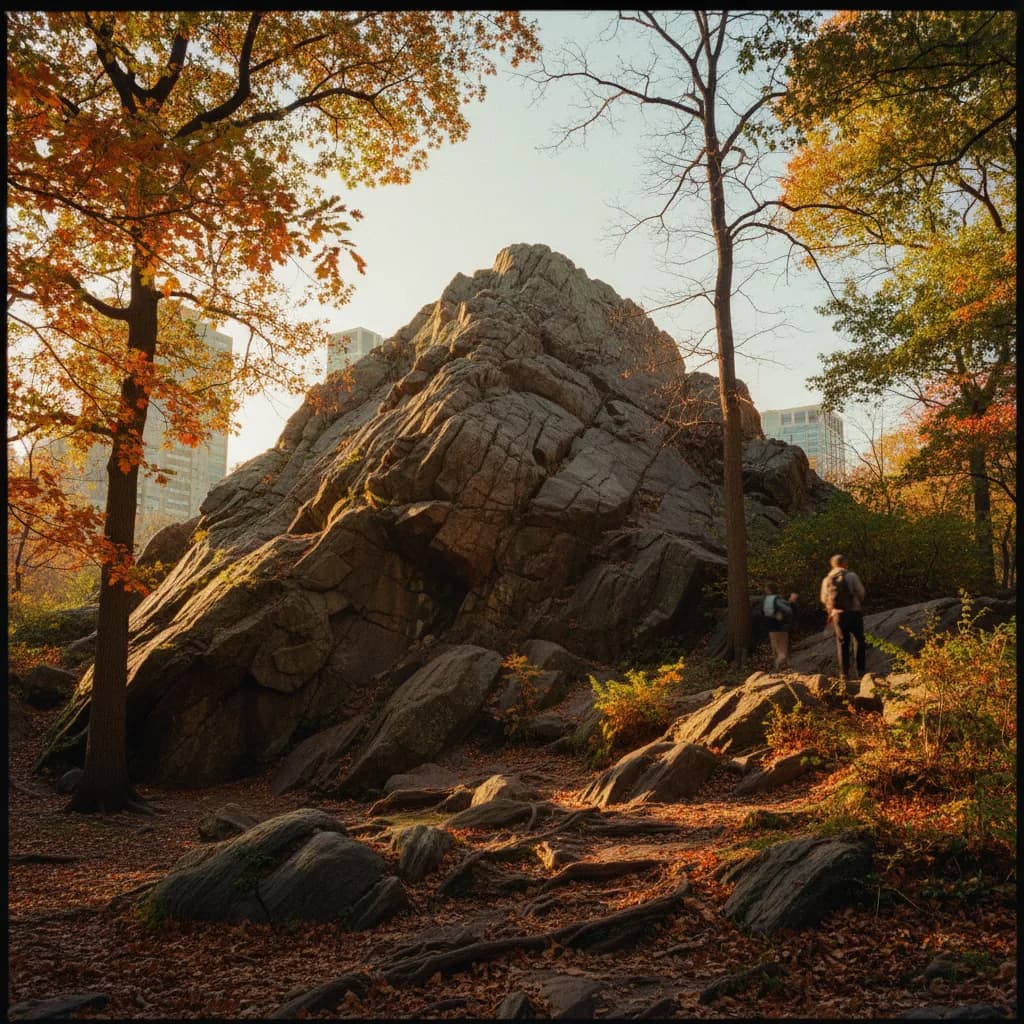
Proceeding south toward Sixty-Ninth Street leads directly to Umpire Rock, also known as Rat Rock, one of the largest and most impressive geological formations in Manhattan. This massive schist ridge rises more than thirty feet above the surrounding pathways, displaying deep parallel grooves carved by retreating glaciers during the last ice age roughly twenty thousand years ago. Examining the exposed rock face reveals folded bands of quartz, glistening flakes of muscovite and biotite mica, and coarse garnet crystals embedded in the stone. Strolling around the base of the formation offers a tactile journey into Earth's deep history.
Inspect Umpire Rock and Glacial Bedrock Grooves
Continuing eastward toward the Sheep Meadow and the Dene reveals additional rustic rock outcroppings, including Summit Rock, the highest natural elevation in the southern half of the park. During the early nineteenth century, local stone pits and quarries across upper Manhattan provided the dark schist and gneiss used to build foundation walls throughout the expanding city. Central Park designers Frederick Law Olmsted and Calvert Vaux deliberately preserved these colossal rock features, integrating them into their romantic landscape design to contrast rugged nature against refined lawns.
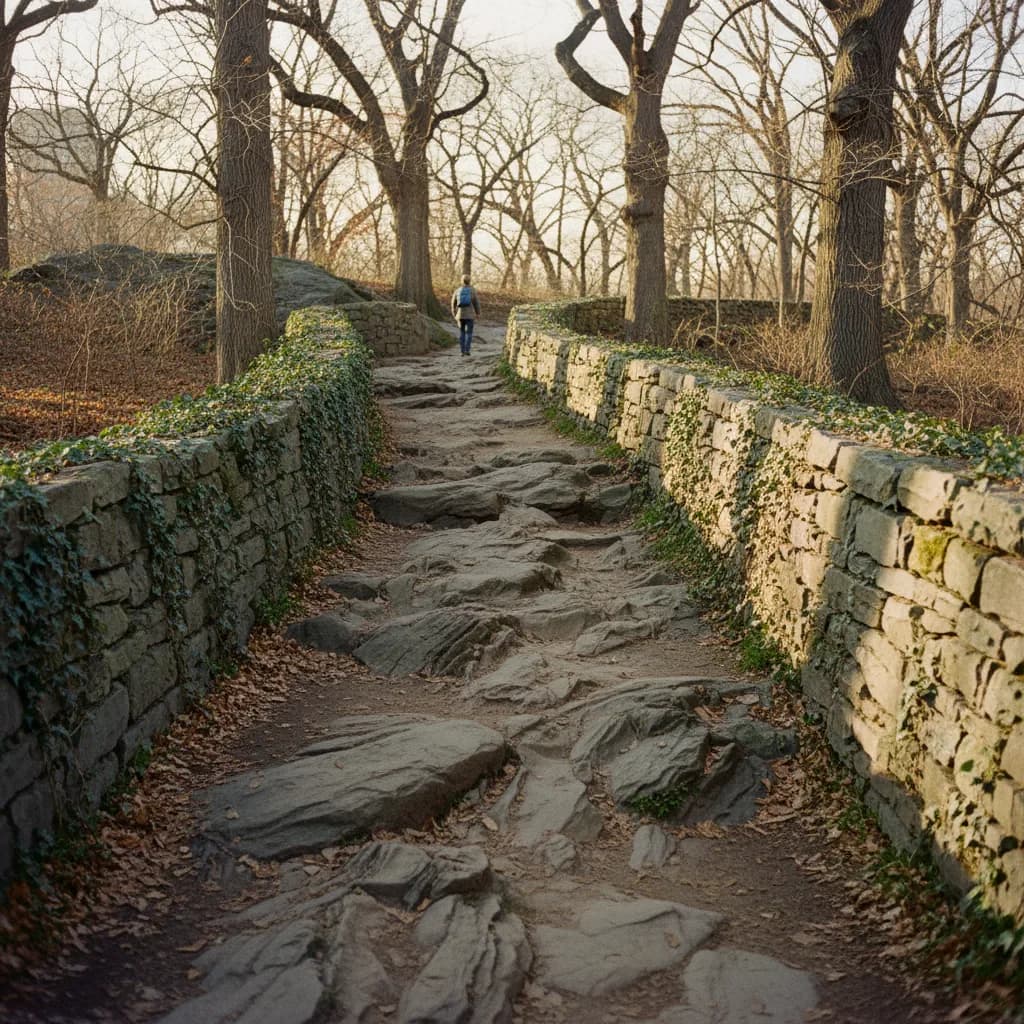
Heading northward along the Ramble allows trail walkers to navigate through a dense, forest-like maze of stone stairways, tumbling streams, and rustic rock caves. The pathways here wind intimately around moss-covered boulders, shaded ravines, and historic rustic bridges crafted from rough-hewn native stone. Birdsong fills the canopy as warblers and thrushes forage along the rocky slopes, creating a peaceful woodland atmosphere that feels miles away from the surrounding metropolis. Pausing near the Gill waterfall provides a soothing natural soundtrack for resting and contemplating park geology.
Plan Early Morning Walks for Peaceful Scenery
Timing your Upper West Side rock walk during early morning hours between seven and nine-thirty ensures the most tranquil and visually stunning experience. Early morning sunlight slants through tree branches, highlighting the glistening mica flakes on exposed rock faces and illuminating morning mist over the lake. Foot traffic along park trails remains sparse, giving you quiet space to photograph geological features and observe wildlife without the congestion of midday tour groups and weekend picnics.
Proper footwear is especially important when navigating Central Park's rock paths and stone stairways. While main thoroughfares are paved with asphalt, venturing onto rustic stone stairs or natural earth trails requires shoes with excellent traction and supportive cushioning. Packing a small daypack with a refillable water bottle, light rain jacket, and camera ensures you remain prepared for changing weather conditions while exploring miles of undulating park terrain.
Adhere to Protected Rock Outcropping Guidelines
Observing park conservation guidelines is essential for protecting these historic geological treasures. Avoid scrambling up steep rock faces outside of designated pathways, as fragile mosses, lichens, and native groundcover clinging to the stone can be easily damaged by heavy foot traffic. Stay on paved paths and established rustic stairs, respecting posted restoration signs around sensitive knolls and plantings. Following these simple rules keeps the park pristine and safe for future visitors.
Completing your outdoor geological trek with a relaxing neighborhood stop adds a delightful cultural element to the day. Exit the park at Seventy-Second or Eighty-First Street to explore Upper West Side avenues lined with historic bakeries, independent coffee roasters, and cultural institutions like the American Museum of Natural History. Sitting down for a warm beverage allows you to review your trail notes, compare rock photos, and plan subsequent walking routes. A balanced morning itinerary ensures an inspiring and relaxing outdoor outing.
Build Custom Nature Itineraries in Karpo APP
Karpo APP enhances Central Park nature exploration by providing detailed pedestrian trail routing that highlights notable rock outcrops, historic stone bridges, and scenic photography perches. The app helps you easily navigate the intricate, winding trails of the Ramble and locates accessible park entrances and paved routes. Instead of struggling with confusing paper maps or losing your way in the woods, you enjoy a seamless and confident walking experience.
The application also lets users mark favorite geological formations, peaceful resting benches, and seasonal birdwatching spots for easy return visits. Sharing saved routes with friends and walking companions encourages collaborative outdoor discovery and deeper appreciation for urban geology. With Karpo APP handling route navigation, you can focus on the awe-inspiring sight of ancient bedrock in the middle of New York City.
Tips for Traversing Upper West Side Park Trails
A few practical pointers will help ensure a successful Upper West Side park excursion. The walking circuit from Seventy-Second Street through Strawberry Fields, Umpire Rock, and the Ramble covers approximately two and a half to three miles, requiring around two hours at an observant pace. Clean public restrooms and drinking fountains are located near the Delacorte Theater, Bethesda Terrace, and Tavern on the Green. Keep an eye out for park runners and cyclists along main transverse drives when crossing between interior trail sections.
Exploring the exposed bedrock of the Upper West Side and Central Park offers an unforgettable immersion into Manhattan's foundational geology. From ancient glacial striations on Umpire Rock to historic stone bridges nestled in the Ramble, this walking route reveals the enduring strength of the schist that anchors the world's most famous skyline. With thoughtful preparation, respectful trail manners, and the reliable assistance of Karpo APP, walkers of all ages can experience a thrilling geological nature adventure right in the city center.
Ask Karpo for more information.
Keep reading
- Flatiron Holiday Window Walk Planner for Remote Teams
 SoHo Holiday Window Walk Planner for a Sketchbook Afternoon
 Upper East Side Holiday Window Walk Planner After a Museum