 SoHo Tailor Alteration Shop Finder for Sample Sale Finds
Neighborhood Guides
Union Square Historic Plaza Walk: Manhattan Heritage Loop
Follow this historic plaza walk around Union Square in New York. Use the Karpo APP to explore heritage monuments, greenmarket stalls, and pedestrian paths.
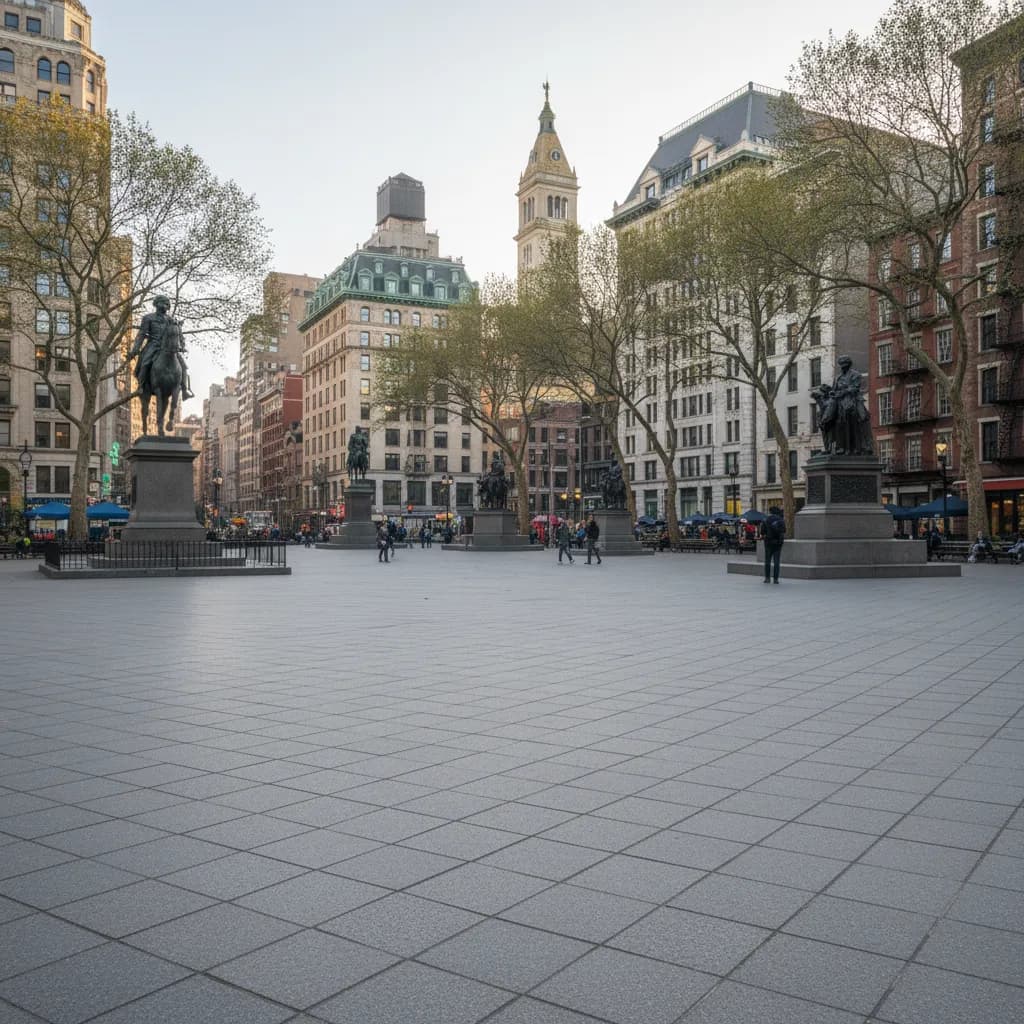
Union Square originated in 1815 when city commissioners mapped the triangular union of Bloomingdale Road and the Bowery, opening formally to the public as Union Place in 1839. Today, this historic plaza walk traces over two centuries of American civic gathering, labor history, and public life across landscaped urban grounds in central Manhattan. Stepping onto the wide south pedestrian plaza directly outside the 14th Street subway concourse introduces walkers to an active civic forum framed by landmark nineteenth-century commercial architecture, historic tree groves, and monumental bronze portraiture.
Monumental Bronze Statues and Early Civic Assemblies
The south plaza anchors Manhattan's oldest public sculpture collection, centered on Henry Kirke Brown's 1856 equestrian bronze statue of George Washington. Commissioned by civic leaders to celebrate Evacuation Day and the end of British occupation in New York, the heroic bronze depicts Washington raising his right hand in benediction above the stone crossing. A short stroll north leads toward the 1870 bronze likeness of Abraham Lincoln, also sculpted by Brown, erected during the Reconstruction era to commemorate the preservation of the Union.
Nearby stands Frédéric-Auguste Bartholdi's 1876 bronze depiction of the Marquis de Lafayette, offering a French tribute to American liberty sculpted just before Bartholdi commenced work on the Statue of Liberty in New York Harbor. On the western lawn, a tranquil bronze sculpture of Mahatma Gandhi by Kantilal Patel, dedicated in 1986, marks a reflective boundary where visitors pause on polished granite benches under mature honey locust trees.
Labor Heritage and the Birth of American Demonstrations
Union Square earned national significance as the historic cradle of American labor organizing. On September 5, 1882, the Central Labor Union assembled over ten thousand workers on this open pavement to stage the nation's inaugural Labor Day parade, establishing a lasting precedent for modern workers' rights demonstrations. Throughout the late nineteenth and early twentieth centuries, trade unionists, garment workers, and social reformers gathered beneath the park's gas lamps to deliver impassioned addresses concerning industrial working conditions.
The physical perimeter preserves notable architectural witnesses to this political history. Dominating the east flank at 44 Union Square East stands the former Tammany Hall headquarters, designed in 1929 with neo-Georgian red brick and pedimented gables that once housed Manhattan's dominant political organization. Directly opposite on the west flank at 33 Union Square West sits the Decker Building, completed in 1893 with Islamic-inspired terra cotta details, celebrated later as the 1968 studio location for Andy Warhol's Factory.
Navigating the Promenade and North Pavilion Colonnade
A complete circuit of Union Square Park creates an accessible pedestrian loop paved in smooth bluestone and granite slabs. Moving clockwise from the southern fountain plaza, the route follows the tree-lined western promenade, where neighborhood chess players gather at permanent stone tables. This wide walkway provides generous breathing room away from Broadway traffic, shaded by historic London plane trees and American elms that date back to mid-century park renovations.
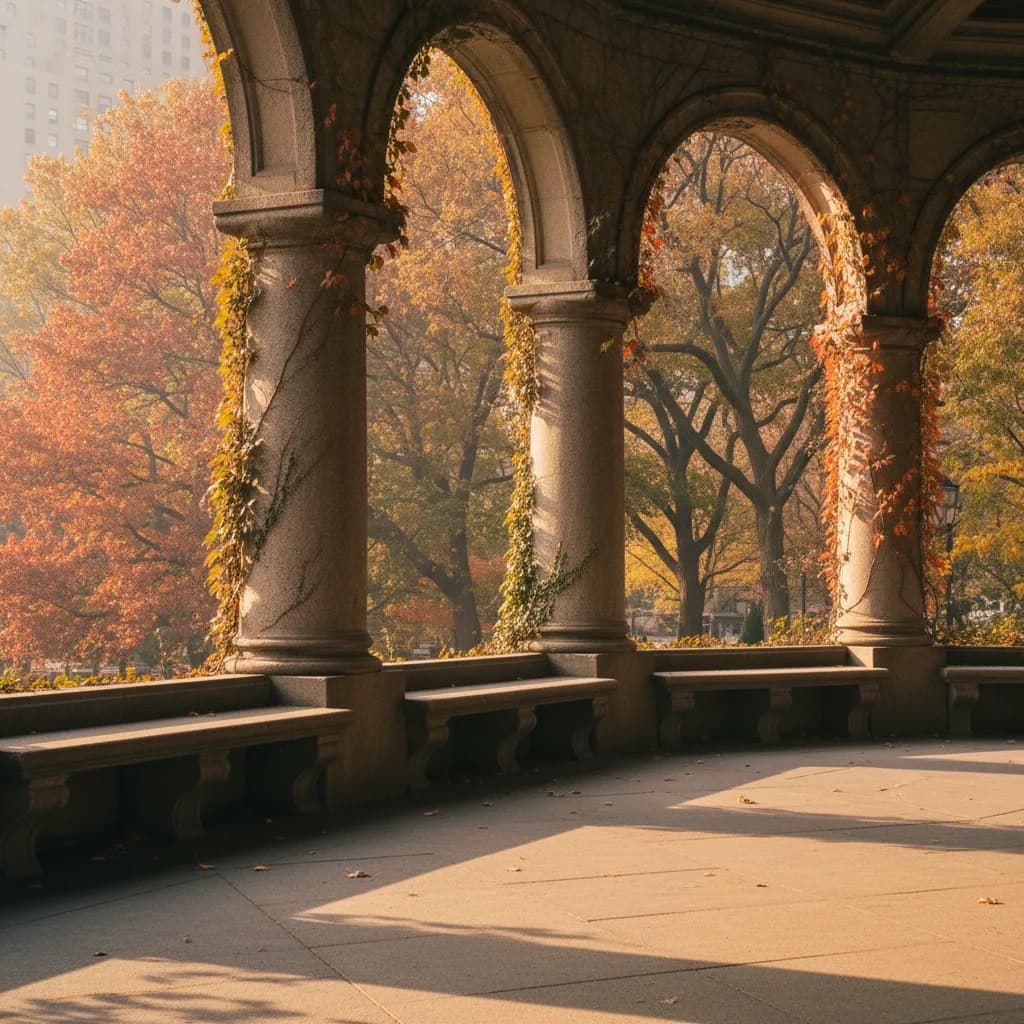
The path ascends gently toward the north plaza, culminating at the neoclassical Union Square Pavilion overlooking the northern pedestrian esplanade. Featuring limestone columns and a broad sheltered portico, the pavilion served historically as an open-air public rostrum during civic rallies. Today, its wide steps offer elevated sightlines sweeping across the center lawn toward the midtown skyline, providing walkers with an ideal spot to sit, rest, and watch the city flow past.
The Greenmarket Tradition and Seasonal Pavements
Operating year-round on Mondays, Wednesdays, Fridays, and Saturdays, Union Square transforms into the flagship outdoor Greenmarket of New York City, established in 1976 by GrowNYC to connect regional farmers with urban communities. Regional orchardists, bakers, and cheesemakers pitch canvas canopies across the north and west plazas from early morning until late afternoon, filling the pedestrian corridor with local agricultural goods. Consulting GrowNYC's official calendar confirms current vendor rosters and seasonal schedules. Walking through the market corridors introduces seasonal aromas of Hudson Valley apples, fresh lavender, freshly baked sourdough boules, and regional farmstead dairy.
On non-market days, the north plaza reverts to a sunlit urban square favored by local sketch artists, street musicians, and neighborhood strollers. The expansive open stone pavement accommodates community gatherings while preserving broad pedestrian corridors that connect effortlessly between the Flatiron District to the north and Greenwich Village to the south.
Strategic Timing and What to Skip on the Square
To experience the plaza walk at its most atmospheric, arrive on a Wednesday morning at 9:00 am when morning sunlight illuminates the eastern building facades and farm stalls have completed their early setups. Walking during early morning hours lets you inspect the monument inscriptions and architectural details without dodging afternoon commuter crowds. Weekday mornings typically offer calmer pathways and open wooden park benches lining the park's perimeter garden beds, making it easier to pause and take in the historic surroundings.
Skip lingering on the crowded southern subway stairs during the peak noon rush from 12:00 pm to 1:30 pm, when thousands of midtown office workers converge on local fast-casual counters. Instead, take your lunch detour one block west to the quiet historic brick corridor of Fifth Avenue, or find a tranquil bench inside the park's dog run overlook where green plantings buffer metropolitan street noise.
Connecting Walks to Nearby Bookshops and Gramercy
Conclude your loop by walking out through the southern plaza gates toward Broadway. A five-minute stroll southward along Broadway toward East 12th Street brings you directly to the Strand Book Store, where packed shelves of secondhand, rare, and new volumes continue downtown Manhattan's historic Book Row tradition. Browsing outdoor dollar carts along the sidewalk provides an authentic continuation of downtown literary exploration.
If rain or sudden crowds interrupt your walk, take an alternative route eastward down 16th Street into the protected historic residential enclave of Gramercy Park. The quiet blocks between Irving Place and Third Avenue showcase early nineteenth-century Greek Revival and Italianate townhouses with wrought-iron balconies and private garden vistas, offering a serene contrast to the kinetic energy of Union Square.
Practical Notes for Navigating Union Square
Union Square is exceptionally accessible via metropolitan transit. The 14th Street-Union Square subway complex serves the 4, 5, 6, L, N, Q, R, and W subway lines, with street-level elevator access situated near the intersection of 14th Street and Park Avenue South per MTA accessibility guidelines. Public comfort stations maintained by NYC Parks operate inside the lower level of the park pavilion during regular daytime park hours, and paved perimeter paths remain entirely grade-level with smooth curb cuts suitable for all walkers.
Automated Citi Bike docking stations flank both the north plaza along 17th Street and the southern crossing at 14th Street, enabling seamless two-wheeled connections along the Broadway pedestrian boulevard. Keep this historical plaza walk in your downtown repertoire whenever you seek a walk that combines monumental public art, deep civic history, and authentic New York community rhythms.
Ask Karpo for more information.
Keep reading
- SoHo Tailor Alteration Shop Finder for Sample Sale Finds
 Williamsburg Tailor Alteration Shop Finder for Bike Riders
 Upper West Side Tailor Alteration Shop Finder for Kids