 SoHo Tailor Alteration Shop Finder for Sample Sale Finds
Neighborhood Guides
Madison Square Historic Plaza Walk: Flatiron Guide
Discover Gilded Age architecture on this historic plaza walk around Madison Square Park in New York. Use the Karpo APP to explore iconic towers and gardens.
Madison Square Park anchors the Flatiron District across historic landscaped park grounds where Broadway dramatically intersects Fifth Avenue at 23rd Street. Formally dedicated as public parkland in 1847 in honor of President James Madison, the surrounding precinct quickly matured into the cultural, hotel, and architectural showcase of Gilded Age New York. Undertaking this historic plaza walk immerses pedestrians in an extraordinary outdoor gallery of early twentieth-century skyscraper engineering, Beaux-Arts masonry, and rotating civic art installations.
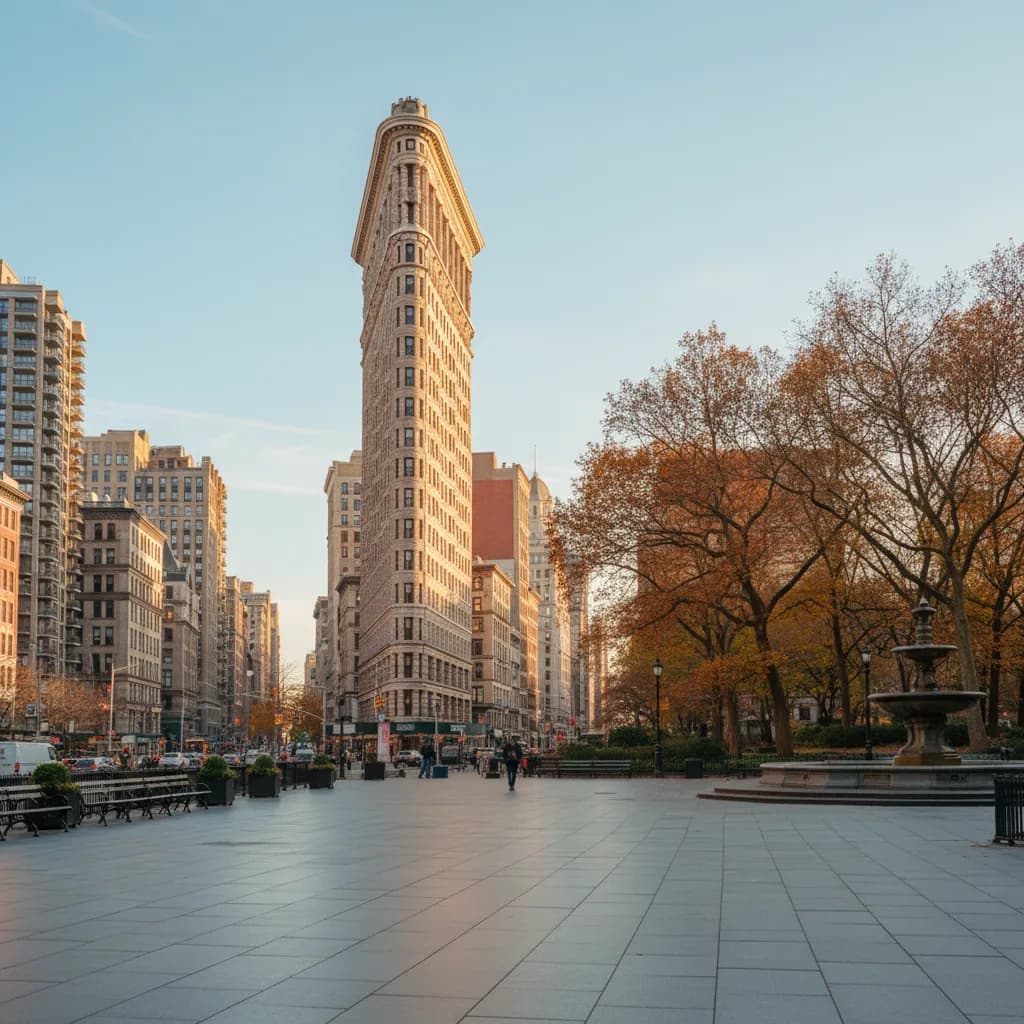
Daniel Burnham's Steel-Framed Flatiron Wonder
Begin your walking journey on the wide triangular pedestrian plaza created where Broadway cuts across Fifth Avenue. Gazing south across 23rd Street reveals the legendary Flatiron Building at 175 Fifth Avenue, designed in 1902 by Chicago architect Daniel Burnham as the Fuller Company headquarters. Rising twenty-two stories to a dramatic tapered prow at its apex, the steel-framed Beaux-Arts landmark revolutionized American vertical architecture with its textured limestone and terra cotta facade inspired by French Renaissance châteaux.
The building's unusual aerodynamic wedge famously generated intense downdrafts along 23rd Street, giving rise to turn-of-the-century urban folklore and early newspaper street photography. Standing within the public plaza benches provides unmatched perspectives of the prow slicing through the urban grid, framed by vintage cast-iron subway entrances and ornamental lampposts.
Gilded Age Towers Framing the Eastern Perimeter
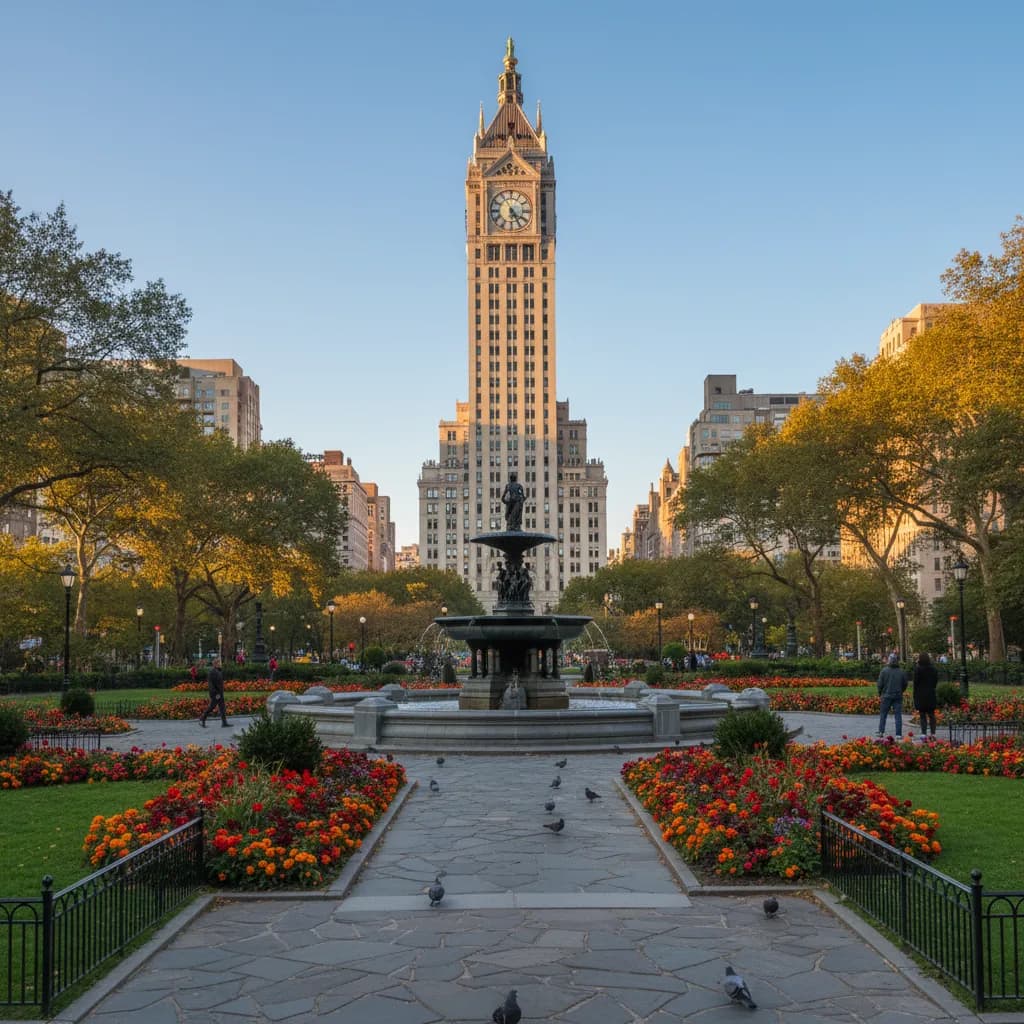
Cross eastward into Madison Square Park to take in the monumental architectural composition ringing the eastern boundary along Madison Avenue. Dominating the skyline at 1 Madison Avenue rises the Metropolitan Life Insurance Company Tower, completed in 1909 by Napoleon LeBrun & Sons. Inspired by the famous St. Mark's Campanile in Venice, the historic clock tower held the title of the world's tallest building until 1913, crowned by an iconic spire and monumental illuminated clock faces that shine across nighttime Manhattan.
Just north at 51 Madison Avenue stands the imposing New York Life Building, designed in 1928 by master architect Cass Gilbert. Occupying the historic footprint of the original Madison Square Garden arena, Gilbert's neo-Gothic masterpiece culminates in an intricate gilded pyramidal lantern that catches the morning sunlight. Completing the civic ensemble at 25th Street is the 1899 Appellate Division Courthouse, adorned with marble statues of historic lawgivers sculpted by prominent American artists.
Park Horticulture, Fountain Balustrades, and Public Art
Entering the interior park paths leads walkers along shaded allées of mature canopy trees that insulate visitors from surrounding vehicular traffic. At the park's heart sits the ornamental Madison Square Fountain, originally established in 1867 and thoughtfully restored, where circulating water trickles over tiered decorative basins into a circular reflecting pool per NYC Parks records. Shaded wooden park benches encircling the plaza fountain create a tranquil sanctuary favored by neighborhood strollers.
Directly north of the fountain spreads the sprawling central lawn, home to the celebrated contemporary art exhibition program curated by the Madison Square Park Conservancy. Established in partnership with NYC Parks, this open greensward hosts monumental site-specific sculptures and botanical installations by internationally acclaimed artists, maintaining a dynamic dialogue between modern creativity and historic nineteenth-century public park design.
Statues of Statesmen and Maritime Commanders
Strolling the perimeter walkways reveals an exceptional concentration of nineteenth-century commemorative statuary stewarded within the historic park grounds. Near the southwest plaza entrance along Broadway stands Randolph Rogers' 1876 bronze statue of William H. Seward, Lincoln's Secretary of State, depicting the statesman seated with pen in hand above a granite plinth per NYC Parks historical records. At the northeast perimeter near 26th Street stands George Edwin Bissell's bronze likeness of President Chester A. Arthur, dedicated in 1899 to honor the twenty-first president who took the oath of office in a nearby Lexington Avenue brownstone.
At the northern plaza entrance stands the celebrated memorial to Civil War Admiral David Glasgow Farragut, dedicated in 1881 near 26th Street. The monument represents a renowned collaboration between sculptor Augustus Saint-Gaudens and architect Stanford White, featuring an expressive bronze naval commander standing atop an exedra base carved with allegorical figures, recognized by NYC Parks as a landmark achievement in American public monument design.
Dining Heritage and What to Skip Around the Lawn
Culinary history made modern waves in Madison Square Park in 2004, when restaurateur Danny Meyer established the original permanent Shake Shack kiosk on the south lawn to help fund park restoration efforts managed by the Madison Square Park Conservancy. The contemporary glass-and-steel pavilion, designed by architect James Wines with sustainable ivy-covered trellises, remains an iconic neighborhood fixture drawing hungry visitors from around the globe.
Skip joining the peak lunch queues snaking past the kiosk during midday hours on sunny weekdays. Instead, visit early in the morning when the lawn perimeter is uncrowded, or take your lunch stop across Fifth Avenue near 23rd Street to the historic market halls of Eataly NYC Flatiron, where artisanal bakeries, espresso bars, and imported Italian specialties operate beneath restored Gilded Age ceilings.
Strategic Circuit and Connecting Walk Routes
For the most rewarding walking experience, commence your loop during tranquil morning hours when soft sunlight bathes the Flatiron Building's west elevation and the park pathways remain peaceful. Follow the outer circular perimeter path in a counterclockwise direction to absorb the architectural shifts from Burnham's Flatiron to Gilbert's gilded Gothic tower before resting near the fountain.
If inclement weather or brisk winds develop around the 23rd Street wind tunnel, shift your route northward along Broadway into the historic NoMad commercial district. This lively stretch between 25th and 30th Streets features preserved Beaux-Arts hotel facades, boutique stationers, and independent cafes where you can comfortably continue exploring without exposure to heavy rain.
Transit Access and Practical Navigation Tips
Reaching Madison Square Park is exceptionally convenient via metropolitan public transportation. The 23rd Street subway station directly adjacent to the park serves the N, R, and W trains along Broadway and Fifth Avenue, while the 6 train stops one block east at 23rd Street and Park Avenue South per MTA subway maps. Downtown and uptown bus routes cross along Fifth and Madison Avenues, providing frequent surface connections.
Park grounds stewarded jointly by NYC Parks and the Madison Square Park Conservancy feature paved, step-free pathways throughout, equipped with accessible curb ramps and clear sightlines across all entry plazas. Generous perimeter seating, tree-shaded walking corridors, and open views toward surrounding architectural facades ensure that this Flatiron historic plaza walk serves as an effortless, intellectually stimulating downtown promenade for every city explorer.
Ask Karpo for more information.
Keep reading
- SoHo Tailor Alteration Shop Finder for Sample Sale Finds
 Williamsburg Tailor Alteration Shop Finder for Bike Riders
 Upper West Side Tailor Alteration Shop Finder for Kids