 SoHo Tailor Alteration Shop Finder for Sample Sale Finds
Neighborhood Guides
NYC Historic Plaza Walk: Astor Place and Alamo Cube
Navigate nineteenth-century literary history and public art on an unhurried historic plaza walk through Astor Place, Cooper Union, and the Alamo Cube.
Where the diagonal trajectory of the Bowery collides with Lafayette Street and Fourth Avenue sits Astor Place, one of New York City's most storied cultural crossroads. Connecting the refined brownstones of Greenwich Village with the vibrant bohemian energy of the East Village, this historic pedestrian plaza has served as a center for nineteenth-century high culture, turbulent civic demonstrations, and pioneering mid-century public art. Today's redesigned traffic-free plazas invite walkers to pause among stone benches, modern granite paving, and historic architectural treasures that span over a century and a half of municipal innovation. Karpo's neighborhood walking route planner guides you through this historic plaza walk so you can discover the profound artistic and civic stories etched into the Astor Place pavement.
The Cultural Crossroads of Astor Place
Originally part of a Native American trail known as the Astor Place path, the junction was named in honor of John Jacob Astor, once the wealthiest man in America, whose real estate holdings dominated Lower Manhattan during the early nineteenth century. During the 1830s and 1840s, Astor Place transformed into the city's most prestigious residential and theatrical quarter, anchored by the luxurious Greek Revival terraces of Colonnade Row on Lafayette Street. Prominent literary figures including Washington Irving, Edgar Allan Poe, and Charles Dickens gathered in nearby drawing rooms and private libraries to debate political and artistic currents. Walking along Fourth Avenue today, visitors can admire how the street wall preserves the imposing masonry of these early commercial and theatrical structures. Deep rusticated foundations, arched stone lintels, and copper gutter brackets demonstrate the uncompromised craftsmanship of late-nineteenth-century master builders who transformed Manhattan into an empire of industry and culture.
In May 1849, the square became the epicenter of the tragic Astor Place Riot, a deadly clash outside the Astor Opera House sparked by a bitter rivalry between British actor William Charles Macready and American star Edwin Forrest. Reflecting deep class divides between the city's nativist working classes and wealthy Anglophile elites, the conflict resulted in the deployment of the state militia and fundamentally altered New York City's approach to public assembly, municipal policing, and civic design.
The Alamo Cube and Bernard Rosenthal Public Art
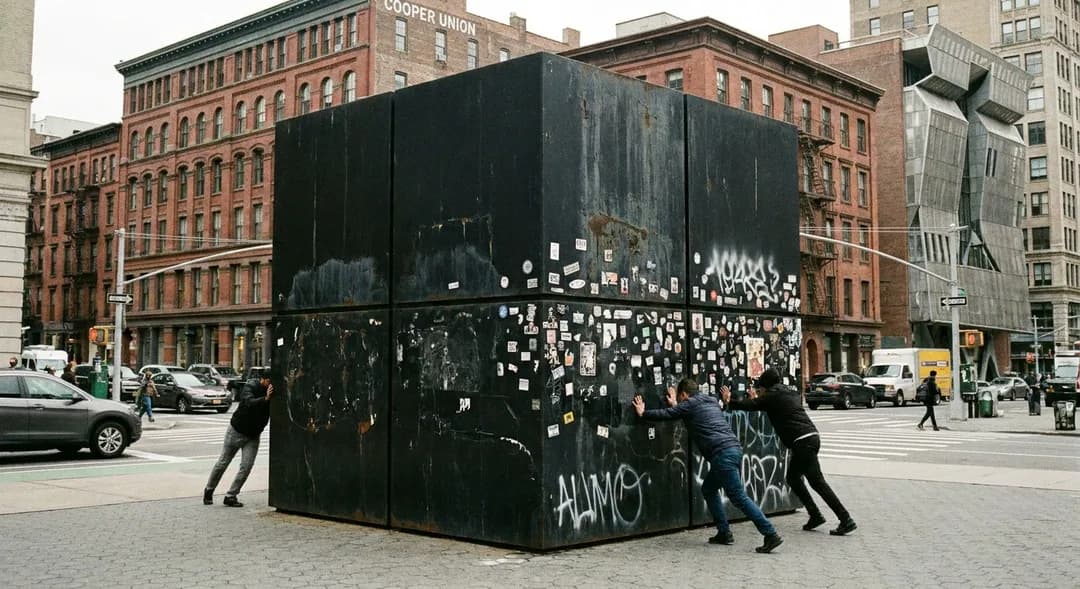
At the center of the northern pedestrian island stands Astor Place's most iconic and beloved public sculpture, Bernard Rosenthal's massive black Cor-Ten steel monument officially titled The Alamo. Installed in 1967 as part of a temporary municipal cultural exhibition, the fifteen-foot cube balanced on a single corner point captivated neighborhood residents so completely that community petitions convinced the city to make its placement permanent.
Weighing approximately eighteen hundred pounds, the hollow sculpture is engineered with internal pivots that allow pedestrians to physically push and rotate the entire geometric structure on its axis. Pushing the Alamo Cube has become an enduring ritual for generations of Cooper Union engineering students, East Village poets, and visitors. Beneath the warm glow of afternoon sun, the weathered steel surface mirrors the surrounding urban rhythm as people gather on wide granite step seating surrounding the installation.
The Historic Subway Kiosk and Clinton Hall
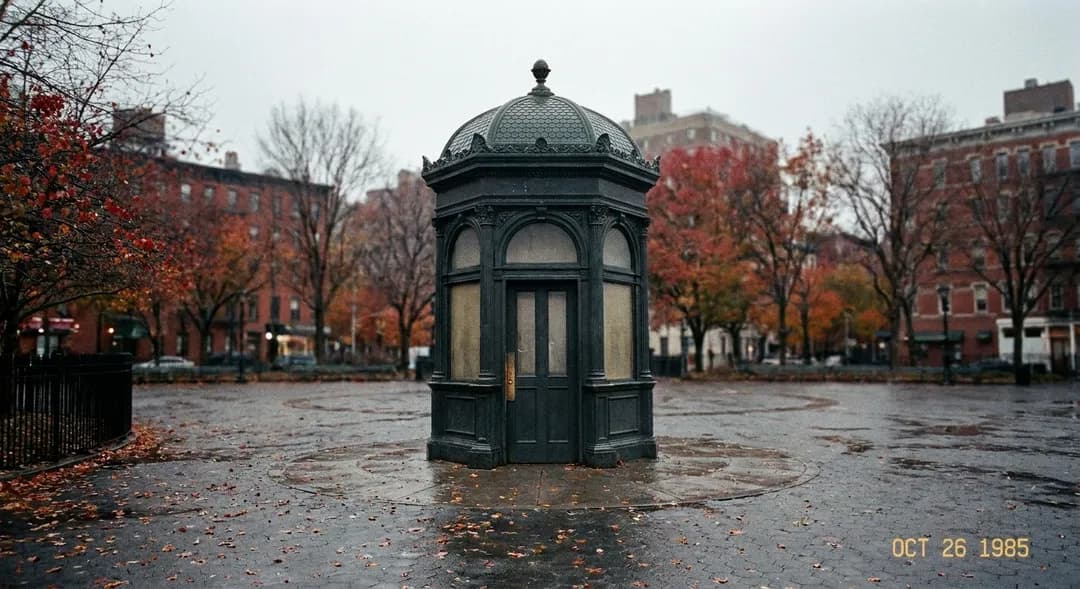
Adjacent to the sculpture sits a masterfully reconstructed cast-iron and glass subway kiosk, commemorating the opening of New York City's first underground transit line on October 27, 1904. Modeled after original Heins & LaFarge designs inspired by Budapest and Paris transit entrances, the green-painted ornamental structure features copper eaves, stained-glass clerestory windows, and delicate iron filigree. Inside the station below, vibrant glazed ceramic beaver plaques crafted by the Grueby Faience Company celebrate the fur trading empire that laid the foundation for the Astor family fortune. Nearby on Astor Place, independent neighborhood cafes feature tall storefront windows where locals sit with fresh espresso while reading newspapers or sketching the dynamic street life outside. The gentle hum of conversation and the steady flow of bicycles along the Lafayette Street bike lane add a vibrant contemporary rhythm to this deeply historic urban landscape.
Directly facing the subway entrance stands Clinton Hall at 13 Astor Place, an imposing brick and brownstone edifice erected in 1890 on the former site of the Astor Opera House. Originally functioning as the headquarters of the New York Mercantile Library, the building featured grand reading rooms and lending desks where thousands of downtown clerks, apprentices, and young intellectuals accessed circulating literature. Its ornate Romanesque Revival arches and terra-cotta medallion reliefs remain magnificent testaments to the neighborhood's intellectual heritage.
Cooper Union Foundation Building and Colonnade Row
Just south of the square looms the Cooper Union Foundation Building, a landmark Italianate brownstone structure founded in 1859 by industrialist and philanthropist Peter Cooper. Renowned for pioneering tuition-free education in art, architecture, and engineering, the building is celebrated for its historic Great Hall located in the basement. It was from this very podium on February 27, 1860, that Abraham Lincoln delivered his legendary Cooper Union address, an eloquent moral critique of slavery's expansion that catapulted him to national prominence and the presidency.
A short stroll down Lafayette Street reveals Colonnade Row, originally known as LaGrange Terrace when built in 1832. Although only four of the original nine marble townhouses survive, their monumental two-story Corinthian colonnades carved from Sing Sing marble evoke the Gilded Age grandeur that once defined Lafayette Street. Directly across from Colonnade Row sits the Public Theater, originally constructed as the Astor Library in 1854, which helped birth Shakespeare in the Park and the modern American musical theater movement.
Practical Walking Tips for Astor Place Plazas
To enjoy the optimal blend of public art interaction and architectural photography, plan your visit during weekday afternoons between one and four o'clock. During these hours, students from Cooper Union and NYU fill the plaza with vibrant creative energy, while natural sunlight illuminates the brick facades along Fourth Avenue and Lafayette Street. The open granite seating terraces and shaded trees offer comfortable resting perches to sketch, read, or watch neighborhood dogs gather around the plaza perimeter.
Transit access to Astor Place is seamless: the Astor Place station on the 6 subway line opens directly onto the plaza cobblestones, while the 8th Street-NYU station on the R and W lines sits just one block west along Eighth Street. Karpo APP provides intuitive neighborhood walking itineraries, historical architectural dossiers, and live nearby cafe recommendations, empowering you to explore Lower Manhattan's historic public squares with effortless insight.
Ask Karpo for more information.
Keep reading
- SoHo Tailor Alteration Shop Finder for Sample Sale Finds
 Williamsburg Tailor Alteration Shop Finder for Bike Riders
 Upper West Side Tailor Alteration Shop Finder for Kids