 SoHo Tailor Alteration Shop Finder for Sample Sale Finds
Neighborhood Guides
Williamsburg Historic Neighborhood Photo Walk River Route
Capture historic brick warehouses and tidal views along the Williamsburg waterfront. Launch the Karpo APP to plan golden hour angles by Domino Park piers.
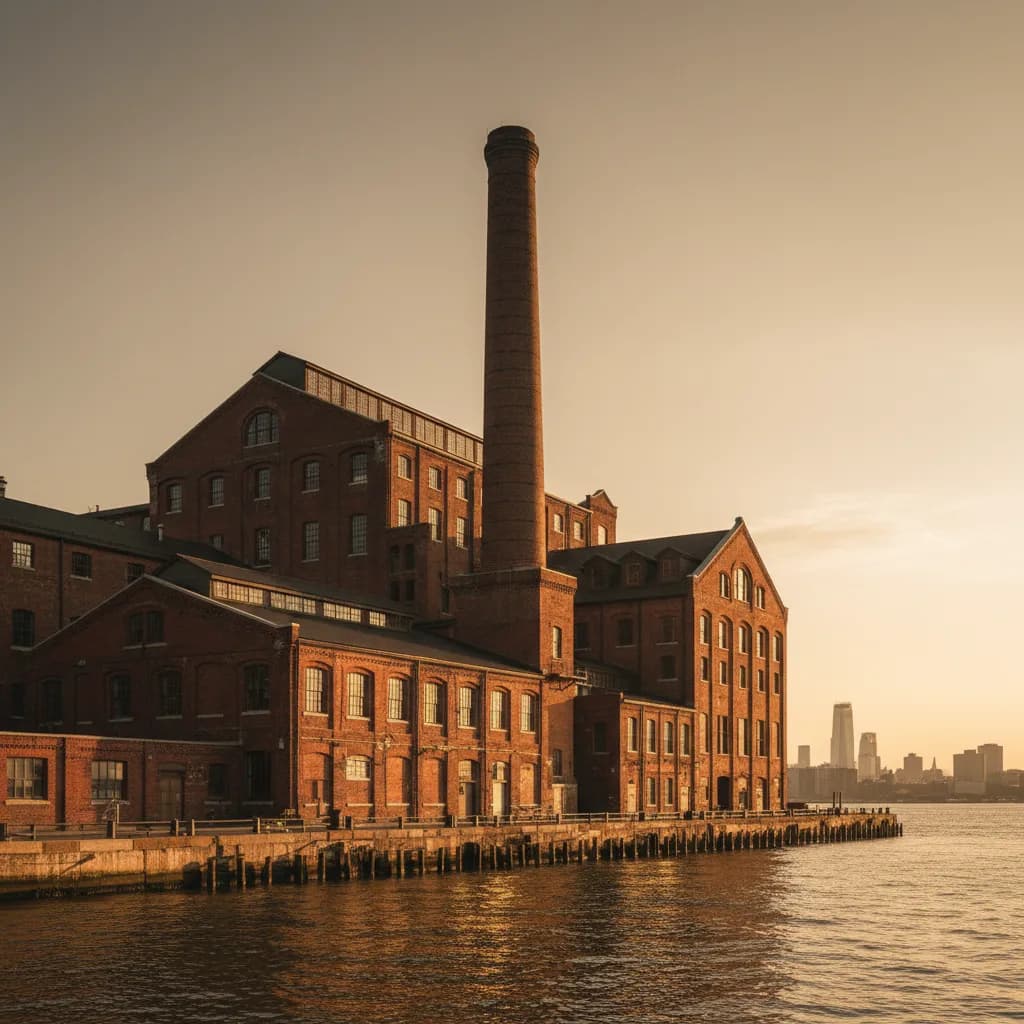
Domino Park anchors the Williamsburg waterfront corridor, transforming a nineteenth-century industrial manufacturing shoreline into one of Brooklyn's most compelling architectural walking zones. As afternoon light sweeps westward across the East River, the colossal brick masonry walls of the landmark 1882 Domino Sugar Refinery glow warm ochre against shimmering tidal currents and the distant Manhattan skyline. Undertaking this historic neighborhood photo walk immerses photographers in an epic visual intersection of Gilded Age factory engineering, reclaimed civic parklands, and evolving urban maritime identity that proudly defines modern North Brooklyn for global travelers and local flâneurs alike.
Industrial Sugar Refinery Architecture on Kent Avenue
Kent Avenue preserves the monumental industrial bones of nineteenth-century Brooklyn, where massive manufacturing operations once relied on deep-water East River shipping docks. Standing before the Havemeyers & Elder Sugar Refinery building, designed by Theodore Havemeyer after an 1882 fire, reveals an intricate industrial cathedral constructed from over ten million red bricks. Its distinctive octagonal boiler smokestack and round-arched masonry window bays command the riverbank with staggering sculptural presence and geometric authority.
Industrial brick facades along South 3rd and South 4th Streets exhibit utilitarian American round-arch style architecture, celebrated for rugged masonry corbelling and heavy timber framing. Framing these towering factory walls from street level with a wide 24mm or 28mm focal length emphasizes the monumental scale of American industrialization while capturing textural details of weathered clay mortar and iron reinforcement ties that have weathered more than a century of salt harbor air.
Golden Hour Waterfront Lighting and Skyline Framing
Golden hour during the final ninety minutes before sunset creates extraordinary lighting conditions along the western-facing Brooklyn shoreline. Low-angled sunlight bathes the East River in shimmering gold and illuminates the steel superstructure of the nearby Williamsburg Bridge. The long, dramatic shadows cast by the refinery's brick piers provide graphic leading lines stretching across the manicured waterfront boardwalks and salvaged timber platforms.
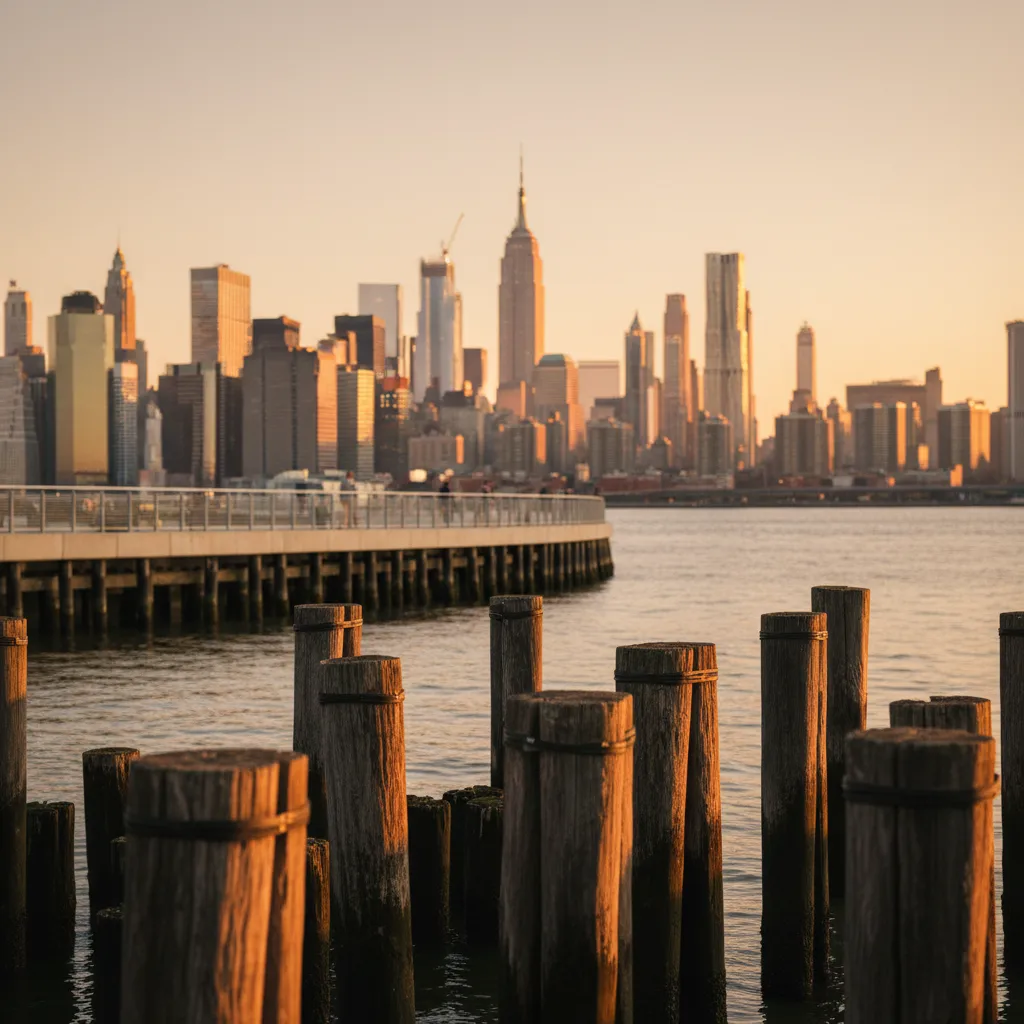
East River reflections mirror the glass and steel towers of Lower Manhattan and Midtown across the water, creating multi-layered landscape compositions. As dusk sets in, the fading natural sky light balances against glowing yellow industrial lighting along the preserved conveyor crane catwalks, providing rich dynamic range for evening architectural photography that celebrates both historic masonry and contemporary skylines.
Grand Ferry Park and Historic Cobblestone Wharves
Grand Ferry Park marks the historic landing site where steam ferry boats connected Brooklyn with Manhattan from 1814 until the Williamsburg Bridge opened in 1903. The modest circular park preserve incorporates salvaged cobblestone paving, historic iron bollards, and unvarnished timber benches directly fronting the water's edge. Photographers can capture close-up perspectives of historic nautical hardware framed against flowing tidal currents and distant midtown spires.
Weathered timber pilings and decaying wooden pier bulkheads along the park boundary tell the quiet story of New York's bygone working harbor. Composing low-angle shoreline frames across these textured wooden posts with the Manhattan skyline in the background creates evocative visual dialogues between historic maritime infrastructure and modern metropolitan progress, especially when longer shutter speeds smooth the flowing East River current.
Bedford Avenue Congestion and Sections to Skip
Bedford Avenue and North 6th Street become overwhelmingly crowded with retail shoppers, brunch patrons, and tour buses on weekend afternoons. Sidewalks along the commercial core are heavily congested, making steady architectural framing or uninterrupted documentary shooting difficult and frustrating. Skip spending prime afternoon photographic light along Bedford's crowded retail strip where storefront awnings and sidewalk merchandise racks block architectural views.
Riverside boardwalks and quieter industrial blocks along River Street and Wythe Avenue offer significantly cleaner visual perspectives throughout the afternoon. Exploring the open plazas around Bushwick Inlet or tracing the quiet brick warehouses between Grand Street and Division Avenue allows photographers to work peacefully with expansive sightlines, undisturbed leading lines, and minimal pedestrian interference.
Artifacts, Gantry Cranes, and Sugar Processing Relics
Gantry crane tracks and preserved industrial equipment integrated throughout Domino Park provide striking sculptural motifs for fine-art photography. Walk along the four-hundred-foot elevated Artifact Walk to inspect massive fifty-foot cylindrical syrup collection tanks, mooring bollards, and restored crane trusses painted vibrant industrial teal. These preserved factory components offer compelling geometric lines, rivets, and bold industrial textures that reward patient compositional framing.
Refinery smokestacks and elevated conveyor bridges create dramatic silhouettes when shot directly toward the setting sun. Look for interesting graphic intersections where raw industrial steel beams frame glass-walled contemporary loft conversions, documenting the physical transformation of Brooklyn's industrial waterfront into twenty-first-century residential neighborhoods while honoring the blue-collar trade roots of the waterfront.
Bushwick Inlet and North Waterfront Transitions
North Williamsburg transitions into expansive tidal wetland parks around Bushwick Inlet, where green recreational lawns meet restored river marshes. This northern stretch offers open natural foregrounds of salt-tolerant grasses and native shoreline rocks that contrast wonderfully with the stark industrial geometry of nearby fuel storage tanks and brick pumping stations. The wide horizon here provides sweeping views spanning from Midtown Manhattan all the way south to the Brooklyn Navy Yard.
Bushwick Inlet Park's sloping green roof building and soccer fields offer elevated viewing mounds that elevate your camera perspective above waterfront railings. Capture panoramic golden hour vistas across the inlet as commuter ferries cross the open water, trailing white wake lines that catch the evening sun while seabirds circle low above the marsh vegetation.
Transit Access and Practical Waterfront Field Notes
East River Ferry landings at North Williamsburg and South Williamsburg offer the most scenic and relaxing transit approach, delivering photographers right onto the waterfront boardwalk. Subways are equally convenient: the L train stops at Bedford Avenue, while the J, M, and Z trains serve the Marcy Avenue station near the foot of the Williamsburg Bridge, providing direct routes back into Manhattan.
Waterfront breezes can be surprisingly brisk along open river piers, so windproof outer layers and lens hoods are highly recommended to prevent spray from settling on camera glass. Keep microfiber lens cloths handy, pack a spare battery for cold twilight shooting, and open the Karpo APP to scout waterfront viewpoints, track golden hour schedules, and discover historic routes across Brooklyn's evolving harbor. Setting up before sundown guarantees ample time to frame shifting reflections on the water and capture dramatic long exposures of illuminated river ferries crossing the sound.
Ask Karpo for more information.
Keep reading
- SoHo Tailor Alteration Shop Finder for Sample Sale Finds
 Williamsburg Tailor Alteration Shop Finder for Bike Riders
 Upper West Side Tailor Alteration Shop Finder for Kids