 SoHo Tailor Alteration Shop Finder for Sample Sale Finds
Neighborhood Guides
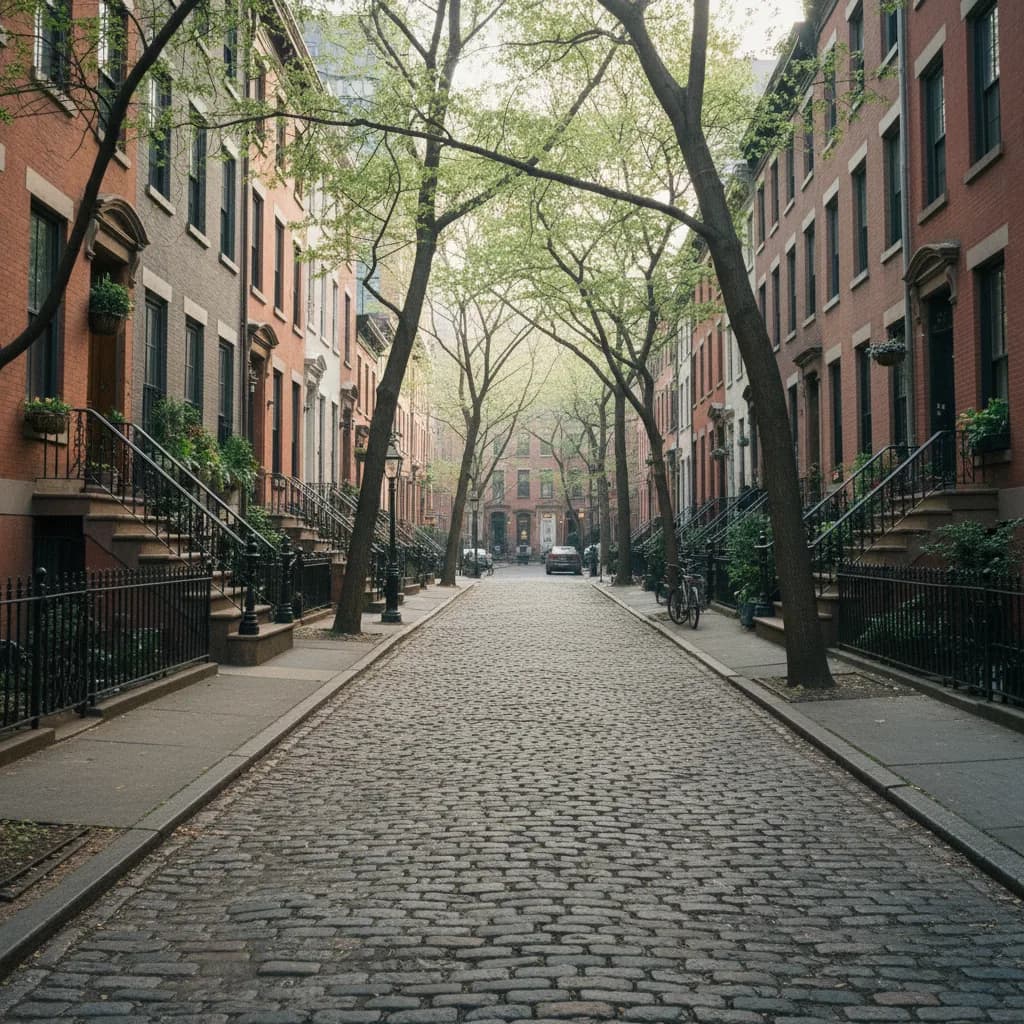
West Village Historic Neighborhood Photo Walk Hudson Trail
Walk tree-lined West Village mews and Greek Revival townhouses in morning light. Open the Karpo APP to route quiet historic lanes between Bedford and Hudson.
Strolling west from Sixth Avenue immerses photographers in the labyrinthine street geometry of Greenwich Village, where historic seventeenth-century Dutch field paths predate Manhattan's rigid commissioner grid. In the tranquil hours after dawn, mature leafy canopies filter gentle sunlight over Flemish-bond red brick townhouses, granite stoop balustrades, and black wrought-iron boot scrapers. This self-guided historic neighborhood photo walk leads visual explorers through secluded residential mews, historic literary corners, and quiet architectural enclaves that showcase New York's most preserved residential streetscapes across every winding city block.
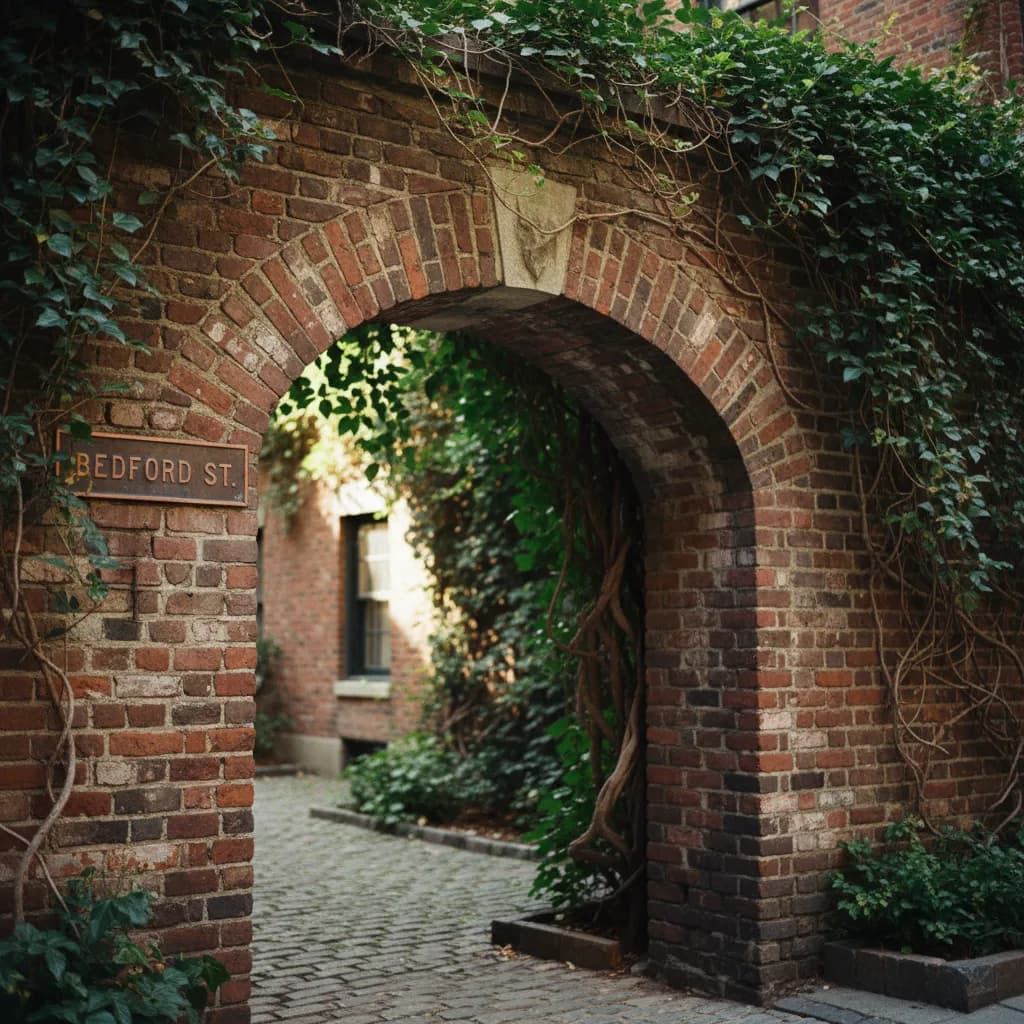
Bedford Street Townhouses and Hidden Courtyards
Bedford Street forms the architectural spine of the historic district, lined with federal-style residences and Greek Revival townhouses dating to the 1820s. Pause outside 75 1/2 Bedford Street, famously known as the narrowest house in New York City, where poet Edna St. Vincent Millay once lived within its slender nine-foot facade. Framing this idiosyncratic structure beside the grander adjacent brick residences offers an engaging study in historic urban scale and quirky nineteenth-century property division. The delicate timber sash windows and miniature chimney stacks emphasize the charming domestic intimacy of the early nineteenth-century village.
Grove Court hides discreetly off Grove Street, accessible only through a narrow iron security gate set between historic street-front townhouses. Built in 1854 as modest workers' cottages, the secluded six-house brick courtyard now represents one of the Village's most sought-after and photogenic residential secrets. Capture the arched passageway framing the sunlit communal garden and weathered brick pavers to convey the timeless village atmosphere that persists amidst a bustling metropolis. The sheltered brick walls catch warm ambient bounce light, making this enclave exceptionally rewarding for rich architectural documentary frames.
Morning Light and Side-Street Shadow Contrast
Early morning offers the purest lighting conditions for photographing West Village townhouses without distracting glare or heavy traffic. Because streets like Commerce, Barrow, and Morton curve unpredictably, eastern morning sunlight strikes facades at varied dynamic angles, illuminating ornate wooden entry porticos while casting rich diagonal shadows across brick facades. This soft raking illumination accentuates the textured irregularities of handmade historic brickwork and reveals subtle craftsmanship variations between neighboring row houses.
Shadows cast by overhanging street trees create natural dappled patterns across stoops and sidewalks that enhance candid street portraits. Look for moments when sunlight isolates historic window shutters, brass door knockers, or cascading wisteria vines against deeply shaded entryway alcoves, creating rich tonal depth with minimal post-processing adjustment. Composing wide shots looking down gently bending blocks draws the viewer's eye through a sequence of alternating sunlit surfaces and cool atmospheric shadows.
Hudson Street and Industrial Waterfront Edges
Framing historic brick warehouses along Hudson Street bridges the residential village with Manhattan's former commercial working waterfront. Heading toward Greenwich and Washington Streets reveals sturdier brick printing houses, meatpacking depots, and historic stables that feature rounded arch windows and heavy timber lintels. The architectural contrast between delicate federal residential stoops and utilitarian commercial masonry enriches any documentary photo sequence, recording how transport and maritime commerce shaped urban morphology.
Hudson Street also serves as an expansive visual corridor where low-rise historic building heights allow broad views of changing sky conditions. Compose wide-angle perspectives looking north along Hudson where the curving streetscape gently reveals alternating brick cornices, vintage corner taverns, and tree-lined intersections leading toward the Hudson River Greenway. The broad sidewalks provide ample room to set up stable perspectives without impeding local pedestrians.
Midday Thoroughfares and Sections to Skip
Bleecker Street and Seventh Avenue South become heavily congested with shoppers, tour groups, and delivery vans as the day progresses. The bustling retail stretch along lower Bleecker Street often obscures ground-floor architectural lines behind advertising banners, commercial sandwich boards, and sidewalk merchandise displays. Skip attempting wide architectural exposures along Bleecker during peak afternoon periods when dense sidewalk foot traffic consistently interrupts clean camera sightlines.
Quiet residential streets south of Christopher Street offer superior shooting environments throughout the middle of the day. Turning into St. Luke's Place, Morton Street, or Leroy Street provides sheltered blocks where intact rows of 1850s brownstone and brick Italianate residences remain peaceful, shaded, and free from commercial distraction. St. Luke's Place in particular boasts soaring ginkgo trees, deep areaways, and uniform high brownstone stoops that present rhythmically flawless architectural compositions.
Classic Stoops and Wrought-Iron Masonry Details
Greek Revival doorways along Barrow and Commerce Streets display exquisite woodwork and cast-iron artistry that reward careful close-up study. Focus on fluted ionic columns framing recessed front doors, leaded glass transom lights, and decorative cast-iron pinecone finials atop stoop railings. These subtle emblems of nineteenth-century domestic pride provide excellent compositions when framed with a shallow 35mm depth of field, blurring soft leafy backgrounds behind crisp iron contours.
Wrought iron work in the West Village exhibits remarkable stylistic variety, ranging from delicate anthemion leaf patterns to sturdy diamond-latticed window guards. Take time to photograph original iron boot scrapers embedded into brownstone bottom steps, iron horse hitching rings near curbs, and vaulted coal-hole covers set into sidewalk flagstones that evoke daily life two centuries ago. These small functional survivals ground your photo essay in tangible historical authenticity.
Connecting Walkways Toward Washington Square
Continuing toward MacDougal Alley and Washington Mews at the eastern edge of Greenwich Village links your walk with New York's historic artist studio community. Formerly horse stables and carriage houses serving wealthy Washington Square townhouses, these cobblestone alleys were converted into luminous creative studios in the early 1900s for sculptors and painters. The whitewashed brick facades and painted timber barn doors provide distinct visual contrasts to red-brick residential rows, capturing the artistic heritage of bohemian Manhattan.
Washington Square Park lies just steps away, anchored by Stanford White's monumental marble arch commemorating the centennial of George Washington's inauguration. Framing the arch through tree-lined Fifth Avenue provides an iconic downtown perspective that naturally culminates your historic neighborhood photographic circuit. Morning light illuminates the north face of the marble monument, while perimeter benches offer comfortable spaces to rest and review captured images.
Transit Access and Practical Navigation Tips
Christopher Street-Sheridan Square subway station on the 1 train delivers photographers right into the heart of the historic district. Alternatively, the West 4th Street-Washington Square station provides express access via the A, B, C, D, E, F, and M subway lines, offering an ideal starting point for exploring both eastern mews and western riverfront blocks with minimal transit transfer friction.
Narrow sidewalks and historic bluestone paving flags can be uneven and occasionally slick, so comfortable low-profile footwear is strongly advised for extended photographic explorations. Carry a lightweight prime lens to navigate tight street corners comfortably, respect resident privacy on residential stoops, and open the Karpo APP to follow curated walking paths and pin quiet photo vantage points across Lower Manhattan's most enchanting neighborhood streets.
Ask Karpo for more information.
Keep reading
- SoHo Tailor Alteration Shop Finder for Sample Sale Finds
 Williamsburg Tailor Alteration Shop Finder for Bike Riders
 Upper West Side Tailor Alteration Shop Finder for Kids