 SoHo Tailor Alteration Shop Finder for Sample Sale Finds
Neighborhood Guides
Upper West Side Historic Neighborhood Photo Walk Trail
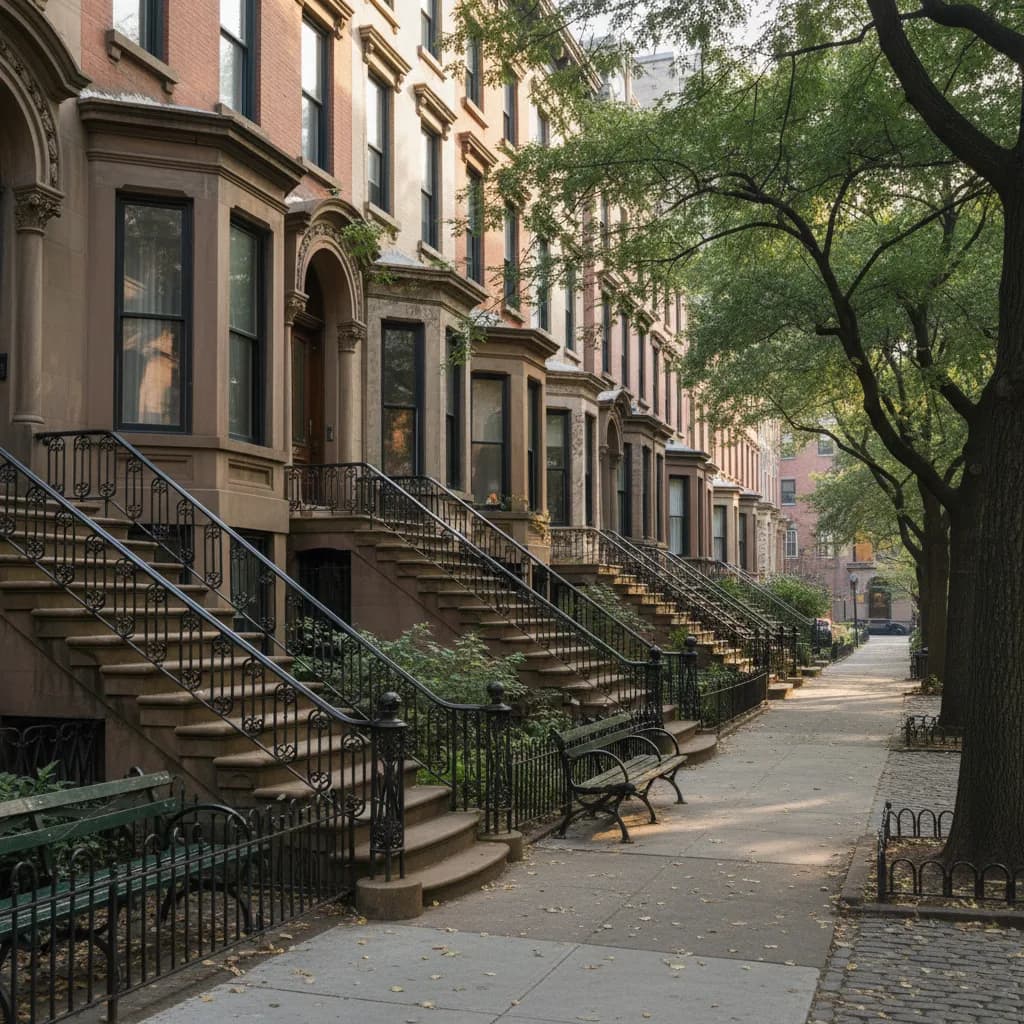
Photograph brownstone row houses and Beaux-Arts limestone blocks along Columbus Avenue. Use the Karpo APP to trace quiet side streets from 72nd to 86th.
Columbus Avenue anchors the residential heart of the Upper West Side Historic District, flanked by monumental nineteenth-century row house blocks that showcase the golden age of Manhattan brownstone domestic architecture. As morning sunlight breaks over Central Park's canopy to the east, long golden light shafts illuminate carved limestone lintels, rusticated brownstone stoops, and elegant copper bay windows along tree-shaded cross streets. Undertaking this historic neighborhood photo walk provides architectural photographers and urban documentarians with an inspiring exploration of Gilded Age residential design, Romanesque Revival stonework, and tranquil neighborhood character that has endured gracefully for more than a century across generations.
Brownstone Row House Harmony Across Side Streets
Side street residential blocks between 72nd and 86th Streets display some of the most cohesive and impeccably preserved row house ensembles in the United States. Walking down West 76th or West 78th Street reveals undulating blocks designed by master speculative architects like Lamb & Rich and Clarence True, who pioneered the bowed Elizabethan brownstone front in the late 1880s. The harmonious rhythm of ascending high stoops, hand-carved floral balustrades, and bracketed projecting cornices creates magnificent linear perspective lines that draw the eye effortlessly down the street.
Central Park West borders the neighborhood just one block eastward, providing majestic backdrops of twin-towered Beaux-Arts residential landmarks like the San Remo and the Dakota. Composing perspectives from Columbus Avenue looking east down tree-lined residential side streets frames intimate brownstone stoops in the foreground anchored by soaring Gilded Age towers rising dramatically above the park foliage, creating breathtaking depth of field in morning light.
Raking Morning Light and Deep Shadow Contrasts
Raking morning light between early dawn and mid-morning strikes east-west cross streets at an acute angle, producing pronounced three-dimensional relief across deeply carved stonework. Romanesque Revival arches, foliated brownstone capitals, and rusticated stone basement courses cast crisp, dramatic shadows that reveal the incredible tactile texture of New Jersey and Connecticut brown freestone quarried in the late nineteenth century.
Tree canopies along the residential avenues filter the bright sky, creating soft natural vignettes that protect exposures from blown-out highlights. Look for moments when early morning delivery cyclists or neighborhood dog walkers pass through narrow shafts of sunlight breaking between four-story rooflines, injecting life and human scale into your architectural frames without distracting from the historic facade rhythm.
West 76th and 77th Street Architectural Details
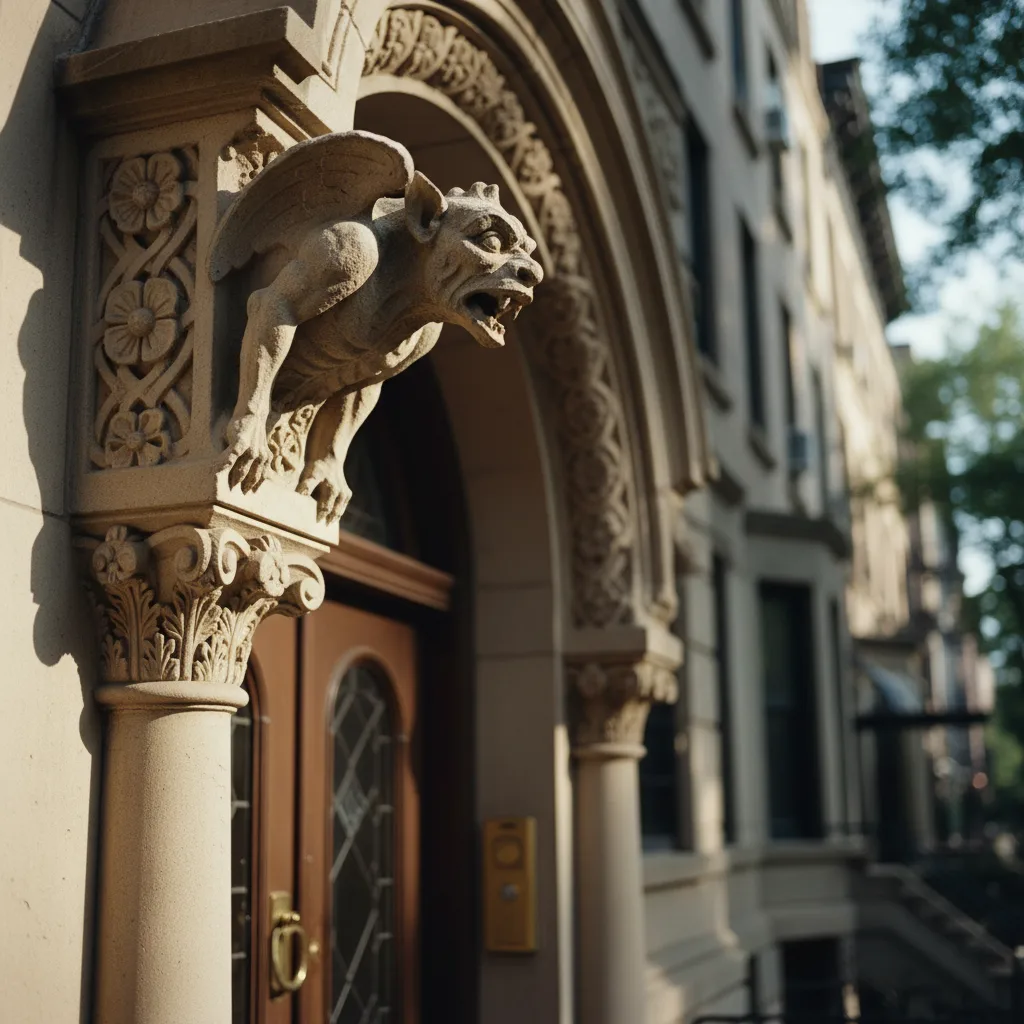
West 76th Street features an extraordinary variety of architectural revivals, spanning from Renaissance Revival terra cotta to rugged Romanesque masonry. Stop before the historic townhouse rows near Amsterdam Avenue to capture intricate wrought-iron entry grilles, stained-glass transom windows, and elaborate stone grotesque carvings peering down from second-story window pediments. Using a medium telephoto lens isolates these individual sculptural treasures from the broader street scene with exceptional clarity.
Beaux-Arts apartment buildings anchoring the corners along Columbus Avenue showcase opulent Parisian limestone facades adorned with monumental limestone brackets and classical balustraded balconies. Framing the contrast between these grand corner apartment houses and the intimate row houses lining the interior side streets illustrates the rapid urban development of the late nineteenth century when farmland transformed into metropolitan residential grandeur.
Broadway Commercial Bustle and Sections to Skip
Broadway retail corridors between 72nd and 79th Streets become dominated by heavy commercial vehicle traffic, noisy delivery zones, and crowded sidewalk scaffolding. The visual clutter of retail awnings, traffic lights, and delivery trucks often disrupts architectural sightlines and makes clean street photography challenging and frustrating. Skip lingering along Broadway during busy shopping hours when commercial activity reaches its peak.
Residential brownstone avenues between Columbus and Central Park West provide peaceful and visually pure alternatives throughout the day. Exploring blocks along Manhattan Avenue, West 78th Street, or quiet residential lanes near the Museum of Natural History allows photographers to work in tranquil surroundings with clean background lines, minimal sidewalk disruption, and unobstructed townhouse stoops.
Carved Sandstone Stoops and Decorative Iron Craft
Carved sandstone stoops throughout the neighborhood reveal the exquisite hand-tooling of nineteenth-century European stonecutters who immigrated to New York. Examine the delicate acanthus leaf scrolls, spiral handrail newels, and heraldic medallions carved directly into the soft brownstone balustrades. Capturing these architectural features with angled natural side light emphasizes the rich, earthy warmth and textural grain of the stone.
Decorative iron craft complements the stone masonry with graceful curving parlor-floor window guards and ornate areaway fences. Focus on details like vintage brass mail slots, polished iron door knockers, and iron basement gates that retain their historic character, offering intimate documentary vignettes that celebrate classic Upper West Side street life and domestic craftsmanship.
American Museum Precinct and Park Perimeters
American Museum of Natural History grounds on West 77th Street provide a monumental civic centerpiece constructed from monumental pink Milford granite. J. Cleveland Cady's imposing Romanesque Revival southern facade features soaring corner towers, deeply recessed arched portals, and intricate stone diapering that create stunning architectural compositions when framed through Theodore Roosevelt Park's mature oak trees in afternoon sunlight.
Riverside Park and the Hudson River promenade lie just four blocks west, offering expansive afternoon walking extensions where golden hour light shines across open water. Concluding your photo circuit along the tree-lined bluffs of Riverside Drive introduces grand limestone mansions, historic monument terraces, and panoramic sunset views across the Hudson Palisades that perfectly round out your photographic portfolio.
Transit Access and Practical Neighborhood Notes
Subway stations along Central Park West and Broadway provide effortless transit access to the Upper West Side photo trail. The B and C local subway lines stop at 72nd, 79th, and 81st Streets right alongside the park, while the 1 train serves local stops along Broadway at 72nd and 79th Streets, providing convenient connections from anywhere in the city.
Paved avenues and residential side streets feature wide, level concrete sidewalks that make walking with camera equipment comfortable and relaxed for hours at a time. Remember to shoot quietly on quiet residential blocks, watch for changing morning light angles as the sun rises over Central Park, and open the Karpo APP to explore customized historic walking circuits and locate neighborhood architectural treasures. The neighborhood's timeless masonry details provide endless photographic rewards for those who take time to observe the quiet elegance of New York's residential history.
Ask Karpo for more information.
Keep reading
- SoHo Tailor Alteration Shop Finder for Sample Sale Finds
 Williamsburg Tailor Alteration Shop Finder for Bike Riders
 Upper West Side Tailor Alteration Shop Finder for Kids