 SoHo Tailor Alteration Shop Finder for Sample Sale Finds
Neighborhood Guides
SoHo Historic Neighborhood Photo Walk Cast Iron Guide
Explore SoHo cast iron facades and cobblestones on this self-guided photo walk. Use the Karpo APP to time morning light across Greene and Mercer Streets.
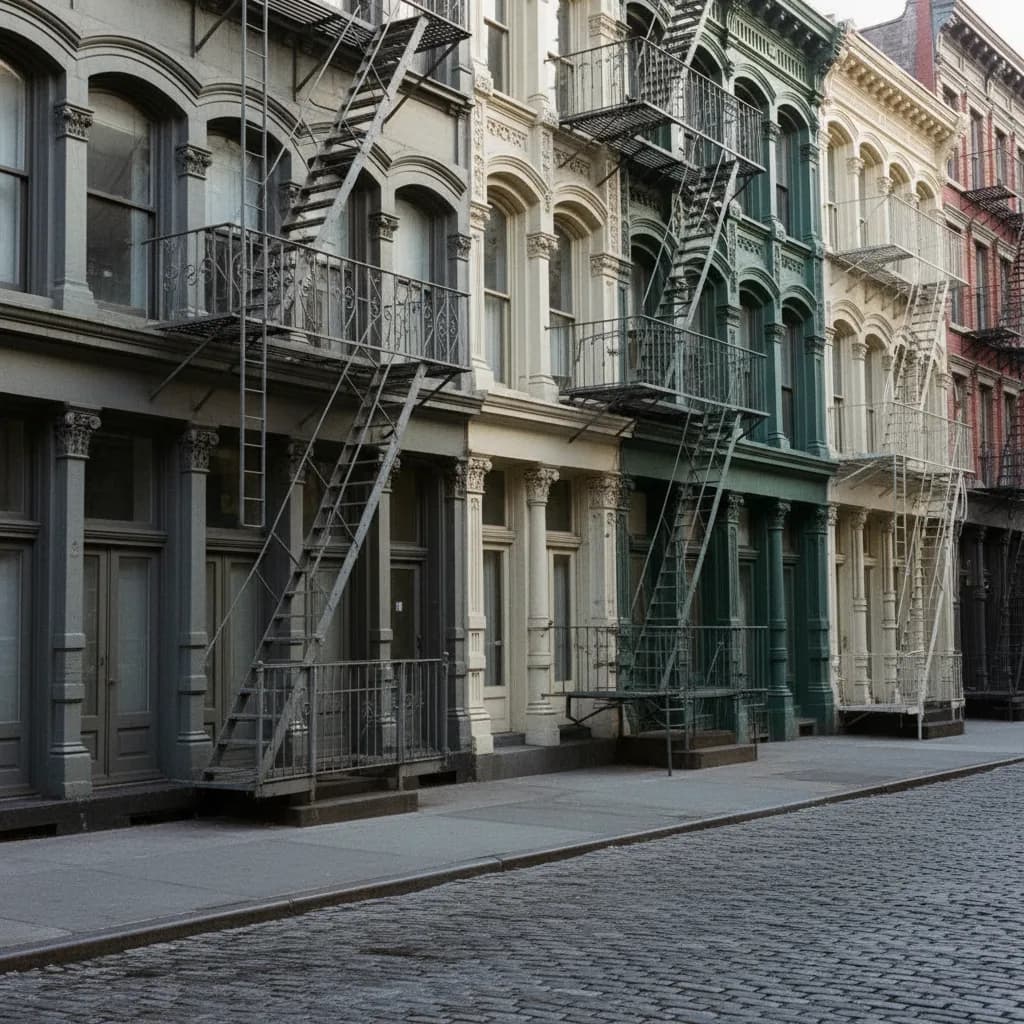
Greene Street anchors the SoHo Cast Iron Historic District with the densest concentration of prefabricated architectural ironwork in the world. As morning light cuts obliquely between Houston and Canal Streets, the rhythmic rows of ornate Corinthian columns, grand arched windows, and zig-zagging exterior fire escapes cast dramatic geometrical shadows across Belgian granite paving blocks. Embarking on this historic neighborhood photo walk provides visual storytellers with an unparalleled masterclass in nineteenth-century industrial craftsmanship, evolving urban preservation, and atmospheric street photography.
The Cast-Iron Architecture of Greene Street
Walking along the five-block stretch of Greene Street reveals the pinnacle of New York's post-Civil War commercial boom, when dry goods merchants replaced older brick dwellings with modular iron facades. Because iron could be cast into intricate classical forms far more cheaply than hand-carved stone, architects replicated Parisian palazzos and Italianate colonnades with exuberant decorative flair. Stand outside the magnificent Queen of Greene Street at numbers 28 to 30, where six soaring stories of French Renaissance ornament showcase the delicate, almost lace-like possibilities of structural ironwork.
Directly across the roadway rises the King of Greene Street at number 72, constructed in 1872 with a commanding mansard roof and prominent projecting cornice designed by architect Isaac F. Duckworth. Examining these facade planes with a prime 50mm or 85mm lens highlights the subtle imperfections of weathered coats of pale paint over cold metal joints. The uniform architectural height and repeating window bays create sweeping converging perspective lines that reward patient framing from the sidewalk curb.
Morning Shadows and Golden Hour Angles
Optimal photographic lighting transforms SoHo between 8:00 am and 10:30 am on clear mornings, when eastern sunlight skims low through the east-west cross streets like Broome, Spring, and Prince. During this early window, long diagonal bands of warm amber light illuminate the north-south facades of Greene and Mercer Streets while leaving side alleys bathed in soft, cool atmospheric ambient contrast. The intense directional light picks out projecting acanthus leaves on cast capitals and etches crisp shadows beneath projecting sill ledges.
Photographers should prioritize shooting looking northward during the first two hours after sunrise to capture illuminated building faces against deeper blue morning skies. As delivery trucks and early shopkeepers begin their daily routines, the narrow roadway creates organic framing opportunities that balance architectural formality with the honest pulse of Lower Manhattan street life.
Mercer and Broome Cobblestone Perspectives
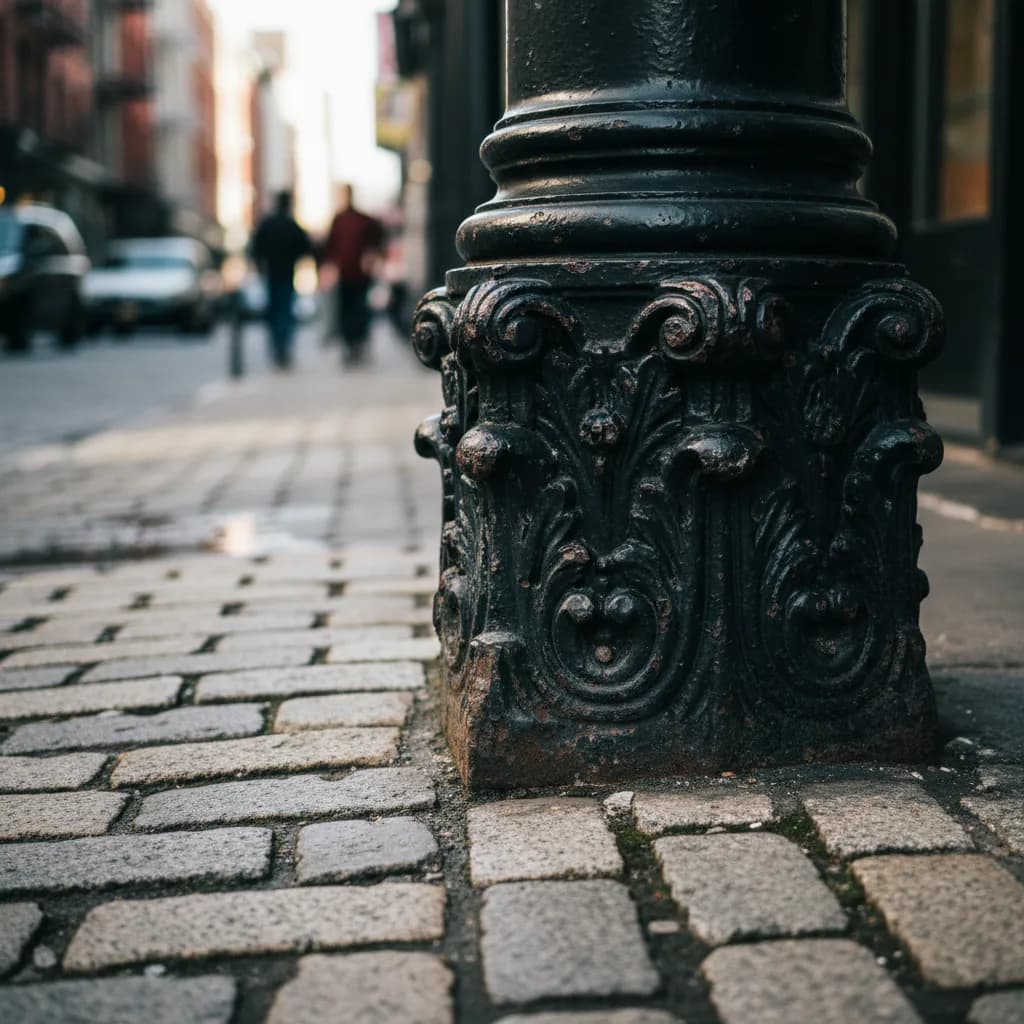
Turning east onto Mercer Street immerses photographers in a more textured and intimate street corridor surfaced with historic Belgian blocks. Unlike smoother asphalt avenues, these weathered granite blocks reflect puddles after rain and create rich foreground leading lines when captured from a low shooting stance. Mercer Street preserves a tactile industrial aesthetic where loading bays, iron vault covers, and service elevators offer authentic glimpses into nineteenth-century warehouse logistics.
At the busy corner of Broome Street and Broadway stands the landmark E. V. Haughwout Building, completed in 1857 with an Italian Renaissance palace facade inspired by Venice's Sansovino library. Beyond its Venetian arches and fluted columns, the structure earned international renown for housing the world's very first commercial passenger elevator installed by Elisha Graves Otis. Framing this corner from the south sidewalk captures both street elevations receding symmetrically toward distant Lower East Side vistas.
Crowd Management and Midday Sections to Skip
Navigating SoHo successfully requires understanding foot traffic patterns and knowing which congested stretches to deliberately avoid. By 1:00 pm on weekend afternoons, the main shopping spine along Broadway between Houston and Broome Streets becomes swamped with international retail crowds, promotional kiosks, and tour groups that make tripod work or unobstructed architectural wide shots practically impossible. Skip lingering on Broadway during midday hours when harsh top-down overhead sun washes out delicate iron moldings.
Instead, redirect your lenses into quieter residential side arteries such as Wooster Street, Howard Street, or the northern end of Crosby Street. These cobblestone lanes retain their tranquil, creative character well into the afternoon, allowing photographers to work unhurriedly around artisan storefronts, understated gallery entrances, and residential cast-iron entry stoops without fighting sidewalk foot traffic.
Architectural Details from Cornices to Capitals
Photographing cast iron demands careful attention to modular details that might easily be overlooked on a casual stroll. Look upward toward the rooflines along Prince and Spring Streets to study the immense stamped zinc and iron cornices, often embellished with projecting brackets, dentil courses, and classical urns designed to divert rainwater from building facades. These elaborate crowning features provide striking geometric silhouettes when framed against passing cloud banks.
At pedestrian eye level, examine the base plinths and hollow column shafts where original foundry manufacturer plaques remain bolted into the metal. Foundries like Architectural Iron Works of New York and Daniel D. Badger's stamped insignia bear testament to the prefabrication boom that transformed American construction. Using a macro or telephoto perspective captures the unique peeling patina, industrial rivets, and subtle structural seams where separate facade components fit together.
Connecting Alleys and Surrounding Streetscapes
Extending your photo walk beyond the central grid leads naturally into adjacent historic pockets that enrich your visual narrative. A short stroll southward brings you to Howard Street, where narrow curving asphalt gives way to understated boutique facades and historic red-brick tenements that mark the atmospheric boundary where SoHo merges with Chinatown. The transitional architecture here offers striking visual contrast between ornate iron grandeur and gritty vernacular masonry.
Wandering east toward Crosby Street delivers some of the best candid street photography in downtown Manhattan. The weathered timber loading platforms, iron delivery stairs, and vintage hand-painted ghost signs offer textured backdrops for documentary portraits and candid frames. Pausing at an independent espresso bar along Spring Street provides a welcome chance to review captured exposures while morning shadows gradually shift across the cobblestones.
Transit Access and Field Navigation Notes
Arriving in SoHo is straightforward thanks to multiple convenient metropolitan transit connections. The Prince Street station right on Broadway serves the N, R, and W subway lines, placing walkers directly at the northern gateway of the historic district. Alternatively, taking the 6 train to Spring Street or the C and E trains to the Spring Street Sixth Avenue station allows convenient east-to-west entry into the quietest morning blocks.
Cobblestone streets and granite crosswalks can be uneven and taxing on footwear, so sturdy walking boots or cushioned sneakers are essential for several hours of continuous shooting. Keep your camera securely tethered with a cross-body sling, carry extra camera batteries during cooler autumn months, and open the Karpo APP to pin custom architectural waypoints and discover quiet walking routes connecting Lower Manhattan's most photogenic historic quarters.
Ask Karpo for more information.
Keep reading
- SoHo Tailor Alteration Shop Finder for Sample Sale Finds
 Williamsburg Tailor Alteration Shop Finder for Bike Riders
 Upper West Side Tailor Alteration Shop Finder for Kids