 Upper West Side Nail Salon Walk In Finder: First Manicure
Neighborhood Guides
DUMBO Historic Neighborhood Photo Walk Bridge Loop
Frame Manhattan Bridge vistas and 19th-century Belgian blocks across historic DUMBO. Use the Karpo APP to scout crowd-free perspectives along Water Street.
Water Street anchors the industrial waterfront enclave of DUMBO, an acronym for Down Under the Manhattan Bridge Overpass that preserves New York's premier collection of nineteenth-century daylight factory architecture. In the serene moments before midday, eastern sunlight cuts through massive steel suspension tower trusses, casting dramatic industrial geometry across dark Belgian block cobblestones and embedded historic freight rail tracks. Taking this historic neighborhood photo walk immerses photographers in an unforgettable landscape where colossal suspension bridges, historic coffee warehouses, and tidal riverbanks collide in monumental harmony and historic gravitas.
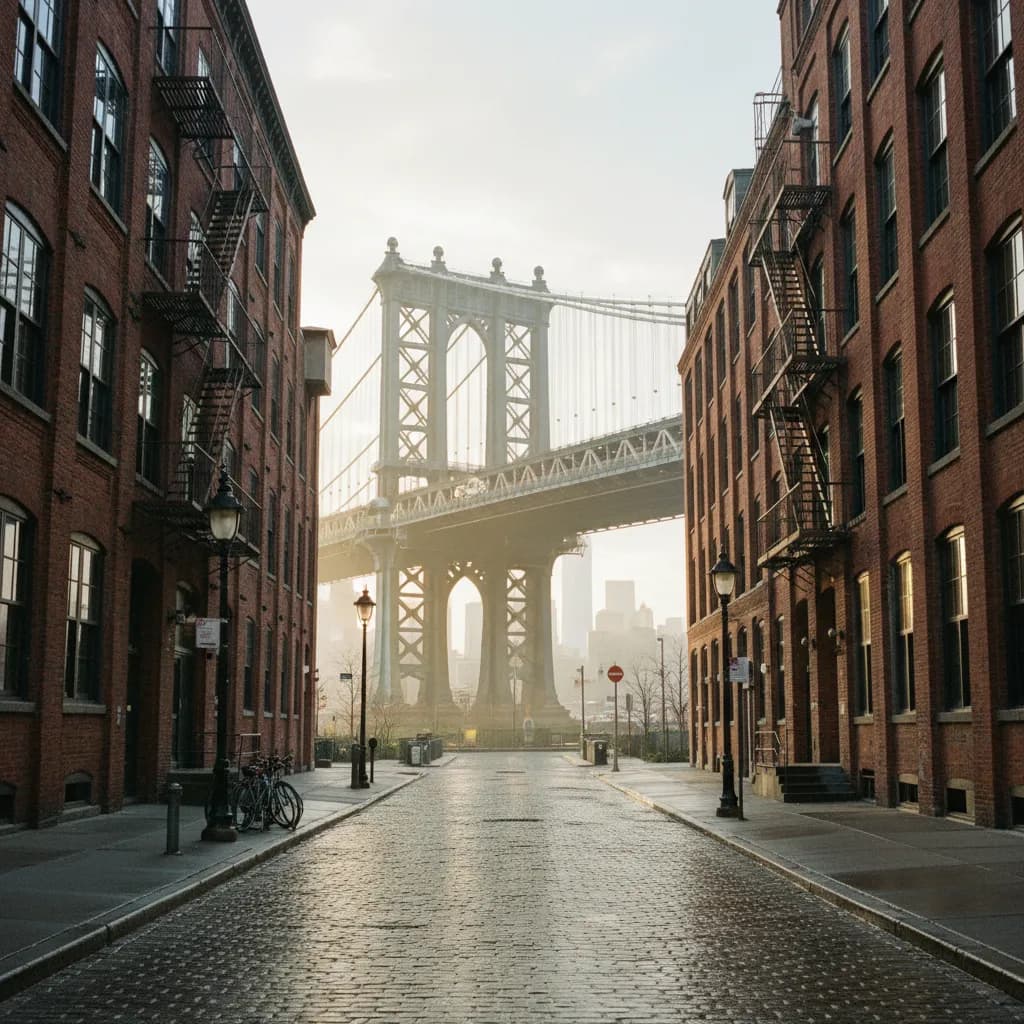
The Iconic Washington Street Bridge Perspective
Washington Street between Front and Water Streets offers one of the most celebrated architectural vistas in world photography. Standing between two five-story nineteenth-century brick industrial buildings, your camera captures the monumental blue steel anchorage tower of the 1909 Manhattan Bridge rising precisely centered in the street corridor. On clear mornings, the distant spire of the Empire State Building aligns neatly through the bridge tower's lower archway with startling geometric precision.
Manhattan Bridge steel beams and intricate rivet patterns provide bold diagonal leading lines that draw the viewer's eye skyward. To capture this iconic perspective without tourist crowds, arrive at dawn when early morning light reflects softly off the cobblestones and delivery trucks have yet to line the curbs, creating clean, symmetrical urban compositions that showcase Brooklyn's industrial heritage at its purest.
Sunrise Lighting Across Cobblestones and Rails
Sunrise illuminates the east-facing facades along Water and Plymouth Streets with warm crimson and gold tones. The historic Belgian paving blocks, laid in the late nineteenth century to withstand heavy horse-drawn freight drays, pick up gleaming highlights after morning rain or dew. Historic steel rail spurs, formerly used by the Jay Street Connecting Railroad to transport cargo directly into factory basements, remain embedded in the road surface as compelling leading lines that guide the camera lens.
Belgian block textures combined with low camera angles yield rich tactile foregrounds that ground your architectural frames. Experiment with shooting close to the pavement along Plymouth Street to capture the gleaming curves of rusted rail tracks winding past weathered warehouse loading bays and granite curb stones, documenting the physical infrastructure that once fueled American maritime trade.
Empire Stores and Historic Coffee Warehouse Arches
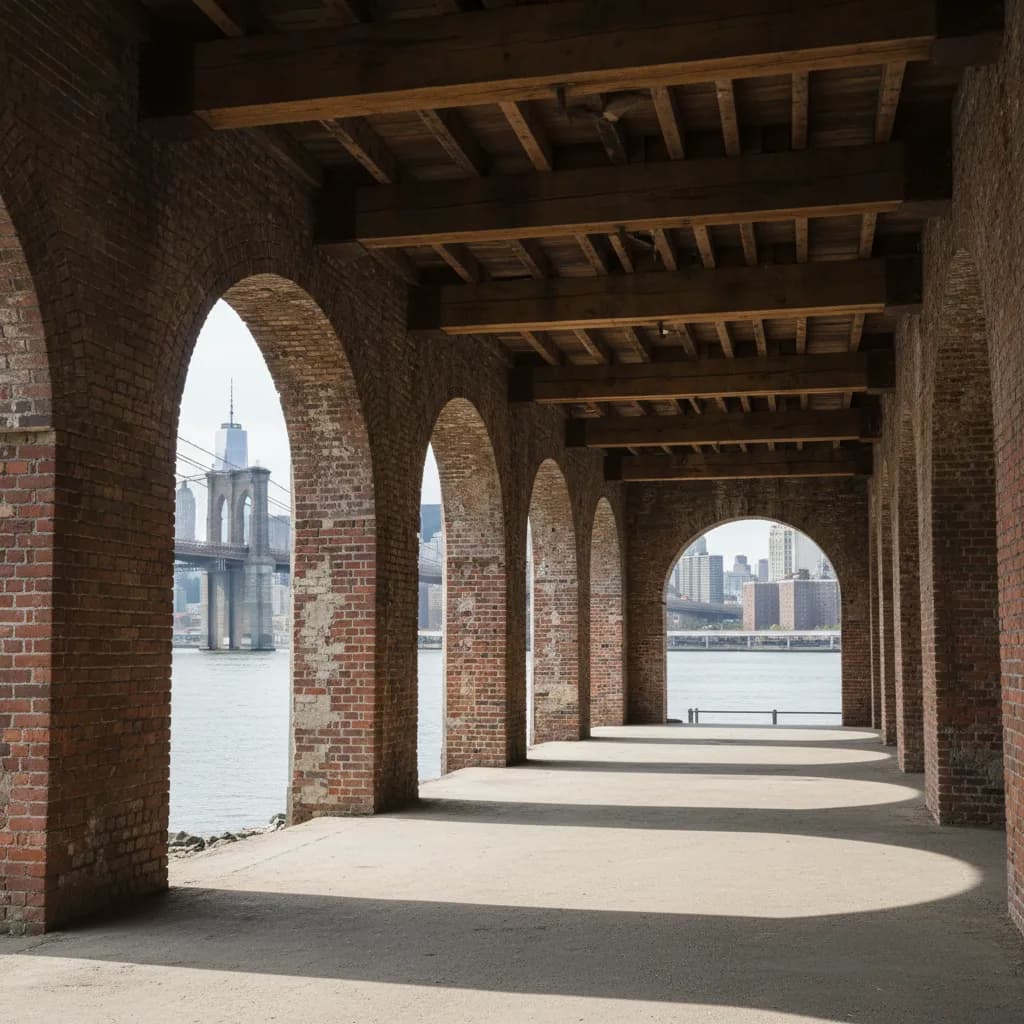
Empire Stores on Water Street represents an extraordinary restoration of seven contiguous brick warehouses constructed between 1869 and 1885 for the Arbuckle Brothers coffee empire. The landmark complex features colossal schist masonry foundations, heavy timber interior framing, and heavy iron fire shutters lining rows of arched window openings. Walking through its open public courtyard reveals where historic stone walls meet contemporary glass architectural interventions, creating dramatic light reflections.
Jane's Carousel sits just across the park lawn in Brooklyn Bridge Park, encased within a transparent acrylic pavilion designed by French architect Jean Nouvel. Framing the restored 1922 wooden carousel against the monumental stone anchorages of the Brooklyn Bridge creates whimsical juxtapositions between kinetic historic entertainment and heroic civil engineering, especially in the gentle glow of late afternoon light.
Tourist Crowds and Busy Intersections to Skip
Midday tourist crowds flood the Washington Street photo corridor between late morning and late afternoon, transforming the historic cobblestones into an obstacle course of selfie sticks and tour groups. Attempting serious documentary or architectural framing during these peak hours results in frustratingly cluttered compositions. Skip lingering on central Washington Street during midday when harsh overhead sun flattens brick textures and crowds block curb perspectives.
Quiet brick canyons along John Street, Pearl Street, and the waterfront edges of Main Street Park provide uncrowded shooting havens throughout the afternoon. Here, historic brick warehouses such as the former Brillo soap factory and historic paper box mills offer tranquil backdrops, rustic wooden loading doors, and authentic industrial character without pedestrian interference.
Original Freight Infrastructure and Industrial Relics
Original freight infrastructure throughout DUMBO offers rich documentary details for photographers keen on industrial history. Study the heavy cast-iron hoist mechanisms, iron shutter hinges, and weathered pulley wheels mounted high on warehouse rooflines along Front Street. These mechanical relics evoke the era when Brooklyn was one of the world's busiest maritime manufacturing ports and freight distribution centers.
Curving rails and cobblestone intersections around the Tobacco Warehouse at Brooklyn Bridge Park showcase master masonry and ironwork. The roofless historic brick shell of the 1860 tobacco inspection warehouse, now home to St. Ann's Warehouse theater, features grand circular arched portals that frame dramatic open-air views of the Brooklyn Bridge towers above, offering exceptional photographic framing opportunities.
Brooklyn Bridge Park Waterfront Promenades
Brooklyn Bridge Park stretches south along the East River shoreline, offering sweeping pedestrian promenades that connect historic piers with lush parklands. Pebble Beach provides a natural stone cove where photographers can capture tidal water lapping against gravelly shores with both the Manhattan and Brooklyn Bridges framing the East River basin. The wide horizon offers spectacular perspectives as twilight settles over Lower Manhattan's skyline towers.
Main Street Park's elevated grassy lawns provide gentle vantage points looking back toward DUMBO's historic industrial roofline. In late afternoon light, the red-brick water towers and saw-toothed daylight factory monitors form a rugged industrial silhouette against the evening sky, capturing the quintessential visual spirit of Brooklyn's waterfront heritage.
Transit Access and Practical Field Notes
York Street station on the F subway line delivers photographers right into DUMBO's southern gateway, just a two-block walk down Jay Street toward the water. Alternatively, taking the A or C train to High Street-Brooklyn Bridge or boarding the NYC Ferry at the DUMBO / Fulton Ferry landing provides picturesque approaches with immediate riverfront views and minimal transit walking.
Riverfront promenade walkways and cobblestone streets require sturdy walking shoes with good grip, especially on wet stones or inclined ramps near the piers. Protect your camera gear from salt river spray on windy days, carry an extra battery for extended golden hour shooting, and open the Karpo APP to chart optimal walking paths and discover historic photo locations across Brooklyn's storied harbor. Taking time to linger as twilight descends rewards patient photographers with breathtaking compositions of illuminated bridge towers glowing against deep indigo river currents.
Ask Karpo for more information.
Keep reading
- Upper West Side Nail Salon Walk In Finder: First Manicure
 Astoria Nail Salon Walk In Finder: Parent and Kid Sunday
 Williamsburg Nail Salon Walk In Finder for a Friend Group