 Upper West Side Nail Salon Walk In Finder: First Manicure
Neighborhood Guides
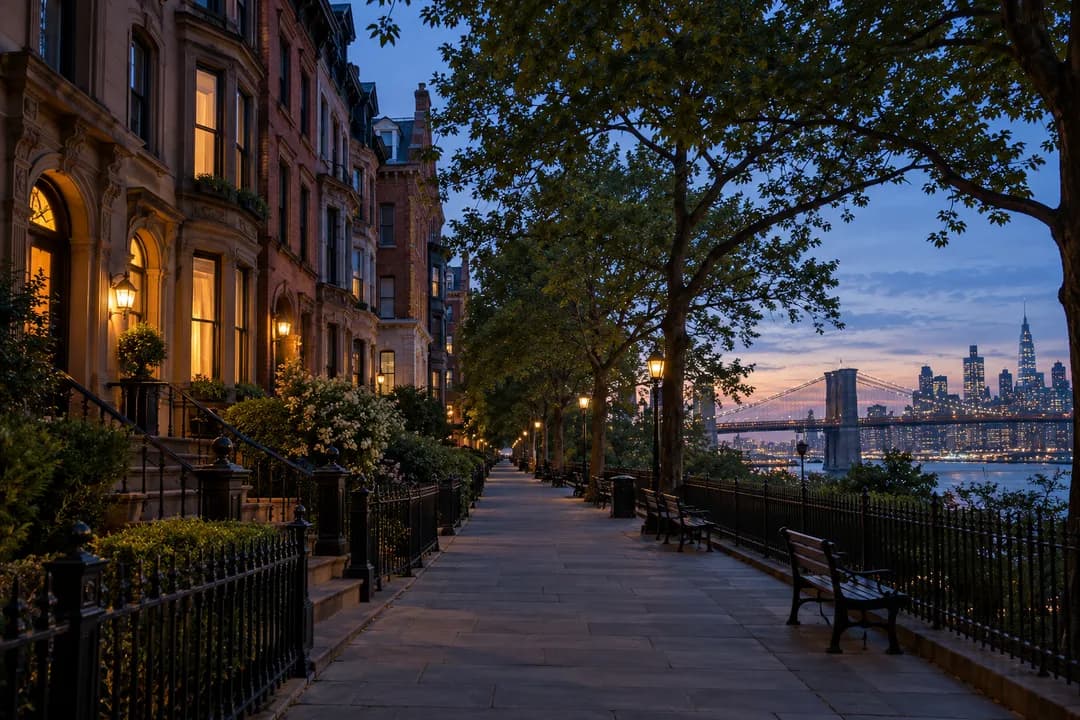
Historic Neighborhood Loop in Brooklyn Heights: 3 Routes
Plan a Brooklyn Heights historic neighborhood loop around promenade views, brownstone blocks, and flexible walking chapters for weather, pace, and group size.
A Brooklyn Heights historic neighborhood loop should alternate between open skyline and close-up street texture. The promenade supplies the broad visual reset, while the brownstone blocks reward a slower, inward-looking pace. Build the route around those two scales, then let Karpo APP adjust for wind, stroller access, photo pauses, or a group that wants to finish near the waterfront instead of returning to its start.
Start with the view you want
Decide whether the promenade is your opening image or your final reveal. Starting there gives newcomers an instant sense of the neighborhood's relationship with the harbor and bridge, then lets the loop move into quieter streets. Saving it for last creates a satisfying release after close facade study. Tell the planner which emotional order you want; otherwise the route may be efficient but miss the reason you chose Brooklyn Heights.
Set a promenade tolerance
The waterfront edge can be breezy, bright, and busy, so add a tolerance rather than treating it as all-or-nothing. A short promenade segment may be enough for a wind-sensitive group, while a photographer may want a longer horizon window. Karpo APP can place the exposed stretch between sheltered chapters and offer a quick inland bypass. That keeps the defining view without forcing every companion to stay outside longer than they enjoy.
Read the brownstone grid
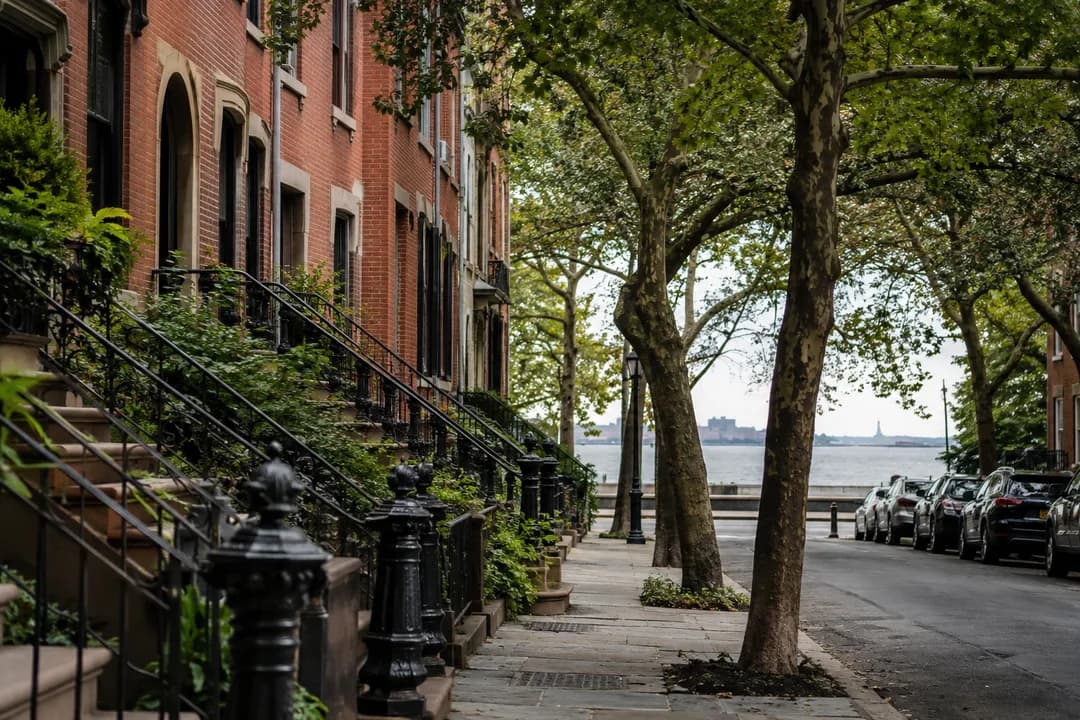
The neighborhood's regular blocks make a useful planning canvas. Ask for one chapter that follows a calm residential line and another that crosses several streets to compare stoops, window bays, trees, and facade colors. The goal is not to count every pretty building; it is to notice how repeated forms create a changing rhythm. A route that names the visual question gives the group a reason to look closely instead of simply walking toward the next pin.
Give the group roles
Brooklyn Heights loops are easier with small roles. One person can hold the route, another can watch for architectural details, and a third can choose the next pause from two options. Karpo APP can attach those choices to each chapter so the planner becomes a shared object rather than one person's private map. Roles also make the walk work for families, where a simple observation mission can keep younger walkers engaged.
Make the bridge a decision
The bridge view should be a decision point, not background wallpaper. Build a branch that approaches the skyline directly and another that keeps the route among trees before revealing it. If the sky is hazy, the second branch may feel richer because it emphasizes texture and anticipation. If visibility is clear, the direct approach earns its place. Keep both branches in the saved plan so the group can choose after seeing the conditions.
Plan a sheltered middle
Insert a sheltered middle chapter between outdoor exposures. That can be a tree-lined block, a quieter garden edge, or a street where the group can pause without balancing a drink and a camera in the wind. The planner should state what this chapter is for—reset, snack, conversation, or route correction—so nobody mistakes it for a wasted detour. A deliberate middle makes the loop feel paced rather than stretched.
Use time honestly
A historic neighborhood loop is not measured only in walking distance. Build time for photographs, looking back at the skyline, and letting a slower companion catch up. Karpo APP can compare a compact version with a lingering version, using the same anchors but different pause lengths. If the group has a firm departure, choose the compact route before leaving; it is easier to add one optional block than to rescue an overlong plan.
Handle weather without drama
Wind and rain are the two conditions most likely to change this loop. In wind, keep the promenade segment short and put the most detailed facade reading inland. In rain, prioritize covered transitions and use the waterfront only if the group actively wants the atmosphere. Save a weather branch with a clear switch point, then let everyone see the choice. That removes the awkward sidewalk debate when the forecast wins.
Create a meeting point
If people are joining from different subway lines or leaving separately, make the meeting logic explicit. Choose one opening landmark, one midpoint reunion, and one ending area that is easy to describe aloud. The app can show the route in chapters so a late arrival can join at the right point without asking for a live narration. Clear reunions matter more than squeezing one extra scenic block into the loop.
Choose the right finish
A waterfront finish suits a relaxed afternoon, while an inland finish can hand the group toward dinner, a ferry connection, or another Brooklyn plan. Ask for two endings with different energy and travel friction. The best ending is the one that matches what comes next, not the one with the most dramatic final photograph. Keeping that next move visible helps the loop fit into a real day.
Review the route afterward
After the walk, record the one chapter that felt too slow and the one that deserved more time. Note whether the promenade was best at the beginning or end, and whether the brownstone grid felt repetitive for your group. Saving those observations turns the next plan into a true revision rather than a duplicate. Over time, Karpo APP becomes a memory of how your companions actually like to explore.
Practical notes for the loop
Bring a light layer for the waterfront, keep your route shareable, and make the short branch visible before anyone gets tired. Treat the promenade as an optional exposure, not a test of stamina. If a companion needs a shorter outing, let them leave at the midpoint with the plan still intact. Brooklyn Heights is most rewarding when the loop leaves space for both skyline awe and the small, human details of the blocks behind it. Keep one optional chapter uncommitted so the group can follow a compelling detail without losing the route logic. A plan should provide confidence, not close every door. When the waterfront is bright and the brownstone blocks are calm, the strongest version may be the one that leaves ten minutes for a spontaneous turn. Record that choice afterward; it becomes useful evidence for the next Brooklyn Heights loop.
Ask Karpo for more information.
Keep reading
- Upper West Side Nail Salon Walk In Finder: First Manicure
 Astoria Nail Salon Walk In Finder: Parent and Kid Sunday
 Williamsburg Nail Salon Walk In Finder for a Friend Group