 Fort Greene Holiday Market Browsing Guide for Young Shoppers
Weekend Plans
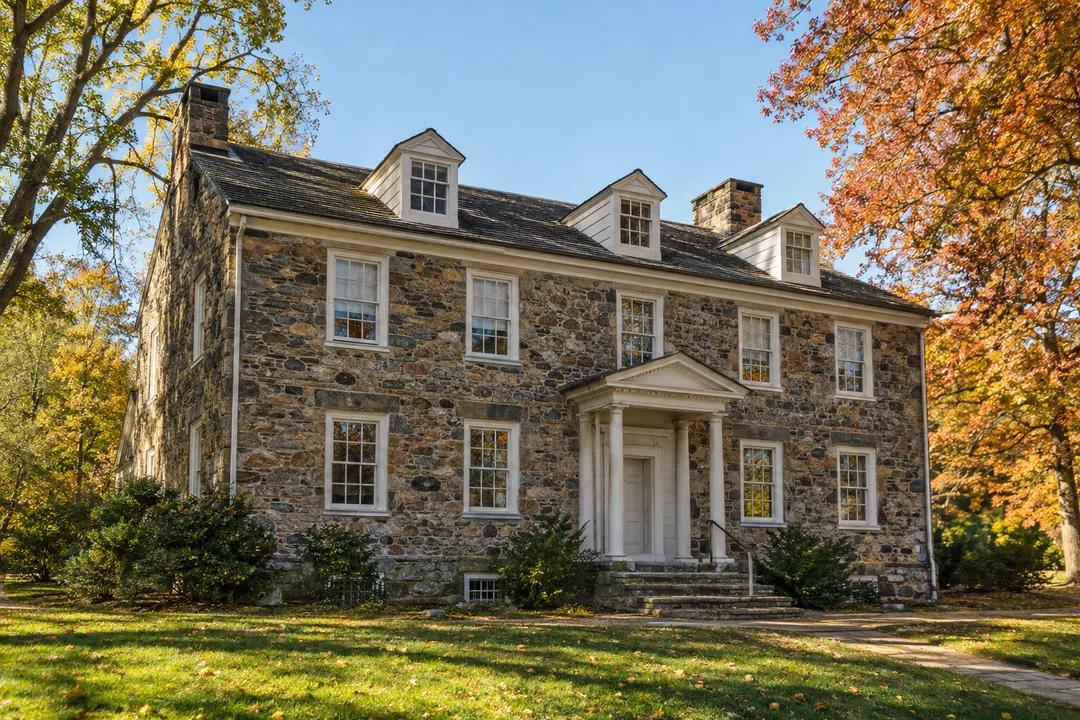
Historic Mansion Near Me in the Bronx: Van Cortlandt House Museum
A detailed visitor guide to Van Cortlandt House Museum at 6036 Broadway in Van Cortlandt Park, the Bronx's oldest standing manor house constructed in 1748 with rich colonial and Dutch history.
Situated in the southwestern corner of expansive Van Cortlandt Park in the northern Bronx, Van Cortlandt House Museum at 6036 Broadway stands as the borough's oldest surviving residential building. Constructed in 1748 by merchant and plantation owner Frederick Van Cortlandt, this sturdy Georgian-style fieldstone manor served as the administrative heart of a vast agricultural estate, milling enterprise, and grain shipping operation. Built from dressed Bronx gneiss quarried directly on the property, the home combines traditional English classical proportions with Dutch vernacular domestic details inherited from the family's seventeenth-century roots in New Amsterdam. Because of its strategic position along the historic Albany Post Road, the mansion played a pivotal role during the American Revolutionary War, hosting General George Washington on two separate occasions. Today, carefully preserved under the stewardship of the National Society of Colonial Dames, the museum provides an authentic, immersive look at colonial commerce, domestic life, and regional history.
Colonial Plantation Life, Enslaved Labor, and Washington's Headquarters
The Van Cortlandt family was among the wealthiest and most influential merchant dynasties in colonial New York, establishing extensive grain mills and cattle pastures throughout northern Manhattan and Westchester. Historical records reveal that the estate functioned as a self-sustaining plantation, relying on the labor of skilled enslaved Africans, indentured servants, and tenant farmers who cleared fields, operated the gristmill, harvested wheat, and managed the manor house. When the Revolutionary War broke out, the neutral ground of Westchester became a violent battleground between Patriot militias and Loyalist Queen's Rangers. General George Washington stayed at the house in 1776 before the Battle of White Plains, and returned in November 1783 to assemble his military staff before marching triumphantly into British-evacuated Manhattan. In 1888, the Van Cortlandt heirs sold the family acreage to the City of New York to create Van Cortlandt Park, and in 1897 the residence became the city's very first historic house museum.
Georgian Stone Craftsmanship, Delft Tilework, and Period Interiors
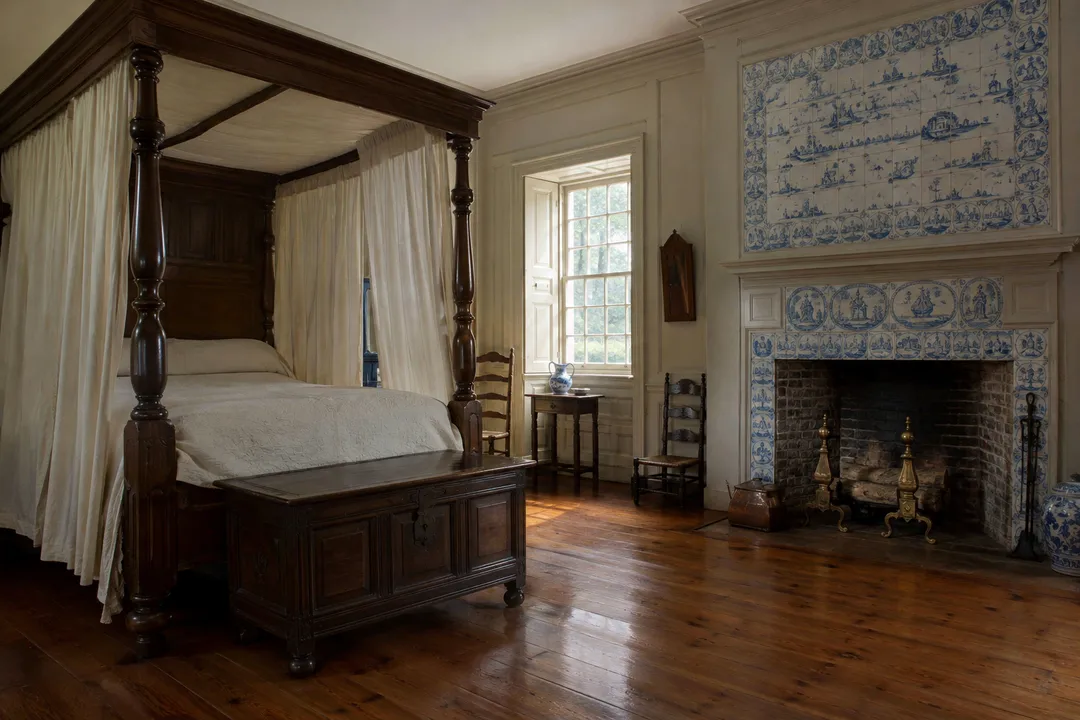
The architecture of Van Cortlandt House reflects refined mid-eighteenth-century colonial craftsmanship. The symmetrical fieldstone exterior features hand-carved grotesque mask keystones above the second-story windows, a distinctive architectural flourish rarely seen on American colonial residences. Inside, the ground-floor dining room and formal parlor showcase raised-panel Georgia pine wainscoting, heavy ceiling beams, and fireplaces lined with authentic hand-painted blue and white Dutch Delft ceramic tiles illustrating biblical parables. In the southeast bedchamber, visitors can inspect the historic four-poster tester bed where Washington rested, alongside a high-chest of drawers, brass warming pans, and woven rag rugs. The basement level contains the original colonial kitchen, featuring a massive open hearth with iron cranes, a Dutch beehive baking oven, butter churns, and copper cauldrons, providing an evocative look at the intense daily labor required to maintain a prominent colonial estate.
The Gristmill Legacy, Farm Economy, and Burial Vault History
Understanding the scale of the Van Cortlandt estate requires looking beyond the manor walls to the surrounding commercial landscape. In the eighteenth century, Tibbetts Brook was dammed to power the family's thriving gristmill and sawmill, producing flour and timber shipped directly down the Hudson River to Atlantic trade ports. Just northeast of the manor house, atop Vault Hill, lies the stone burial vault where the Van Cortlandt family interred their ancestors and where New York City municipal records were hidden from British troops during the war. Archeological excavations on the grounds have recovered eighteenth-century ceramic pipe fragments, hand-forged iron nails, and glass trade beads that illuminate the daily routines of the free and enslaved workers whose physical toil powered this vast agrarian enterprise.
Admission Fees, Schedule of Entry, and Group Opportunities
Van Cortlandt House Museum remains one of the most affordable and accessible cultural destinations in New York City. General admission costs $5 for adults, while tickets for senior citizens sixty and older and students with valid school identification cost $3. Children twelve and under enter free of charge. In a longstanding commitment to the local community, all Bronx residents enjoy free general self-guided admission upon presenting proof of residency. The museum is open Wednesday through Sunday from 11:00 am to 4:00 pm, with final self-guided entry permitted at 3:30 pm to allow ample time to explore the rooms. Guided tours led by staff educators are available by advance reservation for school and community groups, offering focused discussions on the lives of enslaved residents, Revolutionary War espionage, and eighteenth-century agriculture. Visitors can purchase tickets directly at the gift shop desk inside the east entryway upon arrival.
Exploring Van Cortlandt Park, the Parade Ground, and Nature Trails
Stepping out from the museum places visitors directly into Van Cortlandt Park, New York City's third-largest park encompassing over one thousand acres of forests, lakes, and sports fields. Directly adjacent to the mansion lawn is the historic Parade Ground, once used for militia drills and now famous as a hub for weekend cricket matches, soccer, and cross-country running meets. A short stroll north leads to the Old Croton Aqueduct Trail, where hikers can follow the grassy path of the subterranean water pipeline that brought clean drinking water to Manhattan beginning in 1842. Birdwatchers will enjoy exploring the edges of Van Cortlandt Lake, a freshwater reservoir created by the family's eighteenth-century mill dam, which attracts herons, egrets, and migrating waterfowl throughout the spring and autumn months. The nearby Van Cortlandt Golf Course, opened in 1895, holds the distinction of being the oldest public golf course in the United States.
Transit Connections, Accessibility, and Practical Advice
Reaching Van Cortlandt House Museum at 6036 Broadway is remarkably convenient thanks to the subway. Take the 1 train to its northern terminus at the Van Cortlandt Park–242nd Street station. Exit the elevated platform and walk two minutes north across the park lawn directly to the mansion gates. Multiple bus routes, including the Bx9 and Westchester Bee-Line 1, also stop along Broadway near the park entrance. For those driving, free public parking is available in the municipal lot beside the park tennis courts off Broadway. Due to eighteenth-century architecture, the second floor is accessed via historic wooden staircases, while the ground floor and surrounding garden paths offer step-free access. Photography without flash is encouraged in all exhibition rooms, making this storied colonial treasure an enriching stop on any cultural itinerary.
Ask Karpo for more information.
Keep reading
- Fort Greene Holiday Market Browsing Guide for Young Shoppers
 DUMBO Holiday Market Browsing Guide for Gifts to Mail Home
 Midtown East Holiday Market Browsing Guide for Commuters