 Fort Greene Holiday Market Browsing Guide for Young Shoppers
Weekend Plans
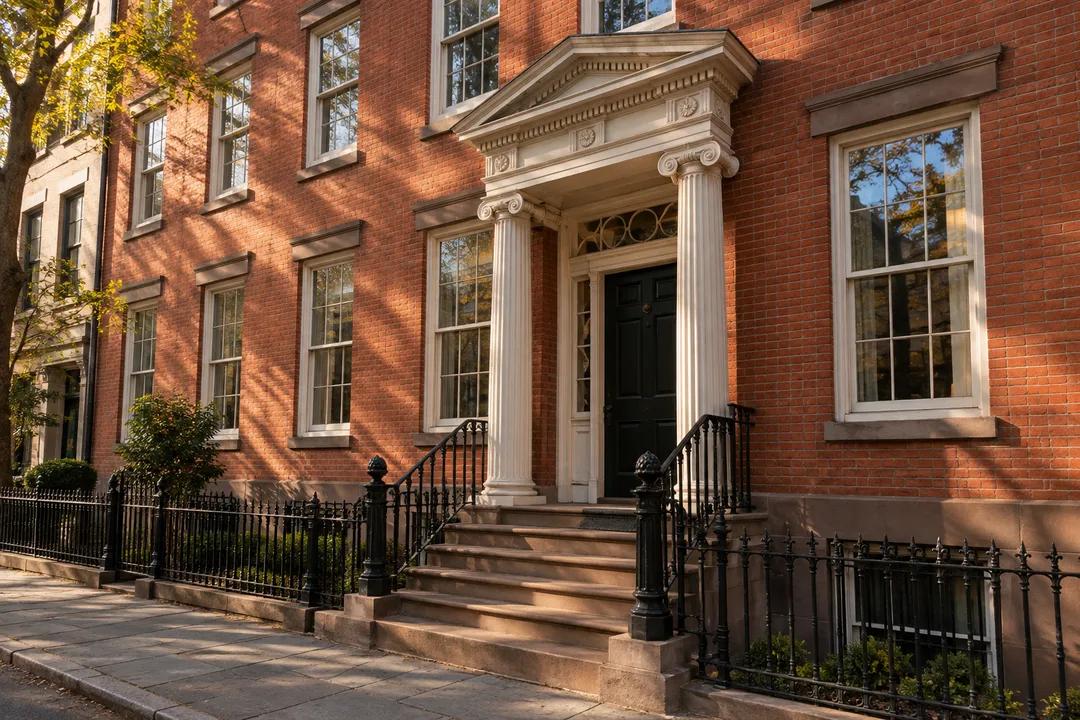
Historic Mansion Near Me in NoHo: Merchant's House Museum Visit
An in-depth visitor guide to Merchant's House Museum at 29 East 4th Street in NoHo, New York's only fully intact nineteenth-century family mansion with original furniture and decor.
Tucked quietly along a bustling block of East 4th Street between Lafayette Street and the Bowery, the Merchant's House Museum at 29 East 4th Street is widely celebrated as New York City's only complete nineteenth-century domestic time capsule. While other historic residences were emptied, remodeled, or turned into institutional offices over the decades, this four-story brick rowhouse remained in the hands of a single family from 1835 until 1933. Hardware merchant Seabury Tredwell purchased the newly constructed late Federal and Greek Revival townhouse during a period when the Bond Street area was the city's most fashionable residential quarter. Because Tredwell's youngest daughter Gertrude lived in the family home until her passing at age ninety-three, the building preserved virtually every piece of furniture, gasolier, dress, and domestic tool acquired over nearly a century of continuous occupancy. Walking across its worn floorboards offers an extraordinary, unfiltered window into the everyday rituals of elite antebellum New York.
The Tredwell Family Legacy and a Century of Domestic Continuity
Seabury Tredwell made his fortune downtown in hardware importing, supplying tools, copper, and building supplies to a rapidly expanding seaport metropolis. When he acquired the 29 East 4th Street residence in 1835, the neighborhood was home to prominent civic leaders, authors, and mercantile families seeking refuge from the commercial congestion of Lower Manhattan. The Tredwell household included Seabury, his wife Eliza, eight children, and four Irish domestic servants who occupied the attic quarters beneath the pitched dormer roof. What makes the museum globally significant is that when Gertrude Tredwell passed away during the Great Depression, a distant relative recognized the property's irreplaceable cultural value and established a non-profit trust to open the doors to the public in 1936. More than forty pieces of high-style furniture attributed to renowned cabinetmakers like Duncan Phyfe and Joseph Meeks remain exactly where the family placed them, alongside personal correspondence, sewing kits, medicine bottles, and family portraiture.
Double Parlors, Ornamental Plasterwork, and Attic Servant Quarters
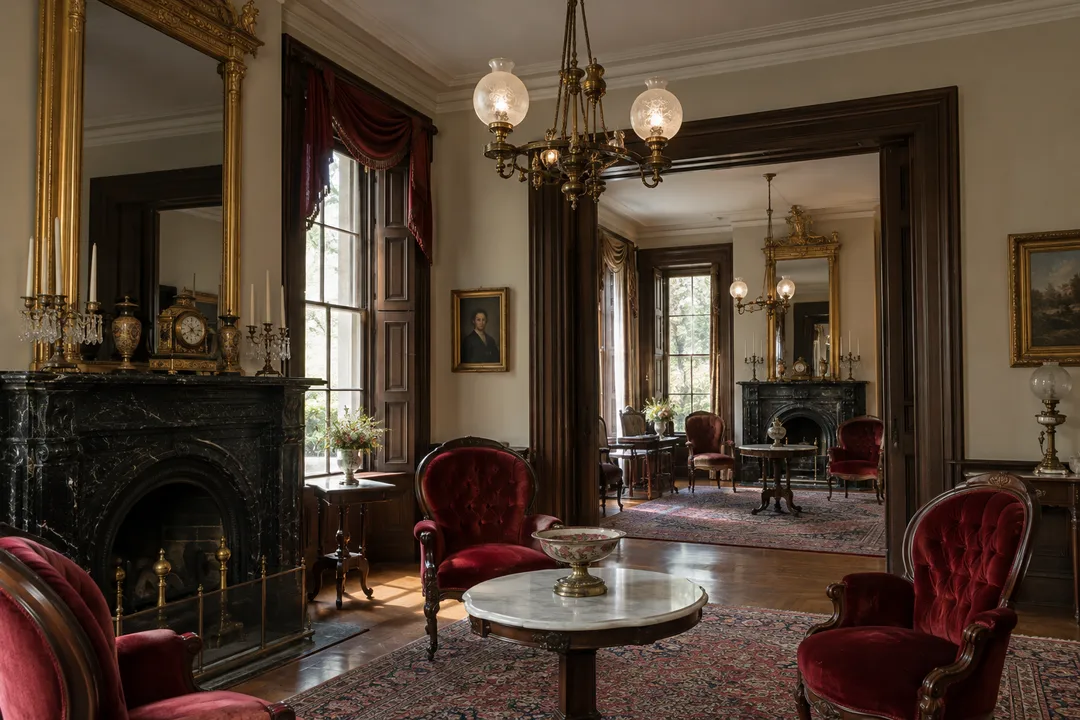
The interior architecture of the Merchant's House showcases the pinnacle of Greek Revival domestic design from the 1830s. The formal ground-floor double parlor features matching black Italian marble mantlepieces, sliding pocket doors crafted of polished mahogany, and stunning cast-plaster ceiling medallions surrounded by acanthus leaves and palmettos. Suspended from the fourteen-foot ceilings are original brass chandeliers converted from whale oil to gas illumination in the late 1850s, casting warm reflections across gilded pier mirrors. Upstairs, the master bedchamber contains a mahogany four-poster bed draped in historic dimity fabric, alongside an adjoining dressing room with washstands and porcelain ewers. Ascending the narrow servant staircase leads to the stark, unadorned fourth-floor attic chambers, where the family's Irish maidservants slept in modest rope beds, providing a powerful architectural contrast between the public opulence of the parlor floors and the strenuous labor required to sustain a wealthy urban household.
Basement Kitchen Hearth, Domestic Labor, and Nineteenth-Century Technology
Descending into the ground-level basement reveals the functional engine of the Tredwell household, centered on an authentic nineteenth-century cast-iron cookstove and an open masonry hearth. In this stone-flagged workspace, cook and scullery maids prepared elaborate multi-course meals using copper pots, iron kettles, and wooden bread bowls. A mechanical call-bell system connected the family parlor and bedchambers to indicator bells mounted on the kitchen wall, demonstrating the era's cutting-edge domestic communication technology. Nearby, the brick-vaulted cold storage cellar held seasonal barrels of root vegetables, pickled meats, and imported wines. The museum's curatorial team has assembled an impressive exhibition of original culinary implements, vintage washboards, and cast-iron flatirons that bring the physical realities of antebellum domestic servitude into vivid focus.
Admission Rates, Guided Tours, and Seasonal Access
Planning a visit to Merchant's House Museum requires keeping track of its public schedule and ticketing options. Self-guided house admission costs $15.50 for adults, with tickets discounted to $10.50 for seniors over sixty-five and students presenting valid identification. Children twelve and under enter free of charge. Visitors who prefer an expert narrative can book the 75-minute guided house tour for $20.50, offered Wednesday through Sunday at 12:00 pm, which explores specialized topics including Victorian mourning customs, kitchen mechanics, and nineteenth-century domestic medicine. Paying cash at the admissions desk earns a fifty-cent reduction per ticket. The museum welcomes visitors Wednesday through Sunday from 1:00 pm to 5:00 pm, with final admissions permitted at 4:30 pm. Because preservation work is occasionally underway on adjacent historic facades, entry is currently directed through the garden entrance adjacent to Manuel Plaza at 35 East 4th Street, where staff welcome guests into the tranquil brick courtyard.
Wandering the NoHo Cobblestones and Historic Merchant Streets
After exploring the mansion interior, spend an hour wandering through the surrounding NoHo Historic District, which features some of Manhattan's most striking architectural landmarks. Just around the corner on Lafayette Street stands Colonnade Row, originally known as LaGrange Terrace, where four remaining Greek Revival townhouses fronted by colossal Corinthian marble columns evoke the neighborhood's golden era. Diagonally across the street is the grand Romanesque Revival building of the Public Theater, originally constructed in 1854 as the Astor Library, New York's first free major public library founded through the bequest of John Jacob Astor. Walking south onto Bond Street reveals cobblestone intersections and handsome nineteenth-century cast-iron lofts that now house independent design boutiques, artisan espresso bars, and art galleries. The vibrant nightlife and eclectic restaurants of the East Village and Bowery are immediately adjacent, making NoHo an ideal launching point for cultural exploration.
Directions, Visitor Etiquette, and Practical Notes
Merchant's House Museum is exceptionally accessible by mass transit, located within easy walking distance of multiple major subway lines. The 6 train stops two blocks away at Astor Place, while the R and W trains serve the 8th Street–NYU station on Broadway. Travelers using the B, D, F, or M lines can exit at the Broadway–Lafayette Street station and walk east along East 4th Street in less than four minutes. Due to the delicate nature of the nineteenth-century furnishings and historic carpets, stiletto heels, open beverages, and oversized backpacks are strictly prohibited inside the museum. Photography for personal, non-commercial use is welcome without tripods or flash equipment. Visiting during weekday afternoon hours provides the quietest experience, allowing you to appreciate the serene atmosphere of this preserved antebellum sanctuary.
Ask Karpo for more information.
Keep reading
- Fort Greene Holiday Market Browsing Guide for Young Shoppers
 DUMBO Holiday Market Browsing Guide for Gifts to Mail Home
 Midtown East Holiday Market Browsing Guide for Commuters