 Flatiron Holiday Window Walk Planner for Remote Teams
Free Things to Do
Williamsburg Historic Civic Square Promenade Walking Guide
Discover historic civic plazas and public gathering spaces in Williamsburg, walking from Continental Army Plaza through historic neighborhood parks.
Williamsburg's public landscape holds a rich heritage of civic planning that predates its modern creative reputation. This historic civic square promenade explores the public plazas, monumental bridge entrances, and dedicated community parks that have sustained civic life across northern Brooklyn for over a century. From the monumental Continental Army Plaza to the expansive promenades of McCarren Park, this walking route connects historic open spaces that celebrate public architecture and enduring urban community traditions.
Continental Army Plaza and the Bridge Gateway
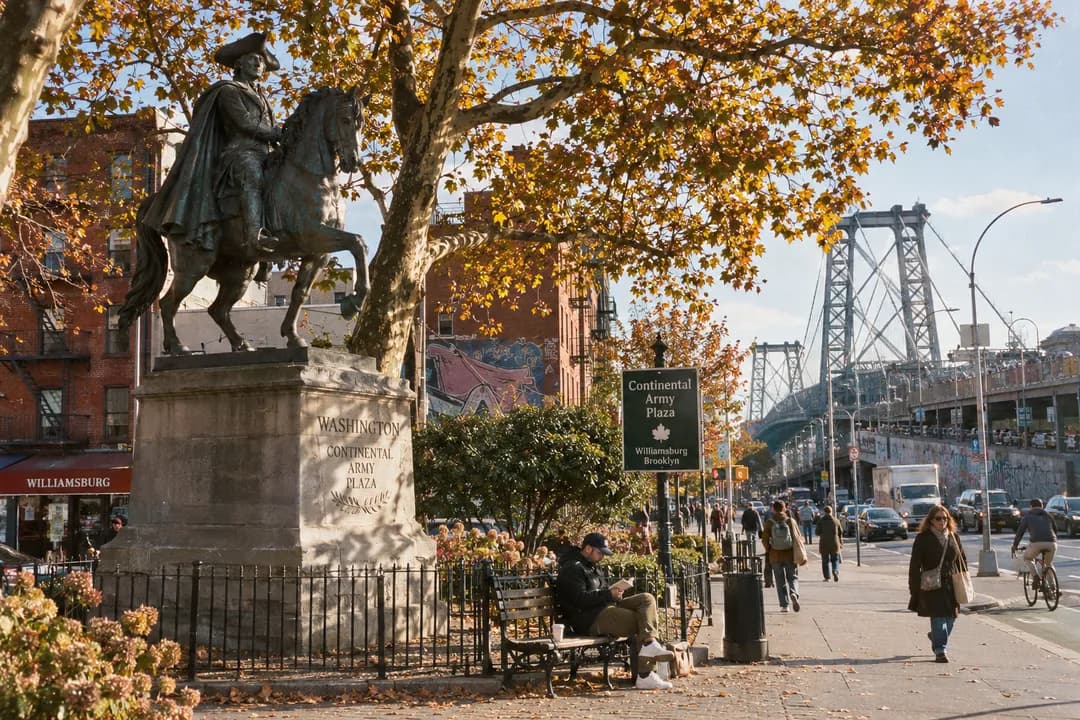
Anchoring the eastern approach to the Williamsburg Bridge at Roebling Street, Continental Army Plaza was established in 1906 to create a dignified civic gateway between Manhattan and Brooklyn. At the center stands an imposing bronze equestrian statue of George Washington at Valley Forge, sculpted by Henry Merwin Shrady and dedicated before tens of thousands of cheering citizens. The statue rests upon an ornate granite pedestal, commanding panoramic views of historic brick tenements and the soaring steel bridge towers.
The surrounding pedestrian plaza features generous stone paving, ornamental tree plantings, and raised masonry borders that buffer visitors from vehicular traffic. Walking through the plaza offers a direct connection to Brooklyn's early twentieth-century civic expansion, when massive bridge projects reshaped neighborhood boundaries. The plaza serves as an active neighborhood crossroad where daily commuters, cycling enthusiasts, and local elders converge under the expansive sky.
Historic brownstone residences and former bank headquarters border the plaza, providing rich architectural context that reflects Brooklyn's consolidation era. The open spatial design allows daylight to flood the plaza throughout the day, highlighting carved limestone cornices and historic street lamps. Taking time to study the commemorative inscriptions on the Washington pedestal deepens one's appreciation of early municipal public space design.
Walking the Havemeyer and Grand Street Civic Spine
From the bridge plaza, heading north along Havemeyer Street leads pedestrians through one of Williamsburg's most historic public corridors. The streetscape is framed by landmark municipal structures, including the historic Williamsburg Trust Company building built in 1906 with its grand dome and classical columns. Wide concrete walkways and low-rise residential frontages allow plenty of natural light to penetrate the corridor, creating an inviting walking environment.
Intersecting with Grand Street brings walkers to a historic commercial and civic crossroads that once linked local ferry landings with Brooklyn's interior farmlands. Historic cast-iron facades, carved stone cornices, and decorative street lamps line the pathway, reminding walkers of the district's industrial and architectural vitality during the late 1800s. Pedestrian curb extensions and high-visibility crosswalks provide safe, comfortable passage along the entire thoroughfare.
The rhythmic facades of nineteenth-century dry goods stores and community halls along Grand Street showcase intricate brick corbelling and terra cotta friezes. Walking this stretch at a steady pace allows pedestrians to observe how neighborhood civic life evolved from nineteenth-century industrial prosperity into diverse residential solidarity. Benches installed near key corners provide practical rest stops for observing street traffic and architectural details.
McCarren Park Promenades and Community Gathering
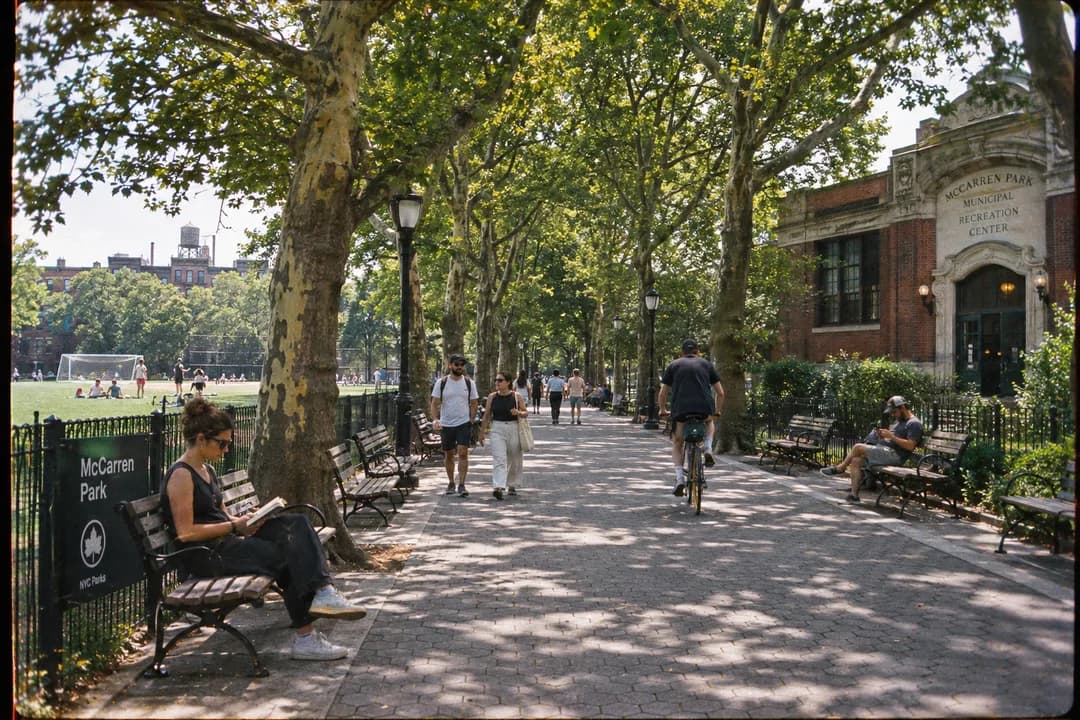
Continuing northward culminates at McCarren Park, a thirty-five-acre public recreational haven established in 1906 under the guidance of early Brooklyn park commissioners. Entering along the southern promenade reveals wide asphalt pathways shaded by mature sycamore and oak trees, flanked by expansive grassy lawns and historic sports fields. The park serves as the democratic living room of northern Brooklyn, where neighborhood soccer matches, family picnics, and casual joggers share open green space.
Near the northern boundary stands the historic McCarren Play Center and bathhouse, designed by Aymar Embury II and opened in 1936 as part of New York's historic public works initiative. Its monumental brick archways and soaring entrance pavilion evoke Roman civic grandeur, illustrating the city's commitment to public wellness and community leisure. Walking beneath these historic brick arches offers an inspiring finale to the civic walking tour.
The perimeter pathways of McCarren Park offer broad sightlines toward the skyline, framed by the mature tree canopy along Driggs Avenue and Bayard Street. Historic cast-iron drinking fountains and vintage lampposts punctuate the trail, reinforcing the park's status as a foundational Brooklyn municipal treasure. Here, neighbors from Greenpoint and Williamsburg gather naturally, carrying on a century-old tradition of open-air civic engagement.
Smart Route Organization With the Karpo App
Planning your urban journey through Brooklyn's historic districts is remarkably convenient with the Karpo APP. Rather than getting distracted by confusing map pins, Karpo allows you to bookmark key civic monuments, map direct walking corridors between parks, and locate comfortable outdoor resting spots along the way. The application gives you a smooth overview of public open spaces, making it simple to tailor your walking loop to your personal schedule.
Whether you are embarking on a weekend historical study or an evening pedestrian stroll, Karpo keeps your travel details organized without clutter. You can easily mark entry gates, check walking distances between plazas, and coordinate meeting points near well-known neighborhood landmarks. The app's clear layout lets you focus entirely on the architectural scenery and community atmosphere of Williamsburg.
Helpful Tips for Walking Williamsburg Plazas
Morning visits provide the quietest experience at Continental Army Plaza, when southern sunlight illuminates the George Washington memorial without glare. In McCarren Park, mid-afternoon brings lively community energy, making it a wonderful time for people watching and leisurely walks. Public transit connections are outstanding, with the Marcy Avenue station (J, M, Z trains) directly serving the bridge plaza and the Bedford Avenue L station nearby.
The route follows smooth, level terrain with standard pedestrian curb cuts at all major crossings, ensuring accessibility for walkers of all ages. Public restrooms and seasonal water fountains are located within McCarren Park near the recreation building. Wearing comfortable walking sneakers will keep your feet happy across the concrete sidewalks and paved park promenades that define this inspiring Brooklyn walking tour.
From McCarren Park, walkers can seamlessly continue their promenade into Greenpoint's historic district along Manhattan Avenue or turn westward toward the East River State Park esplanade for waterfront views of the Manhattan skyline. Keeping your walking route adaptable ensures you can explore community gardens, historic firehouses, and quiet residential lanes whenever neighborhood curiosity strikes.
Ask Karpo for more information.
Keep reading
- Flatiron Holiday Window Walk Planner for Remote Teams
 SoHo Holiday Window Walk Planner for a Sketchbook Afternoon
 Upper East Side Holiday Window Walk Planner After a Museum