 Upper West Side Free Indoor Weekend Plan Finder for Music
Free Things to Do
Upper West Side Historic Civic Square Promenade Route
Stroll through the Upper West Side historic civic squares along an inspiring walking promenade connecting Verdi Square to scenic neighborhood plazas.
The Upper West Side of Manhattan is celebrated for its monumental avenues, grand pre-war apartment houses, and a distinctive sequence of historic triangular civic squares. This historic civic square promenade invites walkers to trace the diagonal path of Broadway, exploring public plazas that have served as community focal points since the late nineteenth century. Starting at vibrant Verdi Square and wandering northward toward Straus Park, pedestrians experience a refined tradition of urban public planning across every block.
Verdi Square and the Historic Subway Kiosk
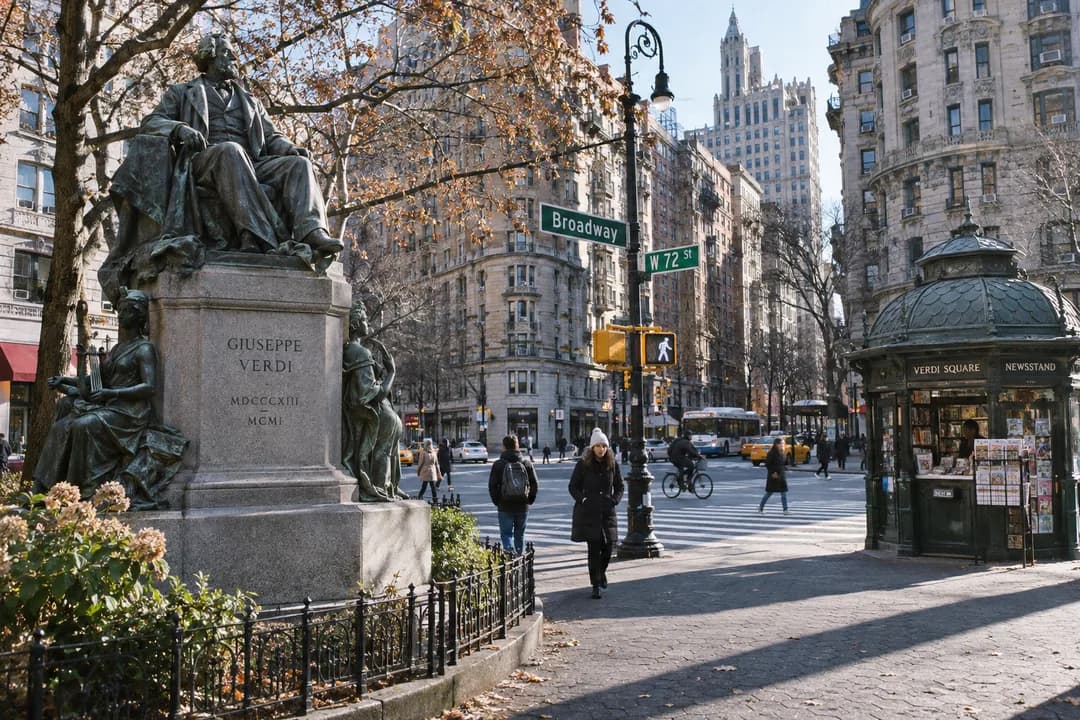
Anchoring the busy intersection of Broadway, Amsterdam Avenue, and West Seventy-Second Street, Verdi Square was officially named in 1902 to honor Italian opera composer Giuseppe Verdi. At the center stands an ornate white Carrara marble monument sculpted by Pasquale Civiletti and dedicated in 1906, featuring life-sized statues of Verdi's famous operatic characters including Falstaff and Aida. The monument is encircled by granite balustrades, bronze lampposts, and lush seasonal floral beds.
Directly across the plaza stands the historic control house for the original 1904 Interborough Rapid Transit subway, designed by Heins & LaFarge in the Dutch Renaissance style. This red-brick and limestone landmark, with its ornate copper cresting, remains one of the city's finest surviving early subway entrances. Watching neighborhood residents, musicians from nearby Juilliard, and casual pedestrians mingle in the square captures the timeless civic energy of the Upper West Side.
The adjacent sidewalk cafe culture and bustling market stalls along 72nd Street reinforce Verdi Square's role as a primary neighborhood gathering node. Shaded benches beneath honey locust trees provide welcoming spots to read or enjoy a warm pastry while listening to classical arias rehearsed in neighboring brownstones. The plaza's open granite flooring offers ample room for strollers and foot traffic to move without crowding.
Walking the Broadway Civic Mall Corridors
From Verdi Square, continuing northward leads pedestrians along Broadway's landscaped central medians, known as the Broadway Malls. Established during the construction of the subway in the early 1900s, these raised planted islands transform the broad thoroughfare into an elegant green boulevard. Shaded by mature trees and planted with vibrant tulips in spring and ornamental grasses in autumn, the malls provide visual calmness and environmental cooling.
Passing landmark residential buildings such as The Ansonia (built 1904) and The Apthorp (completed 1908), walkers can admire ornate limestone carvings, vaulted carriage entrances, and monumental iron gates. The wide western sidewalks provide generous walking space, separated from street traffic by sturdy granite curbs and mature London plane trees. The architectural rhythm makes the journey between civic plazas an engaging open-air museum experience.
Between 79th and 86th Streets, Broadway broadens significantly, offering generous pedestrian refuge islands that make crossing Broadway safe and unhurried. Corner plazas near historic theatrical venues and community bookstores feature wide sidewalk aprons with public benches. Pausing at these intermediate corners allows walkers to absorb the rich architectural detailing of pre-war facades, complete with ornate copper dormers and carved stone gargoyles.
Contemplation and Beauty in Straus Park
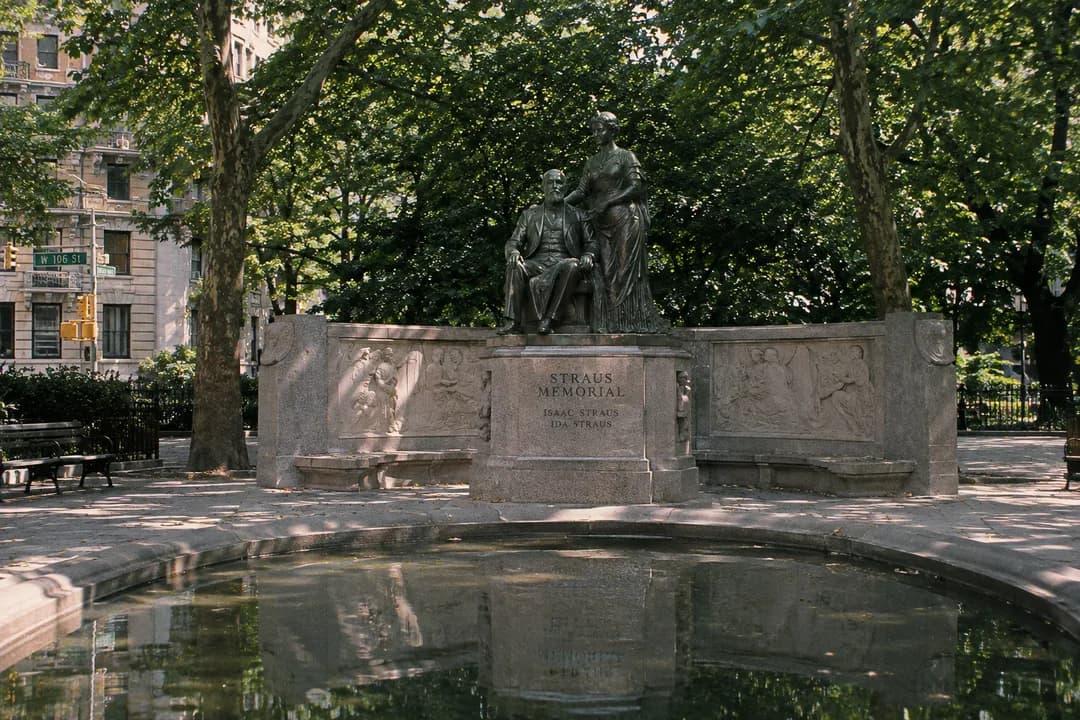
At the intersection of Broadway and West 106th Street, the promenade arrives at Straus Park, established in 1913 to honor Isidor Straus, co-owner of Macy's, and his wife Ida, who both perished on the RMS Titanic in 1912. The park features an evocative bronze statue of Memory, sculpted by Augustus Lukeman, gazing down at a tranquil granite reflecting pool. An inscription from the Biblical Book of Samuel commemorates their enduring love and devotion.
Straus Park is a model of restorative neighborhood park design, featuring semicircular stone benches, shaded arbor trellises, and meticulously maintained flower gardens. Local book lovers, university students from nearby Columbia, and elderly neighbors gather here throughout the day to enjoy peaceful conversation and fresh air. The enclosed triangular geometry buffers the space from surrounding street noise, creating an atmosphere of dignified tranquility.
The northern apex of Straus Park opens toward West End Avenue and Duke Ellington Boulevard, where tranquil residential brownstones replace the commercial energy of mid-town Broadway. Mature oak trees cast dappled shade across the granite paving, while seasonal plantings of lavender and boxwood fill the air with gentle fragrances. Sitting near the reflecting fountain provides a deeply peaceful conclusion to the Upper West Side walking route.
Effortless Planning With the Karpo APP
Organizing your walking exploration along the Upper West Side is made delightfully simple with the Karpo APP. Instead of struggling with static maps, Karpo allows you to bookmark historic monuments, measure walking distances between Broadway squares, and identify quiet park benches along the route. The application provides an uncluttered visual overview of public spaces, helping you adjust your schedule to match your natural walking pace.
Whether you are planning a solo historic walking tour or an afternoon promenade with family, Karpo keeps your favorite locations organized without confusion. You can easily mark subway accessibility points, locate nearby shade trees, and identify scenic street corners for photography. The app's user-friendly layout lets you focus entirely on the architectural splendor and community warmth of the Upper West Side.
Practical Guidance for Upper West Side Walking
Morning light provides a serene experience across Broadway's squares, particularly when sunlight illuminates the Verdi monument from the east. Late afternoons are equally charming, as the setting sun reflects off the stone facades of pre-war apartment towers. Public transit connectivity is superb, with the 1, 2, and 3 express trains stopping directly beneath Verdi Square at the 72nd Street station and the 1 train serving 103rd and 110th Streets.
The entire route follows smooth, level concrete sidewalks equipped with ADA-compliant curb cuts at every intersection, ensuring seamless accessibility for all walkers. Public restrooms and drinking fountains are located nearby in Riverside Park and Central Park. Wearing supportive walking shoes is recommended, as this leisurely two-mile promenade offers countless architectural details that encourage an unhurried, curious pace.
From Straus Park, pedestrians can effortlessly extend their walk two blocks west to the tranquil riverfront promenades of Riverside Park, designed by Frederick Law Olmsted. Alternatively, walking two blocks east leads to the Great Hill in Central Park, offering expansive rolling lawns and shaded picnic groves. This strategic geographic position makes the Upper West Side civic square walk a versatile anchor for an entire day of city exploration.
Ask Karpo for more information.
Keep reading
- Upper West Side Free Indoor Weekend Plan Finder for Music
 Astoria Free Indoor Weekend Plan Finder for Visiting Parents
 Williamsburg Free Indoor Weekend Plan Finder With Kids