 SoHo Tailor Alteration Shop Finder for Sample Sale Finds
Neighborhood Guides
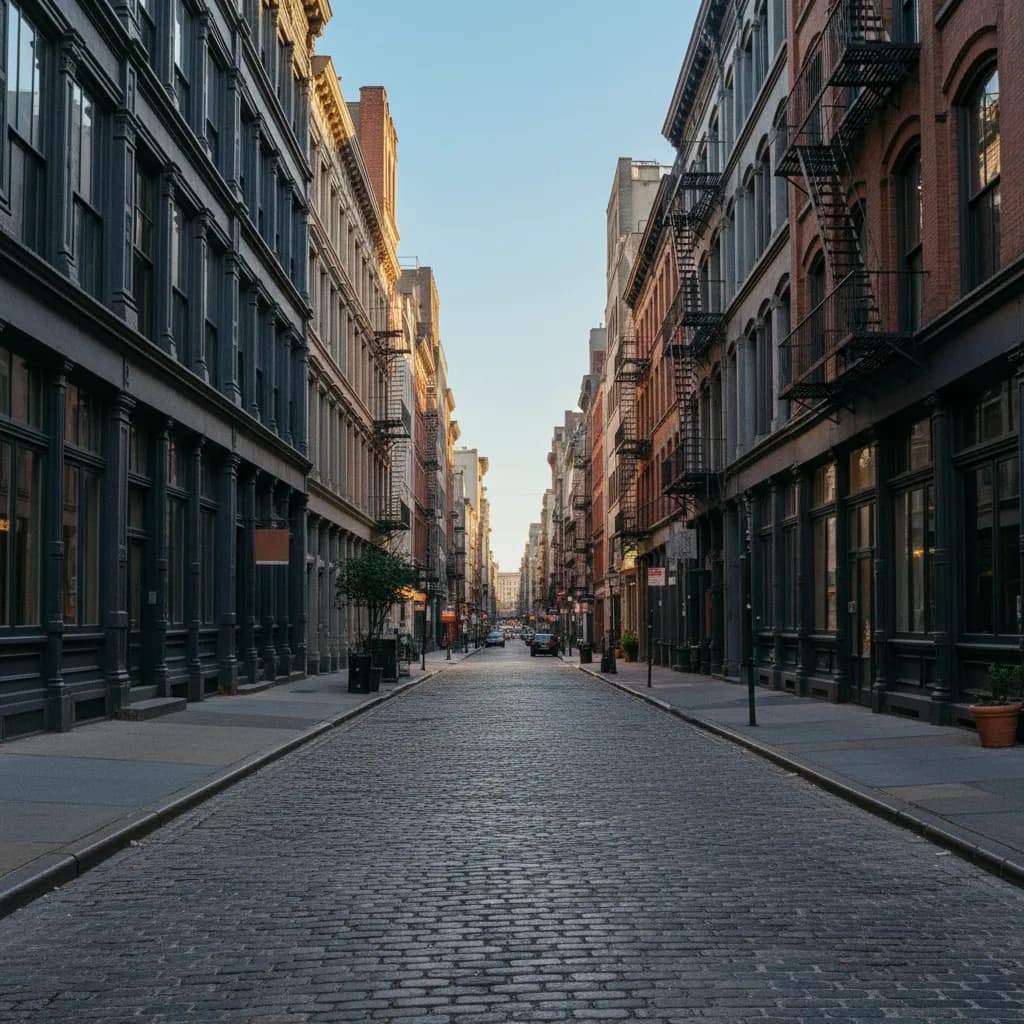
NYC Historic Architecture Stroll: Free SoHo Cast-Iron
Discover SoHo on this free self-guided historic architecture stroll admiring preserved cast-iron facades, ornate Corinthian columns, and cobblestone lanes.
Stepping onto the historic Belgian block paving of Greene Street in Lower Manhattan transports you directly into the zenith of American nineteenth-century industrial architecture. The SoHo Cast-Iron Historic District contains the greatest concentration of ornamental cast-iron architecture anywhere in the world, boasting approximately five hundred historic structures erected between the 1850s and the 1890s. Originally conceived as speculative dry-goods warehouses, textile showrooms, and manufacturing lofts, these pioneering commercial buildings replaced traditional hand-carved stone with modular, prefabricated iron components that allowed for unprecedented window expanses, open interior loft floor plates, and soaring palatial facades. This self-guided historic architecture stroll guides you past landmark iron palaces, highlighting the engineering breakthroughs, decorative classical orders, and visionary urban preservation efforts that rescued this vibrant neighborhood from municipal demolition.
Pioneering Cast-Iron Technology at Broadway and Broome
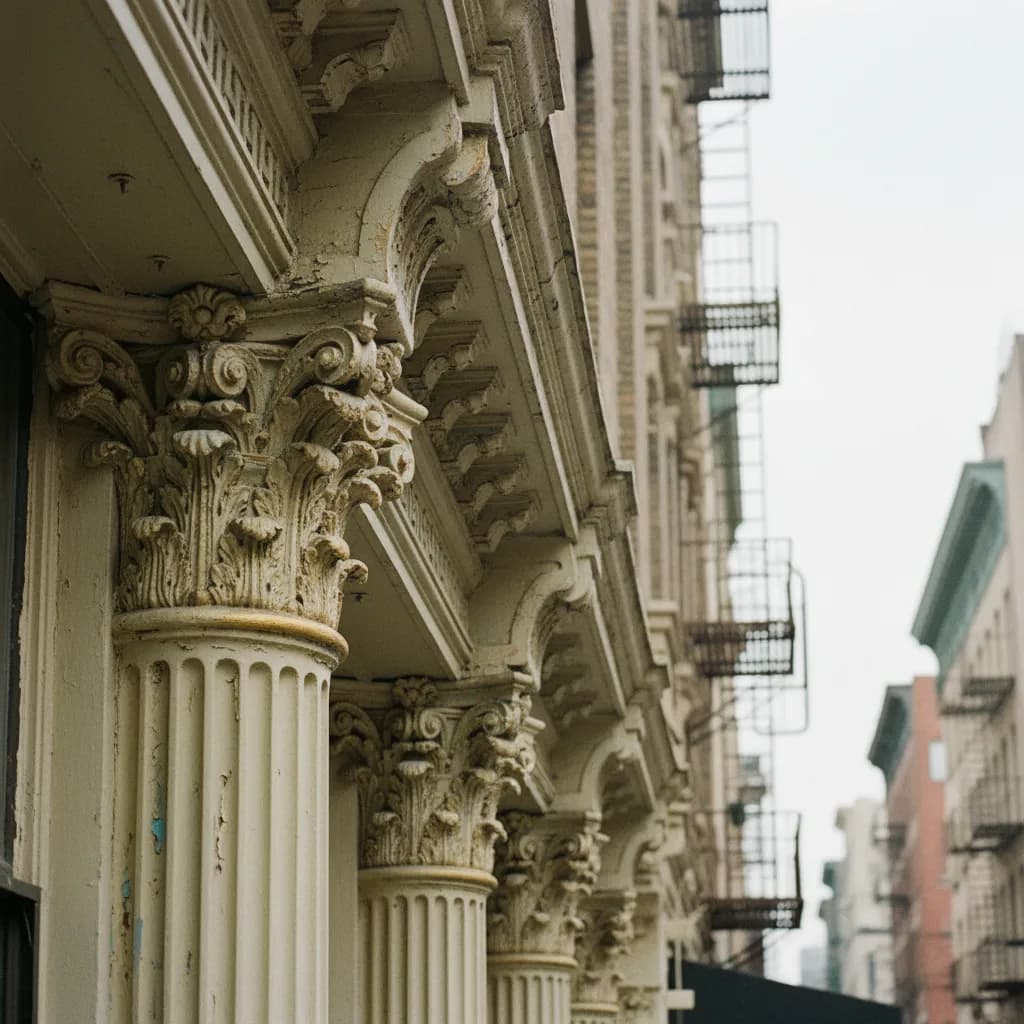
Begin your walk at the northwest corner of Broadway and Broome Street before the monumental E.V. Haughwout Building at 488 Broadway. Completed in 1857 to the designs of architect John P. Gaynor, this celebrated five-story commercial structure is widely regarded by historians as the Parthenon of cast-iron architecture. Gaynor based his rhythmic facade directly on Jacopo Sansovino sixteenth-century Library of St. Mark in Venice, repeating ninety-two identical arched window bays framed by delicate Corinthian columns and balustrades across two grand street elevations. The prefabricated iron components were cast by Daniel D. Badger famous Architectural Iron Works, demonstrating that industrial casting could reproduce high Renaissance stone carving with absolute precision at a fraction of the cost.
Beyond its aesthetic mastery, the Haughwout Building served as a historic catalyst for modern urban development. On March 23, 1857, inventor Elisha Graves Otis installed the world first commercial safety passenger elevator inside this building, driven by a compact steam engine in the cellar. This breakthrough innovation fundamentally altered urban planning, transforming upper building stories from dusty storage lofts into coveted, accessible commercial spaces and directly paving the way for the vertical rise of the modern skyscraper. Take time to examine the deep egg-and-dart moldings and intricate acanthus leaf details along the ground-level display windows.
Greene Street and the Zenith of Pre-Fabricated Ironwork
Turn westward onto Broome Street and turn north onto Greene Street, celebrated by preservationists as the ceremonial heart of the historic district. Here, nearly every building on both sides of the roadway features an intact cast-iron facade, presenting an uninterrupted open-air museum of Victorian commercial design. Pause outside 28-30 Greene Street, affectionally nicknamed the Queen of Greene Street. Designed in 1873 by architect Isaac F. Duckworth, this six-story French Second Empire showcase features a dramatic slate mansard roof punctuated by dormers, circular oculus windows, and a commanding central cresting.
Continue two blocks north along the granite cobbles to 72-76 Greene Street to inspect Duckworth companion masterpiece, the King of Greene Street. Erected in 1873, this monumental eighty-foot-wide commercial palace features a soaring Corinthian order supported by colossal rusticated pilasters and crowned by a bold projecting cornice with heavy modillion brackets. If you carry a small pocket magnet, lightly touching the exterior reveals where cast-iron components meet adjoining masonry party walls, illustrating how nineteenth-century master builders seamlessly integrated structural ironwork with traditional load-bearing brickwork.
Notice the remarkable lightness of the window bays compared to stone buildings of the same era. Because iron possesses exceptional compressive strength, structural exterior columns could be made slender, allowing daylight to flood deep into the manufacturing floors where seamstresses and fabric cutters worked without gas illumination.
Architectural Variety Along Prince and Spring Streets
Meander westward along Spring Street, where mid-nineteenth-century storefronts transition into late Victorian and Beaux-Arts loft buildings. At 561 Broadway, spanning through to Mercer Street, stands the Little Singer Building, completed in 1904 by visionary architect Ernest Flagg. Served as an auxiliary office and showroom for the Singer Sewing Machine Company while their soaring Financial District tower was rising, this twelve-story steel-framed structure incorporates intricate wrought-iron balconies, recessed terra cotta relief panels, and vast expanses of recessed glass that directly foreshadowed modern glass-curtain-wall skyscrapers.
Cross over to the intersection of Broome and Mercer Streets to examine the Cheney Building at 477 Broome Street, designed by E.B. Wells in 1872. This striking corner building showcases how cast-iron allowed architects to eliminate thick masonry corner piers, opening up corner display windows that bathed deep retail floors in abundant natural daylight. Notice the intricate acanthus leaf moldings, floral rosette medallions, and classical egg-and-dart moldings repeated along every window sill and pilaster capital.
Belgian Blocks and Atmospheric Architectural Preservation
As you stroll along Mercer, Wooster, and Greene Streets, observe the historic Belgian blocks underfoot, cut from durable Hudson River Palisades traprock and laid during the nineteenth century to withstand the grinding iron rims of horse-drawn freight wagons. By the mid-twentieth century, as heavy manufacturing relocated to outer boroughs, SoHo lofts fell into neglect, leading transportation planner Robert Moses to propose the Lower Manhattan Expressway, an elevated highway that would have flattened the entire neighborhood.
Pioneering preservationists led by Margot Gayle and the Friends of Cast Iron Architecture mobilized alongside local artists who had illegally moved into the light-filled industrial lofts. Their successful grassroots campaign culminated in the official designation of the SoHo Cast-Iron Historic District by the New York City Landmarks Preservation Commission in 1973. Today, these buildings house luxury galleries and fashion boutiques, yet their painted iron columns, deep freight loading docks, and vault-light glass sidewalk pavers remain meticulously protected.
Subway Navigation and Stroll Recommendations
This self-guided architectural stroll covers approximately one point two miles and takes about sixty minutes to explore at a relaxed, observational pace. The optimal time for architectural photography is mid-afternoon on a clear weekday or Sunday, when the westward sun strikes the eastern building facades on Greene and Mercer Streets, casting sharp, sculptural shadows that accentuate the three-dimensional depth of the iron window moldings and column fluting.
Convenient subway stations surround the perimeter of the historic district: take the R or W train to Prince Street, the 6 train to Spring Street, or the B, D, F, or M trains to Broadway-Lafayette Street. Wear sturdy walking shoes to navigate the historic stone Belgian blocks comfortably. Karpo APP provides seamless waypoint mapping, ensuring you can identify subtle architectural features and historic iron foundry maker marks without looking away from the historic streetscapes.
Ask Karpo for more information.
Keep reading
- SoHo Tailor Alteration Shop Finder for Sample Sale Finds
 Williamsburg Tailor Alteration Shop Finder for Bike Riders
 Upper West Side Tailor Alteration Shop Finder for Kids