 SoHo Tailor Alteration Shop Finder for Sample Sale Finds
Neighborhood Guides
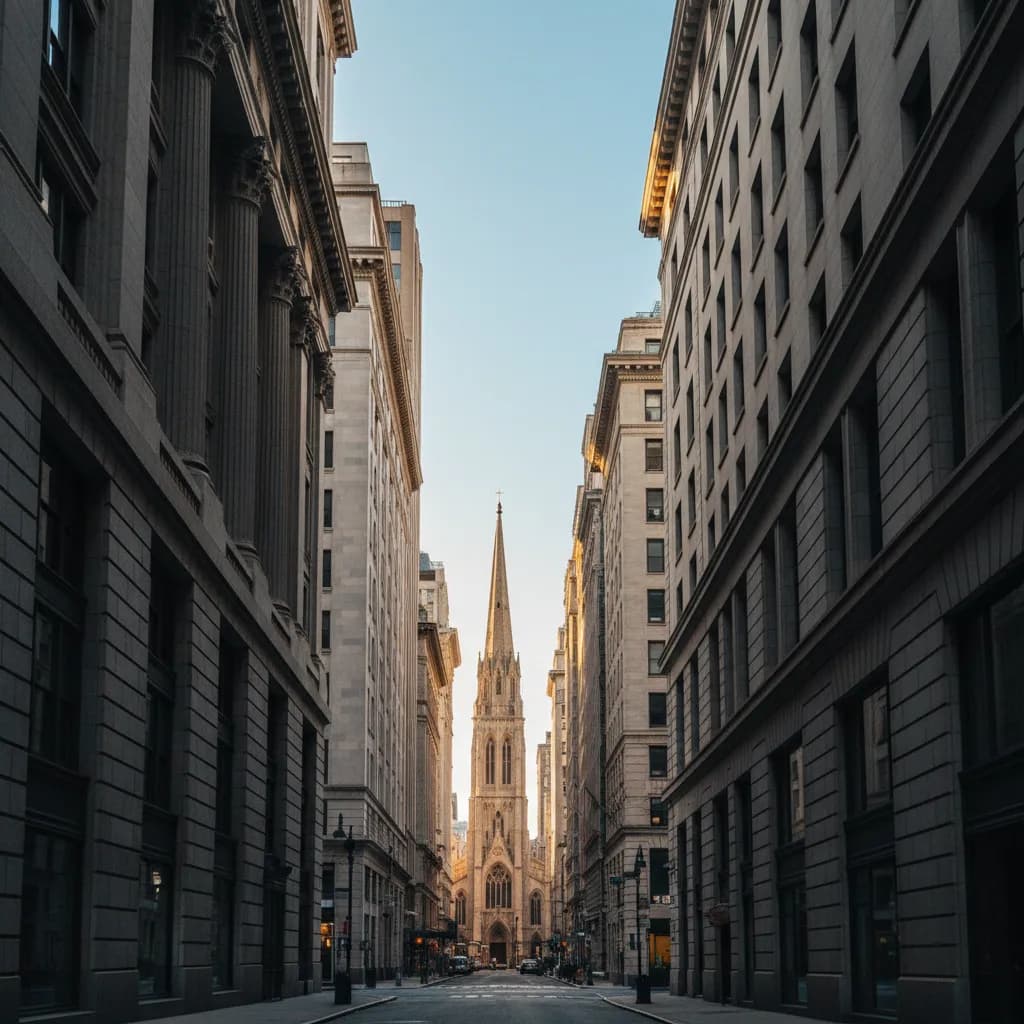
NYC Historic Architecture Stroll: Free Wall St Route
Walk Lower Manhattan on this self-guided historic architecture stroll past Trinity Church, Federal Hall, and the monumental Beaux-Arts Custom House facade.
Starting at the intersection of Wall Street and Broadway places you at the historic crossroads of American commerce and early constitutional government. This self-guided historic architecture stroll explores Lower Manhattan oldest street grid, where Dutch seventeenth-century boundary paths evolved into towering limestone and granite canyons. As morning sunlight angles across the narrow canyon walls, you will encounter soaring Gothic Revival spires, marble Greek Revival temple facades, Gilded Age financial strongholds, and the monumental Beaux-Arts grandeur anchoring Bowling Green. Every block preserves layers of civic transformation that shaped the architectural identity of New York City.
Gothic Revival Splendor at Trinity Church and Broadway
Standing at 89 Broadway directly terminating the vista of Wall Street, Trinity Church represents one of the finest Gothic Revival ecclesiastical landmarks in North America. Designed by English-born architect Richard Upjohn and completed in 1846, this third church edifice on the site features rich reddish-brown sandstone quarried in Little Falls, New Jersey. The building 281-foot spire, crowned by a gilded cross, remained the tallest structure in New York City until the late 1880s, serving as a beacon for incoming merchant ships navigating Upper New York Bay.
Step into the churchyard to admire how centuries-old fieldstone and slate grave markers contrast with towering glass and limestone towers overhead. Here lie founding father Alexander Hamilton, steamboat inventor Robert Fulton, and Revolutionary War general Horatio Gates. Observe Upjohn intricate pointed-arch windows, flying buttresses, and deeply carved acanthus leaf capitals. The monumental bronze entry doors, designed by Richard Morris Hunt and sculpted by Karl Bitter in memory of John Jacob Astor III, showcase deeply relief-carved biblical scenes framed by delicate stone pinnacles.
Neoclassical Monoliths of Federal Power and Modern Finance
Walking one block east to 26 Wall Street brings you before Federal Hall National Memorial, a masterwork of Greek Revival public architecture completed in 1842 as the United States Custom House. Architects Ithiel Town and Alexander Jackson Davis fashioned the exterior in the form of a classical Doric temple, drawing direct inspiration from the Parthenon in Athens. The monumental Tuckahoe marble colonnade features eight fluted columns supporting an unadorned triangular pediment, standing directly over the spot where George Washington was inaugurated as the first President of the United States in April 1789.
Directly across the street at 11 Wall Street stands the New York Stock Exchange building, designed by architect George B. Post and dedicated in April 1903. The monumental Roman Classical facade is constructed of Georgia white marble, framed by six fluted Corinthian columns rising more than fifty feet above the street. Look up at the tympanum pediment sculpture, titled Integrity Protecting the Works of Man, designed by John Quincy Adams Ward and Paul Bartlett. The high-relief figures celebrate human industry, mining, agriculture, and global trade beneath the watchful central gaze of commerce.
Gilded Age Strongholds and the Wall Street Banking Canyon
Continuing eastward past the Broad Street intersection reveals 23 Wall Street, famously known as The Corner. Erected in 1914 for J.P. Morgan and Company by architects Trowbridge and Livingston, this austere four-story building was deliberately kept low in an era of soaring skyscrapers to project unmatched financial modesty and impregnable stability. Clad in pale pink Tennessee marble without any commercial signage, the Wall Street facade still bears distinct shrapnel pitting along its lower blocks from the tragic September 1920 Wall Street explosion, kept unpolished as physical testimony to history.
Looking diagonally skyward to the north, 40 Wall Street rises seventy-one stories into the Manhattan skyline. Designed by H. Craig Severance with associate architect Yasuo Matsui and Shreve and Lamb, this 1930 skyscraper was finished during the legendary race for the world tallest building. The lower floors present heavy limestone rustication and Classical pediment motifs, transitioning through stepped setbacks into a dramatic French Gothic copper crown capped by a soaring pyramidal spire. The dark verdigris copper finial provides a striking silhouette against the morning sky.
Curving Dutch Cobblestones in the Stone Street Historic District
Turn southward down William Street and step into the cobblestone corridor of the Stone Street Historic District. In 1658, Dutch colonial authorities paved this curved lane with stone, making it the first paved thoroughfare in New Amsterdam, then known as Hoogh Straat. Following the Great Fire of 1835, which leveled hundreds of wooden commercial structures across Lower Manhattan, merchants rapidly rebuilt the corridor in handsome Greek Revival brick and granite style, establishing bonded dry-goods warehouses, shipping agencies, and maritime offices.
At the angular intersection of William, South William, and Beaver Streets sits the iconic Delmonico Building at 56 Beaver Street. Constructed in 1891 by architect James Brown Lord, this eight-story rounded landmark presents a dramatic flat-iron curve wrapped in warm orange brick, brownstone lintels, and intricate terra cotta cresting. Notice the magnificent semicircular portico supported by twin marble columns salvaged from the original 1830s Delmonico restaurant, preserving an unbroken direct link to New York earliest culinary legacy.
Monumental Beaux-Arts Grandeur Surrounding Bowling Green
Concluding the stroll at the southern tip of Broadway brings you to Bowling Green, the oldest public park in New York City, established in 1733. The teardrop-shaped green remains enclosed by its original 1771 cast-iron fence. On July 9, 1776, following a public reading of the Declaration of Independence, jubilant American soldiers and citizens toppled the gilded lead equestrian statue of King George III situated within this park, hacking off the decorative crown finials from the fence posts, with the jagged chisel cuts still visible today.
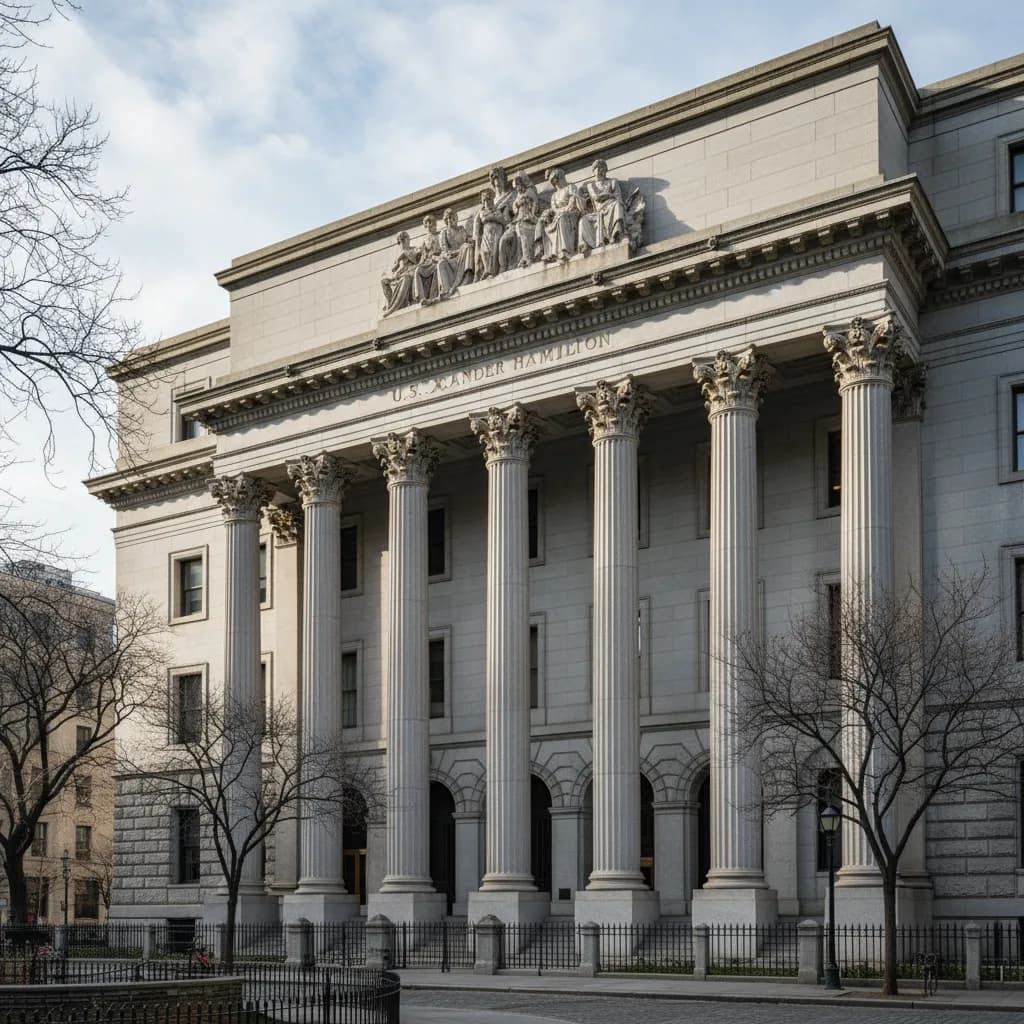
Dominating the southern end of the park at 1 Bowling Green stands the Alexander Hamilton U.S. Custom House, designed by Minnesota-born architect Cass Gilbert and completed in 1907. Widely regarded as one of America supreme Beaux-Arts public monuments, this monumental Maine granite palace rises seven stories above an elevated granite staircase. Fluted Corinthian columns span the piano nobile, crowned by forty-four colossal statues representing the world maritime nations. Flanking the main entry steps are Daniel Chester French celebrated Four Continents marble sculpture groups: Asia, America, Europe, and Africa, each capturing cultural allegories in rich heroic stone.
Transit Logistics and Practical Architecture Stroll Notes
This self-guided historic architecture stroll spans approximately one point four miles and takes between sixty and seventy-five minutes to complete at an observant walking pace. To photograph the stone facades without harsh midday shadows or heavy commuter congestion, embark on the route between eight thirty and eleven in the morning on a Saturday or Sunday, when financial district streets remain quiet and morning sunlight penetrates the eastern canyon intersections.
Multiple subway connections provide direct access to the starting point: take the 4 or 5 train to Wall Street, the 2 or 3 train to Wall Street and William Street, or the R and W trains to Rector Street. All streets along the route feature wide paved sidewalks and pedestrian safety barriers. Karpo serves as your observant companion in the Karpo APP, pointing out intricate limestone carvings along the Wall Street banking canyon.
Ask Karpo for more information.
Keep reading
- SoHo Tailor Alteration Shop Finder for Sample Sale Finds
 Williamsburg Tailor Alteration Shop Finder for Bike Riders
 Upper West Side Tailor Alteration Shop Finder for Kids