 SoHo Tailor Alteration Shop Finder for Sample Sale Finds
Neighborhood Guides
NYC Historic Architecture Stroll: Free Heights Tour
Follow this self-guided historic architecture stroll through Brooklyn Heights past Greek Revival row houses, hidden mews, and panoramic harbor overlooks.
Perched high upon a dramatic natural bluff overlooking Upper New York Bay and the mouth of the East River, Brooklyn Heights stands as America first designated commuter suburb and New York City inaugural historic district. Following the introduction of Robert Fulton reliable steam ferry service in 1814, prominent Manhattan merchants, shipping magnates, and Wall Street financiers sought refuge on the bluff, laying out broad tree-lined residential streets that escaped the commercial density of the city. Today, Brooklyn Heights preserves an astonishing architectural continuum spanning more than six hundred pre-Civil War and Gilded Age residences across a remarkably cohesive neighborhood plan. This self-guided historic architecture stroll guides you through quiet brownstone corridors, secluded horse carriage mews, historic civil rights sanctuaries, and panoramic waterfront promenades, revealing how nineteenth-century suburban ideals shaped modern urban living.
Federal and Greek Revival Row Houses of Pierrepont and Remsen
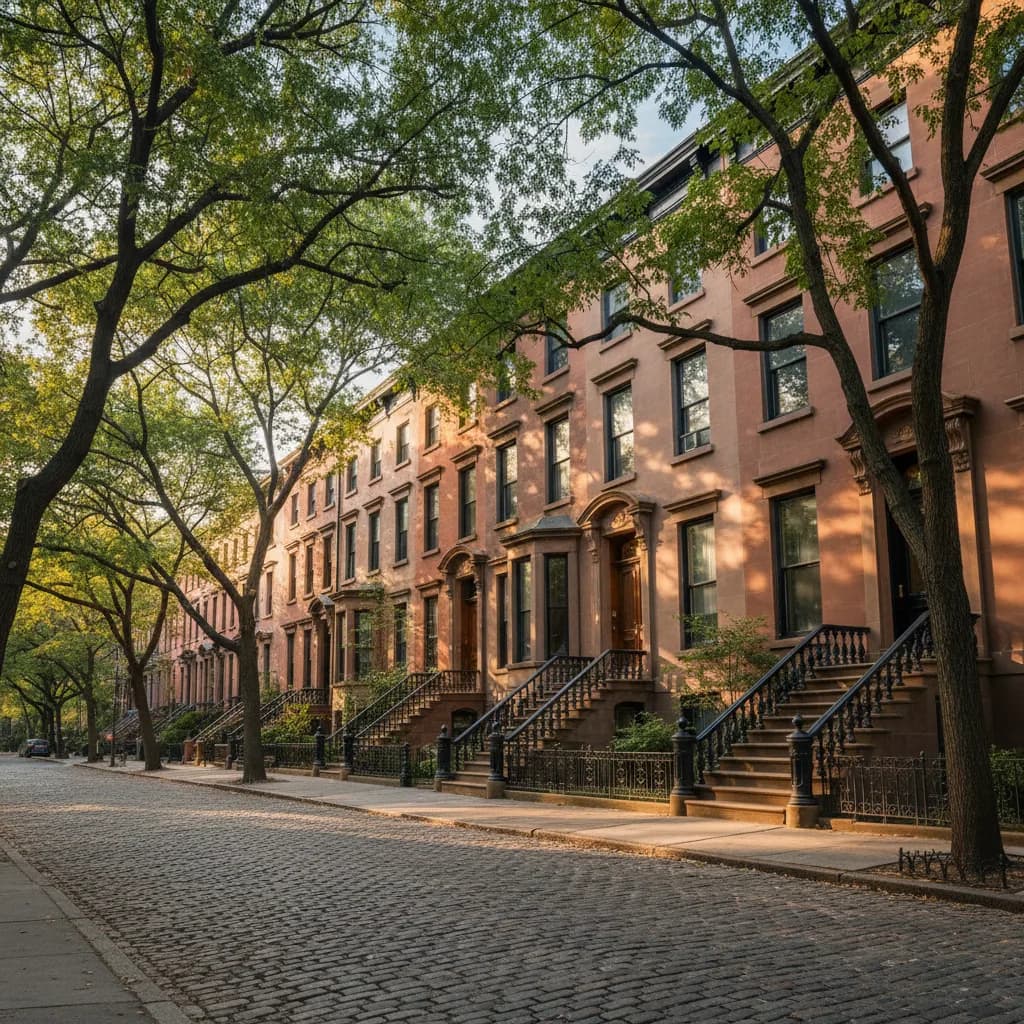
Begin your exploration near the intersection of Pierrepont and Clinton Streets, where you will immediately encounter textbook examples of late Federal and early Greek Revival domestic architecture. Constructed primarily between 1830 and 1855, these dignified three- and four-story row houses feature warm reddish-brown Triassic sandstone facades quarried across the river in northern New Jersey. Notice the soaring parlor stoops, deep cast-iron balustrades featuring anthemion palmette motifs, and classical entrance porticos flanked by fluted Doric or Ionic columns supporting carved stone entablatures.
At the corner of Pierrepont and Henry Streets stands the striking Herman Behr Mansion at 128 Henry Street. Completed in 1888 to the designs of Brooklyn prominent architect Frank Freeman, this Romanesque Revival landmark breaks from row house conformity with dramatic asymmetry. Constructed of rough-faced Longmeadow brownstone and Roman brick, the mansion features deeply recessed entryway arches, projecting corner oriel windows, terracotta dragon carvings, and a soaring corner turret capped by a steep conical roof, reflecting late Gilded Age industrial wealth.
Wander down Remsen Street to observe how the architectural styles evolve block by block. Early Federal houses feature peaked roof dormers and Flemish bond brickwork, while neighboring Italianate residences built twenty years later boast bold bracketed wooden cornices, arched parlor window lintels, and heavy carved balustrades flanking wide stone entrance steps. The elevated stoops were designed to keep street mud away from formal second-story entertaining parlors, an enduring trademark of New York residential life.
Take time to look closely at the basement level windows, protected by decorative cast-iron grilles featuring Greek key and anthemion motifs that provided both domestic security and refined street-level ornamentation for the original merchant families.
Hidden Carriage Mews Along Grace Court Alley and Hunts Lane
Turn southward onto Hicks Street and step into the cobblestone passages of Grace Court Alley and Hunts Lane. These narrow cul-de-sacs were originally developed in the mid-nineteenth century as private carriage mews, housing stables, tack rooms, and coachmen quarters for the grand estates fronting Remsen and Joralemon Streets. Because these stable lanes were tucked away from street traffic, they maintain an intimate scale and pastoral quietude rare in modern New York.
Following the invention of the automobile in the early twentieth century, these sturdy brick and timber mews were converted into private townhouses and artist retreats. Observe the preserved wooden carriage doors with diagonal iron strap hinges, heavy hayloft loading hooks anchored beneath roof gables, and cascading English ivy clinging to whitewashed masonry. Footsteps echo cleanly off antique granite stones, offering an authentic glimpse into the daily equine rhythms of nineteenth-century domestic life.
Notice the small horse head tie rings still embedded in the masonry walls along Hunts Lane, where carriage drivers hitched teams while washing wooden wagon wheels. These miniature industrial relics give the mews an enchanting, storybook character that feels completely detached from the roaring expressway just beyond the bluff.
Literary and Abolitionist Monuments on Willow and Orange
Wander northward along Willow Street, one of the most picturesque and intact residential corridors in the district. Outside 70 Willow Street, pause before a distinguished yellow Greek Revival townhouse where author Truman Capote lived as a guest of set designer Oliver Smith during the late 1950s. It was in the quiet garden apartment here that Capote wrote Breakfast at Tiffany and conducted foundational research for In Cold Blood, drawing inspiration from the quiet neighborhood atmosphere.
Two blocks east on Orange Street sits Plymouth Church of the Pilgrims, dedicated in 1849 and designed by architect Joseph C. Wells. Constructed in modest red brick resembling an Italianate meetinghouse, this historic sanctuary served as a national center for the American abolitionist movement under the charismatic leadership of preacher Henry Ward Beecher. From this pulpit, Beecher raised funds to emancipate enslaved individuals, while the church cellar operated as a primary Grand Central Depot on the Underground Railroad, secretly harboring freedom seekers on their journey toward Canada.
Promenade Vistas and Cantilevered Engineering
Emerge from the shaded residential blocks onto the Brooklyn Heights Promenade, one of the world most famous civic walkways. Opened to the public in 1950, this one-third-mile cantilevered esplanade was born out of a hard-fought civic compromise. When master builder Robert Moses proposed routing the Brooklyn-Queens Expressway directly through the heart of the historic neighborhood, local residents successfully organized to force the highway beneath a multi-tiered concrete deck, creating an elevated public viewing platform that insulated the community from traffic noise.
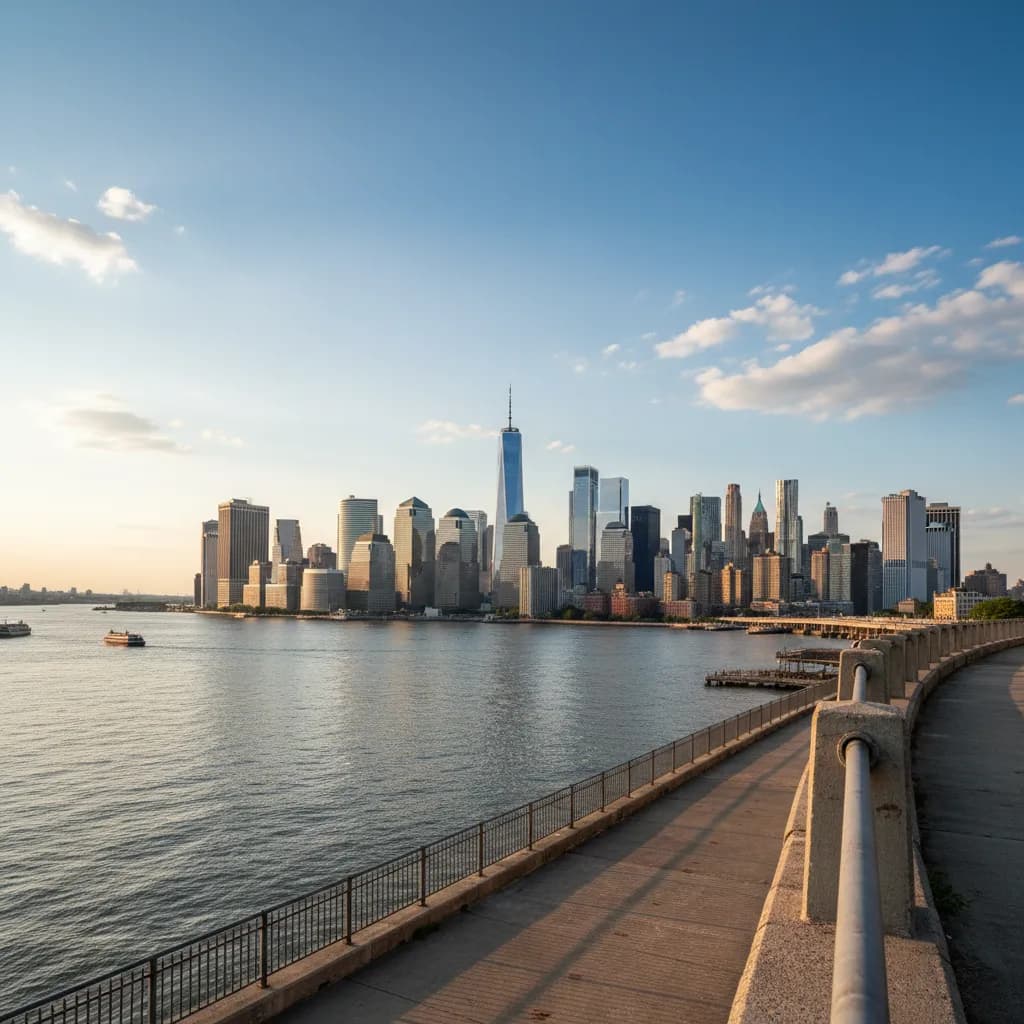
Strolling along the promenade railing provides unobstructed panoramas sweeping from the Statue of Liberty and Governors Island across the towering spires of Lower Manhattan to the stone towers of the Brooklyn Bridge. Take time to examine the majestic suspension cables of the bridge to the north, designed by John, Washington, and Emily Warren Roebling and completed in 1883, which linked Brooklyn civic destiny forever with Manhattan.
The visual juxtaposition from this elevation is striking, framing tranquil residential gardens in the immediate foreground against the gleaming modern glass towers across the tidal strait.
Transit Connections and Neighborhood Touring Advice
This self-guided Brooklyn Heights architecture stroll spans approximately one point five miles and requires between seventy and eighty minutes of unhurried walking. To experience the historic streets and harbor promenade at their most serene, plan your walk for mid-morning on a weekend, when eastern sunlight illuminates the brownstone stoops and the promenade remains tranquil before midday harbor visitors arrive.
Direct subway access is available at several convenient stations: take the 2 or 3 train to Clark Street, emerging directly into the heart of the heights, or take the 4, 5, or R train to Borough Hall and Court Street. Montague Street provides welcoming neighborhood bakeries and cafes along its commercial corridor if you wish to pause for coffee. Karpo acts as your personal walking guide in the Karpo APP, contextualizing Brooklyn Heights pre-Civil War brownstone stoops and harbor overlooks.
Ask Karpo for more information.
Keep reading
- SoHo Tailor Alteration Shop Finder for Sample Sale Finds
 Williamsburg Tailor Alteration Shop Finder for Bike Riders
 Upper West Side Tailor Alteration Shop Finder for Kids