 SoHo Tailor Alteration Shop Finder for Sample Sale Finds
Neighborhood Guides
NYC Historic Alleyway Walk Planner: Village Mews in an Hour
Greenwich Village hides gated mews and crooked lanes behind its avenues. Link Washington Mews, MacDougal Alley, Patchin Place and Gay Street in one easy loop.
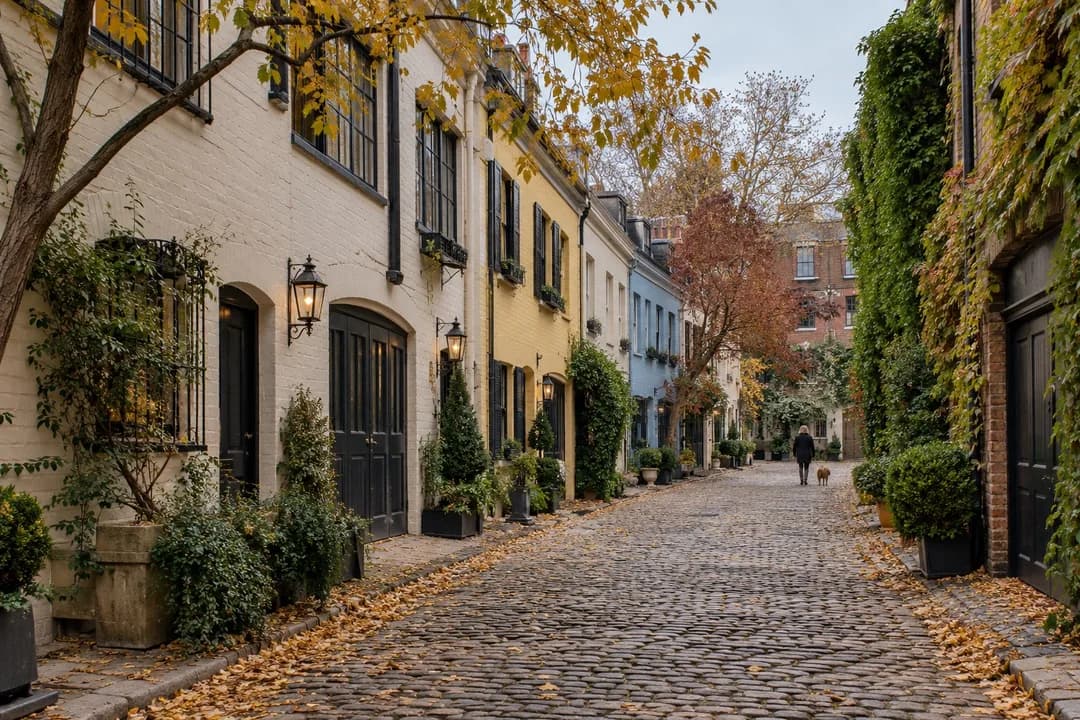
Washington Mews is a cobblestone lane of former stables tucked directly behind the grand rowhouses on the north side of Washington Square, and it is the right first stop for a historic alleyway walk in Greenwich Village. From there, MacDougal Alley, Patchin Place, Gay Street and Grove Court sit within a short stroll of each other, close enough to string into a single loop of about an hour between West 4th Street and Christopher Street stations. This planner gives the order, the timing and the reason each lane looks the way it does.
Why the Village Has So Many Hidden Lanes
Most of these passages exist because of horses. In the early nineteenth century, wealthy families built Greek Revival houses facing Washington Square and kept their carriages and animals in low stables on a service lane behind. When cars replaced carriages, the stables lost their purpose, and in the early twentieth century artists and writers converted them into studios and small homes. That shift explains the odd scale you will notice: two-story buildings, wide ground-floor openings that were once carriage doors, and lanes too narrow for modern traffic.
The other group of lanes grew from the Village's crooked street plan. The neighborhood was laid out before the 1811 Manhattan grid, so short streets bend at angles and leave small courts and dead ends between them. Gay Street, Patchin Place and Grove Court are products of that older pattern. Knowing which lanes were stables and which were simply leftover land helps you read the walls as you pass them instead of seeing a row of pretty doors.
Stop One: Washington Mews From Fifth Avenue
Enter Washington Mews from Fifth Avenue, just north of the Washington Square Arch, and walk east toward University Place. The north side is lined with converted stables painted in soft colors, and the south side backs onto the houses of Washington Square North. New York University owns most of the buildings and uses them for academic programs, which is why the lane feels orderly and quiet rather than residential. Gates stand at both ends, and during daytime hours people on foot often pass straight through.
Spend five minutes here and look at the ground first. The paving is Belgian block, the squared granite stones that replaced rougher cobbles across lower Manhattan, and the slight crown in the middle once shed water toward the sides. Then look up at the stable fronts: several still show the wide openings and hayloft-style upper windows of their first use. If the gate on Fifth Avenue is closed, walk the short way around to University Place and look in from the east end.
Stop Two: MacDougal Alley Through the Gate
Walk back west across Fifth Avenue and along Washington Square North to MacDougal Street, then turn north. MacDougal Alley opens on the right as a short dead end behind a gate. It is private, so this is a look-through stop rather than a walk-through stop, but the view is worth it: another row of former stables, many converted into studios in the early 1900s. Gertrude Vanderbilt Whitney, the sculptor and patron whose collection grew into the Whitney Museum of American Art, kept a studio in this alley.
Two minutes is enough at MacDougal Alley. Stand slightly back from the gate so you are not blocking residents, and use the moment to note how the alley mirrors Washington Mews one block over: same purpose, same scale, different owners. A planner in the Karpo APP can drop a short note on each stop like this, so you remember which lane belonged to which square when you look back at your photos.
Stop Three: Patchin Place and Jefferson Market
From MacDougal Street, walk up Sixth Avenue to West 10th Street, about a five-minute walk past the corner of West 8th Street. Before turning left, look at the Jefferson Market Library on the corner of Sixth Avenue, a Victorian Gothic building that began life as a courthouse and is now a branch of the New York Public Library. Its clock tower is the landmark that tells you that you are in the right block.
Patchin Place is a small gated cul-de-sac on the north side of West 10th Street, just west of Sixth Avenue. Its plain brick rowhouses date to the mid-nineteenth century, and the lane is known for the writers who lived there, including the poet E. E. Cummings, who kept an apartment there for decades, and the novelist Djuna Barnes. Look for the old cast-iron lamppost at the end of the court. The gate is usually closed, so admire it from the sidewalk and keep your voice down.
Stop Four: Gay Street and Christopher Street
Walk south on Sixth Avenue, turn right on Waverly Place, and Gay Street appears on the left within a couple of blocks. It is a single short block that bends as it runs between Waverly Place and Christopher Street, lined with small brick and painted houses from the early nineteenth century. Unlike the gated lanes, Gay Street is a public street, so you can walk its full length and pause on the curve, which is where most people take their photographs.
Gay Street is also the stop where your loop changes mood. At its south end you meet Christopher Street, one of the busiest and most historically significant streets in the Village, with shops, bars and steady foot traffic. If you want to keep the quiet of the mews, turn right on Christopher and head west quickly rather than lingering at the corner of Sixth Avenue.
Stop Five: Grove Court, or Skip It
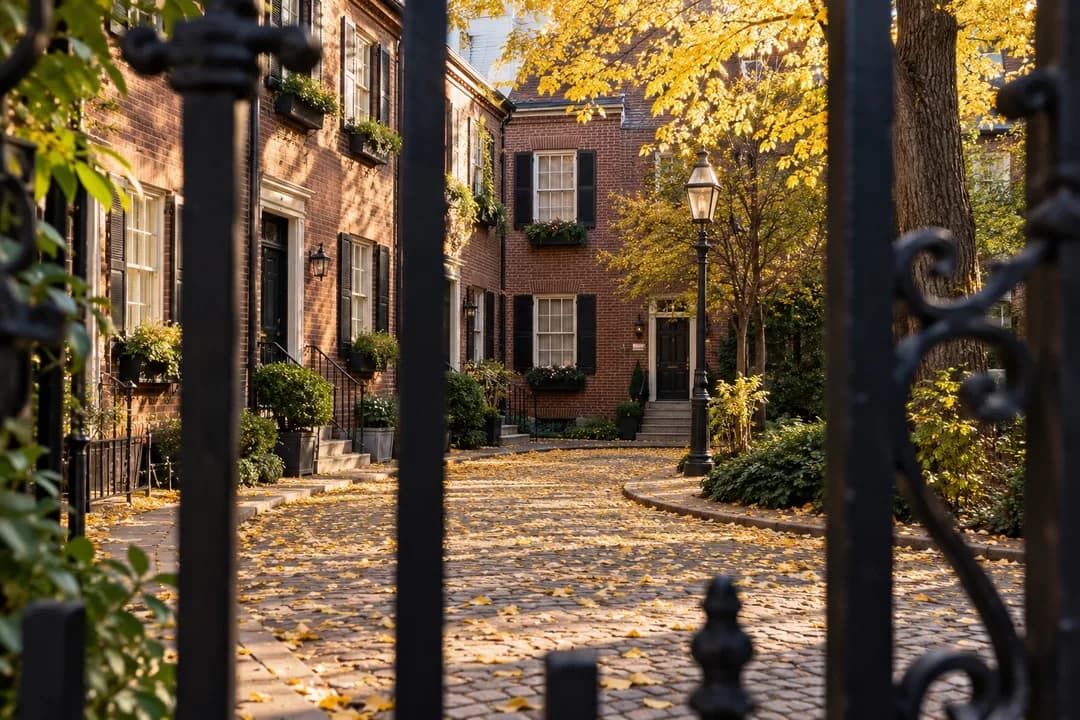
Grove Court sits off Grove Street between Bedford Street and Hudson Street, a few minutes from Christopher Street. It is a gated courtyard of brick houses set back from the street behind a small garden, and the view through the gate is lovely in autumn when the trees turn. Here is the honest call: if you have less than an hour or the light is fading, skip it. It is a look-through stop like MacDougal Alley, and you have already seen that kind of view twice.
If you do go, approach along Bedford Street rather than Seventh Avenue South. Bedford is one of the Village's most intact old streets, and the walk along it adds more historic texture than the final stop itself. From Grove Court, the Christopher Street–Sheridan Square station on the 1 train is a short walk east, which makes this a clean place to finish.
When to Walk and How Long to Allow
Weekday mornings between about 9 and 11 are the best time for this loop. Delivery traffic has eased, students have not yet filled Washington Square, and side light hits the stable fronts along Washington Mews. Saturday afternoons are the busiest, especially around Christopher Street and the park. Allow 60 minutes at an easy pace, or 90 if you plan to sit in Washington Square at the start or end.
Rain changes the plan less than you might expect. The cobbles on Washington Mews get slick, so wear shoes with grip, but the lanes are short and the walk between them is on ordinary sidewalks. On a wet day, swap Grove Court for a few minutes inside the Jefferson Market Library, which is open to the public during branch hours and lets you study its vaulted Victorian interior out of the rain.
Practical Notes
Start at West 4th Street–Washington Square station, served by the A, C, E, B, D, F and M trains, and finish at Christopher Street–Sheridan Square on the 1. Several of these lanes are private homes, so treat gates as windows, not doors: no leaning on the bars, no sitting on stoops and no drones. Public seating is plentiful in Washington Square if you need a break before or after. To build your own version, tell Karpo in the Karpo APP how much time you have and which lanes you want, and it will put them in walking order.
Ask Karpo for more information.
Keep reading
- SoHo Tailor Alteration Shop Finder for Sample Sale Finds
 Williamsburg Tailor Alteration Shop Finder for Bike Riders
 Upper West Side Tailor Alteration Shop Finder for Kids