 SoHo Tailor Alteration Shop Finder for Sample Sale Finds
Neighborhood Guides
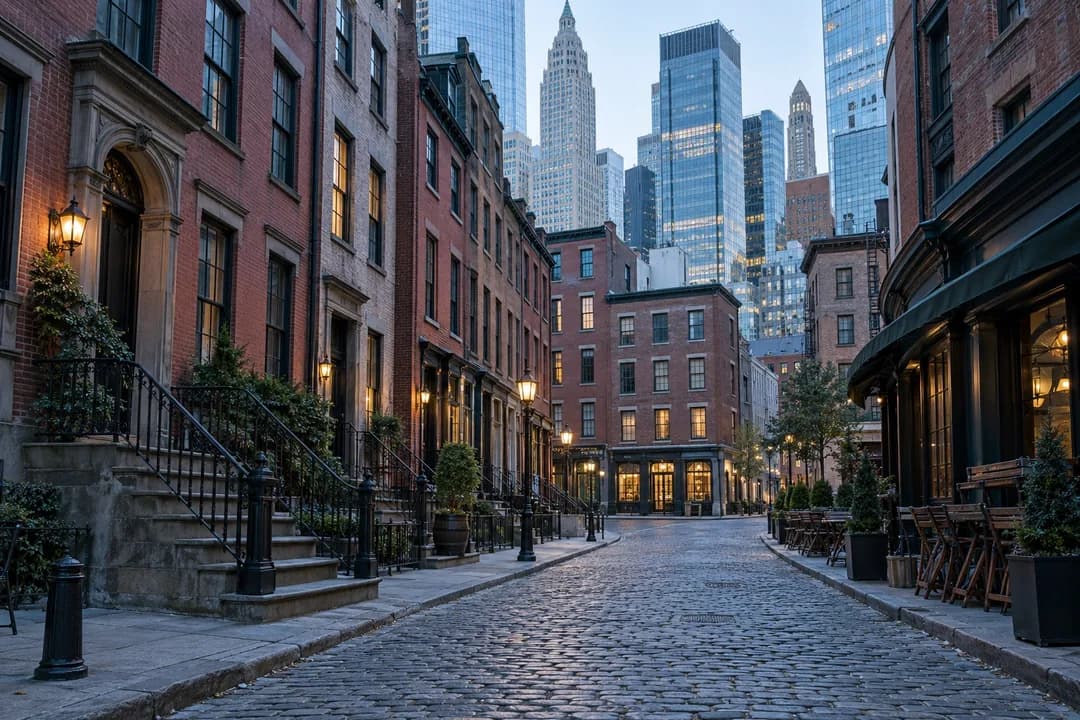
NYC Historic Alleyway Walk Planner: Stone Street Before 9am
Stone Street, Coenties Alley and Mill Lane trace New Amsterdam's oldest street plan. Walk them before 9am from Bowling Green to Hanover Square in under an hour.
Stone Street is a two-block cobbled lane in the Financial District that follows a route laid out by the Dutch in New Amsterdam, and it is quiet only before about 9am on weekdays. That early window is the reason to plan this historic alleyway walk carefully. Start at Bowling Green, the city's oldest public park, thread through Broad Street, Coenties Alley, Stone Street and Mill Lane, and finish at Hanover Square, all in under an hour and well before the after-work crowd turns Stone Street into one long outdoor dining room.
A Street Plan Older Than the Grid
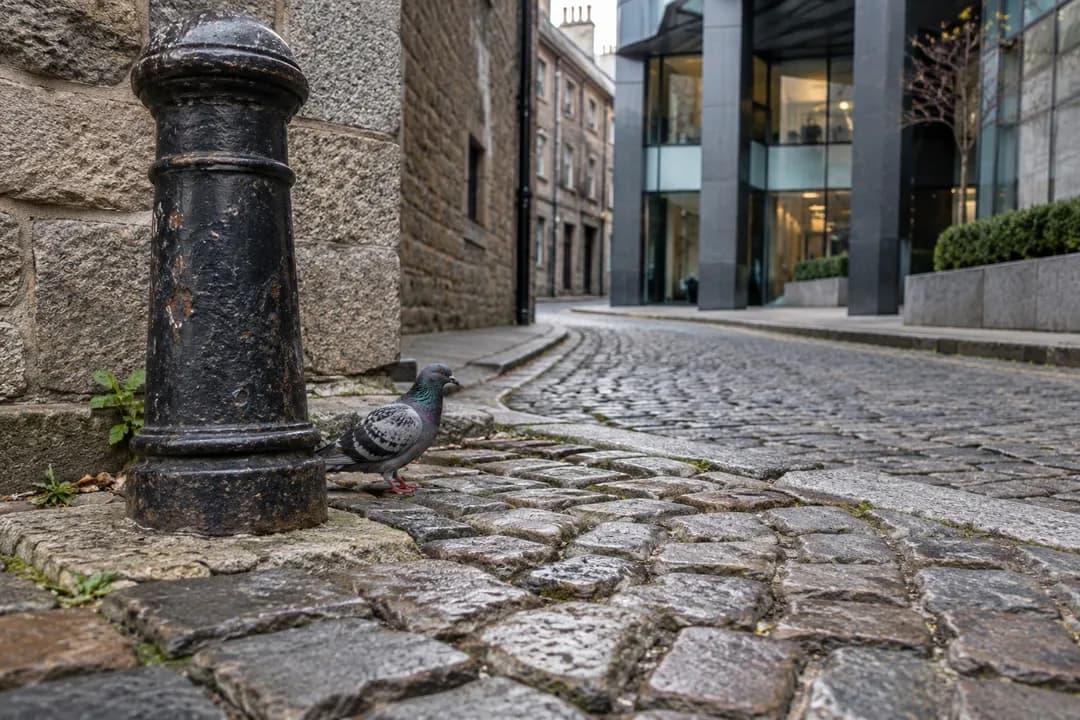
Lower Manhattan below Wall Street was settled long before the 1811 grid that organized the rest of the island, so its streets bend, narrow and meet at odd angles. Stone Street was originally known by a Dutch name connected to the brewers who worked there, and by tradition it was the first street in the colony to be paved with stones in the seventeenth century. The surface you walk on today is later Belgian block, but the line of the lane is the colonial one.
Most of the buildings along Stone Street went up after the Great Fire of 1835, which destroyed much of this district. They are low brick and brownstone commercial buildings with ground-floor storefronts, and the block was designated a city historic district in the 1990s. Read them as the ordinary warehouses and counting houses of a port city, then look up at the glass towers around them for the full contrast.
Start at Bowling Green
Begin at Bowling Green, the small oval park at the foot of Broadway, steps from the Bowling Green station on the 4 and 5 trains. It became a public park in 1733, and the iron fence around it dates to 1771. Colonists famously pulled down a statue of King George III here in 1776, and you can still see where the decorative crowns were sawn off the fence posts. Facing the park is the Alexander Hamilton U.S. Custom House, a Beaux-Arts landmark.
Walk east along Beaver Street, one of the narrow streets that kept its colonial path. It runs only a few blocks and feels like a corridor between tall buildings. At Broad Street turn right and walk south toward Pearl Street. Broad Street was once a canal, which explains its unusual width compared with the lanes around it. The Dutch filled it in during the seventeenth century, and the generous street you walk down is the result.
Glass Windows Onto the Seventeenth Century
At the corner of Broad and Pearl Streets, look down in the plaza in front of the office tower on the east side. Glass panels set into the pavement show excavated foundations of the Lovelace Tavern, built in the 1670s, and the outline of the Stadt Huys, New Amsterdam's first city hall, is marked nearby. This is one of the few places in Manhattan where you can literally stand on top of the colonial city, and it takes only a few minutes.
Across Pearl Street is the Fraunces Tavern block, a group of early buildings where George Washington said farewell to his officers in 1783. The tavern building is now partly a museum. Note it for a later visit rather than going in on this walk, because the museum opens later in the day than the morning window you are using for the lanes.
Coenties Alley Into Stone Street
From the Stadt Huys plaza, look for Coenties Alley, a short pedestrian passage that links Pearl Street to Stone Street. It is easy to walk past because it looks like a gap between buildings. Duck through it and you come out onto the eastern block of Stone Street, which is the more atmospheric half. In early morning the restaurant tables are stacked, the cobbles are wet from cleaning, and the only sounds are delivery carts and footsteps.
Walk Stone Street west toward Broad Street and back. Look at the fronts: cast-iron storefront columns, old loading doors, and several buildings that have been restored to look as they did in the nineteenth century. Here is an honest call for planning: do not come between roughly 5 and 8pm on a warm weekday unless you want a drink. The lane fills with office workers at outdoor tables, and you will not see the street at all.
Mill Lane and Hanover Square
Halfway along Stone Street, Mill Lane runs north for a single short block to South William Street. It is one of the shortest streets in Manhattan, and its name recalls a colonial mill. Walk it slowly, turn right onto South William Street, which curves with the old shoreline, and look at the ornate early-twentieth-century facades that were designed to look like old Dutch buildings, with stepped gables and decorative brickwork.
South William leads into Hanover Square, a small triangular plaza that was one of the colony's early residential squares. Today it holds the British Memorial Garden, which commemorates British victims of the September 11 attacks, with stones and plantings brought from across the United Kingdom. It is a calm place to finish, with benches and a view down Pearl Street toward the water.
How to Time the Walk
Plan to arrive at Bowling Green between 7:30 and 8am on a weekday, which gives you about an hour before office traffic peaks. Weekend mornings also work and are even quieter, though some buildings and plazas are emptier and the area feels sleepy. Allow 45 minutes at an easy pace, or an hour if you linger at the Stadt Huys glass and on Stone Street.
If you are short on time, skip Beaver Street and walk directly down Broadway to Whitehall Street, then along Pearl Street to Broad. You lose one narrow street but keep the colonial ruins, Coenties Alley and Stone Street. On a rainy morning the cobbles get slippery, especially on Mill Lane, so wear shoes with grip and take the walk a little slower.
Practical Notes
Bowling Green station on the 4 and 5 trains is the starting point, and Whitehall Street on the R and W and South Ferry on the 1 are close alternatives. Wall Street station on the 2 and 3 is a short walk from Hanover Square for the trip home. The route is entirely on public streets and plazas. To build a version that fits your morning, tell Karpo in the Karpo APP when you can start and how long you have, and it will set the lanes in walking order.
Ask Karpo for more information.
Keep reading
- SoHo Tailor Alteration Shop Finder for Sample Sale Finds
 Williamsburg Tailor Alteration Shop Finder for Bike Riders
 Upper West Side Tailor Alteration Shop Finder for Kids