 SoHo Tailor Alteration Shop Finder for Sample Sale Finds
Neighborhood Guides
Historic Alleyway Heritage Walk: Williamsburg Sugar Shore
Williamsburg's heritage walk is a free waterfront loop: cobbled industrial lanes, the old sugar refinery shoreline and warehouse blocks, best begun at dusk.
Williamsburg does not have the hidden mews of the West Village or the mural lanes of downtown Manhattan. What it has instead is a waterfront built for heavy industry, where sugar, rope, beer and machinery were made and shipped, and where the bones of that era are still poking through the glass towers. A historic alleyway heritage walk here follows loading lanes, old ferry landings and side streets lined with brick warehouses. It is a story of how a factory edge of Brooklyn became one of the most talked-about neighborhoods in the city, and it is told best on foot as the sun drops behind Manhattan.
Begin at the Old Sugar Shoreline
Start at Domino Park, the riverside park laid out where one of the largest sugar refineries in the world once processed raw cane shipped in from the Caribbean. Designers kept giant pieces of the plant on purpose: syrup tanks, steel columns, gantry cranes and a raised catwalk that lets you walk at the height where workers once moved between buildings. The old refinery's brick hulk still stands beside the park, and its tall chimney is the landmark you will use to orient yourself for the rest of the walk.
Take your time on the elevated walkway. Interpretive panels and leftover machinery explain how raw sugar arrived by boat, was melted, filtered and crystallized, and then left by truck and rail. For many families in the neighborhood, the refinery meant steady jobs for generations, and its closure marked the end of Williamsburg as a factory town.
Grand Ferry Park and the Lost Crossing
Walk north along the water to the small, grassy Grand Ferry Park. Before the bridges, ferries ran from this shore to Manhattan, and the landing helped turn a sleepy village into a busy town. Today the park is just a pocket of lawn and rocky beach, but it is one of the few places where you can stand at water level and imagine the old boats crossing toward the Lower East Side.
Look for a tall brick smokestack preserved at the edge of the park. It is a remnant of the industrial buildings that crowded this shore. Locals come here to read, sketch and watch the sunset, and it is a calm place to let the walk slow down before you head inland.
Kent and Wythe: Warehouse Lanes With a Second Life
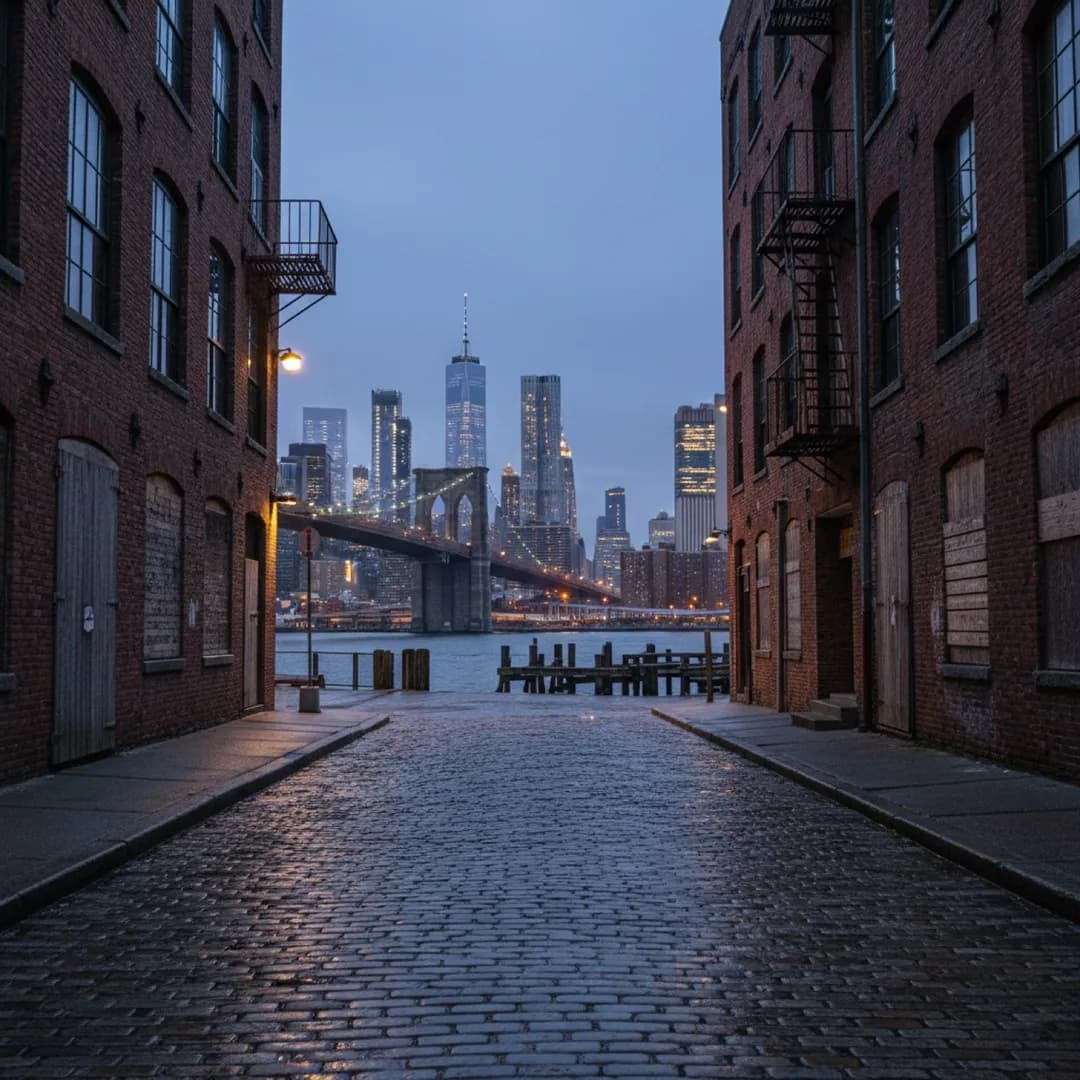
Head a block or two inland and follow Kent Avenue and Wythe Avenue northward. These streets were lined with breweries, cooperages, printing plants and storage buildings, and many of the warehouses survive with their arched loading doors, iron shutters and faded painted names. Some side lanes still have stretches of Belgian-block paving and old rail tracks sunk into the asphalt, a reminder that freight trains once rolled right up to the factory doors.
Many of these buildings now house hotels, studios, restaurants and event spaces, but their shells have barely changed. Pause at corners to look down the cross streets toward the river. The view of brick walls framing the Manhattan skyline is the classic Williamsburg contrast, past and present stacked in one frame.
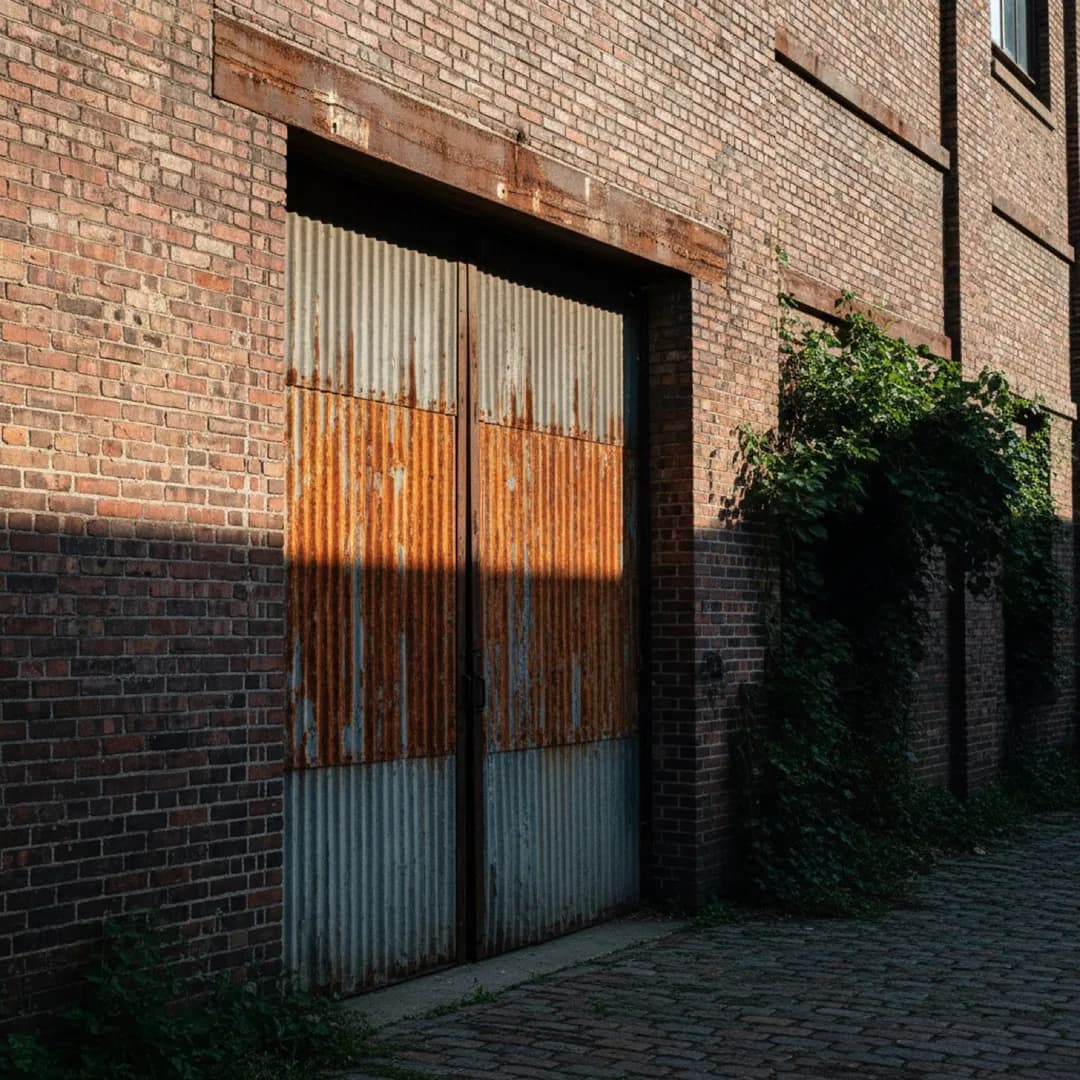
Keep an eye out for small passages between buildings, where vines climb over rusted doors and old freight entrances have been bricked up. These are the nearest thing Williamsburg has to true alleys, and they are especially atmospheric just after dusk, when the warehouse windows light up from the inside.
The Brewing Story Hidden in the Blocks
Before Prohibition, North Brooklyn was one of the great brewing centers of America, with German immigrant families running dozens of breweries across Williamsburg and neighboring Bushwick. Most closed long ago, but their influence shows in the solid masonry buildings, beer-hall architecture and the small craft breweries that have brought the trade back to the area.
As you walk, notice which warehouses have the tall, narrow windows and heavy cornices typical of brewing buildings. Ending the walk with a local beer is a natural way to connect the neighborhood's history with its present, whether you prefer a taproom crowd or a quiet corner table.
A Detour to the Domed Bank by the Bridge
If you have energy for one more stop, walk south toward the foot of the Williamsburg Bridge. Near the bridge approach stands a grand domed former savings bank, once a symbol of how prosperous the waterfront town had become. Its interior now hosts events and performances, yet even from the outside the dome tells a story of a community confident enough to build a small temple to thrift.
Standing near the bridge also helps you understand the area's later history. When the crossing opened, it brought a flood of new residents from crowded Manhattan blocks, and Williamsburg quickly became one of the densest neighborhoods in Brooklyn.
Bedford Avenue and the McCarren Park Edge
For a longer loop, turn inland onto Bedford Avenue, the main street of the neighborhood. Its rows of small brick buildings with ground-floor shops show the residential side of the old factory town, where workers lived above bakeries, tailors and hardware stores. Look above the storefronts for tin cornices and carved window hoods that hint at the street before the record shops and cafes moved in.
Continue north to McCarren Park, where a monumental public pool built as a Depression-era works project anchors the edge of the green. It sat empty for decades before being restored, and its arched brick entrance is a fine example of the civic architecture of that period. On warm evenings the park fills with runners, soccer games and picnics, making it a lively finish to a walk that began among ruins of industry.
Planning Your Route With Karpo
Williamsburg is spread out, so it helps to decide early whether you want a waterfront-only stroll or a longer loop that adds Bedford Avenue and McCarren Park. Ask the Karpo APP for nearby coffee shops, taprooms or bakeries along the stretch you choose, and it can help you string a few stops together so you are not backtracking along the long avenues.
Practical Tips for a Brooklyn Waterfront Walk
The waterfront is windy, especially late in the year, so bring a layer even on mild days. Dusk is the most rewarding time to arrive, since the skyline lights up and the refinery relics glow under park lighting. Weekends get busy near the parks and on Bedford Avenue, while weekday evenings feel more local. Plan on about two hours at an easy pace. Wear shoes that can handle uneven cobbles and old rail tracks, and keep to the sidewalks on Kent Avenue, where bikes and delivery traffic move quickly.
Ask Karpo for more information.
Keep reading
- SoHo Tailor Alteration Shop Finder for Sample Sale Finds
 Williamsburg Tailor Alteration Shop Finder for Bike Riders
 Upper West Side Tailor Alteration Shop Finder for Kids