 SoHo Tailor Alteration Shop Finder for Sample Sale Finds
Neighborhood Guides
Historic Alleyway Heritage Walk: West Village Hidden Courts
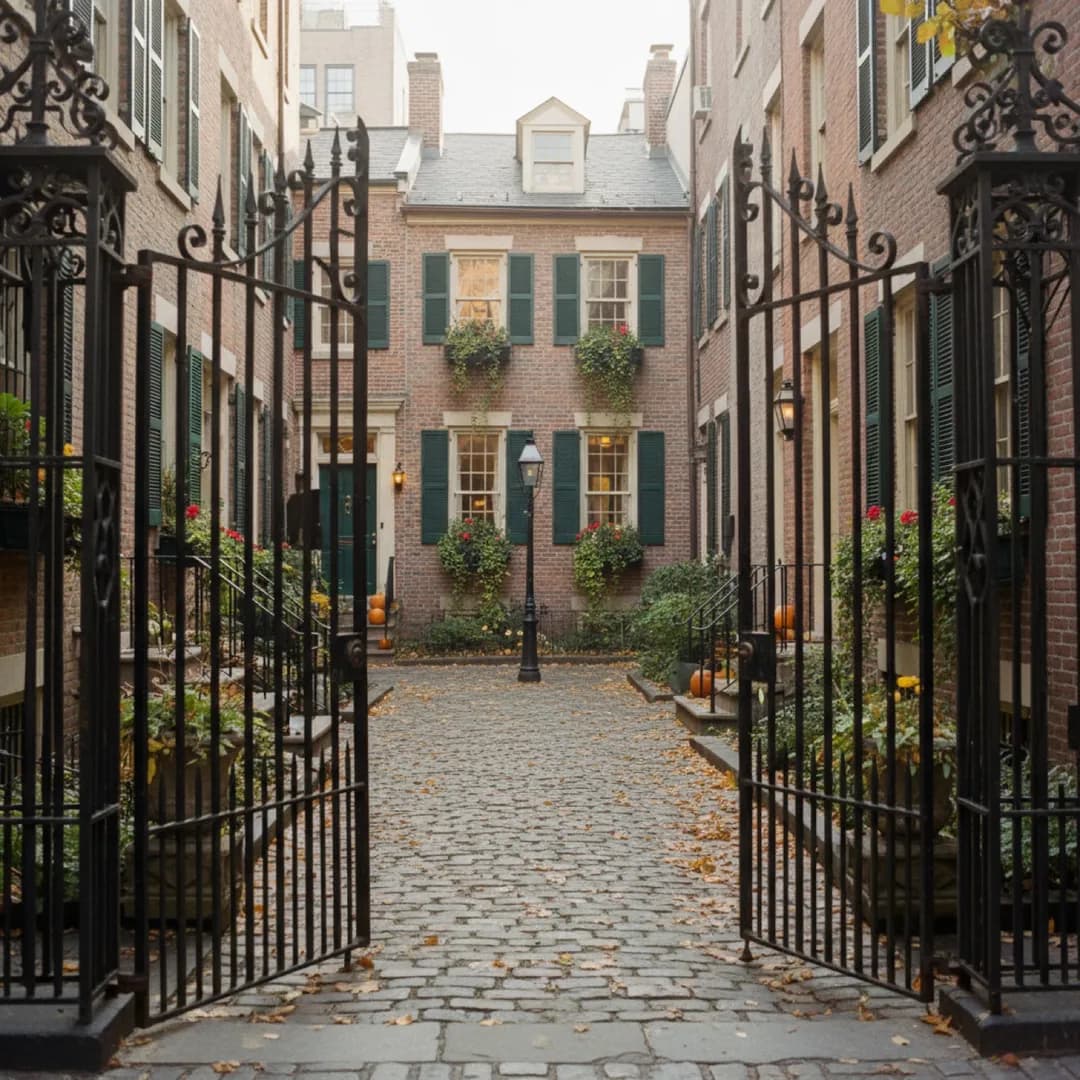
The West Village heritage walk is free and gate-to-gate: peek into Grove Court and Patchin Place, then follow crooked lanes to the river on an autumn morning.
The West Village is the one corner of Manhattan where the street grid simply gave up. Lanes bend, streets cross themselves, and tiny gated courtyards hide behind ordinary-looking doorways. That tangle is the result of a village that grew up as a country refuge long before the grid arrived, and it makes this the most rewarding neighborhood in the city for a historic alleyway heritage walk. This route moves from one hidden court to the next, mixing literary stories with small architectural surprises, and it is designed for a slow morning when the streets are still sleepy and the light falls softly through the trees.
Why the Streets Refuse to Line Up
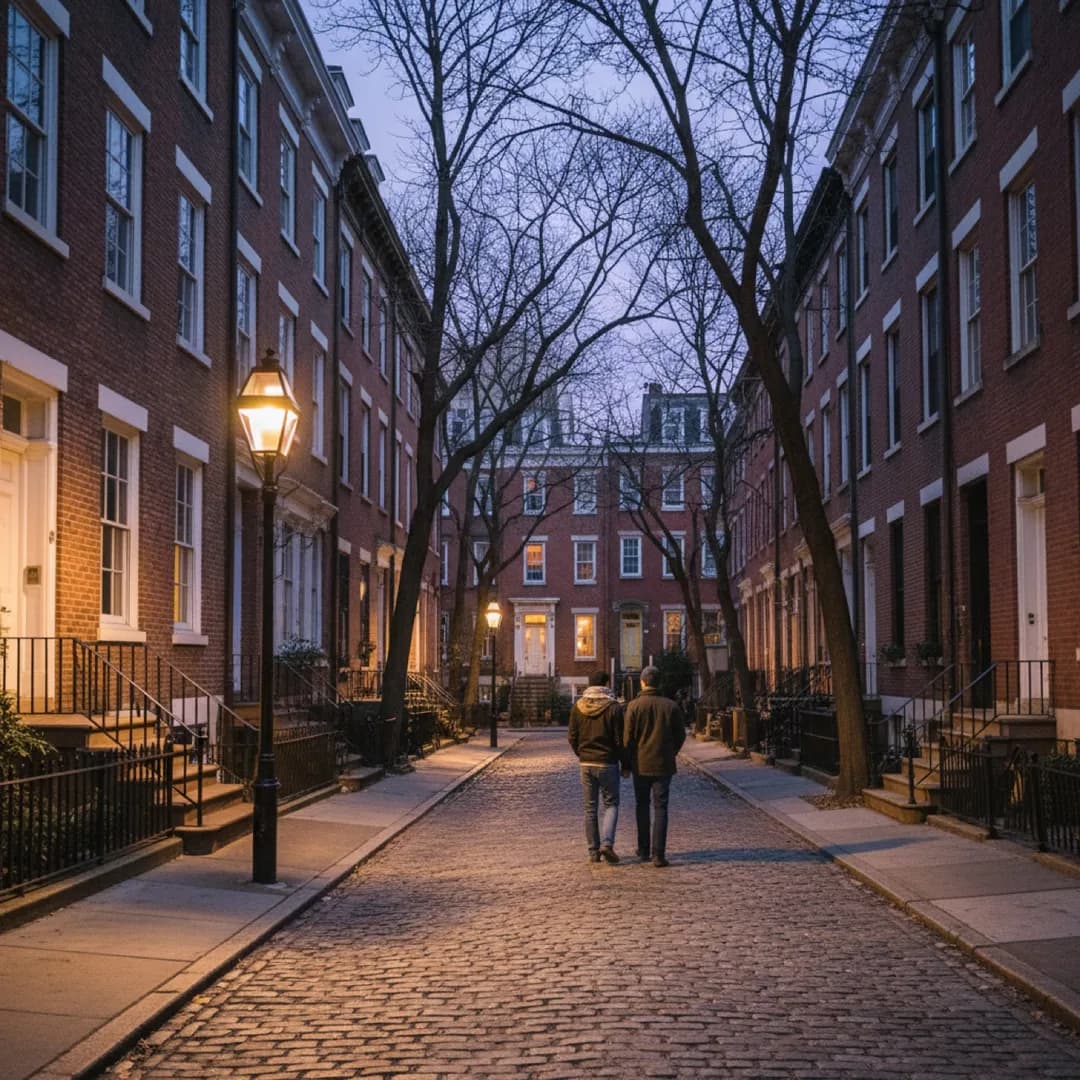
When epidemics swept through lower Manhattan in the early nineteenth century, people fled north to Greenwich Village, which was then a separate settlement with its own farm lanes and paths. Those routes hardened into streets before the city imposed its rectangular grid, so the Village kept its old, crooked pattern. That is why West Fourth Street manages to cross West Tenth, and why so many short lanes end abruptly or curve away from the avenues.
Knowing this history changes how you walk. Instead of trying to keep straight lines, let the streets pull you in different directions. The neighborhood is small enough that getting a little lost is part of the pleasure, and it is almost impossible to stray far from a familiar corner.
Grove Court Through the Gate
Start on Grove Street, where a gated courtyard of small brick houses sits back from the sidewalk behind an iron fence. Grove Court was built as modest housing for workers, tucked into the middle of a block, and it was once considered a rough address. Today it is one of the most photographed and coveted private enclaves in the city, with green shutters, window boxes and a tiny shared lawn.
The court is private, so the right way to enjoy it is from the gate. Stand on the sidewalk, look through the bars and notice how the houses step back from the street to create a quiet pocket. The corner of Grove and Bedford nearby is also worth lingering at, with its wooden-clapboard house and its streetscape that seems pulled from a much older town.
Commerce Street and the Bend That Hides a Theater
Walk to Commerce Street, which curves sharply instead of running straight. Tucked into that bend is a small off-Broadway playhouse in a former industrial building, a beloved stage for new plays and the kind of intimate venue that defined the Village's theater culture. Further along, a pair of matching brick houses stand separated by a walled garden, the subject of a romantic local legend about sisters who refused to speak to each other.
This stretch is a lovely place to slow down. Look at the old doorways, the iron boot scrapers by the steps and the narrow front yards, and imagine the street when it was home to artists, sailors and craftsmen rather than film locations.
Gay Street and the Slimmest House on Bedford
Between Christopher Street and Waverly Place, tiny Gay Street makes a crooked little dogleg lined with Federal-style row houses and colorful doors. It once housed Black families and later jazz musicians and writers, and its compact scale makes it feel like a stage set. Walk it slowly in both directions, because the curve hides each end from the other.
Back on Bedford Street, look for a famously skinny brick house squeezed into what was once a carriage passage between two buildings. It is often called the narrowest house in the city, and a poet who later won a major prize lived there for a time. It is a perfect example of how Village residents turned every leftover alley and gap into a home.
Patchin Place and Milligan Place
Head east toward Sixth Avenue, where two small gated cul-de-sacs sit almost side by side. Patchin Place, off West Tenth Street, is a short row of plain brick houses ending in a dead end, and it was home to poets, novelists and journalists at different points in the last century. A tall old cast-iron street lamp at the end of the lane is a much-photographed survivor of the city's gaslight era.
Around the corner, Milligan Place is even smaller and easy to miss. Both lanes are private, but standing at their gates gives a vivid sense of the bohemian Village, where writers could rent quiet rooms just steps from busy avenues. The striking turreted courthouse turned library nearby makes a fine visual anchor for this part of the walk.
Toward the River: Weehawken Street and Old Waterfront Corners
Finish by heading west toward the Hudson. Near the river, little Weehawken Street runs for barely a block and holds a rare small wooden building that reflects the area's maritime past, when sailors, dockworkers and warehouse crews filled the blocks near the piers. The streets here are wider and plainer, but they show a different side of Village heritage, one shaped by shipping rather than literature.
Cross to Hudson River Park to end with open sky and water after the close, shaded lanes. The contrast between the hidden courts and the wide river feels like stepping out of a time capsule, and it is a natural place to sit, rest your legs and look back at the rooftops you just explored.
Fitting the Walk Into Your Day
A slow version of this loop takes about two hours, more if you stop for coffee or bookstore browsing. Mornings are best for quiet, filtered light under the trees, while early evening brings glowing windows and a livelier sidewalk scene. If you are planning a longer outing, ask the Karpo APP to suggest a bakery near Grove Street to start, a calm cafe near Patchin Place for a midpoint break, or a riverside spot to finish, and it can help you shape the day around what you enjoy most.
Etiquette and Practical Pointers
Several of the most charming spots on this walk are private homes, so keep voices low near gates and never step inside without an invitation. Do not sit on stoops, and keep photography brief when residents are coming and going. Sidewalks are narrow, with tree pits and uneven slate, so watch your step and travel light. Autumn is a particularly beautiful season, with fallen leaves on the brick paths, but spring blossoms and winter lamplight each give the lanes their own mood. Whatever the season, give yourself permission to wander off the planned route.
Ask Karpo for more information.
Keep reading
- SoHo Tailor Alteration Shop Finder for Sample Sale Finds
 Williamsburg Tailor Alteration Shop Finder for Bike Riders
 Upper West Side Tailor Alteration Shop Finder for Kids