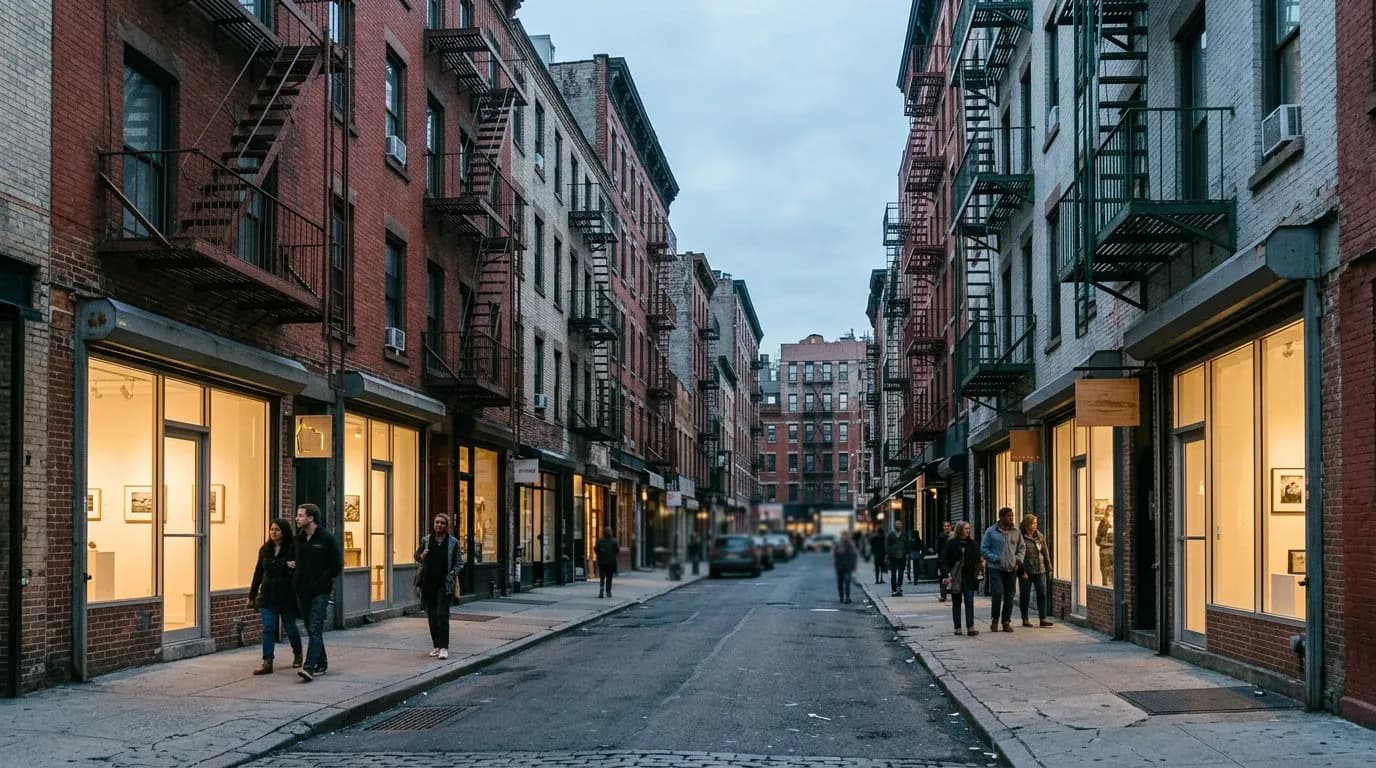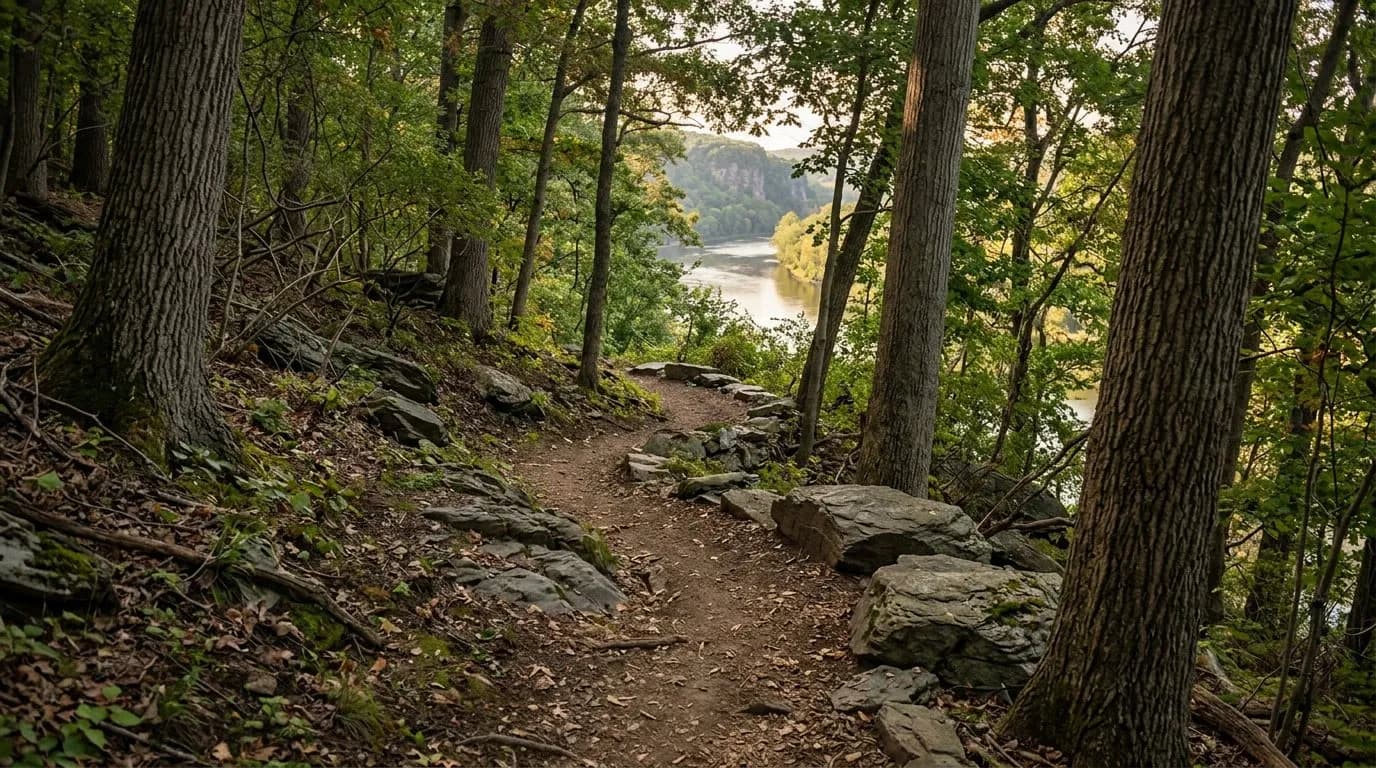
Until 1895, the hill above Dyckman Street was still attached to the Bronx, a single spur of land severed when engineers cut the Harlem River Ship Canal through Spuyten Duyvil Creek. The forest on that hillside kept growing while the rest of Manhattan filled in around it with tenements and rail lines. What survived is now Inwood Hill Park: 196 acres of city land carrying the borough's only old-growth forest, its last salt marsh, and three marked trails open to anyone at no cost.
Karpo can tell you which Inwood Hill trail loop fits the daylight you have left today, and flag whether the Nature Center is open before you walk up.
A peninsula the Harlem River cut loose
Before the Harlem River Ship Canal was dug through in 1895, the land under Inwood Hill Park was still joined to the Bronx, part of the same hillside mass rather than the northern tip of an island. The engineering project rerouted Spuyten Duyvil Creek and left the hill standing on its own, forested and largely untouched while the rest of the borough was cut into streets and lots around it.
The Inwood Hill Nature Center went up on that reshaped peninsula in 1995, run by the Urban Park Rangers as the interpretive hub for what had become, by then, an unusual survival: the only stretch of old-growth forest left in Manhattan. Superstorm Sandy damaged the building years later, and although it has reopened since, permanent exhibits are only expected by early 2026, so it is worth confirming current hours and exhibit status before planning a visit around it.
That history is why the park reads less like a landscaped city green space and more like a piece of pre-development terrain that happened to end up inside city limits. Nothing about visiting it costs money or requires booking. It is a public park, open on foot, with the forest and the marsh doing most of the talking.
Three trails, three different walks up the hill
The park's hiking network breaks into three marked routes. The Orange Trail is the wildest of the three: 1.7 miles of unpaved forest path, rated moderate to vigorous, climbing through exposed grey schist outcroppings and glacial potholes left behind by retreating ice. The Blue Trail covers the same 1.7-mile distance but on paved surface at a more moderate grade, while the White Trail is the easiest option at 1.5 miles, fully paved and manageable for most fitness levels.
Trail-goers who have done the Orange loop put the completion time at roughly 46 minutes to an hour, which sounds generous until the light starts going. One visitor who started the route late in the afternoon reported struggling to finish before dark, which is a useful reminder given how quickly the tree canopy cuts down ambient light on the hillside. Starting earlier in the day, rather than treating this as a quick after-work outing, makes the difference.
All three trails pass through dense stands of oak, tulip tree, and maple, opening periodically onto wide views of the Hudson River and the New Jersey Palisades across the water. From the Overlook Meadow at the top of the hill, that view stretches out fully, and on a clear afternoon it is easy to forget the subway is a fifteen-minute walk away.
The rock where Manhattan was said to be sold
Near the marsh edge, a modest, low boulder carries a bronze plaque marking the legendary site of Peter Minuit's 1626 purchase of Manhattan Island, a deal historians now treat as disputed rather than confirmed fact. The rock itself is unremarkable to look at — no monument, no fencing, just a plaque set into stone just off a dirt path — which makes it easy to walk past without noticing.
Partway up the hillside near the rock sit the so-called Indian Caves, shallow rock shelters formed by glacial retreat that stay cool and shaded even in summer. Native American archaeological finds have been documented at the site over the years. To find them from the Isham Street entrance, the general route is to take the path with the baseball fields on the right, follow signs toward Shorakkopoch Rock, then cut into the woods where the caves appear on the right, roughly halfway up the hill.
That said, trail blazes through this stretch can be inconsistent, and it is worth bringing a proper map rather than relying purely on memory of a route someone else described. The caves are not signposted with the same clarity as the numbered trails, and a wrong turn on the hillside mostly just means more climbing, not danger, but it does eat into daylight.
Eagles over Spuyten Duyvil
The forest supports mature red oak and some of the city's largest tulip trees, along with more than 150 recorded bird species, which has made Inwood Hill a known spot for birders well beyond the casual hiker crowd. Bald eagle sightings here trace back to a 2002 release project run by the Urban Park Rangers, and the park remains one of the more reliable places in the city to spot one overhead, particularly near the river edges.
In 2024, the Shorakapok Preserve within the park was formally designated part of the Old-Growth Forest Network, a recognition of just how rare this kind of unmanaged, mature woodland has become in a city this dense. Walking the Orange Trail through it feels less like a park path and more like the outer edge of a much older landscape that simply never got cleared.
The marsh most hikers miss
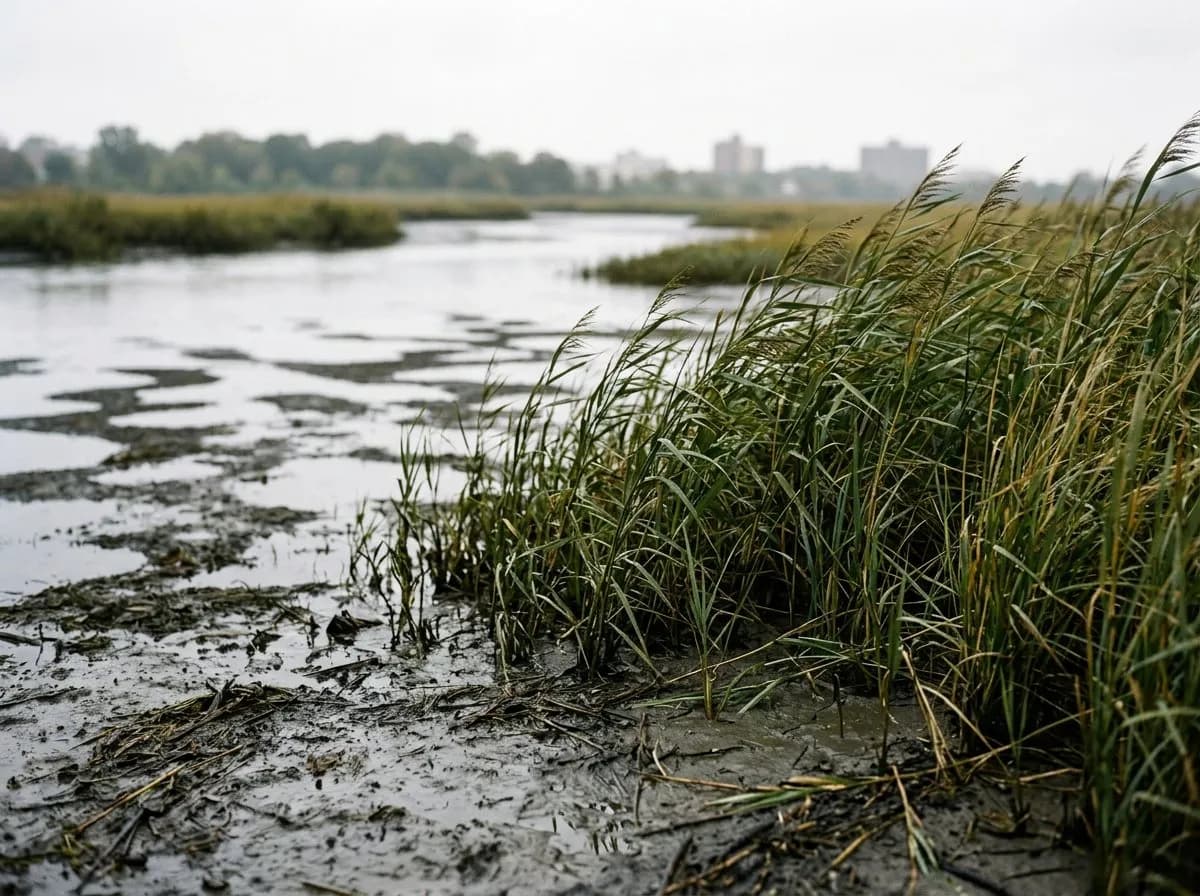
Near the old soccer field sits a wide tidal salt marsh, brackish and lined with reeds, visibly distinct from the wooded hillside above it — Manhattan's last remaining salt marsh, and one of only a handful left in the city at all. The adjoining Muscota Marsh area sits at the park's edge and is easy to overlook entirely if a visit sticks strictly to the numbered forest loops, since none of the three main trails run directly through it.
It is worth treating the marsh as its own short detour rather than an afterthought tacked onto the hill trails. The Spuyten Duyvil Creek and Harlem River Ship Canal curve around the park's edges here, giving this section a waterside, almost rural feel that is easy to forget sits inside Manhattan. Across the river, a large painted 'C' for Columbia is visible on a rock formation, a small landmark that helps orient the view.
Getting to the northern tip
The park sits at Manhattan's literal northern end, bordered by Dyckman Street, the Hudson River, and the Harlem River Ship Canal. The A train stops at Dyckman Street and Inwood–207th Street, and the 1 train stops at 215th Street, both within walking distance of park entrances. From there it connects directly to the Hudson River Bike Trail, part of the longer waterfront greenway running down Manhattan's west side.
The surrounding Inwood neighbourhood is dense and residential, with bodegas, small restaurants, and public housing blocks abutting the park's southern edge, so food and coffee before or after a hike are close by even though the park interior has limited concessions. Bringing water and a packed lunch is the sensible move for anyone planning to cover more than one trail, since there is nowhere to buy either once deep inside the woods.
Practical notes
Inwood Hill Park runs along Dyckman Street, the Hudson River, and the Harlem River Ship Canal in Inwood, Manhattan, 10034. Entry is free, with no bookings or admission at any point. Reach it via the A train to Dyckman Street or Inwood–207th Street, or the 1 train to 215th Street. The park has no fixed closing hours in the way a business would, though general NYC park curfew rules may apply after dark, so confirm current posted signage before an evening visit. A separate facility near Dyckman Street is closed for reconstruction with a 2028 target reopening; confirm which structure this affects before directing anyone there. Bring water, food, and a paper or offline map for the unpaved Orange Trail and the walk to the Indian Caves.
Tags: #InwoodHillPark #NYCHiking #ManhattanForest #FreeThingsToDoNYC #OldGrowthForest #SaltMarshTrail #InwoodNYC #HikingTrailsNearMe #UrbanHiking #BaldEagleWatching #HudsonRiverViews #ShorakkopochRock #IndianCavesNYC #NYCParks #OutdoorNYC
All trademarks are the property of their respective owners.
Ask Karpo first
Wondering whether you have enough daylight left to finish the Orange Trail loop before dusk, or whether the Nature Center's exhibits are actually open today? Ask Karpo for today's realistic trail window and current Nature Center hours before you head up to Inwood.