 SoHo Tailor Alteration Shop Finder for Sample Sale Finds
Neighborhood Guides
Heritage Historic District NYC: 3 Jackson Heights Details
Explore Jackson Heights through garden apartment setbacks, residential blocks and commercial corners, with a sidewalk approach to the historic district.
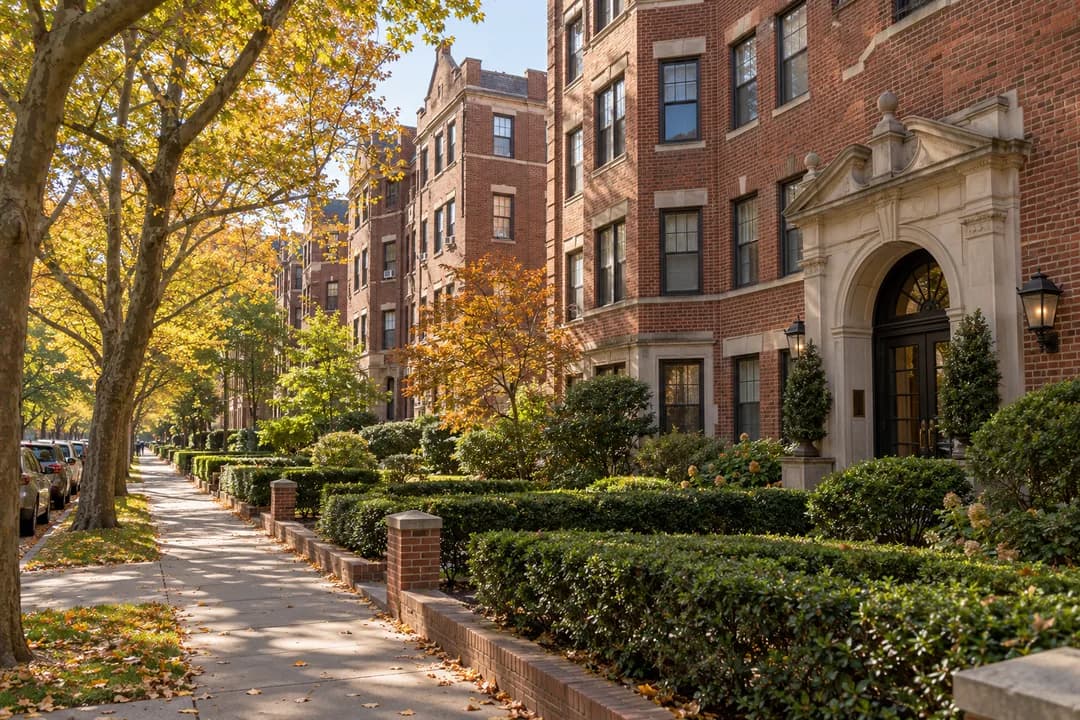
Jackson Heights rewards a sidewalk walk rather than a hunt for one famous building. For a heritage historic district visit in NYC, make the garden apartment blocks the main event: look at the relationship between brick buildings, planted setbacks and the spaces between them. The Landmarks Preservation Commission's designation report explains those features as parts of a planned residential community. Start with the district map, then choose a short stretch that lets you compare two blockfronts without treating anybody's home as an attraction you can enter.
The interesting view is the space between buildings
The temptation on an architecture walk is to photograph a doorway and move on. Here, try a wider frame. Stand where you can see the building line, the pavement and the planted strip together. Notice how a repeated facade differs from an isolated house: windows establish a rhythm, entrances interrupt it, and gaps reveal something about the arrangement behind. You do not need to name every architectural style to see the pattern. Describe what is visible before attaching a historical explanation to it.
For a first visit, pick three things to observe: the setback, the entrance and the treatment of a corner. Give each a separate photograph or written note. That small constraint produces a more useful record than dozens of nearly identical pictures. It also makes the walk work for a companion who enjoys looking but does not want a lecture. Each person can choose a different detail and compare impressions at the next junction, away from a residential entrance.
A planned community has more than one kind of street
The city's report discusses garden apartments, houses, later apartment buildings, institutions and commercial streets. Those different pieces are the substance of the walk. The housing is not just a backdrop to a shopping trip, and the shopping streets are not an interruption of the district. Consider how a neighborhood accommodates both. A quiet residential frontage and a busier commercial corner answer different needs, even when their materials or proportions offer a visual connection.
One useful comparison is the relationship between the residential streets and 37th Avenue. The designation report identifies that avenue as the district's commercial spine and discusses the neo-Tudor commercial group at its intersection with 82nd Street. Use that intersection as an optional visual comparison, rather than promising a particular shop or meal. Shop tenants can change without erasing the architectural question: how does a building announce a public, commercial use while still belonging to its surroundings?
What the map can tell you before your feet do
A neighborhood name and a designated district are different things. The historic district has a mapped boundary, while everyday use of Jackson Heights can cover a wider area. For this outing, use the Landmarks Preservation Commission's district documentation to establish what you mean by the district. Avoid drawing a convenient rectangle from memory. A corner building, a rear lot line or a later addition can make an official boundary less tidy than a visitor expects.
Choose an arrival point and a finishing point before deciding which individual buildings to include. Then keep the path continuous. If you find yourself crossing the same junction repeatedly to collect disconnected photographs, shorten the list. This is an observation walk, not an inventory assignment. A small route with a clear question can be more satisfying than reaching every edge of a district while barely noticing the street in front of you.
Leave the gardens on their own side of the gate
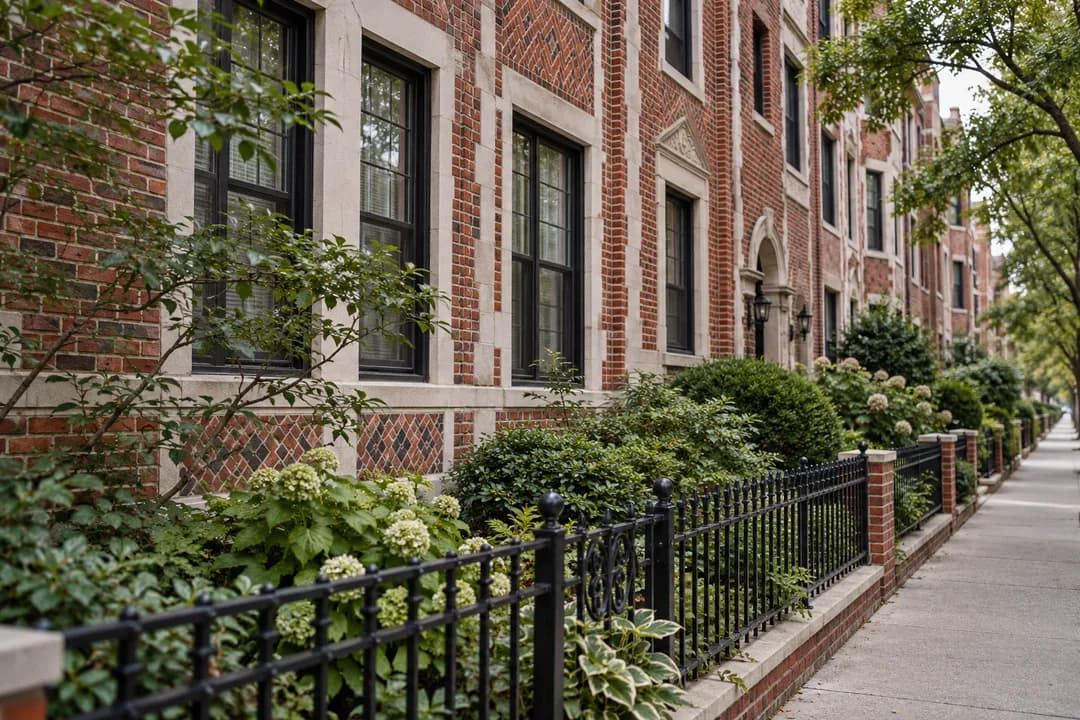
Garden apartments invite curiosity precisely because the interior landscape is partly concealed. That does not turn a gate into a visitor entrance. This article proposes public sidewalk observation only. Do not follow a resident through a door, reach through fencing for a photograph or wait beside an intercom for somebody to let you in. If a view is blocked, the blocked view is the limit of that stop. You have not missed an entitlement included with the walk.
A useful way to discuss that limit with children is to distinguish an interesting building from a public building. Ask them to sketch a roofline or count a visible window grouping from the pavement. Avoid games that require approaching windows or peering into rooms. With a group, gather at a place that leaves the walking path clear. Finish any explanation there before moving along, rather than spreading listeners across the doorway you are discussing.
Reading history without inventing a scene
The district report provides documented planning and architectural context. It does not tell you what a passerby is thinking, which apartment belongs to a particular family or how every resident feels about preservation. Keep those categories separate. It is possible to write a vivid note about a curved entrance, a planted gap or a contrast in building height without inventing a former resident's conversation. An observation becomes stronger when its limits are clear.
Try making a two-column note during the walk. In one column, record what you actually saw. In the other, put the question it raises. A repeated entrance might prompt a question about the original building group, for example. Later, match that question to the relevant entry in the designation report. This turns an official document into a companion to looking, rather than a set of facts to recite at somebody's front door.
Give the outing an ending before adding another stop
If your interest is garden apartment planning, finish after you have compared a residential frontage with a commercial corner. Do not add a distant landmark simply because it appears on a citywide list. The transition from housing to a local avenue already gives this walk a beginning and an ending. Save a separate neighborhood for another day, particularly if somebody in the group has limited energy or prefers a shorter outing.
For wet weather, reduce the number of stops instead of promising an indoor substitute inside a private building. For a photography outing, leave room to revisit one facade from a different public viewpoint. For a conversation with a visiting relative, let the question of how people share outdoor space guide the route. These are suggested approaches, not scheduled tours or guarantees about conditions. Choose the version that matches the people actually joining you.
Practical Notes for a respectful district visit
Use the official district map as the boundary reference and keep the outing on public walking routes. Wear shoes suited to an ordinary city walk, carry what you need for the weather and plan a finish that makes the return trip straightforward. A historic designation is not a promise of step-free access, a staffed welcome point or entry to a residential courtyard. This article does not offer access to private property.
The Karpo APP can be the starting point for a conversation about what you want from a neighborhood outing. Explain that you are interested in garden apartment streets, exterior architecture and a short route, with no private interiors. Keep the final selection modest: one district, one observation theme and an ending everybody understands. The most useful souvenir is a small set of precise observations that makes Jackson Heights feel distinct, rather than another collection of anonymous brick facades.
Ask Karpo for more information.
Keep reading
- SoHo Tailor Alteration Shop Finder for Sample Sale Finds
 Williamsburg Tailor Alteration Shop Finder for Bike Riders
 Upper West Side Tailor Alteration Shop Finder for Kids