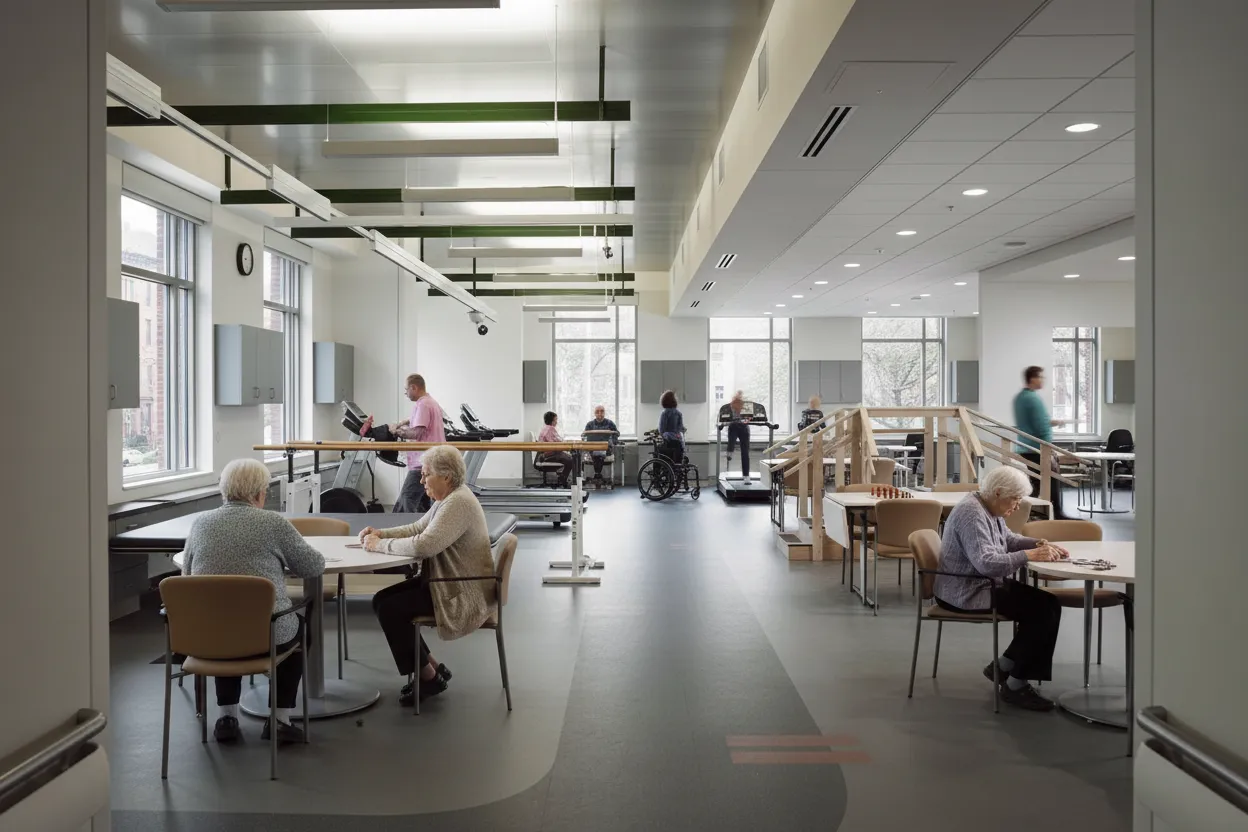
Search interest in “mitch mcconnell rehab status” is really a proxy for a more local question: what happens when an older adult suddenly needs rehab, discharge planning, transportation, or steady follow-up? In New York City, the useful answer is not celebrity-style speculation. It is knowing which public systems can help, what they actually promise, and where families still need to verify details before relying on them. This guide is for a concerned New Yorker trying to move from hospital anxiety to a workable care plan. Start with official contacts, document every referral, and treat any unconfirmed bed, appointment, ride, or service as provisional until the provider confirms it directly.
Want help turning a confusing discharge call into a practical NYC care checklist? Text Karpo with the borough, mobility limits, insurance status, and next appointment date.

NYC Health + Hospitals Geriatric Services for the First Medical Triage
NYC Health + Hospitals is the clearest public starting point when the issue is medical rather than purely social. Its geriatric services page says the system offers primary and preventive services for older adults, accepts Medicare and Medicaid plans, and works on issues such as falls, medication use, discharge instructions, memory disorders, chronic pain, diabetes, heart disease, and depression. That makes it useful for a first triage conversation when a family needs a physician-led plan rather than scattered phone calls.
The tradeoff is that systemwide availability does not mean one same-day geriatric appointment exists near you. Use the central appointment number or the location finder, then ask whether the site has geriatric-focused staff, wheelchair-accessible exam space, pharmacy support, transportation help, and after-visit instructions in the patient’s preferred language. If the answer is vague, ask for the specific clinic name, appointment type, and callback path before ending the call.
NYC Health + Hospitals Locations for Post-Acute and Long-Term Care Decisions
For rehab planning, the location finder matters because NYC Health + Hospitals lists hospitals, Gotham Health centers, and post-acute or long-term care centers separately. The public listing includes post-acute and long-term care locations such as Carter in Manhattan and Coler on Roosevelt Island, along with phone and appointment contacts. That distinction helps families avoid calling a neighborhood clinic when the real question is skilled nursing, post-hospital recovery, or longer residential care.
The failure mode is assuming that a listed facility equals an appropriate open placement. Bed availability, insurance authorization, therapy intensity, visitor rules, and discharge destination planning can change quickly. Ask the hospital discharge planner which level of care is being recommended, whether the patient needs physical, occupational, or speech therapy, and whether the receiving facility has accepted the referral in writing. Before transfer day, verify destination address, transport type, medications, assistive devices, and follow-up appointments.
NY Connects for Sorting Home Care, Nursing Home, and Benefits Questions
NY Connects is the practical bridge when the problem is bigger than a clinic visit. NYC Aging describes it as a free, objective information and assistance service for long-term supports, serving people of all ages and income levels, including older adults, people with disabilities, caregivers, friends, and neighbors. It can help with benefits eligibility, referrals to home care, support groups, financial information, legal information, and choices between home, nursing home, or another residential setting.
This is best for medium-complexity cases: an older adult is medically stable enough to leave the hospital, but the apartment, caregiver schedule, insurance paperwork, or food access is not ready. Call with the ZIP code, diagnosis, mobility limits, insurance, current location, and discharge date. If timing is urgent, say so immediately. If the need is medical, emergency, or psychiatric crisis, NY Connects is not the substitute for 911, the hospital team, or a licensed clinician.
Aging Connect and the Service Finder for Borough-Level Backup
Aging Connect is NYC Aging’s information and referral contact center, and the city lists 212-AGING-NYC as the main number for older adults and their families. The Service Finder adds a borough and ZIP-code layer, with categories such as older adult centers, case management, home care, home-delivered meals, transportation, caregiver services, legal services, abuse prevention, and geriatric mental health. That makes it useful when a family needs nearby support rather than a citywide explanation.
The smart pacing is to use the Service Finder before calling, then confirm everything live. Program pages and search results can lag real capacity, eligibility, intake windows, or language availability. Ask whether the agency serves the exact address, whether a home visit is required, whether there is a waitlist, and whether fees or suggested contributions apply. If the first referral cannot help, ask for the next contracted agency rather than restarting from scratch.

NYC Aging In-Home Services When Staying Home Is the Goal
NYC Aging says its funded case-management agencies provide in-home services for residents age 60 and older after a phone intake and an in-home visit to determine eligibility and coordinate services. Confirmed service categories include help applying for benefits, home-delivered meals, some NYC Aging-funded home care for non-Medicaid recipients, personal care, housekeeping, friendly visiting, long-term care counseling, and nutrition counseling. This is the lane for making home recovery realistic.
The limitation is timing and fit. A case-management intake is not an instant hospital bed, and home care depends on eligibility, staffing, and the person’s actual needs. Before choosing home discharge, test the apartment against reality: stairs, bathroom access, medication management, food, overnight risk, fall history, and caregiver availability. If any piece is uncertain, ask the discharge planner what temporary rehab, visiting nurse, durable medical equipment, or emergency backup option exists.
NYC Aging Geriatric Mental Health for Stress, Isolation, and Caregiver Strain
Rehab planning often focuses on walkers, wounds, and appointments, but mental health can derail recovery just as quickly. NYC Aging says its Geriatric Mental Health Initiative places licensed clinicians at older adult centers in all five boroughs. Services can include screenings, counseling, engagement activities, education, and referrals. The city says services are available to New Yorkers age 60 and older, and older adult center membership is not required.
This option fits when sadness, fear, sleep changes, withdrawal, or caregiver burnout are part of the care picture, but it is not for immediate danger. If someone is thinking about self-harm or harming others, the city directs people to call 911 immediately. For non-emergency support, call Aging Connect and ask for the nearest geriatric mental health option, format availability, language access, intake steps, and whether the patient can participate by phone or video.
Access-A-Ride for Rehab Appointments That Depend on Transportation
Transportation can be the quiet reason a rehab plan fails. The MTA describes Access-A-Ride as paratransit for eligible customers with disabilities that prevent them from using public buses and subways. It operates within New York City’s five boroughs and a three-quarter-mile corridor beyond the city border into nearby Nassau and Westchester areas. The service is shared-ride, origin-to-destination or feeder service, and operates every day, including holidays.
Do not build a discharge plan around Access-A-Ride until eligibility, booking, pickup expectations, and backup rides are confirmed. Rehab appointments can be time-sensitive, and shared rides may involve longer travel windows. For the final verification step, call the clinic and transportation provider the day before the appointment, confirm the exact entrance, wheelchair or escort needs, pickup window, return plan, and what happens if therapy runs late.
Tags: #NYCHealthcare #GeriatricCare #SeniorCareNYC #RehabPlanning #NYCHealthHospitals #NYConnects #AgingConnect #AccessARide #CaregiverSupport #DischargePlanning #SeniorResources #HiddenGemsOddFinds #AskKarpo #BeforeYouGo
Sources consulted: Source 1: nyc.gov · Source 2: nychealthandhospitals.org · Source 3: nychealthandhospitals.org · Source 4: a125-egovt.nyc.gov · Source 5: nyc.gov · Source 6: mta.info
All trademarks are the property of their respective owners.
Ask Karpo first
Tell Karpo your date, group size, budget, and starting neighborhood. We’ll check current access, timing, transit, and the cleanest plan for NYC Hospitals and Senior Centers before you head out.