 Brooklyn Paints Pottery Painting: Saturday Bed-Stuy Plans
Weekend Plans
Planning a quiet New York City weekend after reading about Hayden Panettiere ex husband news
When tabloid headlines pile up, a low-key Brooklyn route and a train ride north offer the reset you actually need.
You spend twenty minutes reading about Hayden Panettiere ex husband drama—Wladimir Klitschko, the former heavyweight champion, their split, custody headlines, the whole tabloid spiral—and suddenly it's Saturday morning and you need to get off your phone. The algorithm wants you to keep scrolling. You want air and a plan that doesn't require group texts or waiting for someone else to commit.
Karpo lives in iMessage and builds same-day routes that account for real subway timing and what's open right now. Text it the neighborhood you're starting from and it'll hand you a plan that survives service changes.
When the internet sends you down a rabbit hole
New York City rewards the solo decision. You can board a train in fifteen minutes, eat something decent without a reservation, and come home before the evening subway confusion starts. The goal here is simple: a route that resets your attention without adding friction. No crowd-thick museums, no restaurants where you stand in a hallway for forty minutes, no late-night transfers through stations that close half their exits after eleven.
Sunset Park to the water, then north
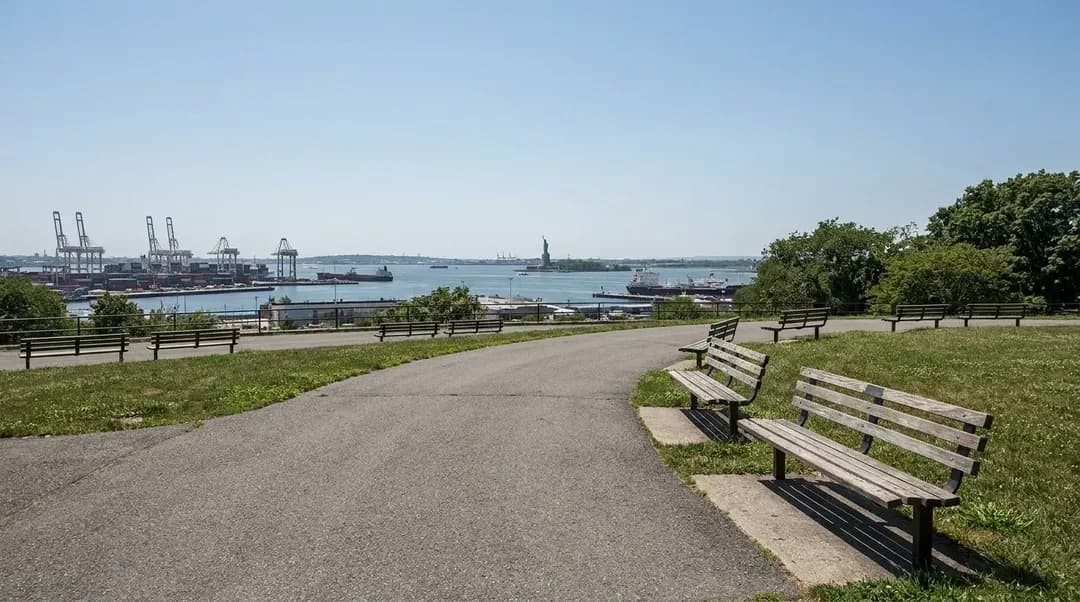
Start in Sunset Park, the Brooklyn neighborhood, not just the park itself. Take the D or N to Eighth Avenue or Ninth Avenue. The park runs along a ridgeline above the harbor, and the western edge gives you a clear sightline to the Statue of Liberty, container cranes at Red Hook, and the Verrazzano Bridge without the crowding you'd face at Brooklyn Bridge Park on a weekend afternoon. Walk south along the paved path; the slope drops off fast, so benches on the upper level stay quieter than the playgrounds below.
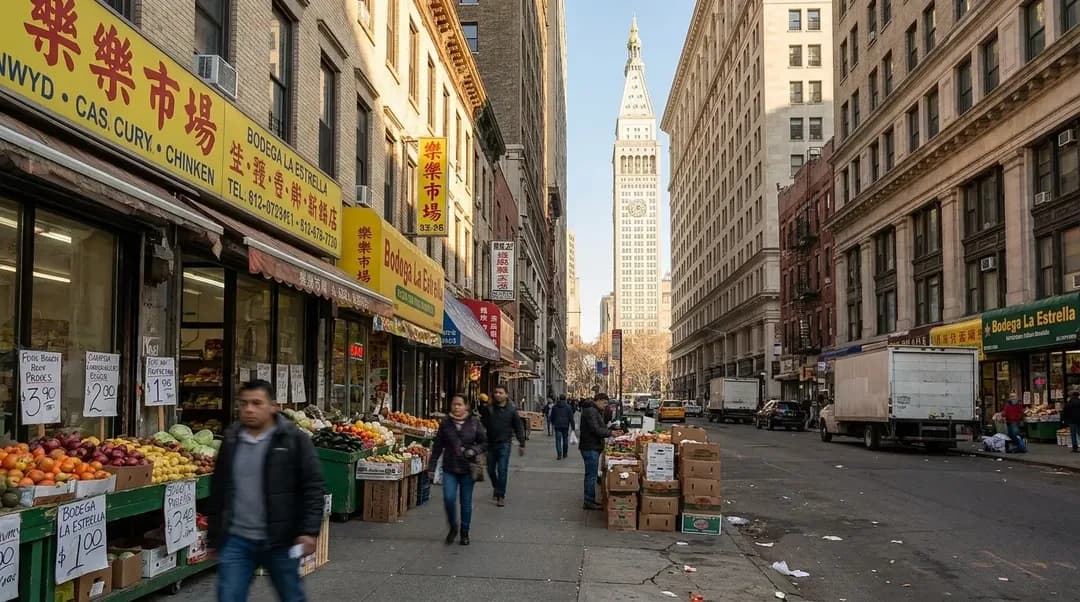
The neighborhood around the park is heavily Chinese and Latino. Eighth Avenue between Sixtieth and Fiftieth Streets is wall-to-wall bakeries, produce stands, and roast-meat windows. It's a working retail strip, not a destination dining scene, so foot traffic moves with purpose and you're not dodging brunch lines. If you want a hour of walking that doesn't feel like a curated experience, drop down to the avenues in the Forties and loop back north. Industry City sits at the western edge near the water, but on weekends it turns into a family-and-stroller zone; the hallways get bottlenecked fast, and every vendor stall requires a decision. Skip it unless you have a specific errand.
From Sunset Park, the R train runs north through Bay Ridge, then under the harbor into Manhattan. It's a long tunnel stretch—about twelve minutes underwater—but the train stays above ground through southern Brooklyn, so you see rowhouse blocks and back courtyards most visitors never register. Get off at Whitehall Street or Cortlandt Street if you want to walk the southern tip of Manhattan, where the streets are wider and the weekend office-district emptiness gives you room to move. The Hayden Panettiere ex husband search likely pulled you into celebrity-news fatigue; this route is the opposite of that. No one here cares what you're reading.
Longer option: the Metro-North escape to Tarrytown
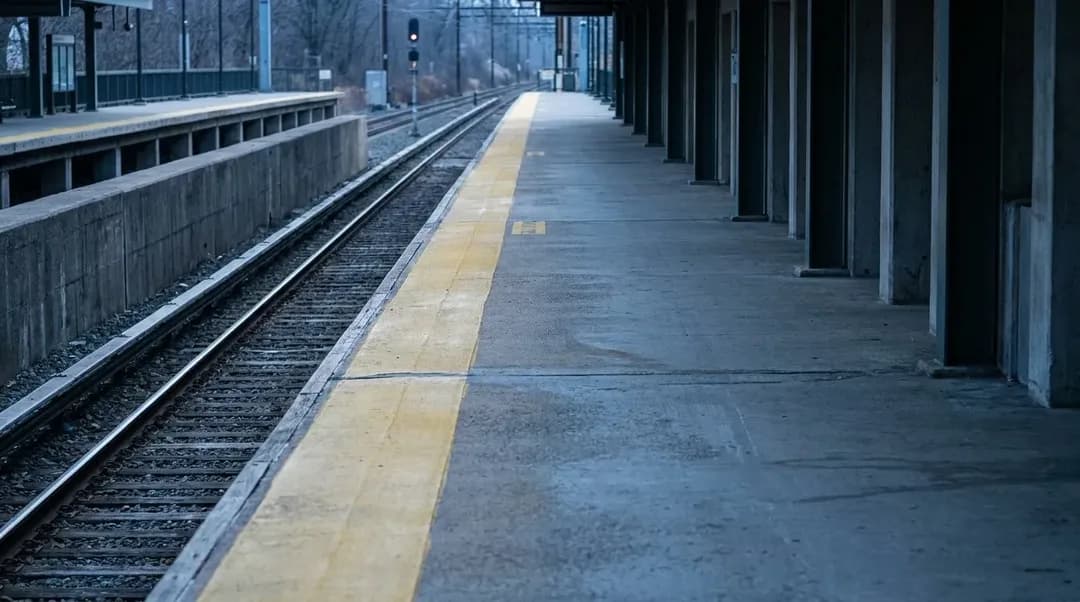
If you'd rather leave the city entirely, Grand Central puts you on a Hudson Line train to Tarrytown in under an hour. Trains run every hour on weekends; check the Metro-North schedule before you go, because missing one means a long wait on a concrete platform with nowhere to sit that isn't directly under a loudspeaker. Tarrytown is a small river town with a walkable downtown, a waterfront park, and the eastern approach to the Tappan Zee Bridge—now the Mario Cuomo Bridge, though most people still use the old name.
The weekend day-tripper move here is to walk from the station down to the river, follow the path south under the bridge, and then loop back through the village. It's about three miles total, flat terrain, and you'll see the bridge's suspension towers up close. The path is paved and wide enough that runners and cyclists don't create conflict. On a clear day the western hills across the Hudson show full texture, especially in morning light. You're not here for landmarks; you're here because the train took you out of cell-service range for forty minutes and the river moves slower than your thought spiral about Hayden Panettiere ex husband tabloid cycles.
Tarrytown's Main Street has cafés and a few bookstores. Nothing is cutting-edge, but that's the point. The rhythm is small-town weekend, not Brooklyn brunch combat. If you want a longer walk, Sleepy Hollow is one stop farther north, and the Old Dutch Church and cemetery are open to the public. Don't expect a guided experience; it's a churchyard with old gravestones and a historical marker, and you can walk through it in twenty minutes. The Metro-North return runs until nearly midnight, but the last few trains are express and skip smaller stops, so confirm your station is on the late-evening schedule.
Where to eat without a wait strategy
In Sunset Park, the bakeries along Eighth Avenue open early and close by dinnertime. You'll find sesame balls, egg tarts, and steamed buns in the windows. These are counter-service spots; you point, pay, and leave. No table service, no tipping math, no host stand. If you want to sit, the park itself has benches, or you can take food down to the Brooklyn Army Terminal area, where the waterfront promenade has empty stretches even on weekends. The wind off the harbor is steady, so bring a layer if it's before May or after September.
In lower Manhattan, the Whitehall and Cortlandt Street area empties out on weekends. Most of the lunch spots are closed, but the Staten Island Ferry terminal has a food court that stays open every day. It's not destination eating, but it's reliable, cheap, and you can sit by the windows overlooking the ferry slips. The ferry itself is free and runs every thirty minutes; if you have an extra hour, ride it round-trip for the harbor views without committing to a Staten Island itinerary.
Tarrytown's Main Street has diners and a few sandwich places. Expect table service and weekend-morning waits if you arrive between nine and eleven. The better move is to eat after noon, when the brunch rush clears, or pick up something for the train ride back. There's a pizzeria near the station that opens early afternoon and doesn't take reservations. The slices are standard suburban New York—thin crust, not artisan, priced for high-schoolers. If you're chasing the Hayden Panettiere ex husband story because you're procrastinating a decision or avoiding your own news, eating alone at a counter with a paper plate is sometimes exactly the reset that works.
How to leave when you're done
The D and N lines from Sunset Park run frequently during the day, but after eight p.m. the D drops to every twenty minutes and the N slows further. If you're heading back to Manhattan or north Brooklyn, take whichever train comes first and transfer at Atlantic Avenue–Barclays Center, where nearly every line converges. The station is large and confusing; the transfer from the D or N to the 2, 3, 4, or 5 requires walking through long corridors and up a flight of stairs that's easy to miss if you follow the crowd instead of the signs. The Q train also stops there and runs express into Manhattan, but it doesn't serve the same stops as the D or N, so confirm your destination before boarding.
From lower Manhattan, the R, 1, and 4 trains all leave from the Whitehall–South Ferry area, but they serve completely different parts of the city. The 1 is local and slow; the 4 is express but skips most of the West Side; the R crawls through Brooklyn and Queens. If your plan is to head home by dinnertime, aim to leave the waterfront by five, when the evening commuter rush starts to fill platforms. The Whitehall station has limited exits, and on weekends one side is often closed for maintenance, forcing everyone through a single staircase.
The Metro-North Hudson Line runs back to Grand Central every hour until nearly midnight, but the last southbound local trains leave Tarrytown around ten-thirty. After that, you're on an express that may skip your intended stop if you're heading somewhere other than Grand Central. The conductor announces stops, but the PA system is often inaudible in the last car. Sit in the first three cars if you're unfamiliar with the line. Grand Central connects to the 4, 5, 6, 7, and shuttle trains, but the subway entrances close at different times depending on the line, and the Lexington Avenue platforms get dangerously crowded after eleven when multiple trains bunch up. If you're risk-averse about late transfers, plan to be back in the city by nine.
What to confirm the morning of
Check the MTA service status before you leave. The D and N lines share tracks in parts of Brooklyn and frequently reroute on weekends for track work. If the D is running local or skipping Sunset Park entirely, the R is your backup, but it adds fifteen minutes. The MTA website posts planned changes, but real-time delays don't show up until you're already on the platform, so build buffer time if you're connecting to something scheduled.
For Tarrytown, confirm the Metro-North weekend schedule the night before. The Hudson Line occasionally runs a reduced schedule on holiday weekends, and the Tarrytown station is unstaffed, so if you miss your train there's no ticket office to ask for help. The MTA's TrainTime app shows live arrivals, but service in the station itself is spotty. Screenshot the return schedule before you board the outbound train.
Sunset Park is open year-round, but the upper path along the ridgeline has no lighting, and in winter it's fully dark by five p.m. The lower playgrounds have lights, but the western benches with the harbor view do not. If you're planning to stay past dusk, bring a flashlight or stick to the avenues, where streetlights and storefronts keep the blocks visible. The Tarrytown waterfront path is similarly unlit after sunset, and the walk back to the station involves crossing a road with no sidewalk for one short stretch. It's safe in daylight but poorly marked at night. These are not dangerous routes, but they require attention when natural light is gone.
Practical notes
- Sunset Park: D or N to Eighth or Ninth Avenue; upper path has harbor views but no lighting after dusk.
- Tarrytown Metro-North: Hudson Line trains run hourly on weekends; last locals leave around 10:30 p.m., then express only.
- Atlantic Avenue transfer: D/N to other lines requires stairs and long corridors; follow signs, not crowds.
- Whitehall station: one exit often closed weekends; expect crowding during evening rush after 5 p.m.
- Weather: both routes are exposed to wind off water; bring layers spring and fall.
- Cost: subway $2.90 per ride; Metro-North to Tarrytown around $17 round-trip off-peak.
Tags: #karpo #nyc #newyorkcity #weekendplans #sunsetparkbrooklyn #haydenpanettiereexhusband #brooklynweekend #metronorth #tarrytown #hudsonvalley #nycsubway #solotravel #newyorkweekend #brooklynwaterfront #quietweekend
Sources consulted: MTA Service Status · Metro-North Railroad · NYC Parks: Sunset Park
All trademarks are the property of their respective owners.
Ask Karpo first
Text Karpo before you head out and ask what's actually open along Eighth Avenue in Sunset Park today, or whether the Metro-North Hudson Line is running on schedule with no gaps. It'll also build you a live route from your apartment to the D train that accounts for current service changes, so you're not guessing at the platform.
Ask Karpo for more information.
Keep reading
- Brooklyn Paints Pottery Painting: Saturday Bed-Stuy Plans
 Little Shop Pottery Painting: Upper West Side Walk-Ins
 Color Studio NYC Pottery Painting: $15 Chelsea Tables