 Chelsea Piano Bar Night Picker for a Gallery Night Birthday
Bars & Nights Out
East Village Haunted Bars: History Inside McSorley's Old Ale House
A deep dive into McSorley's Old Ale House on East 7th Street, exploring its 1854 East Village saloon roots, historic wishbones, Civil War ghost lore, and famous twin ale pours.
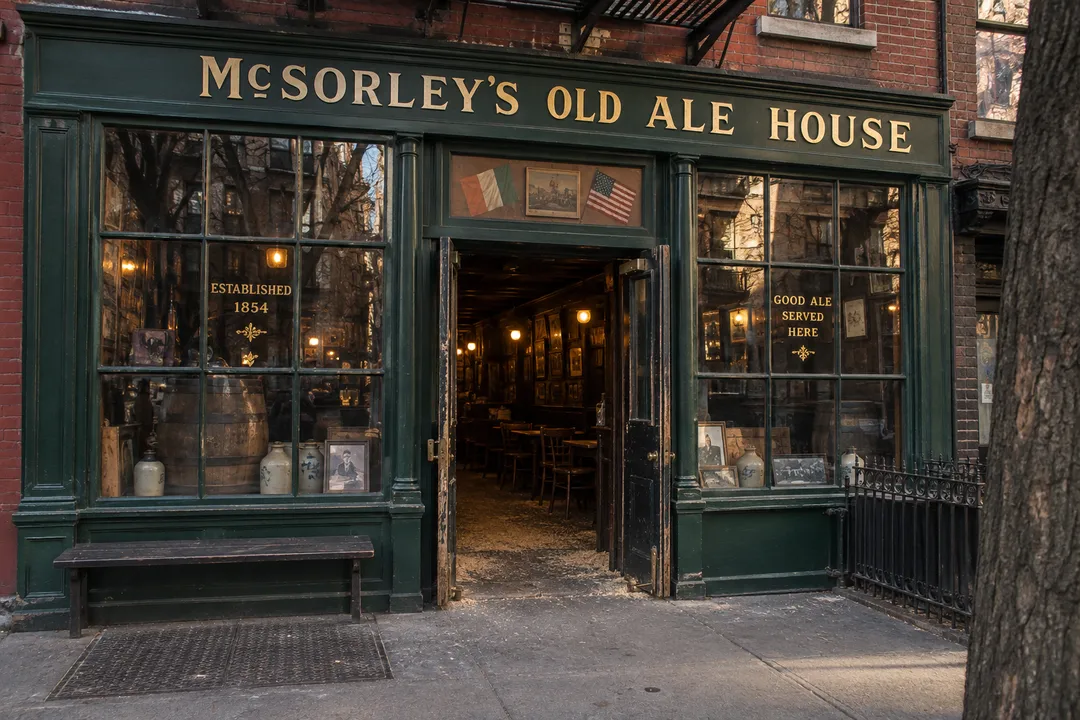
Few places evoke old New York with greater authority and charm than McSorley's Old Ale House at 15 East 7th Street. Standing resolutely in the East Village since 1854, this legendary saloon represents the quintessential destination for travelers seeking haunted bars in New York. Its famous motto, 'We Were Here Before You Were Born,' serves as both a proud statement of longevity and an undeniable historical truth that permeates every corner of the room across centuries.
Visiting the saloon is remarkably simple via the city subway system, located just a three-minute stroll from the Astor Place station on the 6 train. The 8th Street–NYU stop on the R and W lines sits two blocks west, while the 2nd Avenue station on the F train lies nearby to the south. East 7th Street presents a charming historic streetscape filled with red-brick tenements, vintage vinyl record shops, and family-owned Ukrainian bakeries that keep neighborhood traditions thriving.
The physical room remains famously suspended in time, featuring wide wooden floorboards blanketed in fresh pine sawdust and walls covered in thousands of historical artifacts. Yellowed newspaper clippings, antique gas fixtures, and century-old political campaign posters crowd every square inch of plaster. A heavy cast-iron potbelly stove still stands proudly in the center of the main room, radiating gentle warmth during chilly autumn and winter evenings when cold winds sweep down 7th Street.
Ghost legends at McSorley's focus heavily on founder John McSorley and the young soldiers who passed through its doors before heading off to historic conflicts. Above the main wooden bar hangs a delicate iron chandelier draped with dozens of dust-coated wishbones. Doughboys departing for the trenches of World War I hung these wishbones for good luck, planning to snap them upon their safe return home from European battlefields after the armistice.
Those wishbones left hanging belong to the young men who perished overseas, preserved as a sacred memorial that has remained untouched since 1918. Regulars and longtime bartenders report sensing somber, watchful presences in the back room near closing time when the crowds disperse. Heavy wooden chairs occasionally shift across the sawdust without human intervention, and unexplained shadows have been glimpsed standing near the antique cast-iron stove in the dim light.
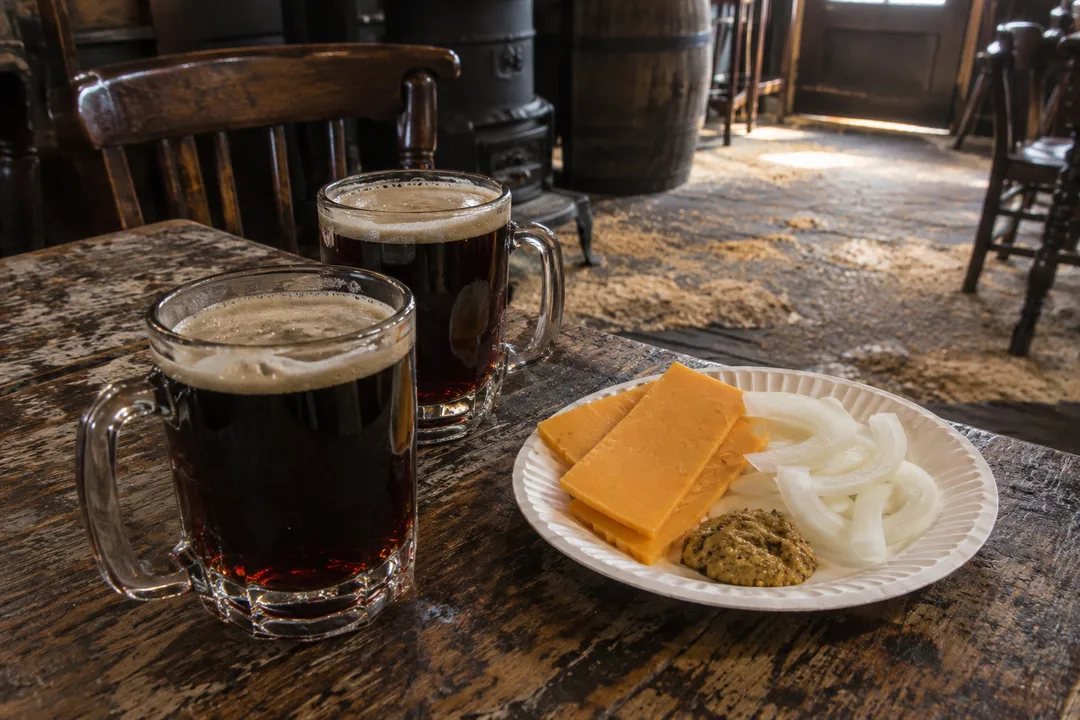
The beverage program at McSorley's is legendary for its minimalism and strict adherence to nineteenth-century saloon tradition. The bar serves exactly two drinks: McSorley's Light Ale and McSorley's Dark Ale. Drinks are ordered exclusively by the pair, meaning asking for a beer delivers two small glass mugs brimming with creamy white foam for nine dollars total, encouraging shared toasts, boisterous camaraderie, and lively conversation among companions.
The food menu matches the drinks in straightforward, rustic simplicity, providing hearty sustenance rather than culinary pretension. The signature offering is the Cheese and Raw Onion Platter, priced at nine dollars and served on paper plates with saltine crackers and fiery house mustard. The sharp white cheddar paired with pungent raw onion slices and eye-watering mustard is a ritual that has sustained patrons and workingmen for over a century.
Those seeking hot food can order the classic corned beef sandwich for thirteen dollars, stuffed with thinly sliced cured beef between soft rye bread. The kitchen also dishes out steaming bowls of homemade beef chili topped with cheddar cheese and onions for ten dollars. Every meal is designed for unpretentious comfort and speed, pairing brilliantly with the malty, roasted profile of the dark and light house ales.
Because of the tavern's global fame, timing your visit strategically will significantly enhance the quality of your overall experience. Arriving on a Tuesday or Wednesday afternoon around one o'clock allows you to sit at a corner table and converse quietly with seasoned bartenders about saloon lore. Weekend evenings after five o'clock see lines extending down 7th Street, packing the room to maximum capacity with thirsty patrons eager to partake in history.
Seating follows communal Bavarian-style tavern rules, where guests slide onto wooden benches alongside total strangers without hesitation. If you find an empty seat at an occupied table, simply nod politely and take it. This communal arrangement fosters spontaneous conversations between neighborhood locals and international visitors, turning an ordinary drink into a shared celebration of local neighborhood history and shared human fellowship.
The saloon has hosted an astonishing array of historical figures across its seventeen decades of continuous operation. Abraham Lincoln reportedly stopped by for a cold ale following his historic Cooper Union address in 1860. Later luminaries including Theodore Roosevelt, E.E. Cummings, Hunter S. Thompson, and folk legend Woody Guthrie all frequented the sawdust-strewn tables, seeking honest company, creative respite, and unadorned pints.
Originally opened as an all-male workingman's saloon called The Old House at Home, McSorley's famously resisted social changes for over a century. It remained strictly male-only until 1970, when a landmark civil rights lawsuit compelled the owners to open the doors to women. Today, the saloon warmly welcomes all visitors while jealously guarding its nineteenth-century atmosphere, antique tavern traditions, and welcoming neighborhood spirit.
After enjoying your twin mugs of ale, explore the vibrant East Village neighborhood surrounding the tavern. Walk half a block west to inspect the historic Cooper Union foundation building where Lincoln delivered his famous address. Alternatively, head east toward Tompkins Square Park to admire century-old elm trees and watch neighborhood dog walkers gathered around the central grassy lawns beneath the afternoon sun.
Keep in mind that McSorley's operates strictly on a cash-only basis, though an ATM is conveniently situated near the rear doorway. Restrooms are utilitarian and historic, reflecting the saloon's nineteenth-century architectural layout and simple plumbing. Visiting McSorley's is not merely about having a beer; it is an immersive historical pilgrimage into the living soul of Old New York that lingers long after you leave.
Ask Karpo for more information.
Keep reading
- Chelsea Piano Bar Night Picker for a Gallery Night Birthday
 Upper East Side Piano Bar Night Picker After the Museums
 Midtown Piano Bar Night Picker for an Anniversary Date