There's something subversive about learning to bind books by hand in 2026, when most of us scroll through thousands of words before breakfast without touching a single page. Yet Manhattan's small community of bookbinding instructors reports waitlists stretching into summer, filled with lawyers and tech workers and designers hungry for an afternoon spent creasing linen thread through folded signatures. The appeal isn't nostalgia—it's the pleasure of making something permanent, spine-stitched and squared, that will outlast your phone by decades.
Why now, why bookbinding
The current wave isn't your grandmother's scrapbooking circle. Students in these workshops trend younger than you'd expect, often under forty, drawn less by preservation instinct than by the radical act of slowing down. A two-hour bookbinding workshop nyc session forces a different cognitive gear: you can't rush a pamphlet stitch, can't multitask while scoring a cover board. Your hands learn a syntax of tension and fold.
Late May in Manhattan means studios with windows cracked open, the sound of traffic mixing with the tick-tick of bone folders on text-weight paper. Instructors describe a post-pandemic shift—participants arrive fluent in screens, beginners in materials, often surprised by how much they remember through touch. Muscle memory, it turns out, works as well on waxed thread as it does on swipe gestures.
What you'll actually make
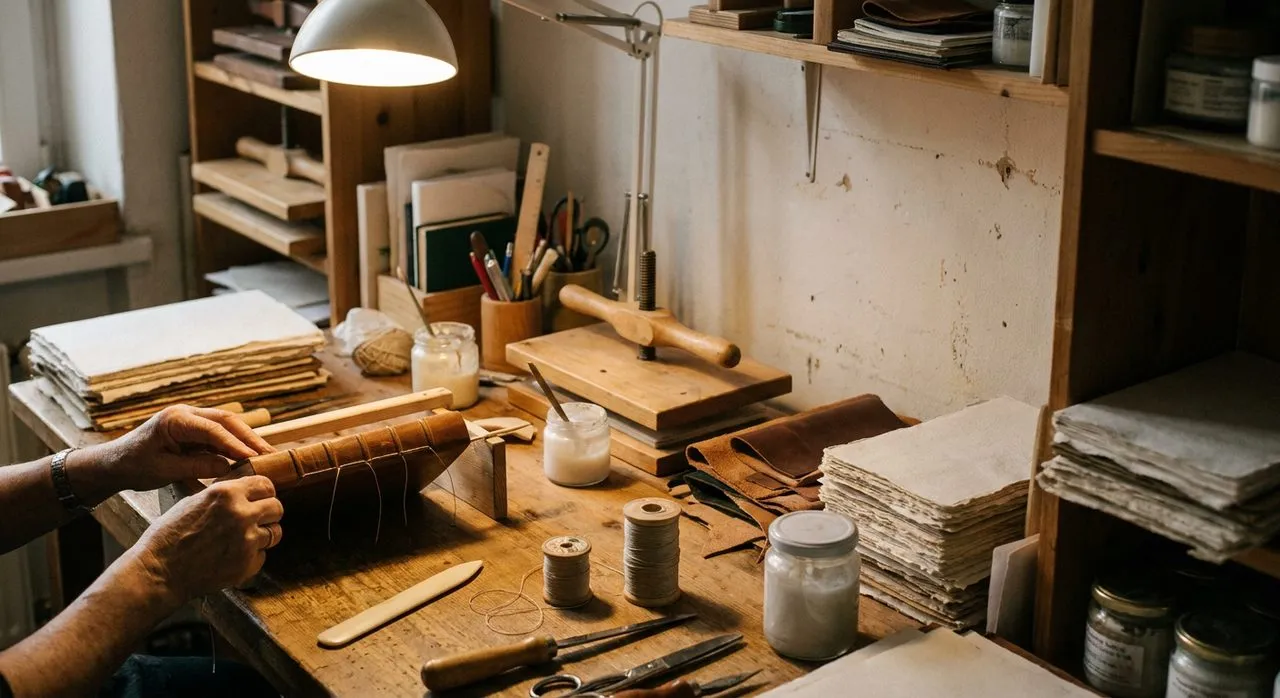
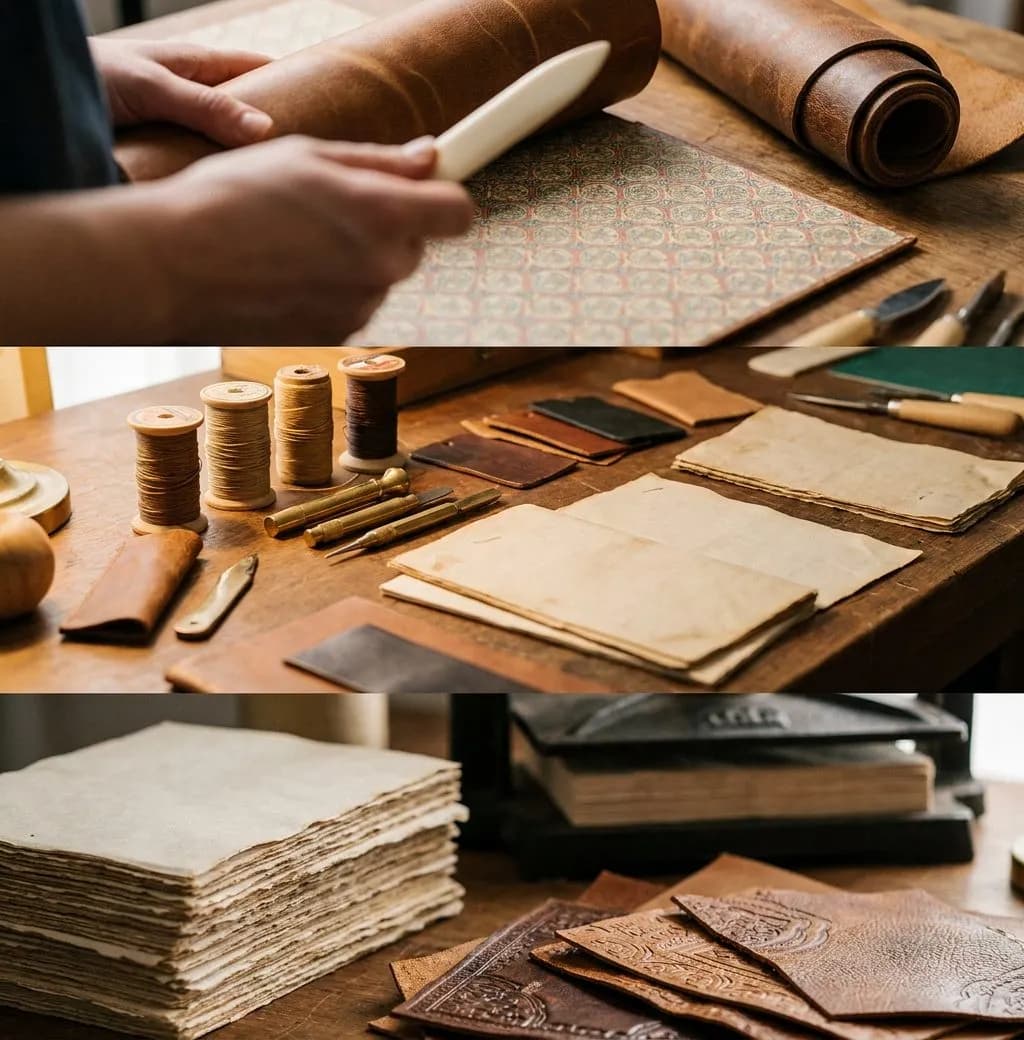
Most beginner sessions focus on softcover pamphlet binding or simple hardcover journals—achievable in a single sitting, satisfying enough to repeat at home. You'll learn to tear (not cut) cotton paper along a ruler, fold sections with precision, pierce holes through stacked signatures using an awl. The vocabulary is old: kettle stitch, endpaper, hinge. The satisfaction is immediate.
Intermediate workshops venture into Coptic binding, where exposed stitching becomes decorative architecture, or Japanese stab binding with its clean geometric patterns. Some studios teach clamshell box construction or gilt-edging techniques, though these typically require multiple sessions. Expect to leave your first class with one completed book, paper-dust under your nails, and a quiet pride that feels antique and utterly contemporary at once.
The studios and their philosophies
Manhattan's bookbinding instructors tend to work from small studios rather than storefronts—a fourth-floor walk-up in Chelsea, a shared maker-space in the Garment District, a light-flooded room above a Chinatown stationer. Most offer weekend workshops scheduled around day-job hours, capping enrollment at eight or ten so everyone gets hands-on guidance. The best teachers let you make mistakes, then show you how a crooked stitch or puckered cover can become a feature rather than a flaw.
Some studios lean traditional, emphasizing archival technique and acid-free materials; others embrace hybrid approaches, encouraging students to bind with vintage maps or marbled papers from paper craft manhattan suppliers. A few instructors also teach related skills—papermaking, letterpress, marbling—and will occasionally combine techniques in special workshops. Check individual studio websites for seasonal offerings; summer schedules typically post in early June.
What it costs, what it's worth
Expect to pay between one hundred twenty and two hundred dollars for a half-day beginner workshop, materials included. That covers paper, board, thread, and use of studio tools—awls, presses, cutting mats, bone folders. Some studios offer discounted series packages if you want to progress through multiple binding styles. Private sessions run higher but allow you to work on a specific project, like binding a collection of family letters or creating custom wedding guest books.
The cost reads steep until you're ninety minutes in, concentration so complete you've forgotten to check your phone, and you realize you're learning a skill taught essentially unchanged since medieval scriptoria. Plus you leave with an object: a book you made, however imperfect, that opens and closes and holds pages. Try getting that from a streaming subscription.
The meditative angle (and when it isn't)
Bookbinding gets lumped into the mindfulness-craft bucket, and there's truth there—the repetitive motion, the focus, the way two hours vanish. But it's not always serene. Thread tangles. Covers warp. You'll poke yourself with an awl at least once. Good workshops normalize this, framing errors as part of the practice rather than personal failures. The teachers worth returning to are the ones who've clearly stabbed their own thumbs many times and lived to joke about it.
What's genuinely calming is the way bookbinding requires sequential thinking: you cannot attach covers before sewing signatures, cannot sew before folding, cannot fold before cutting. In a city that rewards multitasking and speed, there's a rebellious pleasure in a craft that insists on order, patience, one step after another until something whole emerges.
Beyond the first workshop
Many students stop after one session, satisfied to have tried it, the finished journal relegated to a shelf beside other brief enthusiasms. But a surprising number return, drawn back by the tactile problem-solving or the quiet company of other people making things. Some instructors host open studio hours where alumni can use tools and buy materials at cost. A few students eventually invest in their own equipment—a small press, a set of French-curve needles—and start binding at home, usually on a kitchen table cleared of everything else.
The craft also leads sideways into related obsessions: paper stocks, vintage bookbinding manuals, the architecture of rare book libraries. You start noticing how contemporary books are bound, which ones will last, which spines will crack after three readings. It's the kind of knowledge that changes how you see objects you've handled your whole life.
Practical notes
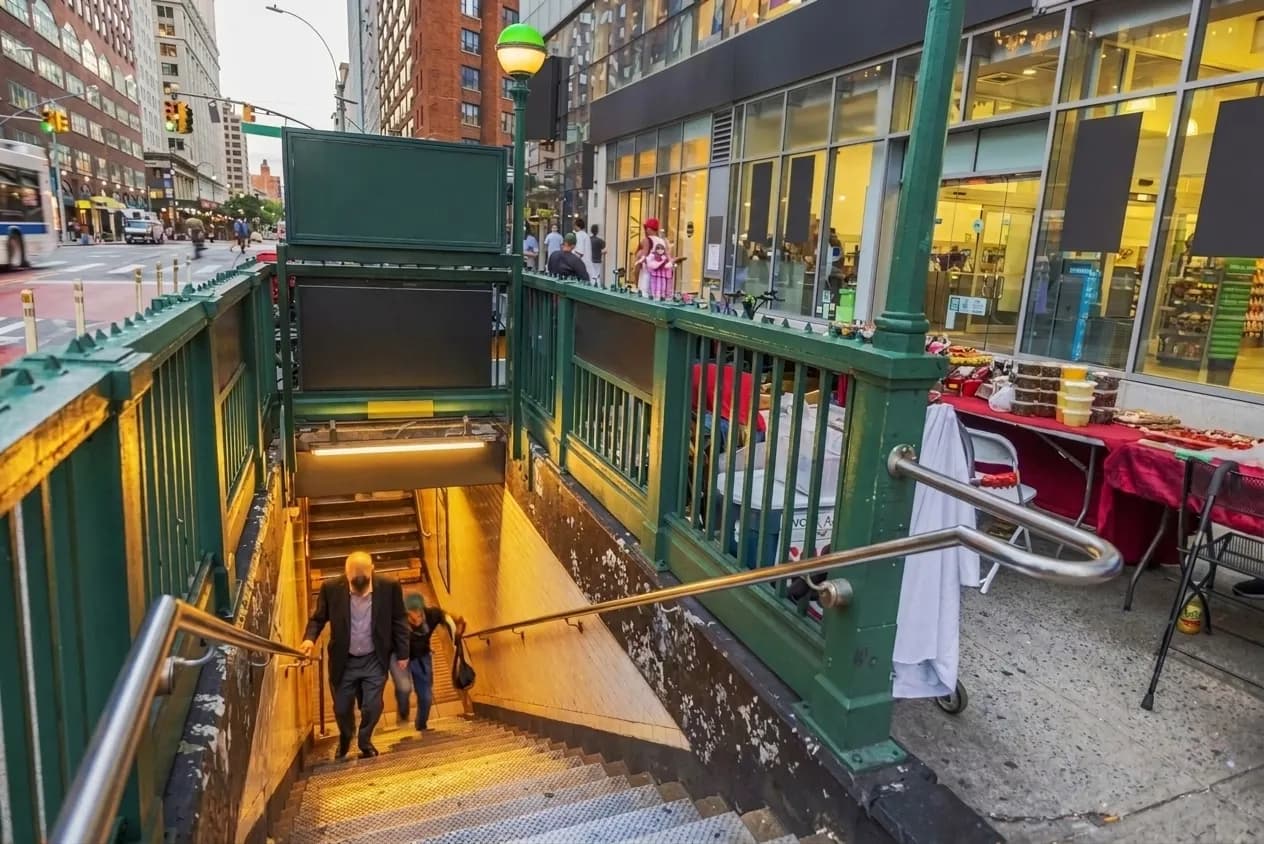
Most Manhattan bookbinding studios operate by appointment or scheduled workshop, so browse offerings online and book ahead—popular weekend slots fill two to three weeks out as June approaches. Studios are scattered: some near Herald Square with access via B, D, F, M trains; others in Soho or the Lower East Side served by the 6 or J/Z lines. Street parking is mythical; garage rates run forty to sixty dollars for four hours. Arrive on time—late entry disrupts pacing for the full group. Wear clothes that can take paper dust and the occasional ink smudge. Studios provide tools, but bring reading glasses if you need them for close work. Most spaces have step access; call ahead for specific accessibility accommodations. Verify current hours and offerings directly with each studio, as schedules shift seasonally.
Tags: #HandBookbinding #ManhattanWorkshops #BookbindingNYC #PaperCrafts #NYCMakers #TheOddEdit #CraftClassesNYC #LearnBookbinding #ManhattanCreative #NYCSummer2026 #TraditionalCrafts #SlowCraft #MakersMovement #BookArts #NYCWorkshops
Sources consulted: Bookbinding · Japanese Binding · NYC Tourism · NYC Craft Classes · MTA Transit Info
All trademarks are the property of their respective owners.