 Chelsea Consignment Shop Crawl Planner for Your First Studio
Hidden Gems & Odd Finds
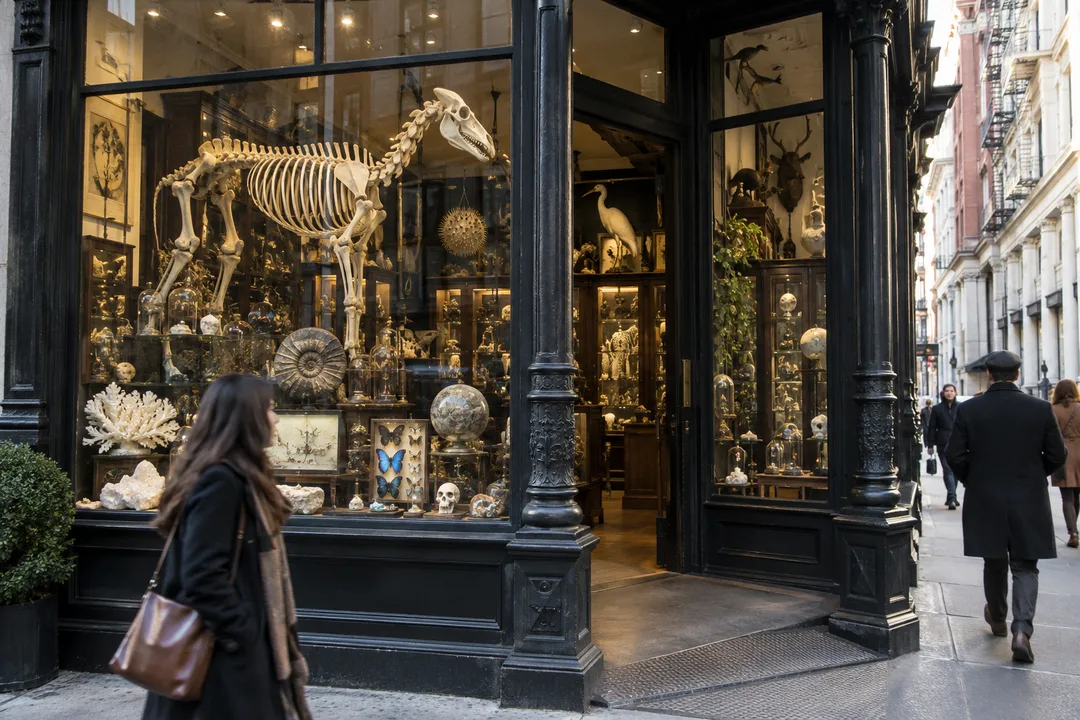
Evolution Halloween Decor Store: Fossil Finds in SoHo
The Evolution Store at 687 Broadway is a Halloween decor store for fossils, minerals, specimens, and natural-history objects that make rooms feel curious.
The Evolution Store at 687 Broadway is a Halloween decor store for people who prefer fossils, minerals, specimens, and natural-history objects to cartoon pumpkins. The SoHo shop turns scientific curiosity into display material: a small cabinet can hold a dramatic stone, a desk can take one unusual specimen, and a dinner table can gain a conversation starter without a themed tablecloth. The store is a walk-in browse, and its best lesson is scale. One real-looking object often creates more atmosphere than a shelf of novelty pieces. A specimen can also organize a color decision. Pull one shade from the stone or fossil and repeat it once in a napkin, ribbon, or lamp glow, rather than matching every object. That small echo lets the natural-history piece feel connected to the room. Avoid placing it beside a busy television screen or a stack of unrelated souvenirs. The eye needs a quiet field to read the details. The shop is full of information, but the finished room should communicate one calm idea at a time. Keep the care note with the receipt, and let the first specimen settle before choosing a partner. Empty space helps the details remain legible. Think of the visit as a cabinet edit. Pick the object that offers the clearest pattern or material, then give it a background quiet enough for the details to show. That approach makes a small natural-history purchase feel generous, and it keeps the Broadway stop useful even when you are decorating for an ordinary dinner rather than a formal party.
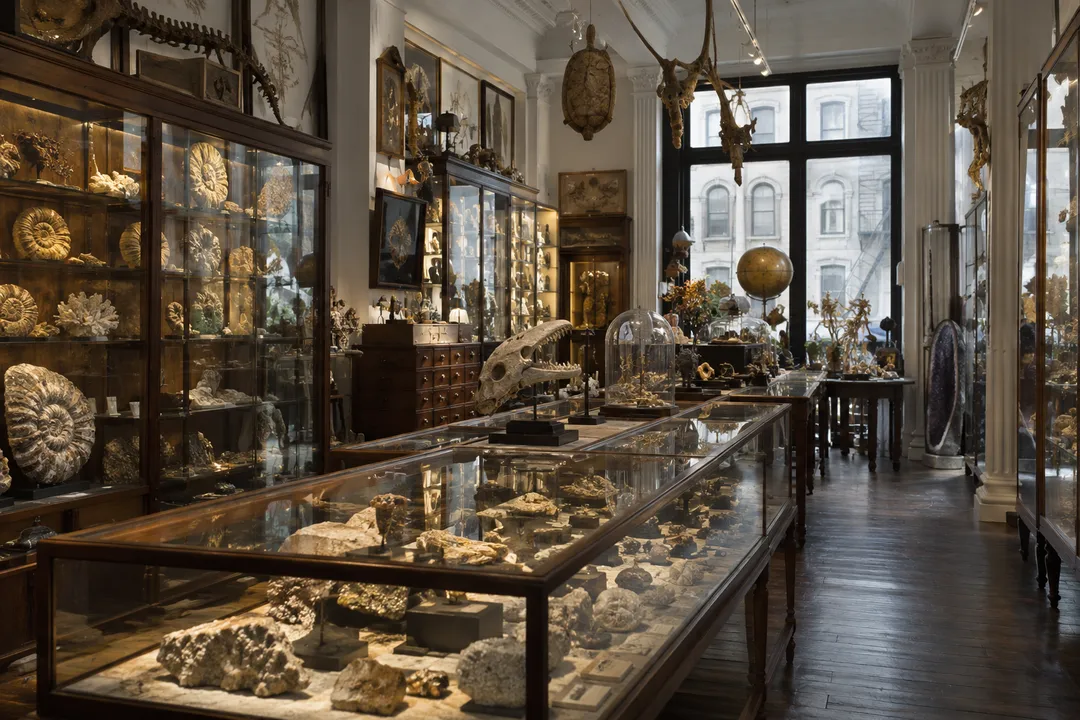
Start with a surface and a story
The Broadway address places the shop in a high-footfall part of SoHo, where a visitor can combine a decor browse with architecture, galleries, and a short downtown walk. Enter with a surface in mind and look at the display cases before choosing a category. Fossils, minerals, bones, and specimen-inspired objects do not all create the same mood. A pale mineral catches daylight. A dark stone works under a lamp. A small fossil invites closer inspection. Let the room decide which direction has a chance to last.
The store attracts a mixed crowd: a science-minded child pointing through glass, a designer choosing a texture for a shelf, and a visitor searching for a gift that does not feel generic. The quiet rule is to keep hands off displayed specimens unless staff invite you to handle one, and to ask how a piece should be supported at home. Weight is easy to underestimate in a store. A stone that feels manageable for ten seconds can still damage a narrow shelf if it is placed carelessly.
The first useful question is not “Is it spooky?” but “What will it do in the room?” A fossil can provide pattern, a mineral can supply color, and a specimen case can give a hallway a focal point. Put one object beside an existing lamp or frame and judge the relationship before adding a second. Natural-history decor looks strongest when the surrounding space stays quiet. It is the difference between a curious cabinet and a pile of souvenirs.
Choosing without overbuying
For a Halloween table, use a low specimen or stone on a tray rather than a tall object that competes with faces. Keep food and drink on a separate surface, and use felt or a stable base under anything heavy. If the room has children or pets, place small pieces behind a closed door or above reach. The Evolution Store is a good source for a single anchor because the objects already have visual authority. They do not need bats, fake cobwebs, or a matching color scheme to read as seasonal.
Skip the largest object unless you know the exact route from shop to home. Downtown sidewalks, subway stairs, and a narrow apartment entry are not forgiving of awkward weight. A smaller specimen that can be carried securely is usually the better purchase. Ask about wrapping and display support at the counter, then take a photo of the final shelf before leaving the store. That picture makes it easier to notice whether the object is solving a space or merely winning an impulse contest.
Give the browse 35 minutes, especially if you are comparing translucent and opaque pieces. Move around the case rather than judging from one angle. Natural light changes a mineral quickly. If you are buying a gift, note the recipient’s desk or shelf size before choosing. A good rule is one object per small surface. If the object has to be surrounded by three others to feel complete, it is probably not the right first buy.
Practical notes and a SoHo loop
The Evolution Store lists its shop at 687 Broadway, New York, NY 10003, and its official site is evolutionstore.com. It is a walk-in retail visit rather than a ticketed attraction. Wear shoes you can walk in, carry a padded tote for smaller pieces, and ask staff about weight and care. A modest budget is useful because specimens vary widely in size and material. You do not need to buy on the first pass; a careful look is part of the value.
Build the afternoon around a downtown loop. From Broadway, walk west through the cast-iron SoHo blocks, then turn toward the small streets around Prince and Spring before deciding whether the neighborhood has given you a better display idea. Window reflections, old stone, and metal fire escapes offer a natural palette of gray, rust, and black. If rain starts, shorten the route and let the store visit stand on its own. The object should make sense indoors, not depend on perfect weather.
The Evolution Store is not a party-supply warehouse, so it will not solve a need for identical cups, garlands, or last-minute bulk favors. Its strength is a more durable kind of Halloween decor: a fossil, mineral, or specimen-inspired object that still works when October is over. Choose the piece that creates a question, then leave enough empty space around it for the answer to unfold. That restraint is what keeps scientific oddity from becoming visual noise.
At home, test the object at the time of day when guests will arrive. Daylight may reveal color that disappears under a warm bulb, while a dark stone can become too dominant after sunset. Add a stable base, keep it away from the edge, and write down its care notes before the receipt disappears. A room with one well-placed specimen feels considered. A room with five competing specimens feels like the store never ended.
Ask Karpo for more information.
Keep reading
- Chelsea Consignment Shop Crawl Planner for Your First Studio
 East Village Consignment Shop Crawl Planner: Leather Jackets
 Harlem Consignment Shop Crawl Planner for a Jazz Night Look