 SoHo Stationery Shop Gift Picker for a New Job Desk
Hidden Gems & Odd Finds
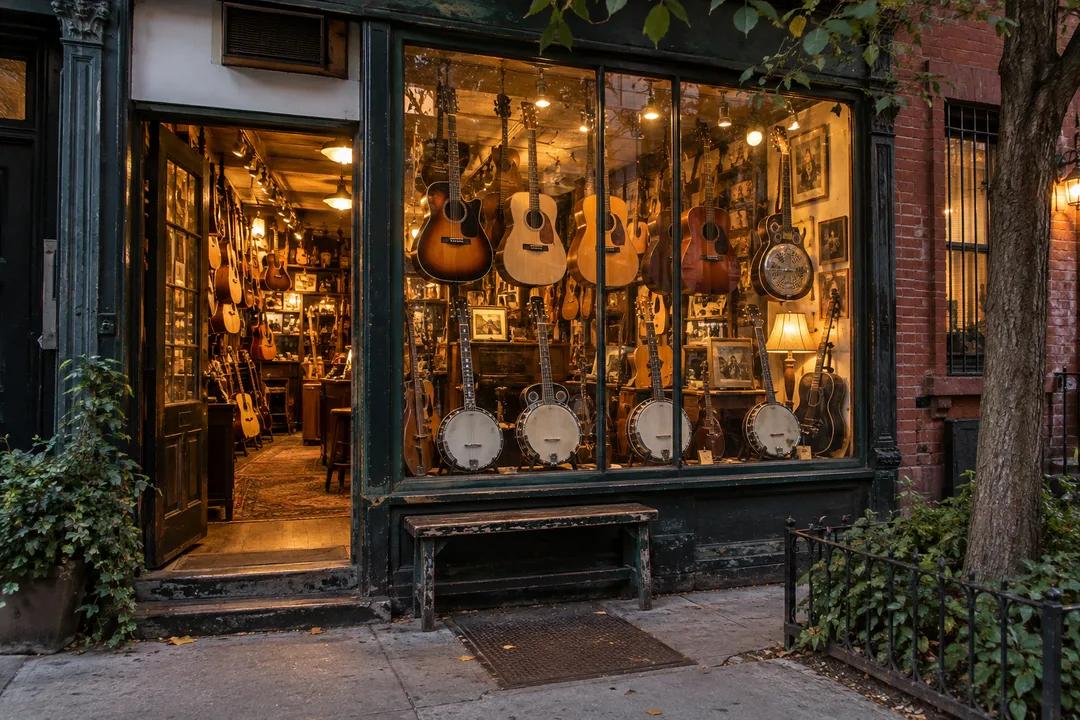
NYC Guitar Repair Shop Until 7pm: Rivington Guitars
Rivington Guitars at 73 East 4th Street offers repairs and stays open until 7pm Monday–Saturday, giving East Village players a later instrument drop-off window.
Rivington Guitars, at 73 East 4th Street, lists repairs alongside its instrument and parts selection. This East Village shop opened in 1998. A useful visit starts with the instrument, its normal accessories, and a precise fault description rather than a vague request to make it better.
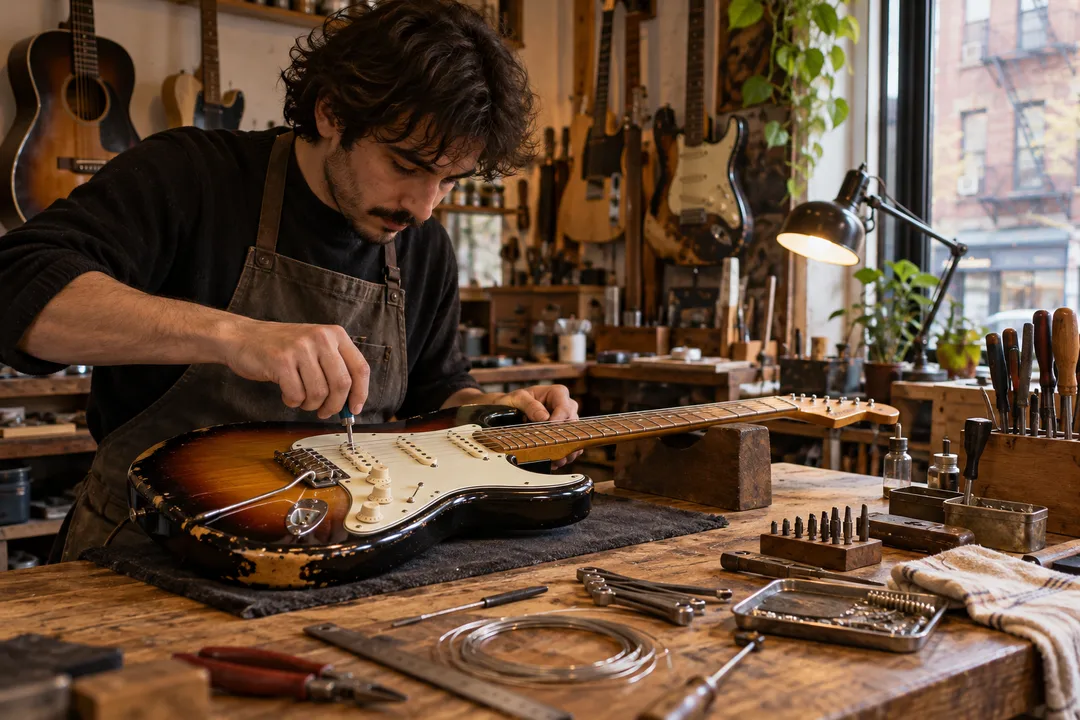
Why the evening window matters
Rivington Guitars makes a guitar repair shop near me search especially useful for players who cannot reach a bench at mid-afternoon. The official site lists 73 East 4th Street, New York, NY 10003, Monday through Saturday from 11am-7pm, and Sunday from 11am-6pm. Repairs appear under the site’s Services menu, so the store is not only a retail stop.
It is worth being precise about what the official page does and does not say. The site gives the repair category and the store’s daily hours, but it does not publish a general repair price list in the material reviewed here. That means your best preparation is a clear symptom and a direct question about scope, turnaround, and whether the work is handled in-house or scheduled through the store.
The shop’s product range is broad: guitars, basses, mandolin-family instruments, ukuleles, banjos, amps, cases, and accessories all appear in the navigation. That makes it a sensible first conversation for a player whose instrument problem overlaps with parts, strings, or setup choices. It is less sensible to arrive expecting a repair to be completed instantly without asking how the service queue works.
Prepare the instrument, not a performance
Before leaving, tune the instrument, note the string gauge, and write down the exact point where the problem appears. “The low E buzzes only when I pick hard at the seventh fret” is a useful starting description. “It has been weird lately” is honest but incomplete. If you can reproduce the issue, bring the same cable, strap, or accessory involved.
For an acoustic guitar, check whether the symptom is a buzz, a lifting bridge, a crack, or a change in action. For an electric, identify whether the problem is mechanical, electronic, or signal-related. For a banjo, mandolin, or ukulele, say what instrument it is before discussing a guitar-style fix. The site’s instrument categories are a reminder that not every stringed instrument should be treated the same way.
Keep the original condition visible. Do not tighten a loose part aggressively, flood a scratch with polish, or rewire a control because you are trying to make the instrument presentable. A repairer needs to see what happened. A photo taken before travel is useful insurance, especially if the instrument has vintage parts or sentimental value.
How to use the East Village timing
Monday through Saturday runs to 7pm, with Sunday to 6pm. That gives a working musician more flexibility than a shop that closes at 4, but it does not guarantee a same-day fix. Use the later hours to start the conversation, not to assume the bench has unlimited capacity.
East Village sidewalks can be crowded, and a hard case is awkward at dinner time. Carry the instrument in a way that leaves one hand free for doors and stairs, and avoid balancing loose pedals or cables on top of the case. Once inside, tell the staff whether you are dropping off, shopping for a part, or asking for a repair assessment. Clear intent makes the counter move faster.
If the diagnosis points to a part you can buy and install later, ask what the part is meant to solve. A new pickup, bridge, tuner, or cable may not address a neck, fret, or grounding problem. The right alternative is often a smaller repair with a clearer outcome, not a larger purchase. Take notes before you approve an upgrade.
A Lower East Side route with a purpose
The East Village location makes it easy to turn a repair errand into a short neighborhood loop, but keep the loop subordinate to the instrument. Finish the intake first, save the store’s recommendation, and only then walk. A café stop or a quiet bench can help you write down the proposed work while the conversation is fresh. Do not rely on memory after a crowded counter exchange.
For a player comparing instruments, the store’s mix of guitars, basses, folk-family instruments, cases, and accessories can make the visit more informative than a repair-only appointment. Still, separate shopping from diagnosis. If the current instrument is already in the case, do not let a new purchase distract you from documenting the original problem and the agreed next step.
One honest judgment: skip a repair request framed only as “make it better.” Ask for the change you can hear or feel. Lower action, quieter frets, stable tuning, cleaner output, or a restored bridge are different targets. A precise request gives the shop a better chance of protecting the instrument rather than applying a generic fix.
Practical Notes
Address: 73 East 4th Street, New York, NY 10003. Official hours: Monday-Saturday 11am-7pm and Sunday 11am-6pm. The official site lists Repairs under Services and sells guitars, basses, folk-family instruments, ukuleles, banjos, and accessories.
Best fit: players who need a flexible East Village visit and want repair advice alongside a real instrument and parts selection. The official site does not provide a general repair price in the reviewed pages, so ask about the estimate before approving work. Bring the instrument and its normal accessories.
Karpo APP can help plan the later closing window around a rehearsal, commute, or Lower East Side walk. Save the address, phone, and the repair symptom together so your search ends with a prepared visit rather than a vague promise to “stop by sometime.”
A good handoff includes the instrument, its normal accessories, and one sentence describing the desired result. If you are unsure whether the issue is a setup, a part, or a structural problem, say that plainly and ask what the first diagnostic step will be. You do not need to arrive with a technician’s vocabulary.
Before leaving, save the store’s recommendation and the next contact step. If the guitar stays for work, write down the strings, tuning, and any parts that must remain original. A careful record is especially useful when an East Village errand turns into a longer repair rather than a same-day adjustment.
Ask Karpo for more information.
Keep reading
- SoHo Stationery Shop Gift Picker for a New Job Desk
 SoHo Consignment Shop Crawl Planner: Designer Handbag Checks
 Williamsburg Stationery Shop Gift Picker for Office Swaps