 Crown Heights Rainy Day Kids Activity Finder for Toddlers
Weekend Plans
Glassblowing Studio Near Me in Sunset Park: Craftsman Ave Glass Workshop
Experience hands-on glass craft at Craftsman Ave in Sunset Park, mastering the traditional Tiffany copper foil technique, scoring art glass, and soldering custom panels.
Craftsman Ave welcomes hobbyists and aspiring artisans inside Building 6 at 68 34th St, Brooklyn, NY 11232, located within the creative manufacturing complex of Sunset Park. Anyone searching for a hands-on glassblowing studio near me will discover an energetic communal workshop teaching foundational glass arts and copper-foil assembly. The studio charges $265 per person for its comprehensive three-and-a-half-hour stained glass workshop, providing individual workbenches, diamond grinders, and soldering stations.
An Artisanal Maker Space In Sunset Park Industry City
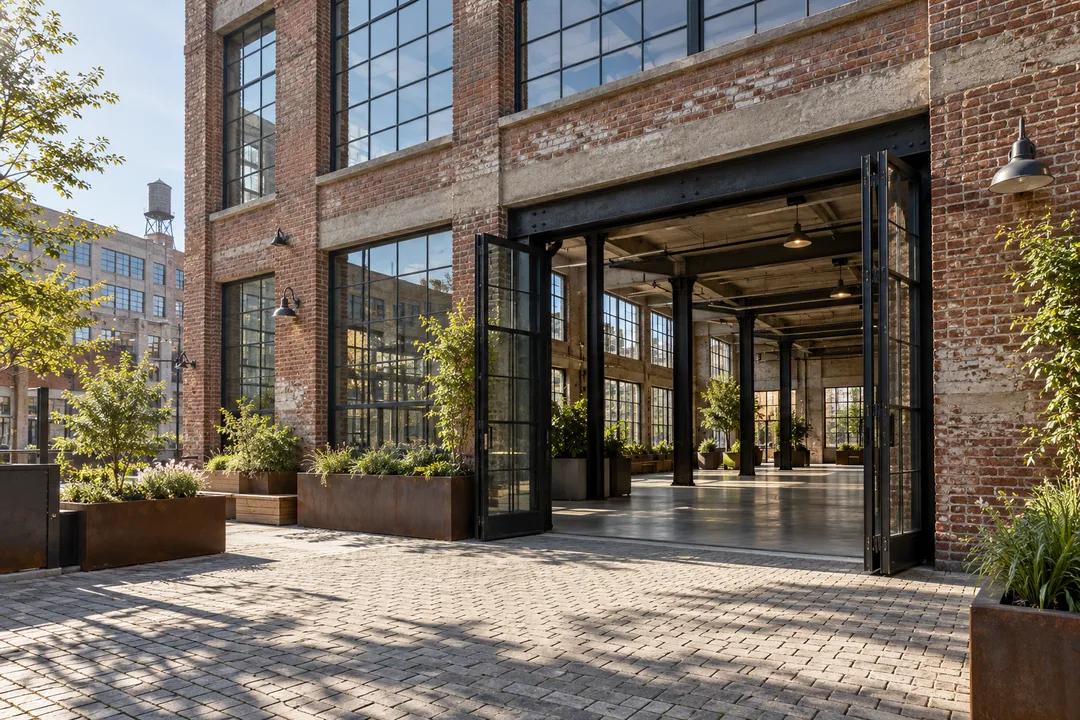
Occupying Suite B124 on the ground floor of a converted industrial shipping depot, Craftsman Ave spans 2,500 square feet of collaborative studio space. Sturdy butcher-block workbenches dominate the main room, each wired with overhead task lighting, dedicated power strips, and localized air-filtration ducts. Racks of hand tools, including glass grozing pliers, running pliers, and oil-fed glass cutters, line the perimeter walls alongside safety shield stations and clean-up supplies.
The environment balances creative freedom with rigorous technical safety. Instructors circulate constantly among the small cohorts, ensuring that every participant feels comfortable handling sharp sheet glass and hot soldering irons. The atmosphere hums with creative focus as students select colored Cathedral and opalescent glass sheets from well-stocked vertical shelving units, testing color combinations under natural daylight streaming through the warehouse windows.
The Tiffany Copper Foil Method Explained Step By Step
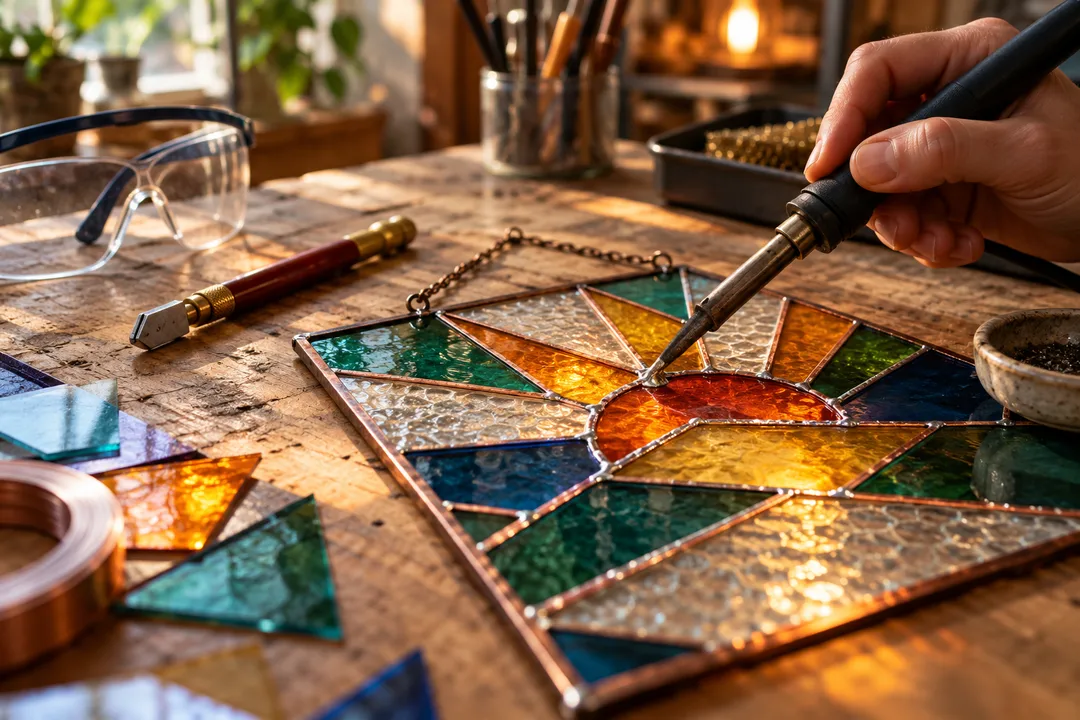
The studio specializes in the historic copper foil construction technique pioneered by Louis Comfort Tiffany in late nineteenth-century New York. Unlike traditional architectural church windows assembled with heavy lead came channels, the Tiffany method relies on wrapping every individual glass shard in thin, adhesive-backed copper tape. This approach allows makers to construct intricate curved lines, geometric suncatchers, and delicate decorative nightlights with exceptional structural strength.
Students begin by choosing a design pattern from a library of contemporary templates or drafting a personalized geometric layout on gridded paper. The pattern is duplicated onto heavy cardstock, and each segment is numbered sequentially to guide cutting. Instructors teach how to account for the minute thickness of the foil seam during initial layout planning, ensuring that the assembled glass mosaic fits together cleanly without gaps.
Scoring And Grinding Colorful Art Glass Sheets
Translating paper patterns into finished glass segments requires mastering the score-and-snap discipline. Holding an oil-lubricated carbide wheel cutter like an upright pencil, students score along traced lines with steady downward pressure, listening for the distinctive tearing sound that signals a clean fracture line. Running pliers are positioned across the score mark to apply gentle leverage, popping the glass cleanly apart along the fissure.
Rough edges are refined at electric diamond-wheel wet grinders equipped with continuous water sponges. Moving the glass gently against the spinning abrasive drum smooths sharp burrs and refines subtle contours until each piece matches its paper template precisely. Once ground, the glass components are washed, dried thoroughly, and edged by hand with 7/32-inch copper foil, burnished flat using plastic fid tools to create a flawless metallic perimeter.
Precision Soldering Irons And Polished Metal Seams
The assembly stage brings the loose mosaic pieces together into a unified structural artwork. Students arrange their foiled glass segments tightly atop heat-resistant drywall boards, pinning the perimeter securely with horseshoe nails. After applying liquid flux along all exposed copper lines, participants wield temperature-controlled Hakko soldering irons melting a 60/40 tin-lead alloy, tacking the corners first before drawing continuous raised solder beads across every joint.
Soldering requires steady hand speed and careful thermal management. Lingering too long in one spot risks thermal shock that can crack the glass, while moving too quickly leaves a flat, jagged seam. The instructor demonstrates how to build a smooth, rounded solder bead that catches the light like liquid silver. Once both sides are soldered and reinforced with copper hanging loops, the piece is washed with neutral soap and treated with black patina polish.
Workshop Tuition Rates And Alumni Open Studio Access
Tuition is kept transparent and all-inclusive across the studio catalog. The flagship Stained Glass Workshop costs $265 per person for a three-and-a-half-hour intensive session, covering all consumable materials, unlimited practice glass, safety goggles, solder wire, and finished mounting hardware. Every guest departs with a completed, ready-to-hang art piece crafted entirely by their own hands during the class.
Graduates who want to continue developing their independent craft can access the studio through Glass Night open studio sessions priced at $65 for four hours of bench time. Open studio access gives alumni full use of commercial diamond grinders, soldering equipment, and studio workspace while allowing them to purchase raw art glass sheets at wholesale rates. The studio also coordinates private corporate team gatherings and milestone celebration bookings.
Founder Vision Cultivated By Mark Adams Since Twenty Seventeen
Craftsman Ave was founded in 2017 by maker and entrepreneur Mark Adams, who sought to demystify traditional manual fabrication for urban residents. Frustrated by the lack of accessible hands-on workspaces in New York City, Adams designed a welcoming curriculum that empowers complete beginners to pick up professional tools with genuine confidence. The teaching team includes practicing sculptors, furniture builders, and stained glass specialists who bring passion to every class.
The studio emphasizes experiential learning over rote repetition, encouraging students to embrace minor imperfections as proof of authentic hand craft. In an era dominated by digital screens and mass-manufactured goods, spending an afternoon cutting vibrant glass and flowing molten metal provides a grounding, tactile creative outlet. That empowering philosophy has attracted thousands of local New Yorkers seeking to master tangible physical crafts.
Express Subway Access And Industry City Culinary Strolls
Reaching Craftsman Ave from anywhere in the metropolitan area is remarkably convenient. The workshop sits just two short avenue blocks from the 36th Street express subway station, served around the clock by the D, N, and R trains. Commuters from Midtown Manhattan can reach the studio in under twenty-five minutes, while Queens travelers enjoy direct connections along the R line without transfers.
After finishing a productive studio workshop, guests are perfectly situated to explore the thriving Industry City campus. You can wander through Courtyard 5/6 to grab Japanese street food and matcha soft-serve at Japan Village, or enjoy slow-smoked brisket at the neighborhood outpost of Hometown Bar-B-Que. For a scenic coastal cooldown, walk west toward Bush Terminal Piers Park to take in sweeping views of Upper New York Bay and the Manhattan skyline across the tidal ponds.
Ask Karpo for more information.
Keep reading
- Crown Heights Rainy Day Kids Activity Finder for Toddlers
 Jackson Heights Rainy Day Kids Activity Finder for Siblings
 Lower East Side Rainy Day Kids Activity Finder by Stroller