 Fort Greene Holiday Market Browsing Guide for Young Shoppers
Weekend Plans
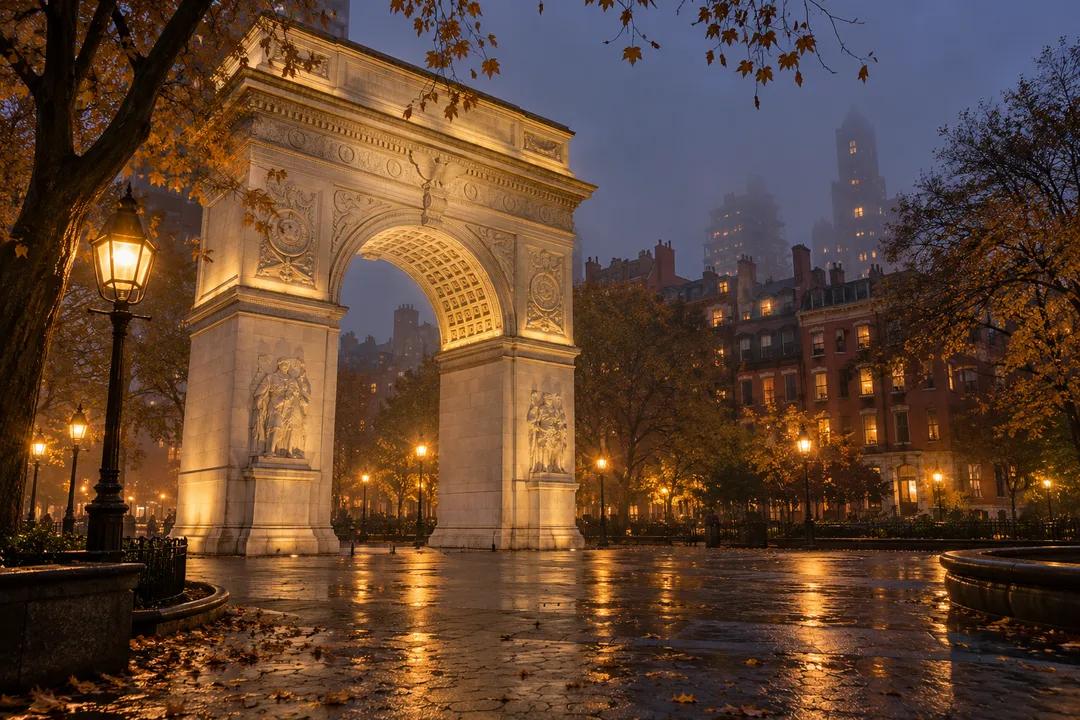
Ghost Walk Near Me in Greenwich Village: Phantoms Around Washington Square
Boroughs of the Dead runs its flagship two-hour Greenwich Village ghost walk from the Washington Square Arch, exploring potter's field burials, Hangman's Elm, and the Mark Twain House of Death for $35.
The Ultimate Greenwich Village Ghost Tour by Boroughs of the Dead gathers ticket holders beneath the marble span of the Washington Square Arch, where Fifth Avenue ends and twenty thousand forgotten colonial graves lie beneath the pavement. Founded in 2013 by horror novelist and historian Andrea Janes, this two-hour walking route bypasses theatrical jump-scares in favor of archival municipal records, verified yellow fever mortality registries, and landmark architecture. Operating continuously throughout the year with tickets set at $35 per guest, it provides anyone searching for a ghost walk near me with an authentic exploration of Manhattan's most haunted quarter.
Gathering at the Arch and the Potter's Field Beneath
Check-in takes place fifteen minutes before departure directly beside the north side of the Washington Square Arch at Washington Square North, New York, NY 10012. Guides carry a discreet clipboard and wear dark commuter clothing rather than colonial costumes or top hats. Before the group takes its first steps westward, the guide establishes the physical ground underfoot: between 1797 and 1825, this park served as the city's primary potter's field, absorbing thousands of indigent residents, prisoners from the nearby Bridewell, and victims of repeated summer yellow fever epidemics. When utility crews excavated trenches for park drainage in the nineteenth and twentieth centuries, intact burial vaults and skeletal remains repeatedly surfaced along the tree lines.
The tour begins by circling northwest past the towering Hangman's Elm, an English elm tree estimated at more than three hundred years old, making it the oldest living tree on Manhattan Island. While municipal executioners historically staged public hangings at Gallows Hill further south, local legend persists that traitors during the Revolutionary War were suspended from its thick horizontal boughs. The guide points out the heavy iron support cables bracing the limb today, contrasting romantic neighborhood folklore with the documented execution records kept at the New York Historical Society.
The House of Death and West Tenth Street Phantoms
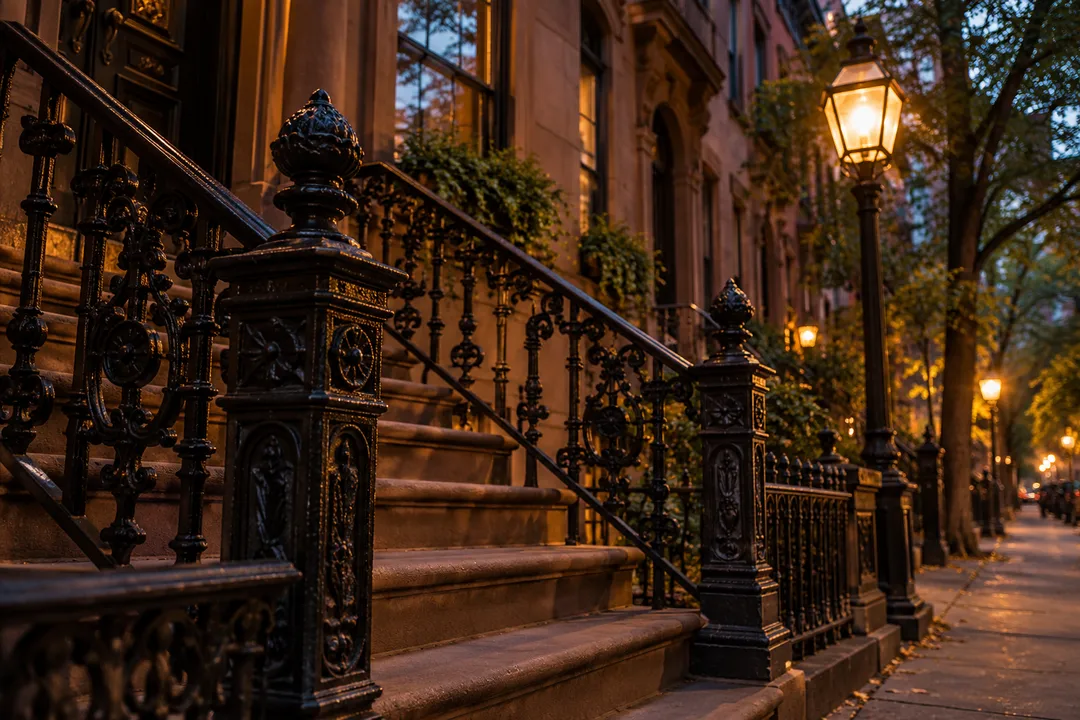
Leaving the park, the group walks north along Fifth Avenue before turning into West 10th Street, stopping outside the grand brownstone at 14 West 10th Street. Known across the city as the House of Death, this multi-family residence has accumulated reports of twenty-two distinct spirits since the late nineteenth century. Mark Twain resided on the second floor between 1900 and 1901, and subsequent tenants reported encountering his white-suited figure gliding past the fireplace long after his death. In 1937, poet Jan Bryant Bartell documented unexplainable cold spots, footsteps, and the stench of decay in her apartment before publishing her memoir Spindrift.
The atmosphere around West 10th Street tightens as the guide details the building's darkest documented tragedy: the 1987 assault and manslaughter of six-year-old Lisa Steinberg by former attorney Joel Steinberg within second-floor apartment 2W. The tour pauses on the sidewalk across the street, keeping noise low to respect neighborhood residents. Rather than exploiting sensationalist headlines, the guide reads aloud court testimonies and police transcripts, illustrating how violent trauma permanently marks residential architecture in dense historic districts.
Triangle Shirtwaist Factory and Edgar Allan Poe Haunts
The route turns eastward toward the corner of Washington Place and Greene Street, pausing before the Asch Building, now known as the Brown Building of Science and part of New York University. On March 25, 1911, a devastating industrial fire broke out on the eighth, ninth, and tenth floors, claiming the lives of 146 garment workers, mostly young immigrant women who found exit doors locked from the outside. Passing students and late-night faculty frequently report phantom smoke smells and sudden drafts along the Greene Street facade. The guide recounts the harrowing testimony of fire captain William Fallon and highlights how this site galvanized national labor reform and modern municipal fire codes.
Two blocks south at West 3rd Street, the walk touches the former site of Edgar Allan Poe's residence. While the original building was largely replaced during modern university expansion, the remaining facade materials and plaques commemorate where Poe drafted portions of 'The Raven' and revised 'The Philosophy of Composition' during the winter of 1844. Guides explain how Poe's pervasive poverty, grief over his young wife Virginia's tuberculosis, and nightly wanderings around Washington Square inspired his most enduring gothic horror tales.
What to Expect on the Route and Booking Rules
The tour covers approximately 1.5 miles of flat city sidewalks over two full hours, ending near the south perimeter of Washington Square Park. Boroughs of the Dead conducts tours in light rain or crisp autumn winds, advising walkers to wear broken-in walking shoes and dress in warm layers, as wind tunnels between row houses can drop perceived temperatures significantly. Group sizes are capped at twenty-five attendees to ensure everyone can hear historical citations clearly without public address speakers.
Tickets must be reserved in advance through the operator's official website at boroughsofthedead.com or by telephone at (646) 389-4678; guides do not carry cash or process sidewalk payments. The standard adult fare is $35 per person. Because historic preservation and true crime are discussed frankly, the tour is recommended for ages twelve and older, though younger teenagers with an interest in New York history are welcome when accompanied by a paying guardian.
An Honest Assessment: What to Skip and What to Watch For
If you are seeking theatrical props, EMF ghost meters, or costumed actors jumping out of alleyways, you should skip this tour. Boroughs of the Dead is built strictly for dark history enthusiasts, literature lovers, and visitors who appreciate archival verification over spectral parlor tricks. Furthermore, avoid bringing bulky strollers or wheeled luggage, as Greenwich Village's narrow brick sidewalks feature protruding tree roots, uneven bluestone pavers, and high curbs that make navigation cumbersome.
Pay particular attention when the guide points out the small commemorative plaques embedded in building walls that thousands of daily pedestrians pass without noticing. Looking upward at the second-story lintels along West 10th Street reveals original gas lamp brackets and ornamental iron rosettes dating to the 1840s, grounding the supernatural stories in tangible nineteenth-century material culture.
Practical Notes and Neighborhood Contingencies
Public restrooms are scarce along the walking route. The public comfort station inside Washington Square Park near the children's play area closes at dusk, so use the facilities at the nearby Washington Square Hotel lobby or coffee shops along 8th Street before arriving. The meeting point at the Arch is a three-minute walk from the West 4th St–Washington Square subway station, served by the A, C, E, B, D, F, and M trains.
If heavy thunderstorms force an official weather cancellation, Boroughs of the Dead notifies ticket holders via email with options to reschedule or receive a full refund. Should your tour sell out or if you find yourself with extra time before check-in, consider stepping into Caffe Reggio at 119 MacDougal Street, operating since 1927 and housing America's oldest espresso machine, or stop by the historic speakeasy basement at Marie's Crisis Cafe at 59 Grove Street for live piano show tunes.
Ask Karpo for more information.
Keep reading
- Fort Greene Holiday Market Browsing Guide for Young Shoppers
 DUMBO Holiday Market Browsing Guide for Gifts to Mail Home
 Midtown East Holiday Market Browsing Guide for Commuters