 Clubs Near Me in Ridgewood: Nowadays' Outdoor Dance Floor
Sports Social
NYC Free Sports History: Exploring Billy Ray Smith Venues and More
A free NYC route through public sports landmarks, with practical checks for access, transit, weather, and verified athlete connections.
New York City’s best free sports-history stops are often working public spaces, not ticketed museums: a Harlem basketball court, a Bronx ballfield shaped by Yankee Stadium memory, a Brooklyn parade ground with deep amateur baseball roots, and public monuments that turn athlete legacy into street-level geography. The recent search interest around Billy Ray Smith venues is trickier. Reputable football records confirm Billy Ray Smith Jr. as an Arkansas and San Diego Chargers figure, but they do not establish a free, public NYC venue tied to him. That makes this route useful in two ways: it gives you confirmed local sports history and shows where to verify any athlete-specific claim before you travel.
Want a cleaner sports-history route before you head out? Text Karpo for NYC-specific venue checks, transit pivots, and free-stop choices tied to this exact topic.
Holcombe Rucker Park at West 155th Street
Start at Holcombe Rucker Park in Harlem if your group wants a living sports landmark rather than a plaque-only stop. NYC Parks lists the site at West 155th Street from Eighth Avenue to Harlem River Drive, with basketball courts, baseball fields, handball courts, restrooms, spray showers, playgrounds, and Wi-Fi. Its pull is the Greg Marius Court, where Rucker’s tournament culture made streetball part of New York’s public identity.
The tradeoff is that Rucker is still a neighborhood playground, so the best visit is brief, observant, and flexible. Do not assume a tournament, celebrity run, or open court time unless an organizer has posted it. For accessibility, use the MTA app’s station and elevator tools before choosing the subway, because nearby hills, stairs, and service changes can matter more than map distance.
Macombs Dam Park and Heritage Field in the Bronx
Macombs Dam Park is the strongest free stop for baseball-era memory near Yankee Stadium without buying a ticket. NYC’s Yankee Stadium redevelopment materials say part of the replacement parkland sits in the former footprint of old Yankee Stadium and includes commemorative features such as plaques, benches, a field outline, viewfinders, historical signage, and a perimeter walking path. It works for fans who want context without entering the current ballpark.
Pace this as a daylight Bronx walk, not a stadium-tour substitute. The failure mode is arriving during a permitted game or field closure and expecting access to every surface. Treat the plaques, overlooks, and field edges as the dependable layer, then add active play only if posted conditions allow. The 4, B, and D trains can be useful, but confirm weekend work before leaving.
Flushing Meadows Corona Park and the Unisphere Walk
Flushing Meadows Corona Park gives the route a Queens chapter, connecting public park history with world-class tennis geography. NYC Parks’ historical material notes that the US Open has been held at the National Tennis Center in the park since 1978, while the broader park carries World’s Fair landmarks, the Unisphere, and the footprint of Shea Stadium-era Mets history. The free move is walking the public park approaches, not entering paid tournament grounds.
This stop fits visitors who like big landscapes, photography, and sports history that overlaps with civic design. It is less efficient for anyone seeking one compact exhibit. Build in extra walking time from the 7 train, and consider buses or rideshare if heat, mobility, or children make the park’s scale difficult. During US Open periods, security perimeters and crowds can change the feel quickly.
Prospect Park Parade Ground in Flatbush
The Prospect Park Parade Ground is a Brooklyn sports-history anchor with confirmed public roots. NYC Parks’ historical-sign text says the grounds hosted archery, lawn bowling, cricket, lacrosse, baseball, football, and soccer, and that by the late 1930s its baseball diamonds drew major daily spectator crowds. For a free outing, this is where amateur sports history still looks like active city recreation, especially when local teams are using the fields.
The practical risk is over-romanticizing the stop. The Parade Ground is not a museum, and scheduled leagues, field permits, or maintenance can limit where you can linger. Pair it with a Prospect Park walk if a field is unavailable, or use nearby Flatbush Avenue options as a weather backup. For accessibility, check sidewalks, station elevators, and bus alternatives before committing to the closest subway stop.
Jackie Robinson Monument at West 147th Street
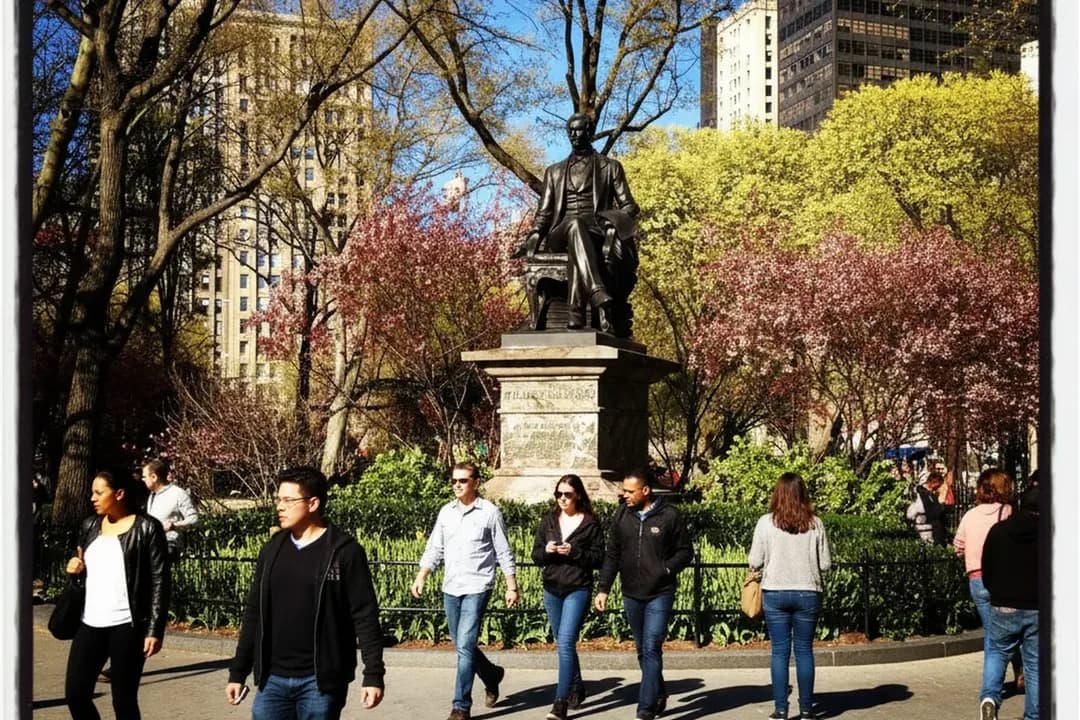
For a compact Harlem stop, the Jackie Robinson monument in the Historic Harlem Parks group gives baseball history a concrete public object. NYC Parks identifies Ruth Inge Hardison as the artist, lists the dedication date as November 10, 1981, and places the monument at West 147th Street and Bradhurst Avenue. It is free, outdoor, and easier to understand quickly than a larger recreational complex.
This is best for readers who want a verified athlete connection inside Manhattan without depending on building hours. The drawback is scale: it may take only a few minutes unless you fold it into a Harlem parks walk. If you are comparing it with Billy Ray Smith claims, use the difference as a rule: Robinson has a named, official NYC public marker; Smith’s NYC venue connection needs proof before planning.
Jackie Robinson Parkway Signs Between Brooklyn and Queens
The Jackie Robinson Parkway is not a walking attraction, but its signs are useful for understanding how New York turns sports legacy into everyday infrastructure. NYC DOT says the road opened in 1935 as the Interboro Parkway and was renamed in 1997 on the 50th anniversary of Robinson breaking Major League Baseball’s color barrier. For most visitors, the practical view is from a vehicle, bus, or nearby safe sidewalk vantage.
Do not stop on the parkway, pull over unsafely, or treat a highway sign as a photo destination. The better approach is to use the sign story as context while traveling between Brooklyn and Queens stops, then spend your actual time at parks and monuments. If traffic is heavy or your group is transit-only, skip this as a physical stop and keep it as route context.
MTA App, Parks Signs, and Same-Day Verification
Before leaving, verify three changing details: posted park hours at entrances, MTA service or elevator status, and whether a field or court is reserved. NYC Parks states general park hours can vary, with many parks open 6:00 a.m. to 10:00 p.m. or 6:00 a.m. to 1:00 a.m.; playgrounds may differ. NYC rules also allow closures when safety requires them.
The final action is simple: search the exact venue name plus today’s date, then check the official Parks or MTA page before you travel on Tuesday, August 4, 2026. If a post claims special Billy Ray Smith venues in New York City, require an official venue page, school archive, team record, or reputable database entry before adding it to your route plan.
Tags: #NYC #NewYorkCity #FreeNYC #SportsHistory #BillyRaySmith #RuckerPark #YankeeStadiumHistory #Harlem #Bronx #Brooklyn #Queens #TransitTips #AskKarpo #BeforeYouGo
All trademarks are the property of their respective owners.
Ask Karpo first
Tell Karpo your date, group size, budget, and starting point. We’ll check current access, timing, transit, and the cleanest New York City plan for Public parks, sports museums, and historical sports sites in NYC before you head out.
Ask Karpo for more information.
Keep reading
- Clubs Near Me in Ridgewood: Nowadays' Outdoor Dance Floor
 Clubs Near Me in Gowanus: Public Records' Hi-Fi Sound System
 Events Near Me in Bushwick: Elsewhere's Multi-Room Rooftop Nights