A hot New York day does not have to turn into a shopping-mall surrender or a full retreat home. The better move is to know which indoor public spaces can hold a real plan: somewhere to sit, reset, meet a friend, wait out the worst hour, or turn a too-bright afternoon into a low-cost city detour.
This guide is built for that specific summer problem. It is not an emergency cooling-center list, and it is not a generic “things to do indoors” roundup. It is a user-facing city route for people who still want to be out, just not melting on an avenue with no shade.
Start with the public-space mindset
New York has a category of spaces that are easy to forget until you need them: privately owned public spaces, civic atriums, cultural lobbies, and indoor plazas that function as small breathing rooms inside dense blocks. NYC Planning maintains a citywide POPS program, and many of the most useful spaces are hiding in plain sight around Midtown, Lincoln Center, and Lower Manhattan.
The trick is to treat them like a route, not a loophole. Check the official page before leaving, keep your group small, buy something only when the space asks for that kind of exchange, and be normal about lingering. A good public-space plan works because it respects the room.
Ford Foundation Center is the leafy reset
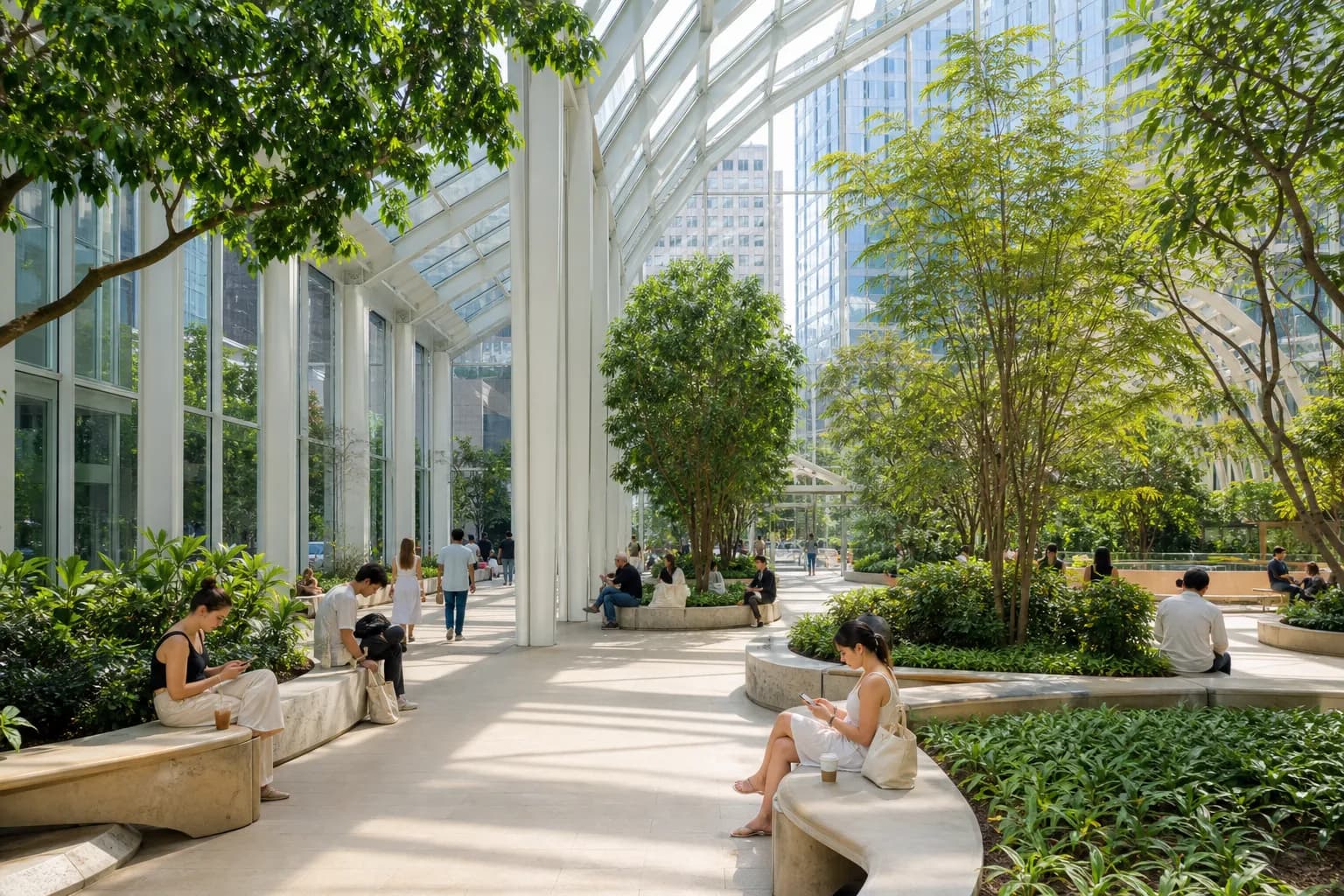
The Ford Foundation Center for Social Justice is the most restorative stop in this version of the plan. Its atrium garden gives you real vertical greenery, filtered daylight, and the rare Midtown feeling that the city has lowered its volume for a few minutes. It is especially useful when you need a solo reset or a quiet meet-before-dinner point that does not feel transactional.
Go here for the emotional pivot: from “I cannot do this heat” to “I can still have a day.” The space rewards slow movement. Look up at the planted levels, let your eyes adjust to the green, and treat it as a short civic pause rather than a content stop.
Lincoln Center Atrium makes waiting feel intentional
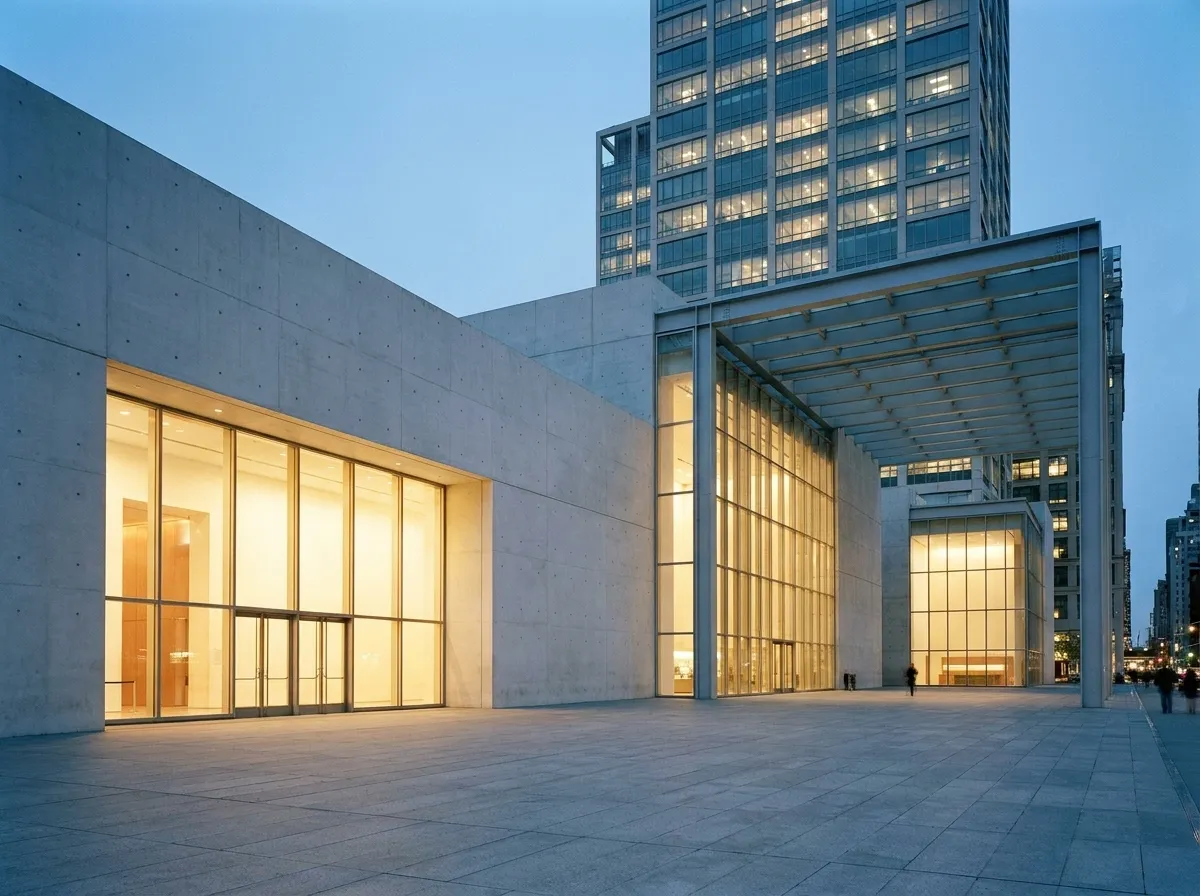
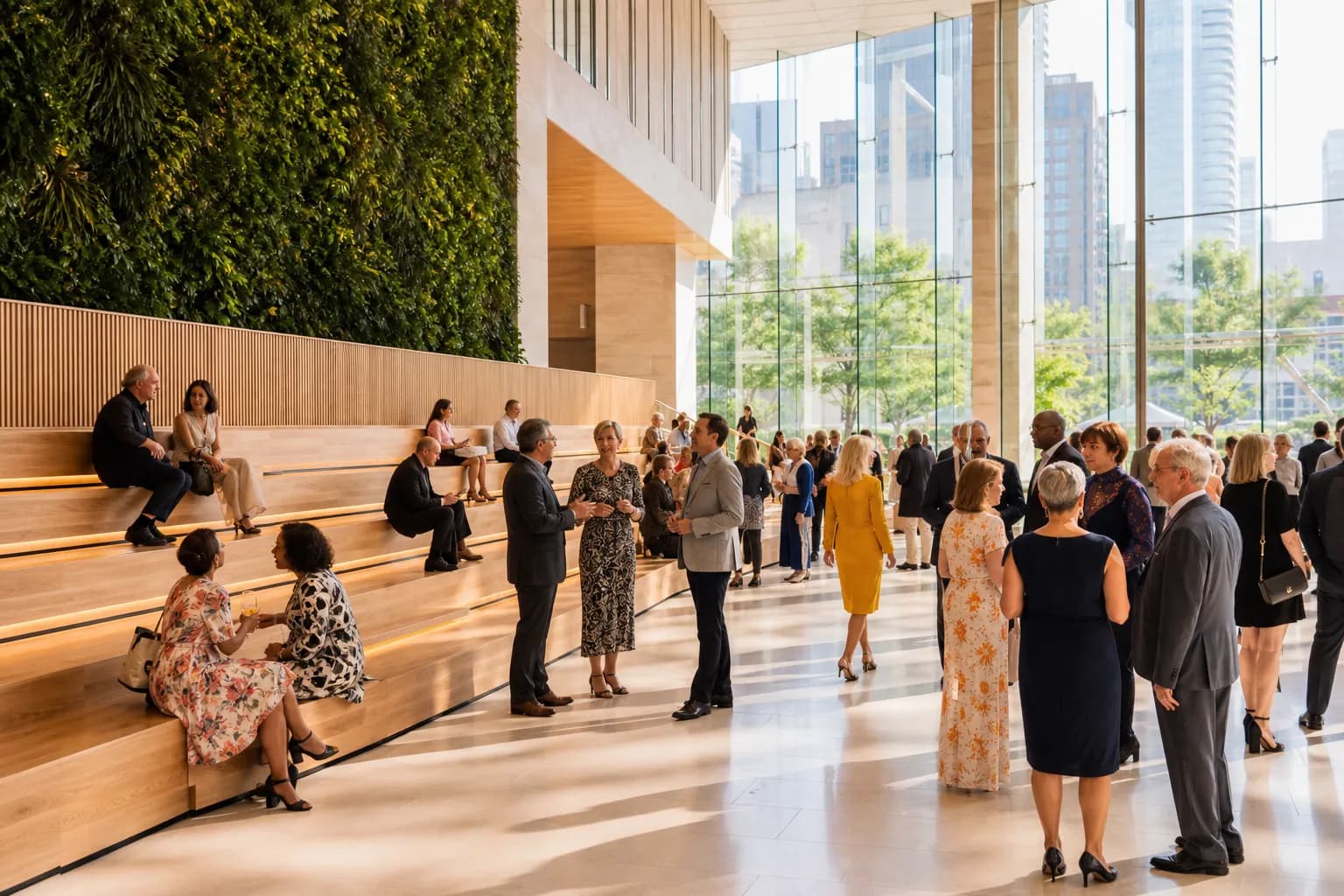
The David Rubenstein Atrium works best when the plan has a cultural edge. It is public-facing, close to Lincoln Center venues, and built for people who are arriving early, regrouping, or deciding what to do next. In summer, that matters: the difference between a good evening and a drained one is often whether you had somewhere civilized to wait.
Use it before a performance, after a long walk on the Upper West Side, or as a low-pressure friend meet-up when nobody wants to commit to a full restaurant sit-down yet. The room has a more social rhythm than the Ford Foundation atrium, so it fits pairs, small groups, and people who want the city around them without being fully outside.
Brookfield Place is the polished Lower Manhattan backup
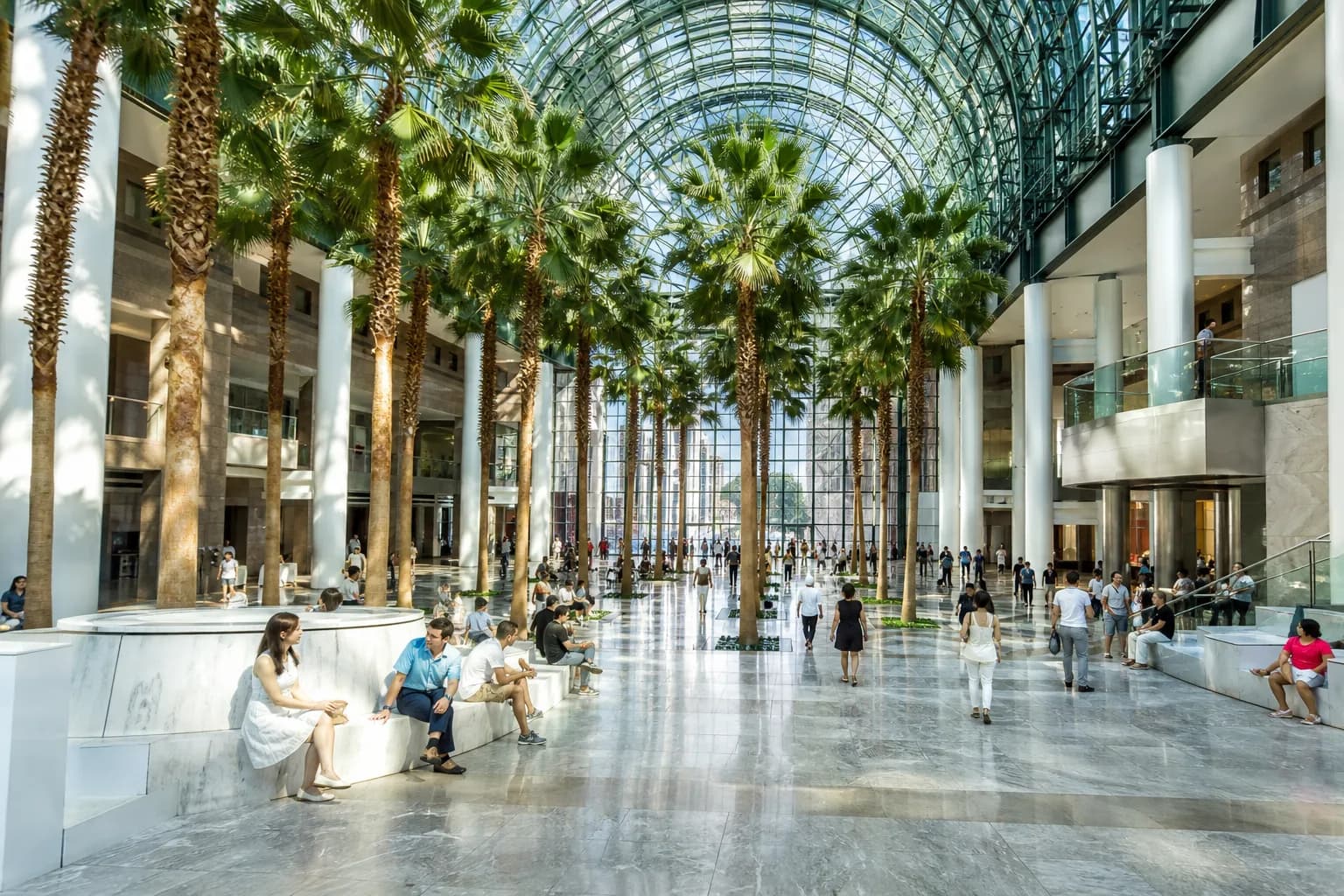
Brookfield Place is not hidden, but it is useful in the way a good backup should be: spacious, bright, transit-adjacent, and easy to understand. The Winter Garden and surrounding indoor areas can turn a downtown errand, waterfront walk, or Battery Park plan into something less weather-dependent.
This is the stop for groups that need choices. One person wants coffee, one wants to sit, one wants to keep moving, and someone else is pretending they are fine in the heat. A glassy indoor concourse gives the group a reset without making the whole afternoon feel cancelled.
How to turn three spaces into one real route
Do not try to hit every indoor public space in the city. Pick a lane. Midtown reset: Ford Foundation first, then a quiet food stop nearby. Culture lane: Lincoln Center Atrium before or after a show, screening, or walk through the plaza. Downtown lane: Brookfield Place when a waterfront plan needs shade, bathrooms, seating, and a better regroup point.
If you are planning for friends, send one clear message: “Let’s meet indoors first, then decide.” That small change removes the worst part of summer logistics, which is making decisions while everyone is overheated, late, and pretending not to be annoyed.
Who this is actually for
This route is for low-budget friend plans, solo city resets, date plans that need a soft start, visiting parents who need a break, and anyone who wants to be out without building the day around spending money. It is also good for people who collect calm interiors: stone, plants, high glass, civic seating, and that rare New York feeling of having somewhere to pause.
Skip it if you need a guaranteed seat, a long laptop session, or a private hang. Public spaces are shared by design. Their value is not that you can occupy them forever; it is that they make the city more usable for a short stretch of the day.
Practical notes
Check each official venue page before leaving, because public access, holidays, events, security rules, and private closures can change. Keep the plan flexible: one primary indoor stop, one nearby food or coffee option, and one outdoor segment only if the weather still makes sense. If the day is a true heat-risk day, use official NYC heat guidance and cooling-center resources first.
Tags: #KarpoFinds #AskKarpo #NYC #NewYorkCity #FreeThingsToDo #IndoorNYC #PublicSpaces #SummerInNYC #MidtownNYC #LincolnCenter #LowerManhattan #CityReset #BeforeYouGo #LowCostPlans #UrbanCooling
Sources consulted: NYC Planning: Privately Owned Public Spaces · Ford Foundation Center for Social Justice: Visitor Information · Lincoln Center: David Rubenstein Atrium · Brookfield Place New York
All trademarks are the property of their respective owners.
Ask Karpo first
Want to know when to show up, where to wait, and what’s actually open to the public? Ask Karpo for the latest NYC public-space hours, a respectful indoor cooldown plan, and a live route through Midtown, Lincoln Center, or Lower Manhattan before you head out.