There are two kinds of free events in NYC this week, and search results only ever show you one of them. The first kind is the one-off — a festival, a pop-up, a brand activation — which is heavily promoted precisely because nobody would otherwise know it existed. The second kind is programming: the same room doing the same thing on the same night, year after year, with no marketing budget because it does not need one. The second kind is almost always better, and once you have it memorised you stop searching altogether. Here is the recurring layer, arranged the way a week actually runs.
Free listings are exhausting in the wrong way — six hundred results, no sense of which ones are worth crossing town for. Tell Karpo which night you have open and which borough you can get to, and it will come back with the two or three that are genuinely worth the trip rather than the full dump.
Thursday is the busiest free night in the city
Two separate traditions collide on Thursday evening. The David Rubenstein Atrium at Lincoln Center runs a year-round program of free performances, with a headline Thursday-night slot that has covered salsa, jazz, global music and dance parties; entry is free and, for most of the calendar, no ticket is required. Across town, Chelsea's galleries cluster their opening receptions on Thursday evening, roughly between six and eight, and anyone can walk into any of them. Nobody checks whether you are a buyer. Start around West 24th Street and work the blocks between Tenth and Eleventh Avenues, and you will see more contemporary art in ninety minutes than a museum visit gives you in three hours.
Conservatory concerts: the best-value ticket in New York, at zero dollars
Juilliard, the Manhattan School of Music and Mannes all present student and faculty performances throughout the academic year, and a large share of them are free — the same repertoire, in purpose-built halls, played by people who will be selling out those halls in a decade. Some require you to reserve a free ticket in advance and some are walk-in; the calendars on each school's own site are the only reliable source, and they are updated more carefully than any aggregator. This is the single most underused category of free culture in the city, and it runs from autumn through spring, when the outdoor listings have nothing to offer.
Midday: lunchtime music and the free-forever museums
The weekday middle of the day has its own free layer. Lower Manhattan's historic churches have run midday concert series for decades — short, formal, and a genuinely strange pleasure to walk into on a workday. Two Federal institutions downtown charge nothing at all, ever: Federal Hall on Wall Street and the National Museum of the American Indian in the old Custom House at Bowling Green. Neither is a pay-what-you-wish arrangement with an awkward suggested price; both are simply free, and both are half-empty on a Tuesday afternoon.
The library as a venue
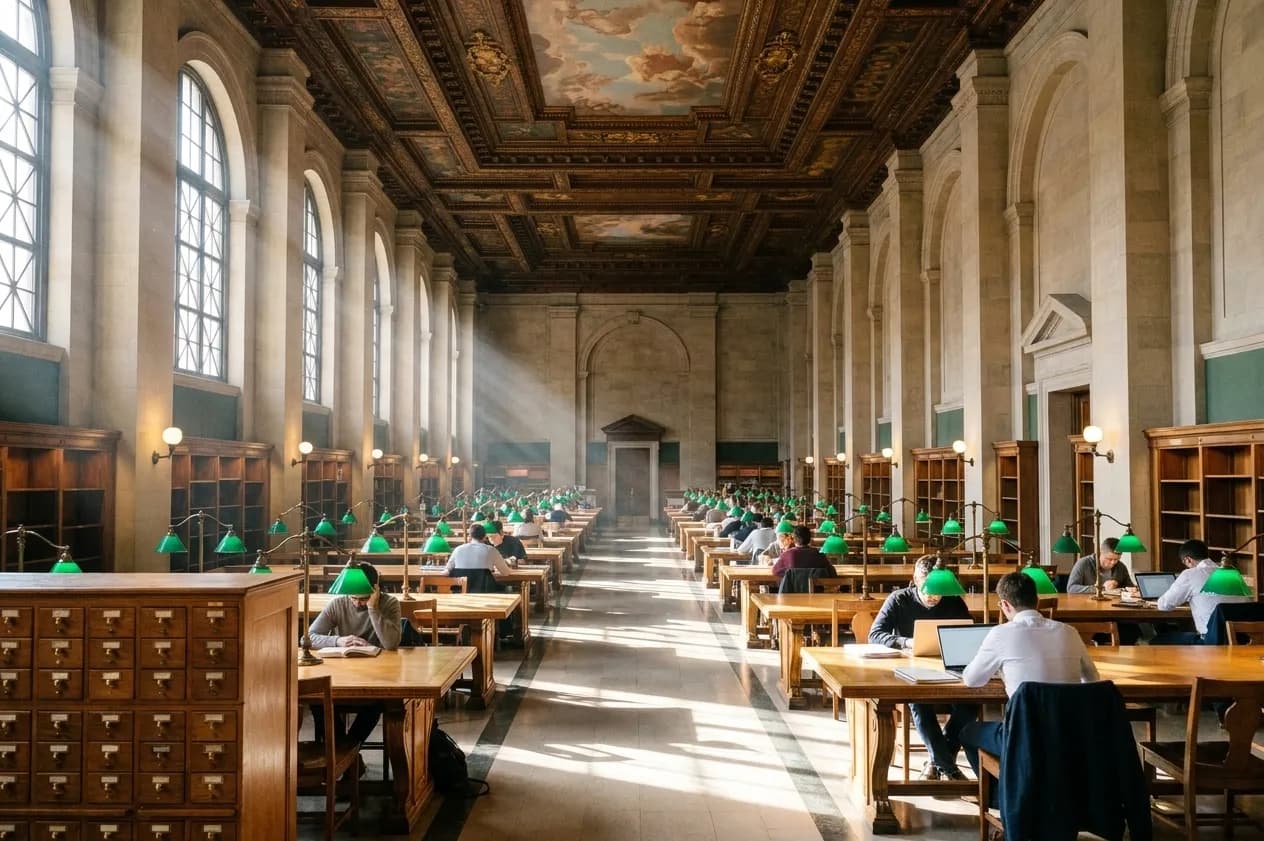
The New York Public Library is a free-events program with books attached. The Schwarzman Building on Fifth Avenue mounts full exhibitions in its gallery — free, no timed entry — and branches across all three NYPL boroughs run talks, film screenings and author events most weeks. Brooklyn and Queens run their own separate systems with their own calendars, which is the part people miss: three library systems means three programs, and the Brooklyn Public Library's central branch at Grand Army Plaza in particular treats itself as a cultural venue rather than a lending library.
Summer changes the arithmetic
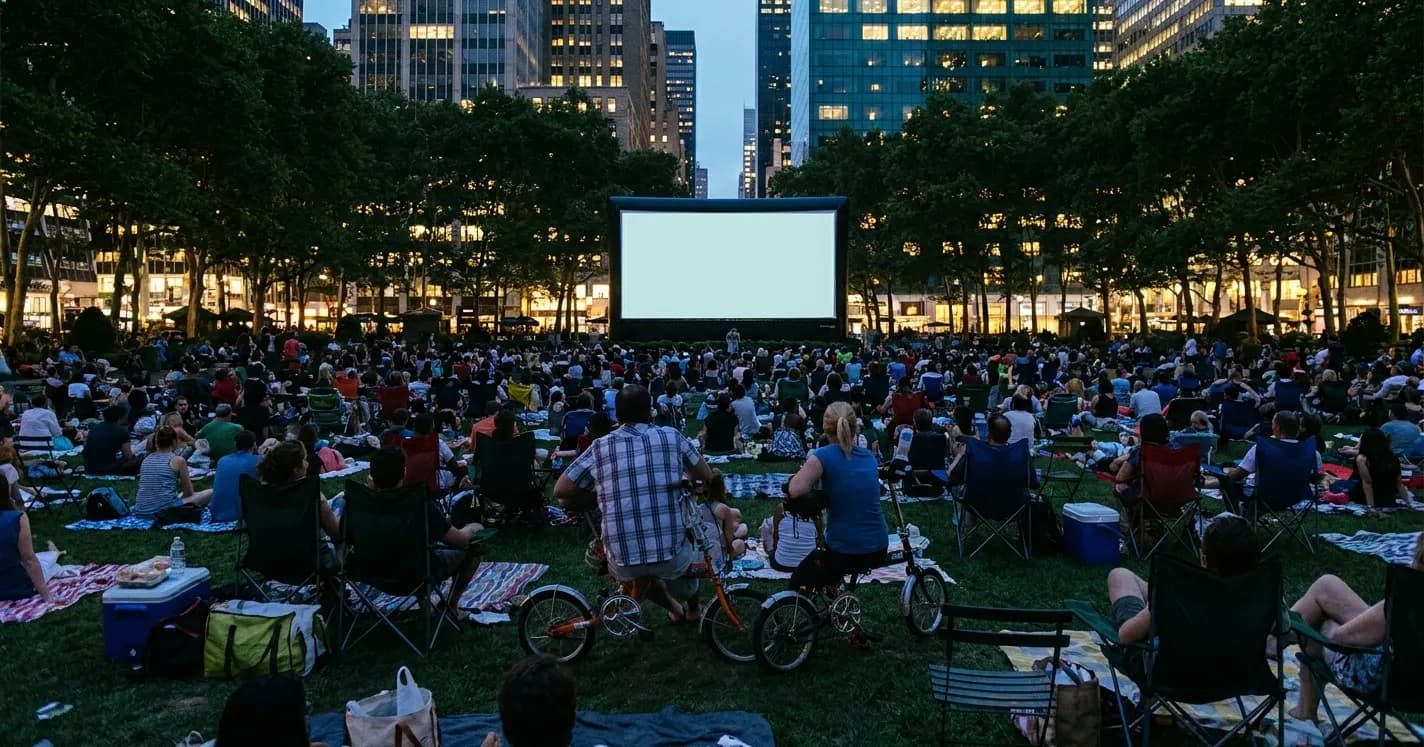
From roughly June to September the balance flips outdoors and the volume increases sharply. Bryant Park alone runs a free summer program spanning music, dance, opera and circus in its Picnic Performances series, lunchtime Broadway performances, and Monday-night films on the lawn. The etiquette on the film nights is worth knowing in advance: the lawn opens at a set time, people queue well before it, and blankets go down immediately. If you arrive when the film starts you will watch it from the path.
Free with an asterisk, and how to read it
Not all free events in New York are free in the same way, and the differences decide whether you get in. Free and open means walk in, no ticket, first come — most gallery openings, church concerts and library exhibitions work like this. Free with reservation means a zero-dollar ticket released on a schedule, often exactly two weeks ahead at noon, and gone within the hour; the venue almost always holds back a walk-up allocation for people who queue, which is why turning up anyway is rarely a wasted trip. Pay what you wish is a third thing entirely and not free at all in practice — there is a suggested amount, a person at the desk, and a queue behind you. Knowing which of the three you are dealing with before you leave the house is most of what separates a good free night from standing outside a full room.
How to keep this current without doing any work
Subscribe to four or five venue calendars directly — a concert hall, a library system, one gallery district mailing list, one park conservancy — and delete every general listings newsletter. The recurring programming above changes its contents weekly and its structure almost never, so the schedule you build once stays roughly true for years. The only rule that consistently matters: for anything advertised as free with reservation, the tickets go at the moment they are released and the walk-up line still moves, so a missed reservation is worth turning up for anyway.
Tags: #freeeventsinnycthisweek #freenyc #lincolncenter #chelseagalleries #juilliard #bryantpark #nypl #nycfree #manhattan #nycthisweek #freeconcerts #nycculture #thingstodonyc
All trademarks are the property of their respective owners.
Ask Karpo first
The free New York that is worth your evening is mostly recurring programming with no marketing behind it, which is why it never surfaces in a search. Ask Karpo what is on near you tonight and it can filter by what you actually like rather than by what a listings site decided to promote.