The setup nobody tells you about
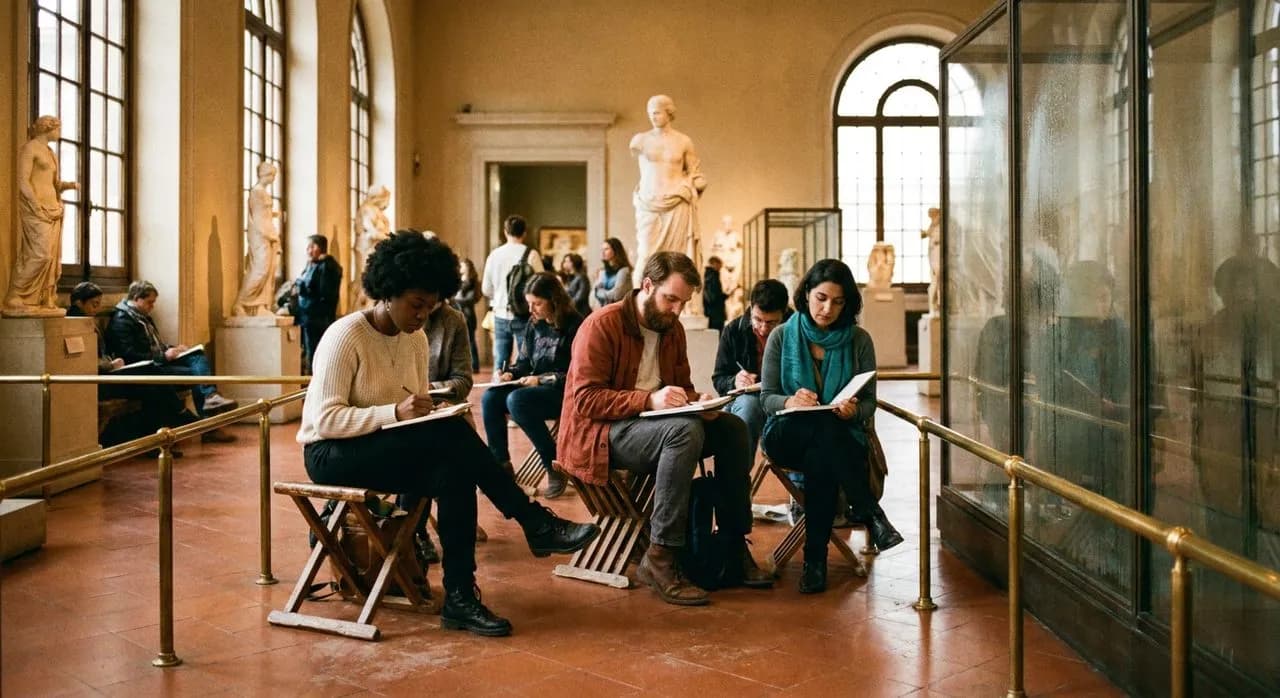
The Met's scheduled drop-in drawing sessions in the galleries draw artists who arrive early to claim the best sightlines. You'll recognize the regulars by their battered portfolios and the way they assess angles before settling in. The museum provides pencils and paper, though most serious sketchers bring their own materials—graphite, sketchbooks, kneaded erasers. Only pencils are permitted in the galleries, a rule the guards enforce quietly but firmly. The sessions unfold in different galleries depending on the schedule, sometimes near European sculpture, sometimes among Egyptian artifacts. The light shifts as you work, and experienced artists anticipate this, starting with broader strokes before committing to detail.
Want to turn the Met’s Friday sketch session into a full evening? Text Karpo for timing, supplies, transit, and a nearby post-museum stop.
You're drawing from the museum's collection—the sculptures themselves, the architectural details, the way a bronze figure catches gallery light. Demonstrations and prompts repeat roughly every thirty minutes, giving you natural intervals to step back and assess. It's a free program included with museum admission, which means the barrier to entry is whatever you choose to pay at the door. The atmosphere stays contemplative, focused, the kind of concentrated attention that makes even a crowded gallery feel private.
Who shows up
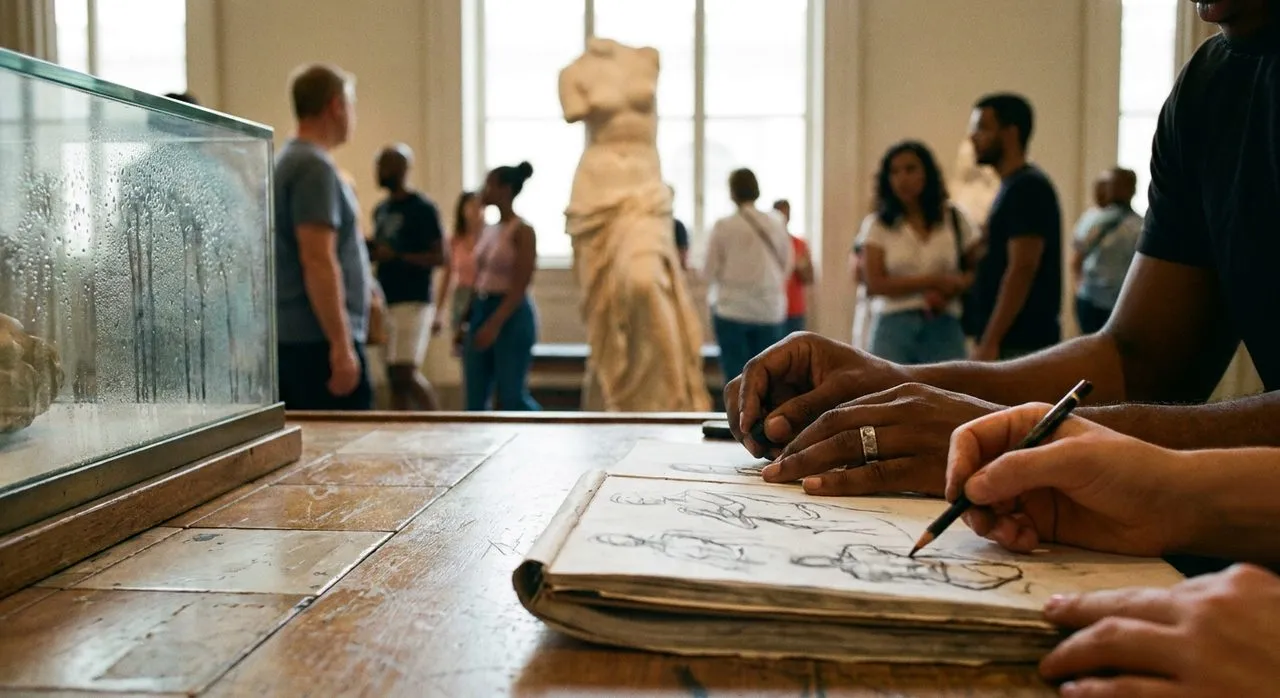
You'll find art students mixing with architects who haven't sketched regularly in years, retired illustrators keeping their hands sharp, and absolute beginners working up the courage to put pencil to paper in public. Nobody asks about your background. The implicit rule is silence during focused work, quiet conversation during breaks. An older gentleman always works in Conté crayon on toned paper. Someone who looks like they've come straight from an office still wears their employee badge. The crowd skews older than you'd expect—people with Friday evenings free and the discipline to maintain a practice.
What you won't find are tourists treating it like a photo opportunity or casual museum-goers who wandered in by accident. The galleries during these sessions develop a church-like quality, that particular hush of concentrated attention. People shift positions between prompts without scraping chairs, pack up materials without rustling. It's self-regulating in the way good informal gatherings are.
The unspoken protocols
Arrive with your materials ready—pencils accessible, paper at hand, a firm surface to work on. The sessions begin without ceremony. Demonstrations and prompts cycle through, giving you structure without rigidity. You'll work for intervals, take brief pauses, then return to drawing. During breaks, people walk the gallery to see the sculptures from different angles or quietly compare approaches with whoever's sitting nearby.
Seating is first-come, first-served, but there's an understanding about sightlines. If you're new, don't plant yourself directly in front of a sculpture that twenty other people are trying to draw. Take a moment to see where others have positioned themselves, find an angle that works. The regulars know which spots catch the best light at different times of day, which is why certain positions fill first. In winter, everyone clusters where the overhead gallery lights are strongest.
What makes it work
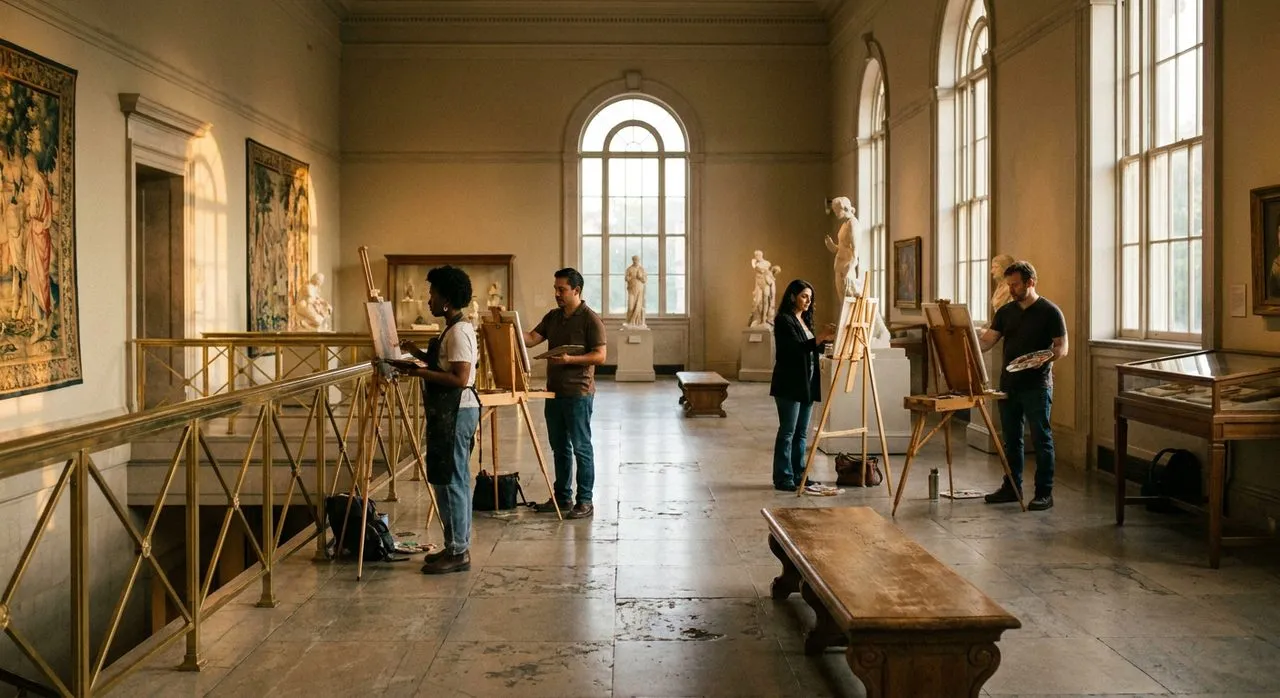
These sessions exist because the Met believes in making art practice accessible. They're free, they're regular, and they require nothing except showing up with basic materials. Security guards know the program and understand that a quiet group of sketchers improves rather than disrupts the gallery experience. The museum provides the fundamentals—space, subject matter, occasional guidance—and the participants provide the focus.
The sessions have a rhythm that builds over time. People return week after week, not because they're required to but because the practice matters. You start recognizing faces without learning names, develop a sense of the room's collective concentration. It's informal in structure but serious in intent, which is a rare combination in organized activities.
The drawing itself
The intervals feel simultaneously too long and not long enough. You start with the gesture, the basic form, the relationship between elements. Then you're chasing details, trying to capture how light defines a marble surface or how a bronze figure's weight shifts through its stance. The museum's architecture—those soaring ceilings, the classical proportions—seeps into your drawing whether you intend it or not. You're working in a space designed for viewing art, which changes how you see.
The best drawings happen after you've warmed up, after your hand remembers what it's doing. The first attempts are always stiff, everyone getting comfortable with their materials and the particular challenges of the subject. By the third or fourth interval, you stop thinking about technique and start actually seeing. That's when the room gets even quieter, just the whisper of pencil on paper and the occasional footstep of a museum visitor passing through.
Why it matters
In a city where studio sessions and art classes cost real money, this is genuinely free beyond museum admission. For artists maintaining a practice, that's the difference between drawing weekly and drawing monthly. The setting matters too—you're not in a basement studio with fluorescent lights but in one of the world's great museums, surrounded by centuries of artistic tradition. It contextualizes what you're doing, reminds you that drawing from observation is an old conversation you're joining.
The sessions also provide something increasingly rare: a regular, in-person artistic practice that doesn't require joining a class or making a reservation. You simply show up. In a city that increasingly requires booking, membership, and advance planning, this feels almost radical. It's art as it used to be—informal, accessible, sustained by the people who participate.
Practical notes
The Met's drop-in drawing sessions run on scheduled dates throughout the year in various galleries. The museum is located at 1000 Fifth Avenue at 82nd Street. Take the 4, 5, or 6 train to 86th Street and walk west, or the Q train to 86th and Lexington. Suggested admission is $30 for adults, but it's pay-what-you-wish. The museum provides pencils and paper; you're welcome to bring your own sketchbook. Only pencils are permitted in the galleries. Check the Met's website for current session dates and times, as the schedule varies. No RSVP required; the program is open to visitors of all ages and skill levels.
Tags: #MetMuseum #FigureDrawing #FreeNYC #NYCArt #LifeDrawing #UpperEastSide #FridayNights #ArtistLife #MuseumPrograms #FreeAndFine #DrawingSession #NYCCulture #ArtPractice #SketchSession #MetropolitanMuseum
Sources consulted: metmuseum.org
All trademarks are the property of their respective owners.