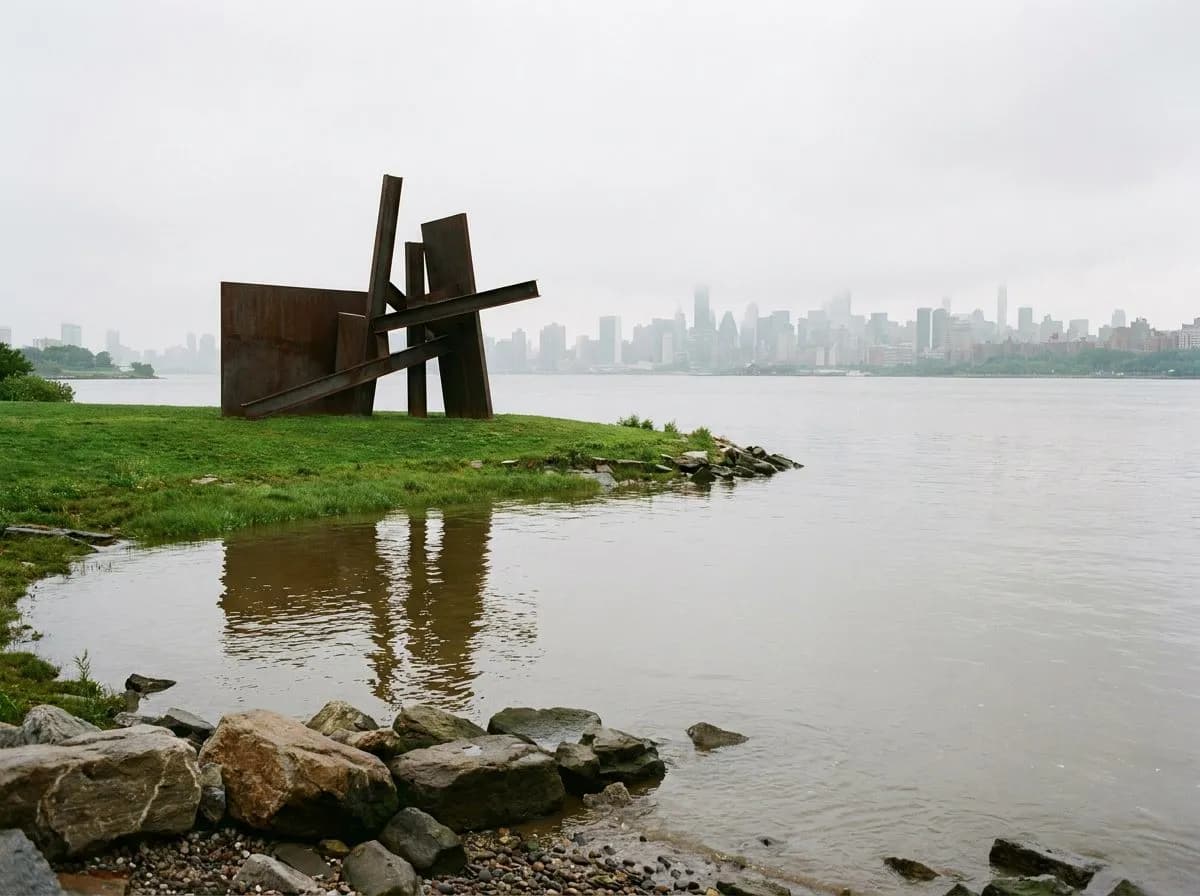
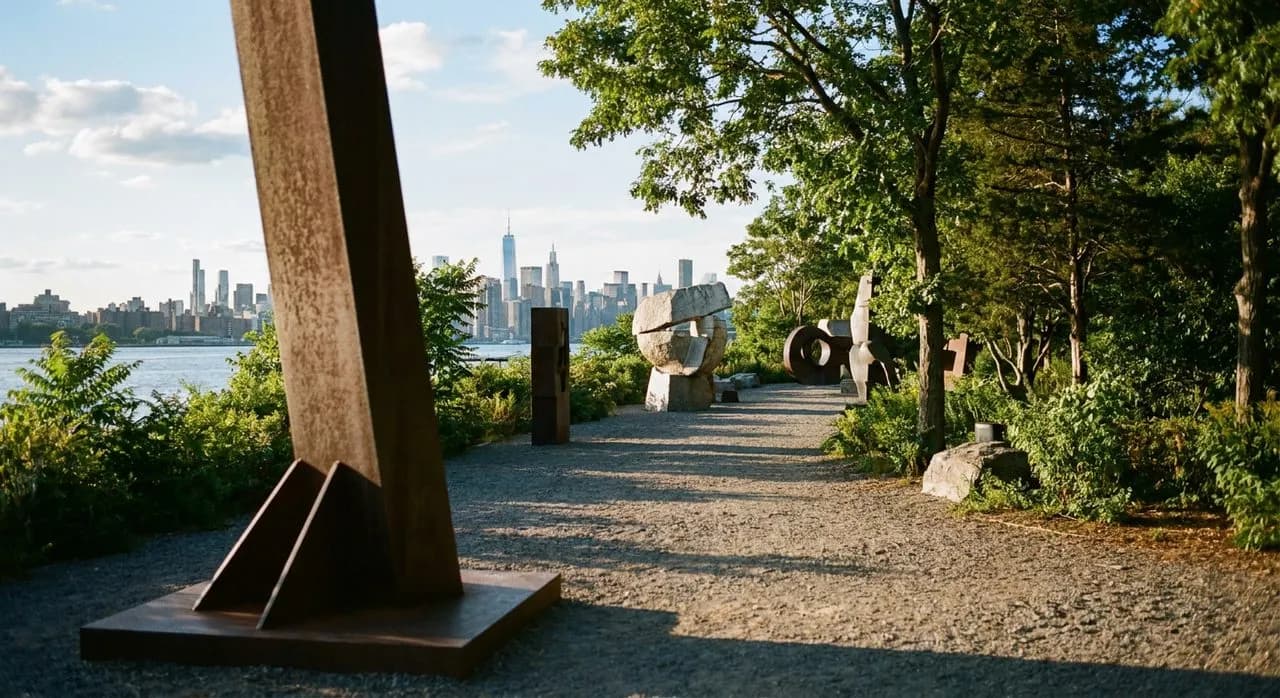
There's a particular kind of New York pleasure in discovering art where you least expect it—not behind velvet ropes or ticketed turnstiles, but open to the sky and the river wind, free for the taking. Socrates Sculpture Park in Astoria delivers exactly that: five acres of ambitious contemporary sculpture perched along the East River, where the Manhattan skyline rises across the water and the grass grows thick enough by late May to justify kicking off your shoes. No admission fee, no timed entry, no membership tier required. Just walk in, look up at a fifteen-foot steel construction catching the afternoon light, and settle in.
A gallery without walls
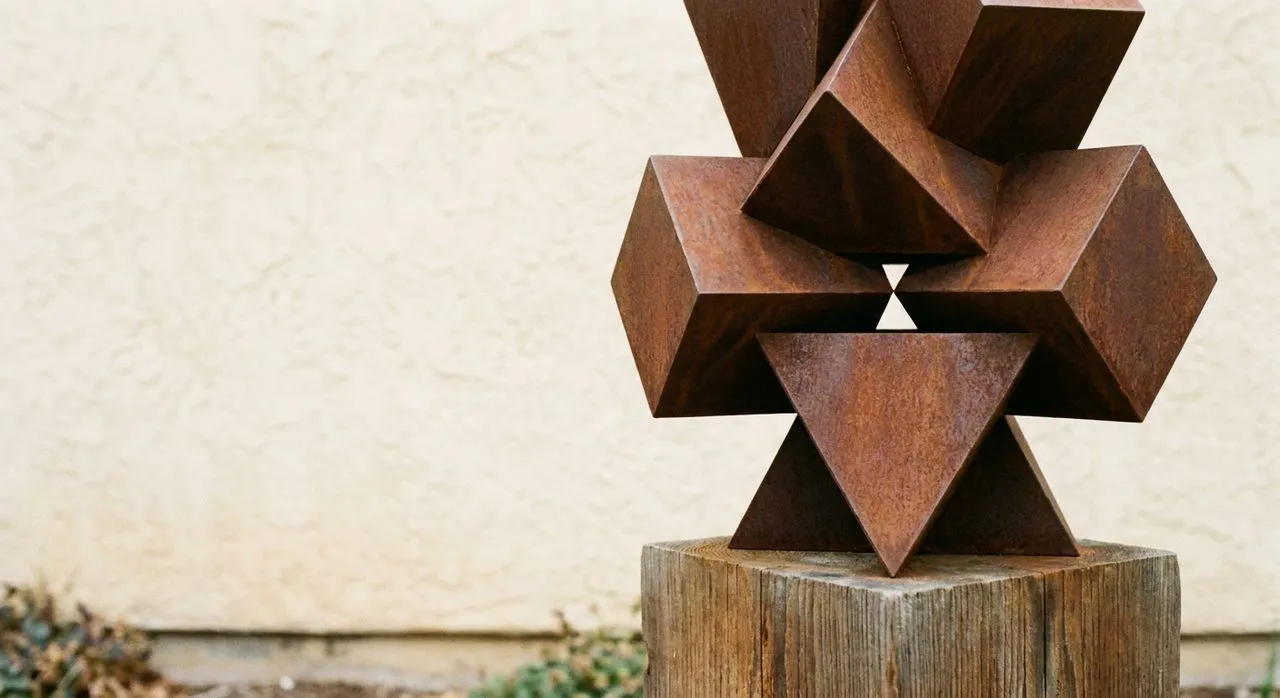
Socrates operates on a rotating exhibition model, with large-scale installations changing every few months. What you'll encounter in spring 2026 won't be the same lineup you'd have seen the previous fall, and that impermanence is part of the park's charm. Artists work in metal, stone, wood, recycled materials, light, sound—anything that can withstand weather and the occasional curious child. The sculptures range from contemplative to playful, abstract to figurative, and the lack of a single curatorial voice means you're never quite sure what you'll find around the next gravel path.
The scale is what surprises first-time visitors. These aren't tabletop bronzes; they're monumental pieces that command space and shift character depending on where you stand. Circle a work once in morning light, then again as the sun drops toward the river, and you're looking at two different conversations. The park invites that kind of slow looking—no guards hovering, no crowd bottlenecks, just you and the work and the sound of gulls overhead.
The site itself tells a story
Before it became an art destination, this stretch of waterfront was an abandoned landfill and illegal dumpsite. Artist Mark di Suvero and a group of collaborators transformed it in the 1980s, clearing debris and reimagining the space as a venue where artists could create and exhibit large outdoor work. That origin story lingers in the park's DNA: it remains scrappy, unpretentious, committed to access over polish. The gravel crunches underfoot. The benches are simple wood. There's no café, no gift shop, no infrastructure designed to extract another twenty dollars before you leave.
What you do get is green space, river breeze, and sight lines that stretch all the way to Midtown's spires. Roosevelt Island sits close enough that you can watch the tram glide overhead. By late May, the grass has shaken off its winter pallor, and the park fills with people treating it less like a museum and more like a backyard: blankets spread, takeout containers open, children zigzagging between sculptures. It's art, yes, but it's also a park, and Astoria claims it accordingly.
Warm weather amplifies everything
May in New York means the city exhales. Jackets come off, outdoor tables reappear, and places like Socrates come into their own. The light stays longer—sunset pushes past eight o'clock—and the park's riverside position means you catch both the afternoon warmth and the cooling influence of the water. Pack a picnic or detour to Broadway, Astoria's central commercial artery a few blocks inland, where bakeries, taquerias, delis, and cafés reflect the neighborhood's layered immigrant history. Grab what looks good, bring it back, and claim a patch of lawn within sight of whatever sculpture currently holds your attention.
The park also programs free public events—yoga sessions on weekend mornings, outdoor film screenings after dusk—that draw neighborhood regulars and bridge-and-tunnel visitors alike. Schedules shift seasonally, so check the park's website before you go if you're hoping to catch a specific offering. Even without planned programming, late May weekends see the lawn dotted with clusters of friends, solo readers, couples leaning against each other as the light goes golden, all of them sharing space with art that doesn't demand reverence so much as company.
Astoria's wider pull
Socrates sits near the northern edge of Astoria, close enough to Astoria Park—home to the city's oldest and largest public pool, plus the Hell Gate Bridge framing the East River like a steel cathedral—that you can easily link the two in a single afternoon. Walk south along the waterfront and you'll trace a path used by joggers, dog-walkers, and anyone craving a stretch of pavement where cars don't dictate the pace. The neighborhood itself has quietly become one of the city's more livable corners: diverse, relatively affordable by New York standards, thick with restaurants and bakeries that haven't yet been discovered to death by lifestyle bloggers.
If you're coming from Manhattan, the trip feels farther than the ten minutes it actually takes. That psychological distance works in Astoria's favor. It stays a little quieter, a little less self-conscious, a place where people still live rather than merely pose. Socrates reflects that spirit. It's not trying to compete with the Met or MoMA. It's offering something different: art in context, art as neighbor, art you can sit beside while eating a sandwich and watching the river traffic slide past.
What to know before the ferry
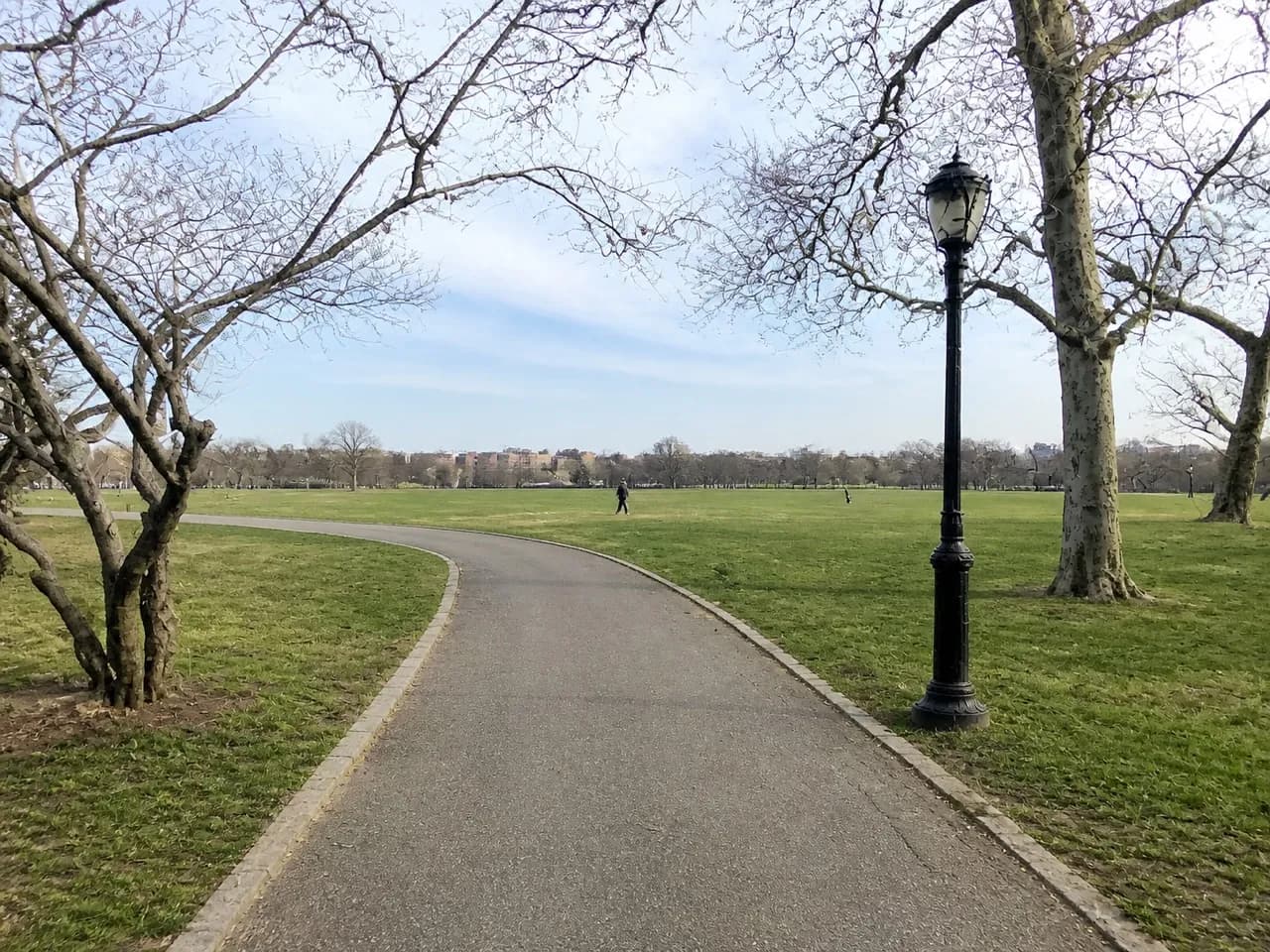
The park operates on daylight hours—officially 9 a.m. to sunset, though those hours shift with the season. Late May means you have until well past eight to wander. Admission is always free. The terrain is mostly flat gravel and grass, accessible for wheelchairs and strollers, though the gravel can be uneven in spots. Bring sunscreen, water, and something to sit on if you plan to stay a while; shade is limited to a few trees and the shadows cast by the sculptures themselves. Bathrooms are available on-site, a courtesy not every outdoor space bothers with.
The closest subway is the N or W to Broadway, about a ten-minute walk northwest through residential blocks. If you're driving, street parking exists but requires the usual New York patience and circling. The address is 32-01 Vernon Boulevard, at the intersection of Broadway, though the entrance feels more like slipping through a gate than arriving at a formal destination. Double-check hours and any special event schedules on the park's website before you go; programming evolves, and sunset times march forward or backward depending on the month.
Practical notes
Socrates Sculpture Park is located at 32-01 Vernon Boulevard, Queens, NY 11106, at the corner of Broadway. The nearest subway is the N or W to Broadway (about a ten-minute walk south through Astoria). Street parking is available but limited. The park is open daily from 9 a.m. to sunset; late-May sunset is in the evening, well after 8 p.m., so plan accordingly. Admission is always free. The grounds are wheelchair and stroller accessible, though gravel paths can be uneven. Bathrooms are on-site. Bring sunscreen, water, a blanket or folding chair, and snacks or a picnic—there's no food for sale. Check the park's official website for current exhibition details and free event schedules, which change seasonally. Combine your visit with a walk through nearby Astoria Park or a stroll south along the East River waterfront.
Tags: #SocratesSculpturePark #Astoria #FreeAndFine #NYCArt #QueensNYC #EastRiver #OutdoorArt #NYCParks #FreeNYC #Spring2026 #ContemporarySculpture #AstoriaPark #NYCWaterfront #FreeMuseums #QueensArt
Sources consulted: Wikipedia: Socrates Sculpture Park · Socrates Sculpture Park Official Site · NYC Parks: Socrates Sculpture Park · MTA: Trip Planning · Time Out New York
All trademarks are the property of their respective owners.