 Haaland Has Seven Goals and Norway Runs Entirely Through Him
⚽️2026 FIFA WORLD CUP

Free Pickup Soccer at Riverside & Pier 5: NYC's Summer 2026 World Cup Warmup
How free drop-in leagues at Riverside Park, Pier 5, Astoria Park, and Brookdale Park are riding the World Cup wave—and tripling attendance.
The World Cup Effect: Attendance Triples at NYC's Free Pickup Games
In the past six months, organizers at Riverside Park's 105th Street field have watched their Sunday morning pickup games swell from a reliable dozen regulars to upward of forty players some weekends. The 2026 FIFA World Cup—kicking off June 11 across the United States, Canada, and Mexico—has ignited a citywide appetite for the beautiful game, and New Yorkers are lacing up cleats in parks from Morningside Heights to Montclair Heights. What was once a quiet ritual for expat communities and die-hard fans has become a cross-borough phenomenon, drawing office workers, students, and families who suddenly want in on the action.
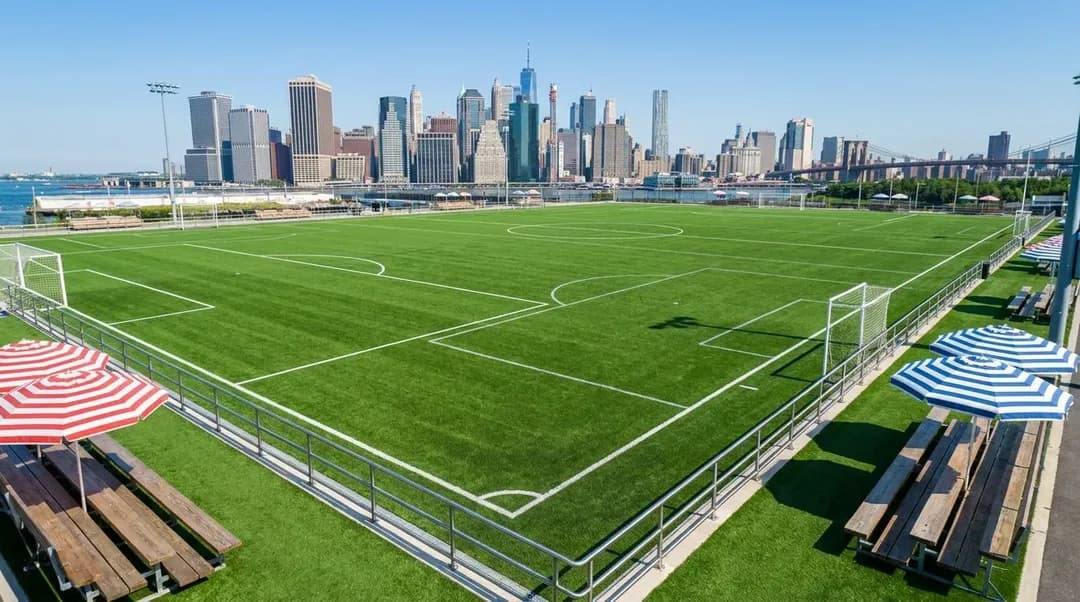
Pier 5 at Brooklyn Bridge Park tells a similar story. The artificial turf pitch overlooking the East River now hosts back-to-back sessions on weekend mornings, with players queuing on the sideline for next game. Astoria Park's fields along the East River waterfront and Brookdale Park in Bloomfield, New Jersey—just a quick PATH ride from Manhattan—round out the quartet of free, no-reservation-required venues that have become the epicenter of the city's pre-tournament fitness surge. As world cup tickets go on sale and heat advisory warnings become a fixture of summer 2026 forecasts, these public pitches offer a zero-cost, high-energy alternative to expensive gym memberships and ticketed amateur leagues.
Where to Find the Games: Four Can't-Miss Venues
Riverside Park's main pickup hub sits at the 105th Street synthetic turf field, tucked between the Henry Hudson Parkway and the Hudson River Greenway. Sunday mornings from 9 a.m. onward are the most reliable slot, though spontaneous weekday evening games pop up when daylight stretches into June and July. The field is first-come, first-served; bring a white and a dark shirt so captains can divide teams on the fly. Pier 5's pitch—officially the Pier 5 Turf Field—operates under Brooklyn Bridge Park's permit system for organized groups, but drop-in players are welcome to join pickup sessions that typically start around 8 a.m. on Saturdays and Sundays. Check the park's bulletin board near the playground for handwritten start times.
Astoria Park, straddling Astoria and Long Island City, offers both grass and turf options. The main turf field near the running track is the go-to for Sunday morning games, while the grass pitch closer to the Hell Gate Bridge hosts smaller-sided matches on weekday evenings. Brookdale Park in Bloomfield features a well-maintained grass rectangle behind the county maintenance yard; games here skew later—10 a.m. Sunday starts—and draw a heavily Latin American and European crowd. Parking is easier than in Brooklyn or Manhattan, and the PATH's Grove Street or Journal Square stops connect to NJ Transit buses that drop you two blocks away.
Drop-In Etiquette: How to Read the Room (and the Sideline)
Arriving at a pickup game for the first time can feel like walking into a house party where everyone already knows the playlist. The unwritten code is simple: introduce yourself to whoever looks like they're organizing—usually the player with a ball bag or the one calling out team colors—and ask if there's room. If the game is full, wait on the sideline; winners typically stay on, and losers rotate off after a set number of goals or a timed period. Most venues play to five or seven goals, with teams reshuffled after every two or three matches to keep skill levels balanced.
Respect the pace and style of the group. Riverside Park games tend toward technical, possession-oriented play with a strong South American influence; hard slide tackles are frowned upon, and showboating is tolerated if you can back it up. Pier 5 leans more physical, with faster transitions and a European flavor—think quick one-twos and overlapping runs. Astoria Park's crowd is the most diverse, blending Balkan grit, West African flair, and Mexican league sensibilities. Brookdale skews older and more tactical, with less sprinting and more shape. Bring water, a backup ball if you have one, and a willingness to play any position when numbers are uneven.
The Language of the Sideline: Calls You'll Hear Every Sunday
Pickup soccer is a polyglot's paradise, and you'll hear Spanish, Portuguese, French, Arabic, and half a dozen Balkan languages shouted in rapid-fire bursts. A few phrases transcend borders: "¡Atrás!" or "Back!" signals a defender needs support; "Man on!" warns of pressure; "Switch!" or "Cambia!" calls for a change of the point of attack. "Next goal wins" is universal, though in some circles it's "golden goal" or simply "último." When someone yells "Freeze!" or "Para!", it means a ball has rolled onto the pitch from an adjacent game—stop play, kick it back, resume.
Disputes over fouls, offsides (rarely called in pickup), and whether a ball crossed the line are settled by volume and consensus, not referees. The phrase "No era" ("It wasn't") or "Come on, ref!"—directed at no one in particular—are standard. If a player is injured, the convention is to kick the ball out of bounds; the opposing team returns possession with a throw-in or a gentle pass back to the goalkeeper. Learning a handful of these calls not only helps you integrate faster but also signals that you've done this before, even if it's your first Sunday at Pier 5.
How the 2026 World Cup Build-Up Changed the Scene
The announcement that MetLife Stadium in East Rutherford would host the 2026 FIFA World Cup final—scheduled for July 19, 2026—galvanized the tri-state soccer community in a way no previous tournament has. Suddenly, the world's biggest sporting event wasn't something happening in Qatar or Russia; it was a thirty-minute train ride from Penn Station. Casual fans who once watched the World Cup in bars started wondering if they could still trap a ball, and the answer for many was to find out on a Sunday morning in Riverside Park. The surge in interest has been most visible among younger professionals in their late twenties and early thirties, many of whom played recreationally in college and let the habit lapse.
Organizers report that attendance began climbing in earnest after the World Cup draw in late 2025, and it spiked again as world cup tickets became available through FIFA's online portal in early 2026. The psychological link is clear: securing tickets to a quarterfinal or semifinal at MetLife feels more meaningful if you're also sweating through your own matches each weekend. The heat advisory warnings that have punctuated summer 2026 forecasts—New York's June has already seen two official advisories—haven't deterred players; instead, games start earlier, water coolers multiply, and breaks between matches stretch longer. The tournament's proximity has turned pickup soccer from a niche pastime into a citywide fitness trend and a social anchor for thousands of New Yorkers.

Practical Notes: What to Bring, When to Arrive, and How to Stay Cool
Showing up prepared makes the difference between a great morning and a miserable slog. Here's what seasoned pickup veterans recommend packing and knowing before you head out:
- Two shirts in contrasting colors—white and dark—so you can switch teams without fuss; reversible pennies work too.
- Molded cleats or turf shoes; metal studs are banned on synthetic fields and will get you benched.
- A reusable water bottle and electrolyte tablets; heat advisory days mean hydration breaks every twenty minutes.
- Sunscreen and a cap for sideline waits; the Pier 5 pitch has zero shade, and Astoria's turf reflects heat like a mirror.
- Cash for a post-game coffee or empanada—food carts cluster near Riverside's 105th Street entrance and Pier 5's exit.
- A small towel and a change of shirt if you're planning to take the subway home; no one wants to be that person dripping on the 1 train.
- Arrive fifteen minutes before the listed start time to claim a spot; games fill fast, especially on holiday weekends.
- Check weather apps for heat index readings; if it's above 95°F by 9 a.m., expect games to be shortened or moved to evening slots.
Right on Time: May 2026 and the Final Countdown
As of May 19, 2026, the World Cup is just three weeks away, and the energy at every pickup venue is palpable. Players arrive wearing national team jerseys—Mexico, Colombia, Argentina, Portugal, and the United States are the most common—and debates about group-stage matchups and bracket predictions bleed into halftime breaks. The tournament's opening match is June 11 at Azteca Stadium in Mexico City, but the first U.S. men's national team game at MetLife is June 15, and that date has become a de facto deadline for getting match-fit. Pickup regulars are treating these final Sunday sessions as their own personal training camps.
The confluence of free access, world-class competition on the horizon, and a city that never stops moving has made May 2026 the perfect moment to join a pickup game. Whether you're a lapsed player looking to recapture old form, a newcomer curious about the sport's global appeal, or a ticket-holder wanting to feel connected to the tournament beyond the stadium, NYC's public pitches offer a no-cost, no-commitment entry point. The World Cup will end on July 19, but the friendships, fitness habits, and sideline vocabulary you pick up at Riverside, Pier 5, Astoria, or Brookdale will last long after the final whistle.
All trademarks are the property of their respective owners.
Ask Karpo for more information.
Keep reading
- Haaland Has Seven Goals and Norway Runs Entirely Through Him
 World Cup Trophy Ceremony Timing Medals and Postmatch Celebrations
 Olise and France's Attack: The Semifinal Tactical Question