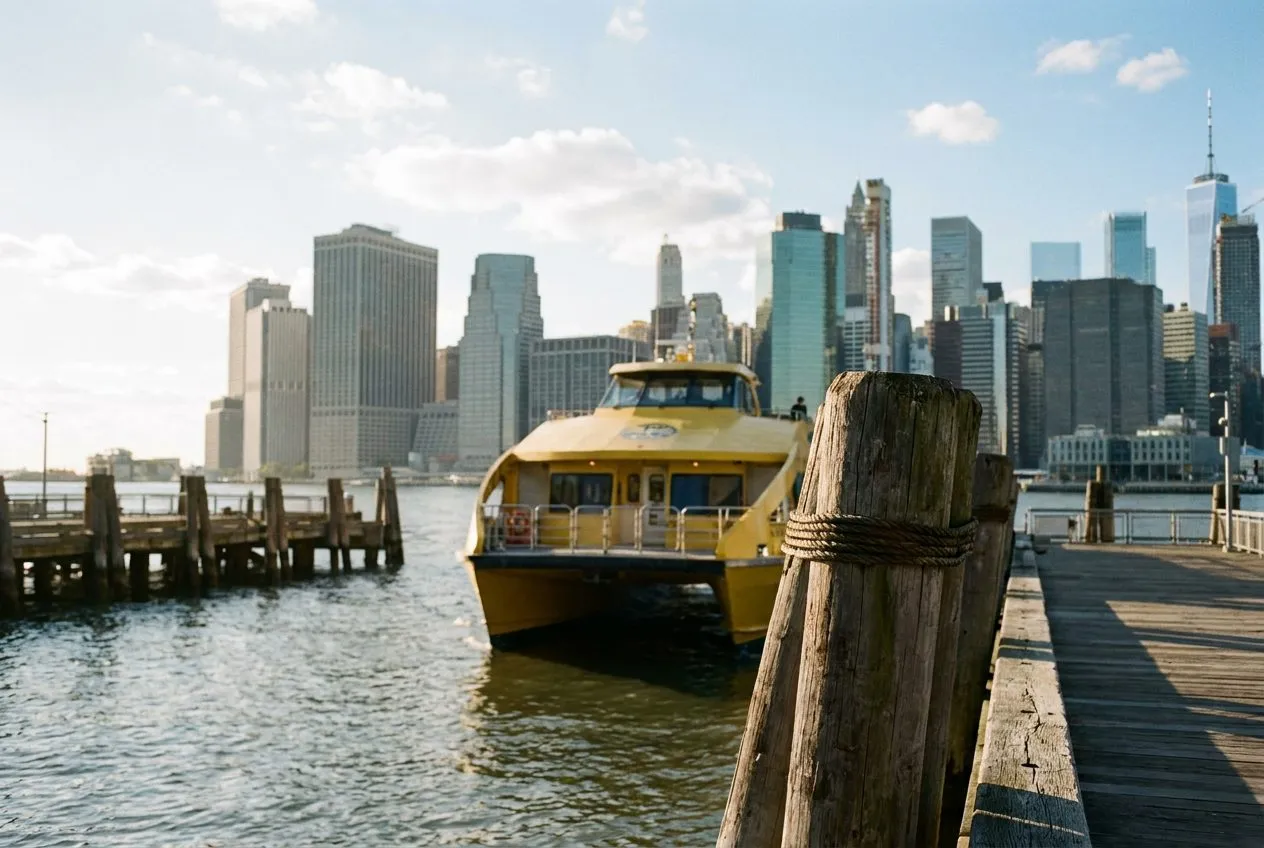
There's a particular satisfaction in crossing water without spending money, especially when the crossing delivers you to 172 acres of car-free island just as the rest of the city is waking up. Governors Island's weekend ferry service runs from late May through October, and if you board on a Saturday morning, the ride is free until noon. The ten-minute passage from the Battery Maritime Building feels like a small escape hatch—brief enough that your coffee stays hot, long enough that the skyline shifts into a new arrangement and you remember Manhattan is, after all, an island too.
The crossing and the quiet
The Battery Maritime Building sits at the foot of Whitehall Street, a Beaux-Arts ferry terminal painted sea-foam green, its grand waiting room mostly empty on early Saturday mornings. Security is minimal—bags are checked, but it's quick—and the boarding ramp leads to a no-frills commuter ferry that feels more municipal than touristic. The seats inside are functional; the outdoor deck is where you want to be. As the boat pulls away, the noise of FDR Drive fades and the chop of the harbor takes over, gulls wheeling overhead, the Statue of Liberty appearing stage-left with that abruptness that still catches you off guard even if you've seen it a hundred times.
By mid-May the water has lost its gray winter flatness and taken on a shifty blue-green. The wind off the harbor smells faintly of salt and diesel. The crossing is short enough that there's no time to get bored, no snack bar, no announcement loop—just the engine hum and the slow approach of Governors Island's low green profile. You dock at Soissons Landing, named after a long-gone military engineer, and step onto an island that feels both familiar and oddly other, a place that belongs to New York but sits just outside its usual rhythms.
The promenade and what it frames
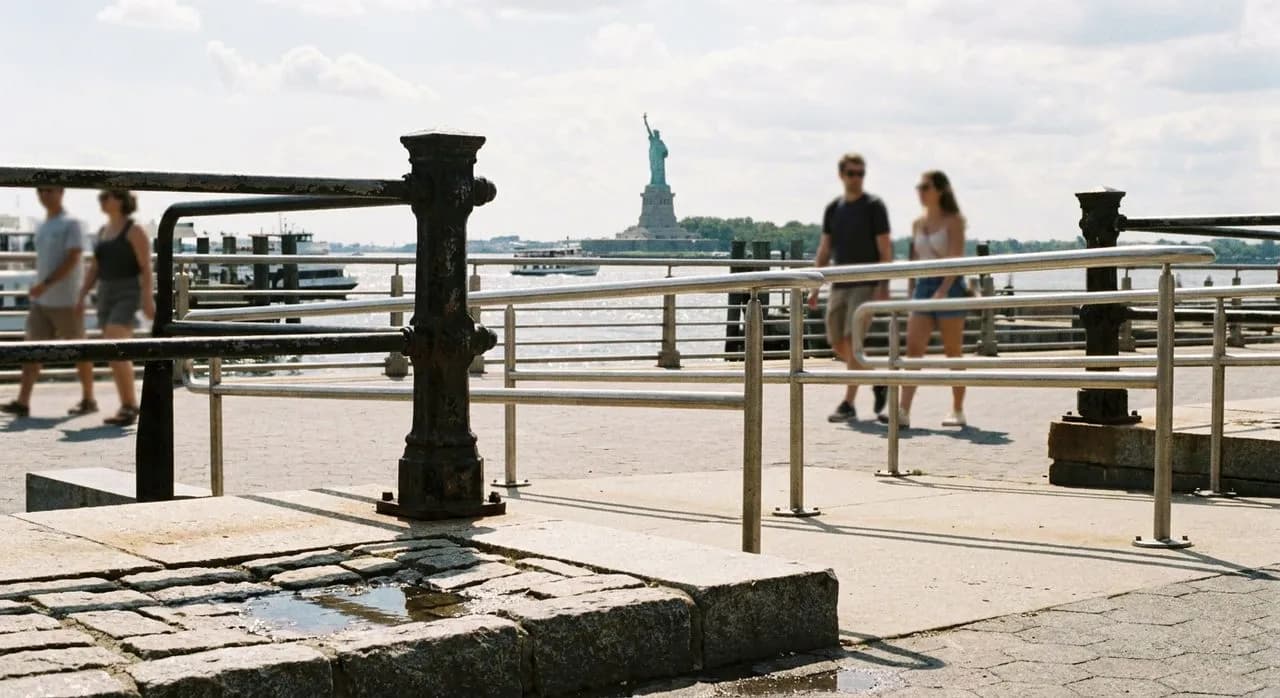
The two-mile promenade loops the island's perimeter, a paved path wide enough for cyclists and strollers but never crowded before noon, when the free ferry crowd is still small and self-selecting. The route follows the old seawall, with the harbor on one side and a mix of lawns, groves, and brick fortifications on the other. There are no guardrails in most sections—just a low curb and then the riprap descending to the water—which gives the walk an open, unmediated feeling. You're not viewing the harbor through a fence or a designated lookout; you're simply beside it.
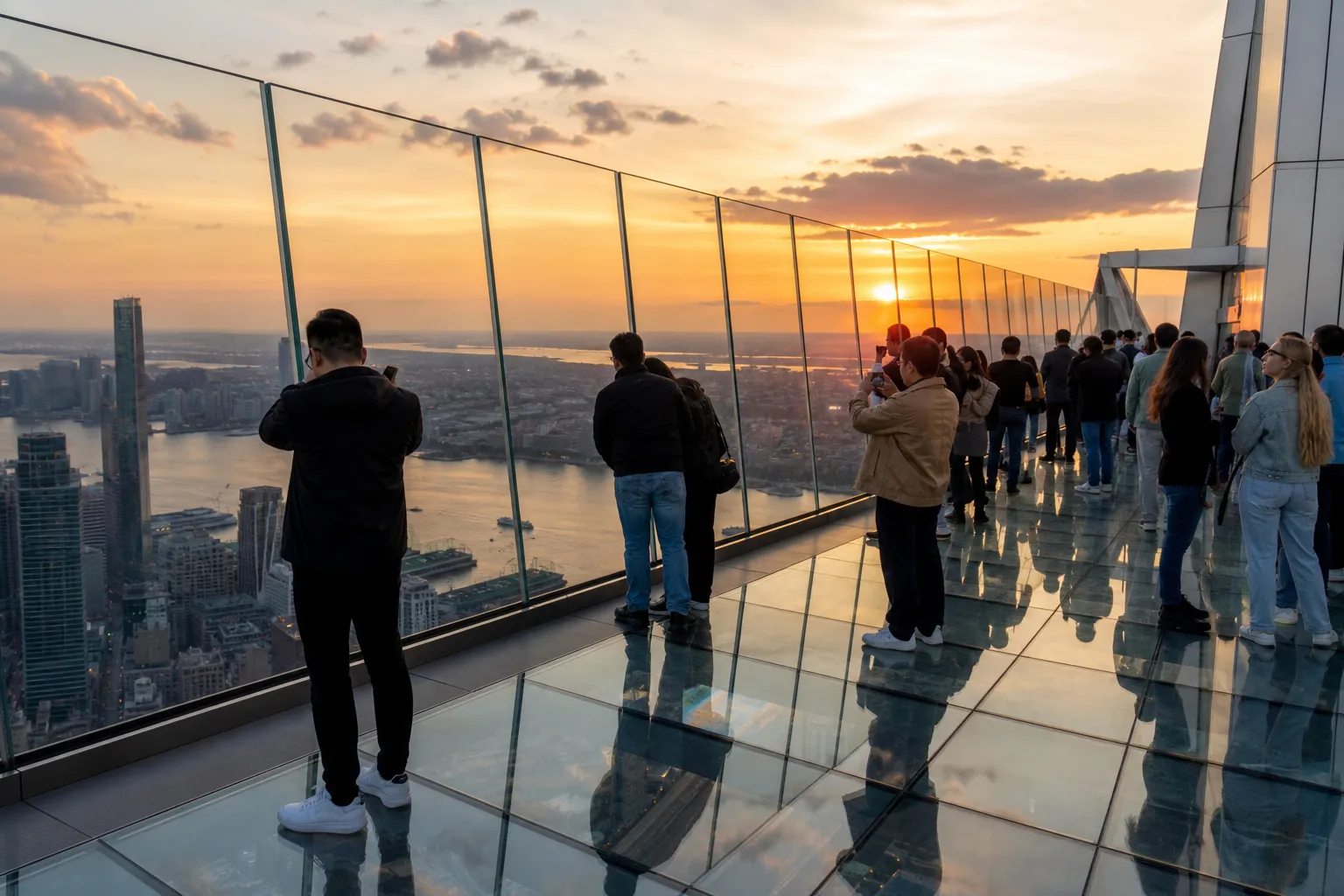
The southern tip offers the closest vantage of the Statue of Liberty, near enough to make out the folds in her robe and the geometric panels of her crown. Ferries and cargo ships pass between you and her, creating a constantly shifting composition. Continue east and Brooklyn's Red Hook shoreline comes into focus—warehouses, cranes, the blocky silhouettes of the container port. The Verrazano Bridge hangs in the distance, delicate despite its size. Heading north, Lower Manhattan rises like a serrated wall, the new towers at the World Trade Center catching the morning light and throwing it back in sharp flashes.
The island's layered past
Governors Island spent two centuries as a military base, first Army, then Coast Guard, and the architecture reflects that functional, no-nonsense heritage. Brick officers' quarters and barracks line the northern half, most painted in shades of beige and cream, their shutters and porches giving them an almost New England reserve. Fort Jay, a star-shaped fortification from the early 1800s, sits at the island's center, its grassy ramparts open to wanderers. Castle Williams, a circular sandstone fort on the northwest corner, looks like something out of a medieval tapestry—thick walls, narrow windows—but was built in 1811 as a companion to Castle Clinton across the water.
These buildings are empty of soldiers now, repurposed as galleries, studios, or simply left as atmospheric ruins. The effect is less museum than stage set, a backdrop that lends the island a sense of layered time. You can walk through the parade grounds and imagine drills, inspections, the clatter of boots on brick. Or you can ignore all that and simply appreciate the shade of the old trees, the way the light filters through sycamore leaves in late May, dappling the paths and benches.
Lawns, hammocks, and the art of lingering
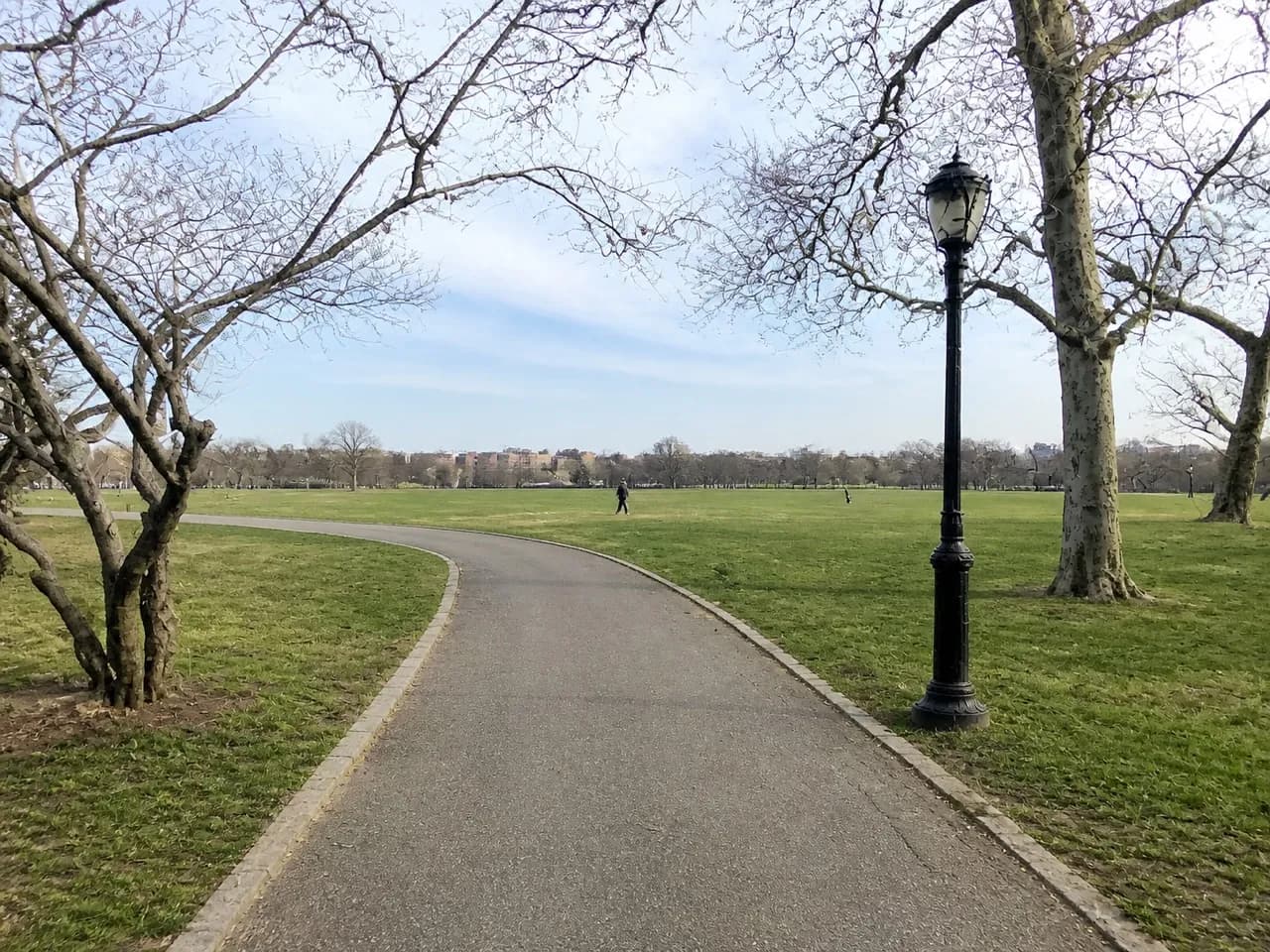
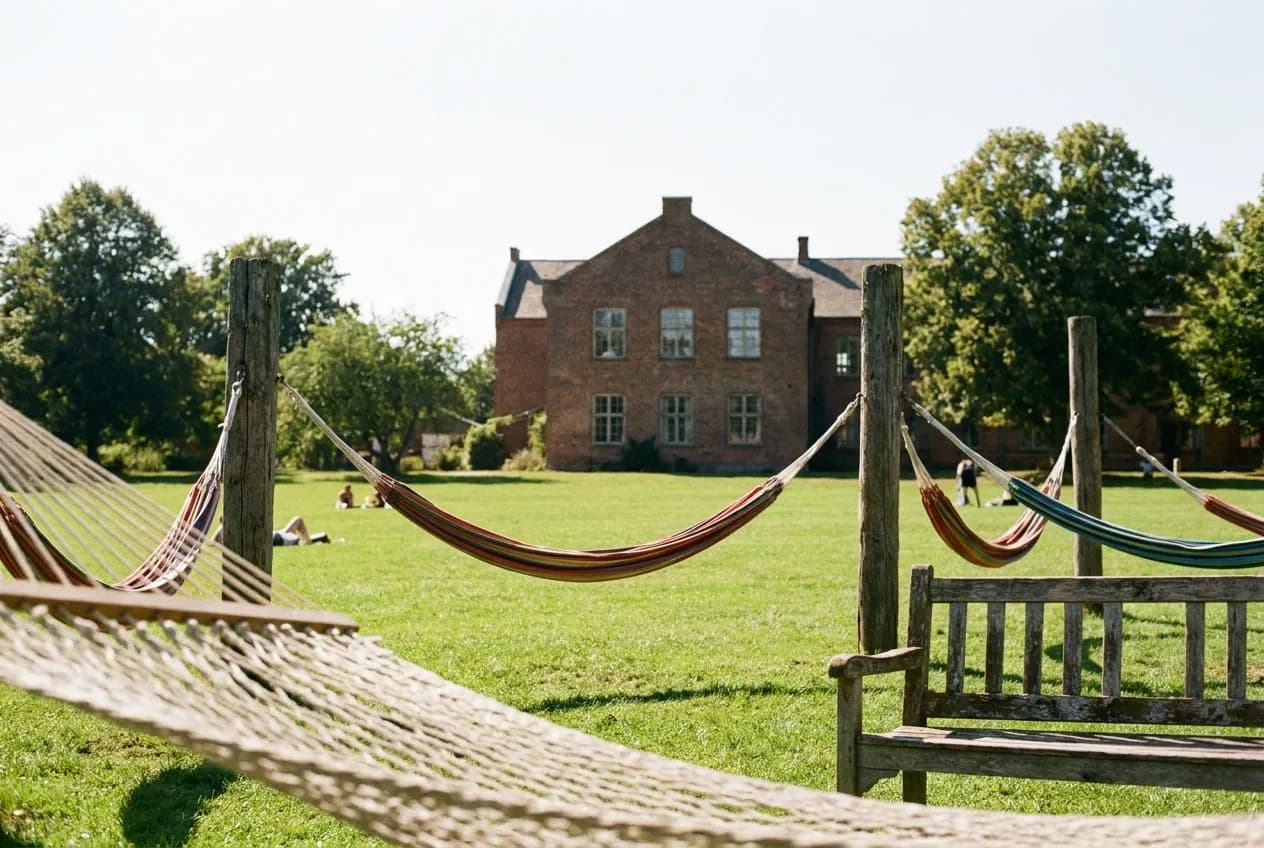
The southern half of the island, called the Hills and the Hammock Grove, was added in recent years—a landscape design project that turned landfill and old pavement into rolling, grassy mounds and a cluster of trees strung with bright nylon hammocks. It's unabashedly recreational, a place designed for sprawling and picnicking and doing very little. On a late-May Saturday the grass is thick and green, the hammocks swing gently even when empty, and the whole scene feels like a postcard version of leisure, except it's real and free and available to anyone willing to take the ferry.
Seasonal vendors set up near the central plaza—coffee carts, ice cream stands, taco trucks—though the selection is limited and lines can be long by midday. Bringing a picnic is the smarter play: a thermos of iced coffee, sandwiches wrapped in paper, fruit that won't bruise in a tote bag. There are scattered picnic tables and plenty of open lawn. The island's no-car policy means the dominant sounds are wind, voices, bicycle bells, the occasional bark of a dog. It's quiet in a way that feels deliberate, engineered even, but after a week of subway screeches and delivery truck beeps, the contrast is welcome.
The return and the rhythm
Return ferries run every thirty minutes from early afternoon onward, the schedule posted at the landing and generally adhered to. The island closes at 6 p.m. on weekends, which means the last ferry leaves around 6:15—enough time to finish a loop, claim a patch of grass, and still catch an early dinner back in Manhattan or Brooklyn. The crowd thickens as the day progresses, especially if the weather is fine, but it never reaches the crush of Central Park or the Brooklyn Bridge promenade. There's space here, literal and psychological, a sense that you can claim a corner of the island without negotiating for it.
The Saturday-before-noon free ferry window is narrow, which keeps the early crowd smaller and self-selecting—people who plan, who wake before the city's tourist engine fully revs, who value a deal but also the quality of the experience a deal can unlock. By the time you board the return ferry, the skyline looks different again, the angle shifted, the light changed. It's the same ten-minute crossing in reverse, but the city you're returning to feels a little more manageable, a little less insistent, after an hour or three on an island that insists on very little.
Practical notes
The Battery Maritime Building is at the foot of Whitehall Street in Lower Manhattan, accessible via the 1 train to South Ferry, the R/W to Whitehall Street, or the 4/5 to Bowling Green. Street parking is scarce and expensive; public transit is strongly recommended. Weekend ferry service to Governors Island typically begins in late spring and runs through fall; departures start in the morning, with the free Saturday window ending at noon. The island is open until 6 p.m. on weekends. Most paths are paved and accessible, though some historic building interiors have limited access. Bring water, sunscreen, and snacks—vendor options are limited. Bicycles are permitted and rentals are available on the island. Dogs are not allowed. Verify current ferry schedules and island hours directly with the Trust for Governors Island before your visit.
Tags: #GovernorsIsland #FreeAndFine #NYCFerry #HarborViews #WeekendWalks #BatteryMaritime #StatueOfLiberty #CarFreeNYC #LowerManhattan #NYCParks #SpringInNYC #NYCOnABudget #IslandEscape #May2026 #CityGetaway
Sources consulted: Governors Island Official Site · Governors Island - Wikipedia · NYC Parks - Governors Island · Time Out New York
All trademarks are the property of their respective owners.