Central Park's Conservatory Garden occupies six acres at the park's northeastern edge, behind a wrought-iron gate that most visitors walk past without noticing. The entrance sits at 105th Street and Fifth Avenue, far enough from the southern tourist circuit that weekday mornings here feel like a secret kept by Upper East Side dog walkers and the occasional horticulture student sketching in a Moleskine. The formality is the point: clipped hedges, gravel paths raked into tidy lines, fountain edges sharp enough to photograph without editing. It costs nothing to enter, and on a Tuesday in late May, you might share the Italian garden with exactly three other people.
Three gardens, three moods
The layout divides into Italian, French, and English sections, each interpreting "formal" through a different lens. The central Italian garden anchors the space with a large lawn panel flanked by twin pergolas heavy with wisteria in early May—by month's end the blooms have dropped, but the shade remains dense and cool. The fountain at the center, ringed by seasonal annuals, hums quietly. Crabapple allées frame the lawn; in late May their petals have already given way to green canopy.
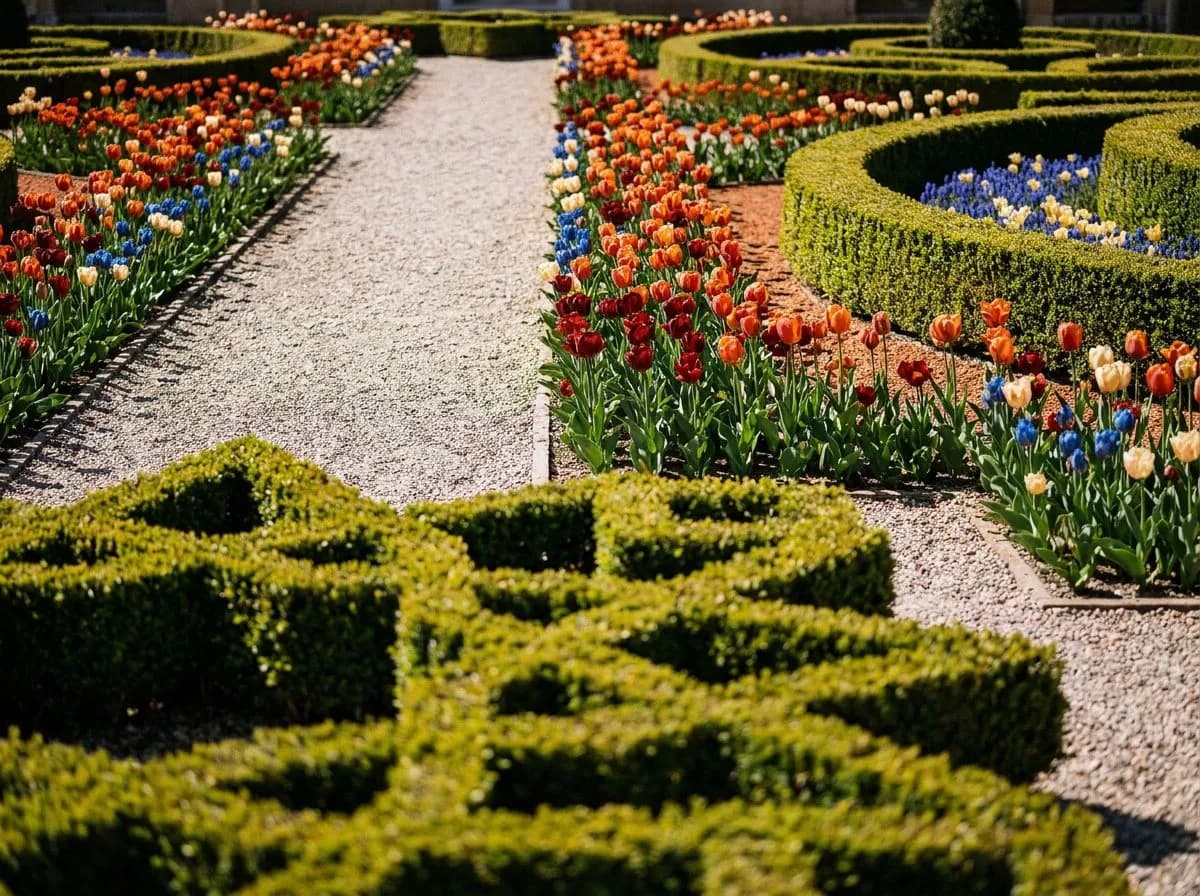
To the north, the French garden leans into symmetry: a circular fountain, radiating wedges of tulips in mid-May, then alliums and later perennials as the season rolls forward. The Untermyer Fountain—three dancing figures in bronze—catches morning light beautifully, and the benches here fill first when the weather turns. To the south, the English garden softens the geometry. Perennial borders bloom in drifts rather than blocks, and the small pool at the far end, shadowed by a wisteria arbor, feels like the sort of place where you'd find a Jane Austen character pretending to read.
Why weekday mornings work
The garden opens at eight a.m., and the first hour is the quietest. By ten, tour groups begin to trickle in—usually retirees on horticultural society outings, occasionally school trips clutching clipboards. They're polite, but they fill the gravel paths and cluster around the fountains, and the spell breaks. If you arrive at eight-thirty on a Wednesday in May, you'll have the wisteria pergolas nearly to yourself. The light slants low through the crabapples, the gravel crunches underfoot, and the city noise fades to a background hum you stop noticing after two minutes.
Weekends are a different story. Saturdays draw wedding parties for photographs, families with strollers, and enough foot traffic that the benches stay occupied. Sundays are marginally calmer, but the essential solitude evaporates. The garden was designed for strolling, not crowding, and it shows its best self when you can pause on a path without someone stepping around you.
Peak bloom and what to expect in late May 2026
May is the Conservatory Garden's showpiece month. Tulips peak in the first two weeks, alliums in the third, and by the final week the perennial borders in the English section begin to layer in foxgloves, salvias, and early roses. The crabapples finish blooming by mid-month, but their green canopies provide structure and shade. Wisteria on the pergolas typically blooms from late April through the second week of May; if you visit in the last week of the month, you'll miss the purple cascades but gain the leafy tunnels that frame the Italian lawn.
The French garden transitions from tulips to summer annuals around Memorial Day weekend, so late May catches the tail end of spring bulbs before the maintenance crews replant. It's a brief window, and the garden doesn't advertise it—no signs, no social media countdowns. You either know, or you stumble into it and feel lucky.
What the garden is not
This is not the place for a picnic blanket or a Frisbee. The lawns are roped off, the gravel paths are meant for walking, and the benches are the only seating. There's no café, no vendor carts, no Wi-Fi you'd want to rely on. It's a walking garden, built for looking and sitting, and the rules—unspoken but clear—keep it that way. Dogs are not allowed inside the gates, which separates it immediately from the rest of Central Park's more relaxed zones.
It also lacks the dramatic scale of the Ramble or the postcard views of Bethesda Terrace. The beauty here is contained, deliberate, and quiet. If you're looking for sweeping vistas or a place to entertain restless children, this isn't it. If you want twenty minutes of calm before a day of meetings, or a place to sit with a book that you might actually read, the Conservatory Garden delivers.
The Vanderbilt Gate and the entrance question
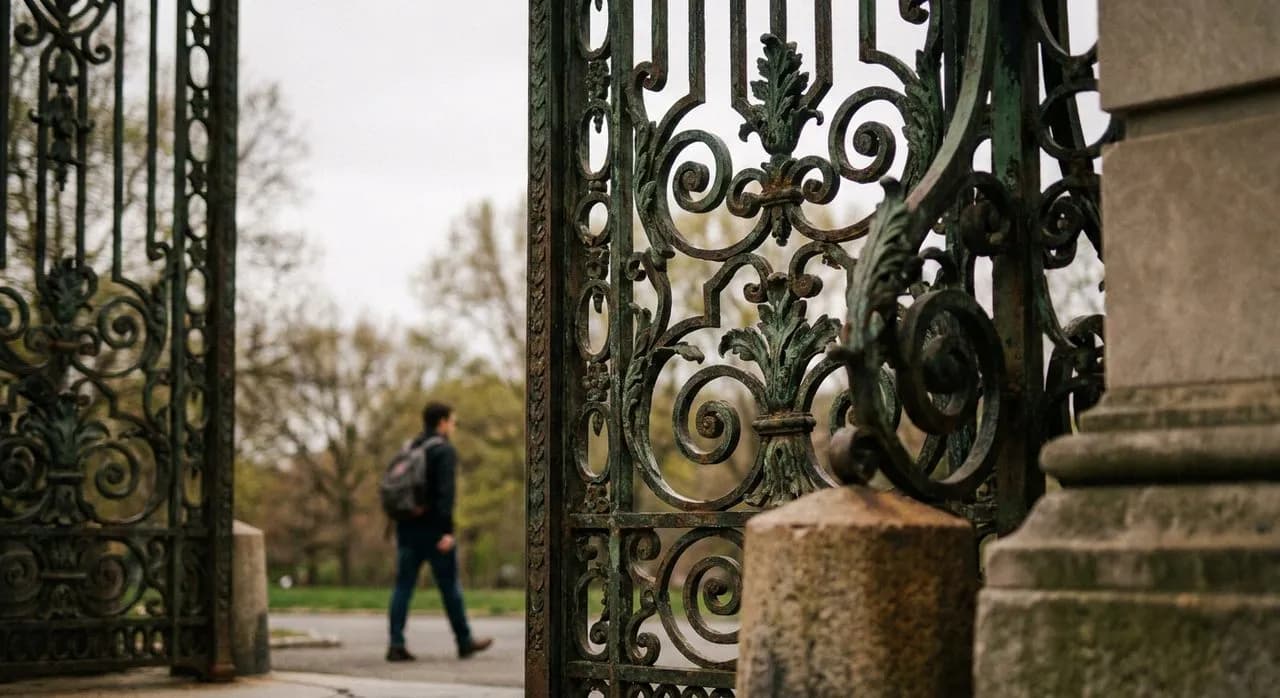
The gate itself—a tall, ornate wrought-iron piece relocated from the Vanderbilt mansion in 1939—sets the tone. You pass through it from Fifth Avenue into a space that feels gated in the European sense: separate, intentional, maintained. The contrast with the rest of Central Park is immediate. No food trucks, no runners cutting diagonal paths, no amplified music from a distant roller skater. Just gravel, hedges, and the occasional gardener deadheading tulips with focus.
There are two other entrances, one at 106th Street and another inside the park from the east, but the Vanderbilt Gate is the primary access point and the one that frames the experience properly. Arriving from Fifth Avenue, you get the full reveal: the pergola vista, the central fountain, the axial layout that pulls your eye straight through to the far end. It's stagecraft, and it works.
Practical notes
The Conservatory Garden is located at Fifth Avenue and 105th Street, accessible through the Vanderbilt Gate. Nearest subway: 6 train to 103rd Street, then a short walk west. The garden is typically open from 8 a.m. until dusk; verify current hours with the Central Park Conservancy before visiting. Admission is free year-round. Restrooms are located near the center fountain. The paths are paved or graveled and generally accessible, though some gravel sections may be uneven. Benches are plentiful. Bring water if you plan to sit for a while; there are no vendors inside the garden. Street parking along Fifth Avenue is metered and scarce; public transit is the simpler option.
Tags: #ConservatoryGarden #CentralPark #FreeAndFine #NYCParks #UpperEastSide #NYCGardens #HiddenNewYork #SpringInNYC #MayBlooms #FormalGardens #QuietSpaces #NYCTravel #CityParks #VanderbiltGate #CentralParkSecret
Sources consulted: Conservatory Garden - Wikipedia · Central Park Conservancy · Central Park - NYC Parks · Time Out New York - Central Park · NY Times - New York Region
All trademarks are the property of their respective owners.