A volunteer-powered paddle program on the East River
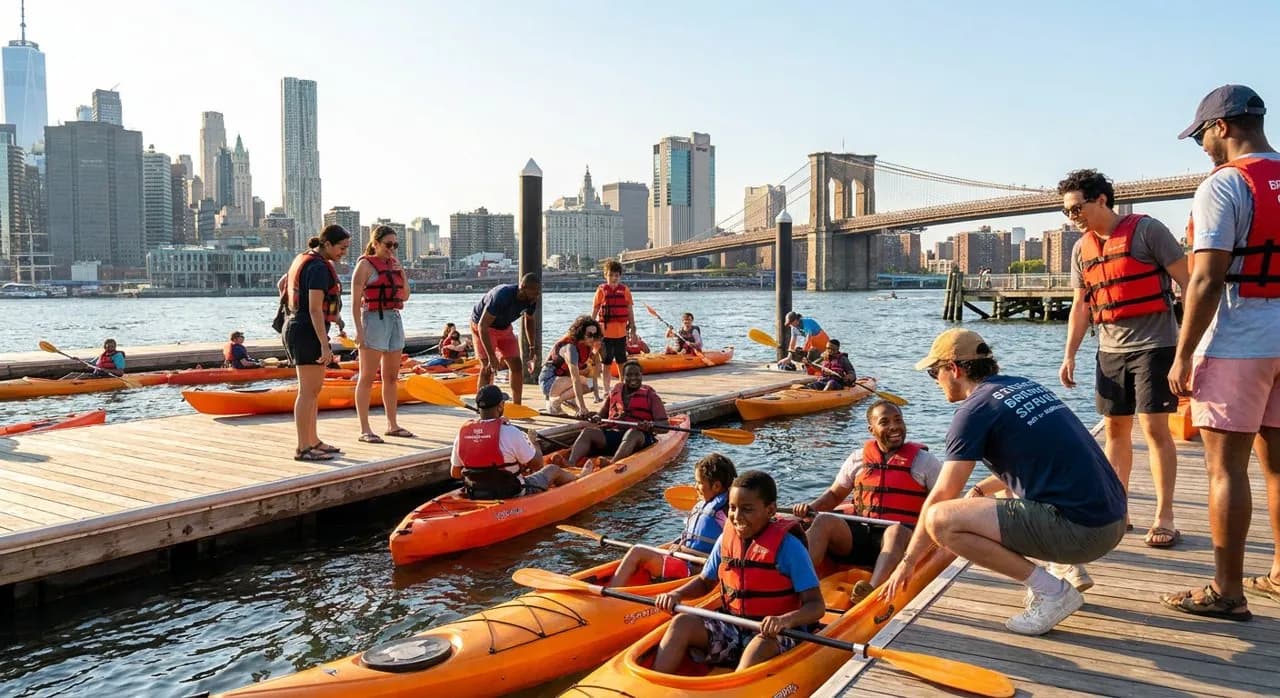
Brooklyn Bridge Park Boathouse has operated free kayaking and canoeing programs since 2008, powered almost entirely by volunteers who believe waterfront access shouldn't require a credit card. The organization is part of a network of community boathouses across New York harbor—including Downtown Boathouse in Manhattan and Sebago Canoe Club in Brooklyn—that collectively put thousands of New Yorkers on the water each season. The Brooklyn Bridge Park location launches from Pier 2, where staff and volunteers help first-timers into sit-on-top kayaks designed for stability rather than speed. Sessions typically run from late May through mid-October, weather and tides permitting, with the exact 2026 schedule expected to be announced in early spring. Check the Brooklyn Bridge Park Boathouse website closer to May for confirmed opening dates and any changes to the program format.
What the experience actually looks like
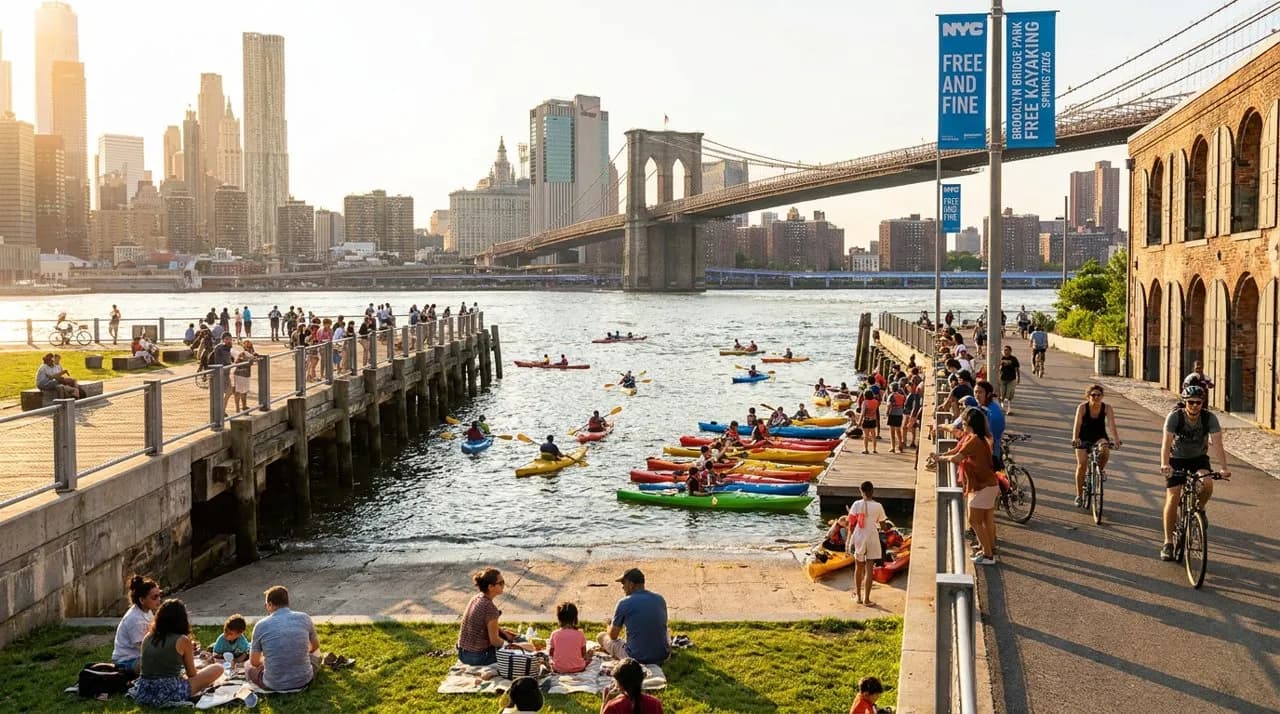
Walk-ups are welcome during posted hours—historically weekend afternoons and occasional weekday evenings, though schedules shift based on volunteer availability and tide conditions. You'll sign a waiver, receive a life jacket (mandatory for all ages), and get a brief orientation covering basic paddle technique and safety boundaries. The kayak zone is roped off, creating a protected area where beginners can acclimate without worrying about boat traffic or swift currents. Most paddlers stay out for twenty to forty minutes, circling within the designated area with views of Lower Manhattan's skyline, the Brooklyn and Manhattan bridges, and the occasional water taxi cutting across the river. The boats are stable recreational kayaks—tippy compared to a rowboat, confidence-inspiring compared to a racing shell. Children are welcome when accompanied by an adult in a tandem kayak. No swimming ability is required, though comfort around water helps, and you should expect to get at least partially wet from paddle drips and the occasional splash.
Why this program matters in an expensive city
Commercial kayak rentals in New York City typically run forty to seventy dollars per hour, and guided tours can exceed one hundred dollars per person. Free programs eliminate the price barrier entirely, transforming kayaking from a special-occasion expense into an impromptu weekend activity. The volunteer model also builds community in ways that transactional recreation rarely does—regulars return season after season, eventually joining the volunteer corps themselves, creating a continuity of knowledge and care that transcends any single paddle session. Brooklyn Bridge Park Boathouse reports that many participants have never been in a kayak before their first visit, and a significant percentage are neighborhood residents who might not otherwise engage with the waterfront beyond walking the promenade. The program demonstrates that urban waterfronts can serve as true public commons rather than amenities reserved for those who can afford lessons, memberships, or equipment.
The park itself rewards a longer visit
Brooklyn Bridge Park spans eighty-five acres along one-point-three miles of Brooklyn waterfront, built on the bones of former shipping piers and transformed into one of the city's most successful post-industrial park projects. Beyond the boathouse at Pier 2, the park includes basketball courts, a roller rink, sand volleyball courts, playgrounds, and Jane's Carousel—a restored 1922 merry-go-round housed in a Jean Nouvel–designed glass pavilion. Pier 1 offers sweeping lawns with unobstructed Manhattan views, popular for picnics, sunbathing, and that particular New York pastime of sitting on grass while surrounded by concrete and steel. The park's design preserves a strong sense of place, with original granite paving stones, refurbished pier structures, and native plantings that attract migratory birds. Plan to arrive early if you're combining kayaking with other activities—weekend afternoons draw crowds, especially when weather cooperates. Multiple entrances serve different neighborhoods, with access from Brooklyn Heights, DUMBO, and Cobble Hill, and the park is entirely free to enter.
Other free-kayaking options across the five boroughs
Brooklyn Bridge Park Boathouse is one node in a broader network of free paddling programs. Downtown Boathouse operates from multiple Manhattan locations including Pier 96 on the Hudson River (West 56th Street) and Governors Island, with a similarly volunteer-driven model and no reservations required. The Manhattan locations tend to offer calmer water conditions and longer seasons, with some sites opening as early as late May and running into September. Sebago Canoe Club in Brooklyn's Paerdegat Basin offers free kayaking and canoeing on Sunday mornings during summer months, though their focus leans more toward club membership and skill development. The Bronx River Alliance occasionally hosts free paddling events on the Bronx River, one of the city's only freshwater rivers, offering a quieter and more enclosed paddling environment. Each program has distinct character, schedules, and water conditions, so checking individual websites closer to your intended visit date remains essential. Collectively, these organizations make it possible to paddle regularly throughout the warmer months without ever paying a launch fee.
What to bring and what to expect
Dress in clothes you don't mind getting wet—synthetic athletic wear or swimwear covered by a t-shirt and shorts works well, while cotton and denim stay soggy and uncomfortable. Secure footwear is required; water shoes or old sneakers are ideal, while flip-flops are typically prohibited. Bring a towel, sunscreen, and a hat with a strap if you burn easily—the reflection off the water intensifies sun exposure. Most programs provide life jackets and paddles, but call ahead or check websites if you have specific needs regarding sizing or accessibility. Personal flotation devices are non-negotiable regardless of swimming ability. Leave valuables at home or with a trusted companion on shore, as there's limited secure storage and you cannot bring bags into the kayaks. Waterproof phone cases allow for photos but add risk—many paddlers prefer to leave devices on land. Waits can stretch to an hour or more on beautiful weekend afternoons, so arriving at session start times or on weekday evenings typically means shorter lines. Programs close for high winds, thunderstorms, and unsafe tide conditions, sometimes with little advance notice, so flexibility helps.
Practical notes
Brooklyn Bridge Park Boathouse typically operates from Pier 2 at Brooklyn Bridge Park, accessible via multiple subway lines to High Street–Brooklyn Bridge (A, C) or York Street (F), followed by a ten-minute walk. The 2026 season schedule had not been published at time of writing; check brooklynbridgeparkboathouse.org in April or early May for confirmed dates, times, and any program updates. Sessions generally run weekend afternoons and select weekday evenings from late May through mid-October, weather and volunteer availability permitting. No reservations are accepted—all access is walk-up and first-come, first-served. Life jackets are provided and required for all participants regardless of age or swimming ability. Children must paddle in tandem kayaks with adults. The program is free, though donations are welcomed to support equipment maintenance and operations. Parking is limited and expensive in the area; public transportation is strongly recommended. Arrive early on weekends to avoid extended waits. Alternative free kayaking programs operate at Downtown Boathouse locations in Manhattan and Sebago Canoe Club in Brooklyn—check individual websites for schedules. Water conditions, weather, and tides can force last-minute cancellations with no advance notice.
Tags: #FreeAndFine #NYCFree #BrooklynBridgePark #FreeKayaking #NYCKayaking #BrooklynWaterfront #FreeNYC #OutdoorNYC #EastRiver #BrooklynActivities #NYCOutdoors #FreeActivitiesNYC #Spring2026 #VolunteerPrograms #WaterfrontAccess
Sources consulted: Brooklyn Bridge Park — Official Site · Brooklyn Bridge Park — Wikipedia · NYC Parks Department · Downtown Boathouse NYC · Time Out New York — Free Activities
All trademarks are the property of their respective owners.