Late spring in New York means dappled light through new leaves, the faint sweetness of blooming trees, and—if you time it right—an hour or two in one of Brooklyn's finest green spaces without spending a cent. Brooklyn Botanic Garden offers free admission on Saturday mornings from ten until noon, a narrow window that attracts plenty of locals but remains civilized if you arrive early. The fifty-two-acre site sprawls across Crown Heights and Prospect Heights, a patchwork of specialty gardens, glass conservatories, and grassy slopes where the city's hum fades to birdsong and rustling branches. It's a generous civic tradition, and one worth setting an alarm for.
The logistics: Washington Avenue entrance and timing
Free admission on these Saturday mornings is valid only through the Washington Avenue gate, the main entrance facing the wide sidewalks of Crown Heights. The other entrances—including the one near Prospect Park—remain closed or require paid tickets during this window. Arrive closer to ten than to eleven; by mid-morning the queue can snake down the block, especially on warm weekends when the forecast promises sun. Security checks bags quickly but thoroughly, and once you're inside the turnstile the crowd disperses along the pathways like water finding its level.
The garden's layout rewards those who know where they're going. First-timers tend to drift toward the nearest lawn or follow the widest path, but the real gems—shaded alcoves, specimen plantings, benches tucked behind hedges—require a little intentionality. Pick up a paper map at the entrance or study the wayfinding pylons; cell service is decent but the pleasure here lies in getting momentarily, productively lost.
Japanese Hill-and-Pond Garden: the anchor
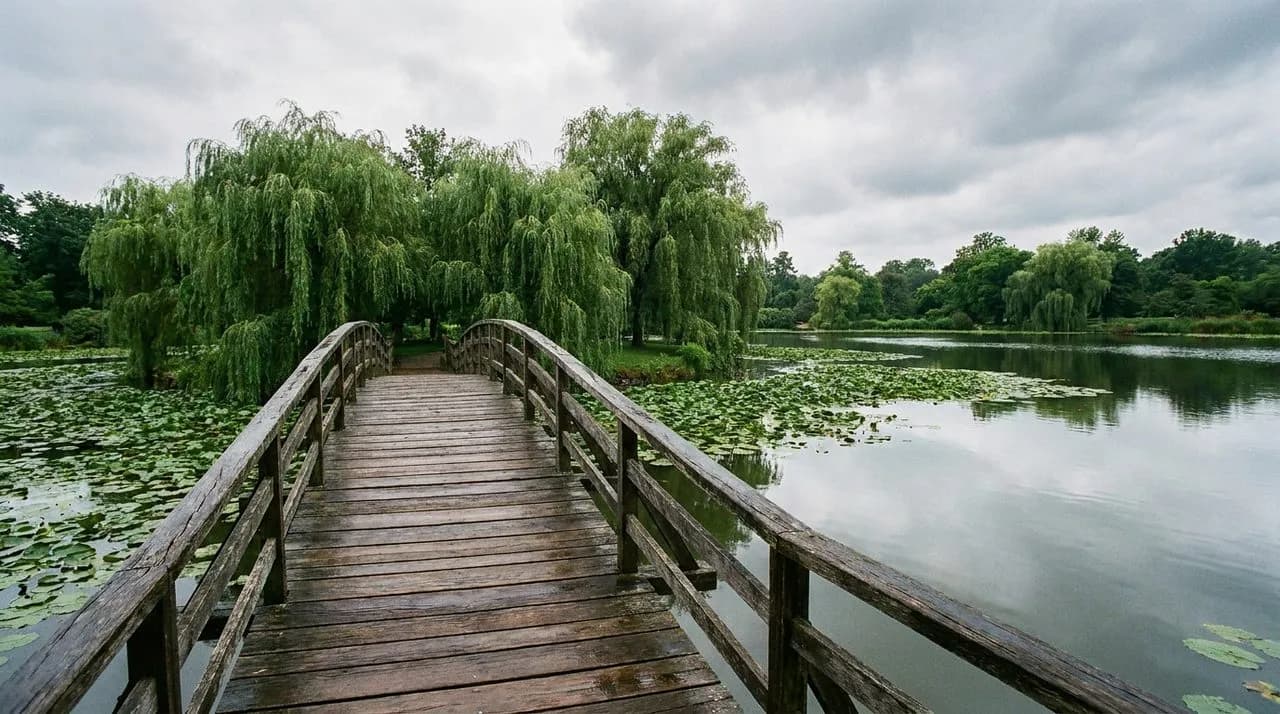
If you make only one stop, make it the Japanese Hill-and-Pond Garden. Designed in 1915 and refined over the decades, it's a study in controlled asymmetry: a pond crossed by wooden viewing pavilions, stone lanterns half-hidden by azaleas, and a waterfall that trickles over moss-draped rocks. By late May the cherry blossoms have long since dropped, but the maples are lush and green, casting coins of shadow on the water. Koi glide under lily pads; turtles sun themselves on half-submerged logs.
The garden unfolds in layers, paths winding uphill past bamboo groves and dwarf pines pruned into sculptural shapes. The air smells faintly of damp earth and boxwood. On a crowded Saturday you'll share the wooden bridges with strollers and couples taking photographs, but the design absorbs foot traffic gracefully. Linger on the upper viewing deck—the sightline across the pond, framed by weeping branches, feels composed enough to hang on a wall.
Cherry Esplanade and the remains of bloom
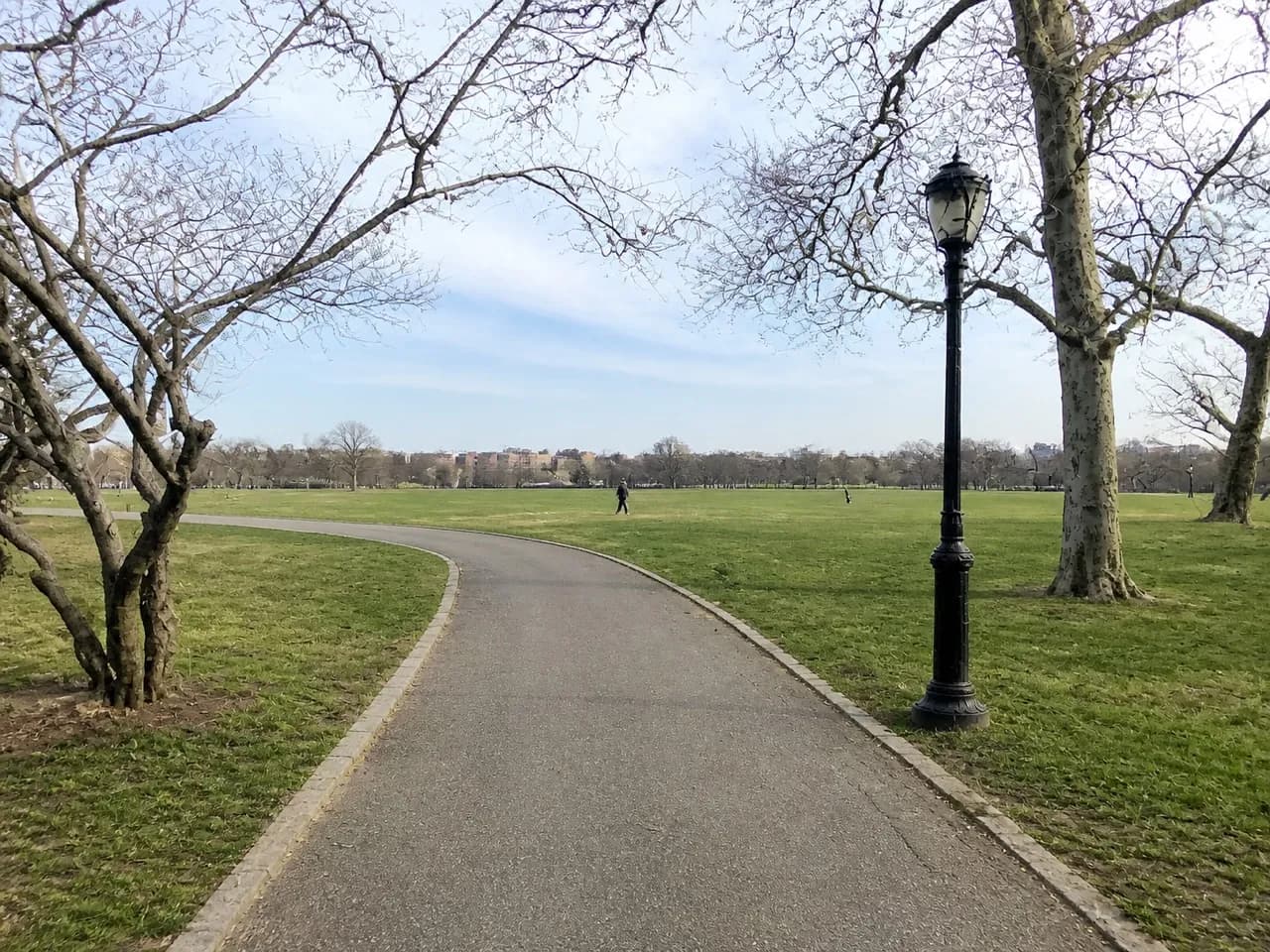
The Cherry Esplanade is Brooklyn Botanic Garden's most Instagrammed corner, and for good reason: more than two dozen Japanese flowering cherry trees form a vaulted canopy over a grassy promenade. Peak bloom typically falls in mid-to-late April, drawing enormous crowds and a festival atmosphere. By the first Saturday in May, the petals are mostly gone, replaced by fresh green foliage that's less dramatic but more intimate. The light filters through the leaves in a softer, steadier way, and the grass—well-tended but beginning to show the wear of spring foot traffic—invites a pause.
Blankets are welcome on the lawns here, though the garden forbids food and drink inside the cultivated beds and conservatories. On a warm morning you'll see people sprawled under the cherry canopy with books, sketchpads, or simply closed eyes. It's a different mood from the Japanese garden's contemplative formality—more communal, more Brooklyn. The trees themselves are stately even without blossoms, their bark a burnished bronze that catches the late-morning sun.
Roses, natives, and the Cranford collection
The Cranford Rose Garden, a geometric grid of beds encircling a central fountain, won't reach full flush until mid-June, but by late May the first blooms are opening—tight scrolls of color unfurling into saucers. The garden holds more than five thousand plants representing nearly a thousand varieties, a living catalog of hybrid teas, floribundas, and old garden roses. The scent on a still morning is heady, almost narcotic, and the labeled beds reward close reading. This is where you'll find the garden's most devoted hobbyists, noses inches from petals, cameras clicking.
Nearby, the Native Flora Garden offers a quieter counterpoint: woodland paths winding through plantings that evoke the mid-Atlantic landscape before European settlement. Ferns uncurl in the shade; columbine nods on slender stems. The effect is deliberately artless, though the maintenance required to keep it looking wild is anything but. It's a good reminder that even a formal botanical garden can make space for understated beauty, the kind that doesn't announce itself from across the lawn.
Conservatory greenhouses and tropical refuge
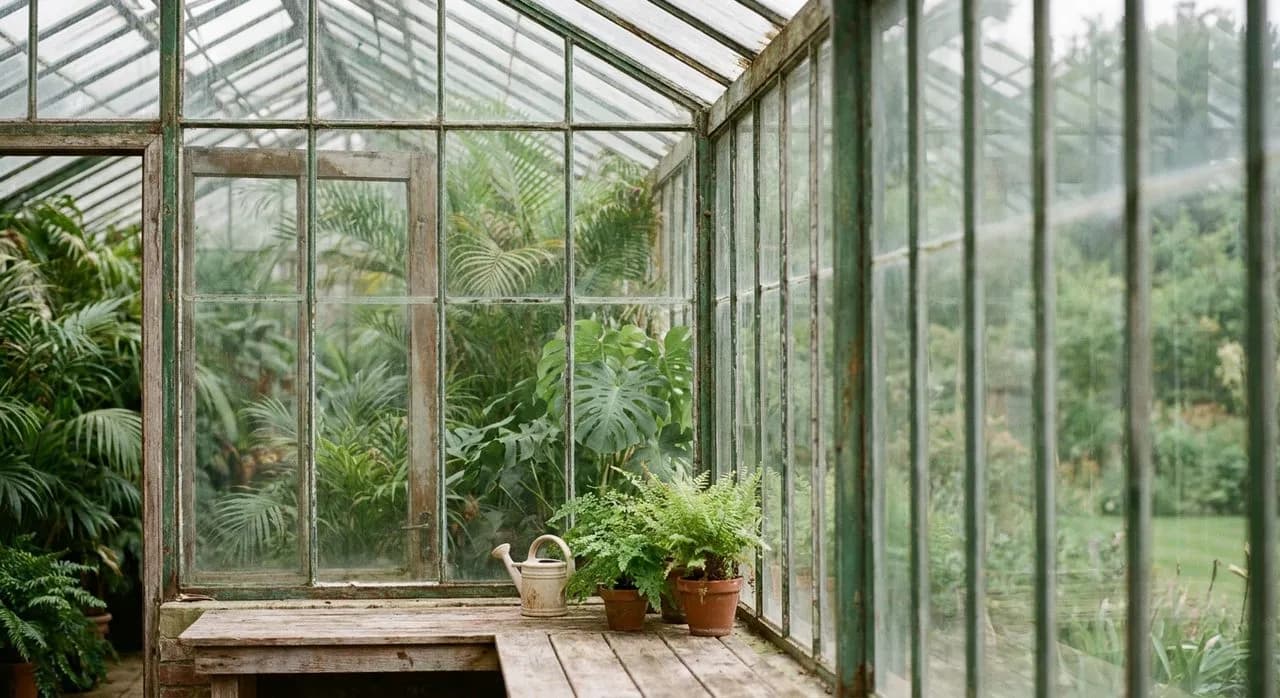
The Steinhardt Conservatory houses three climate-controlled pavilions—Tropical, Warm Temperate, and Desert—each a glass-walled pocket universe. Step inside and the temperature climbs; humidity clings to your skin. The Tropical Pavilion is the most dramatic, with a canopy of palms and fig trees arching overhead, orchids clinging to bark, and a burbling stream threading between the paths. The air smells green, alive, faintly sweet with decomposition and bloom in equal measure.
The desert collection, by contrast, is all spines and geometry: columnar cacti, agaves spreading their rosettes, succulents clustering like abstract sculpture. The light is bright and hard, filtered through the glass roof, and the silence feels deeper here—no rustling leaves, just the occasional creak of expanding metal. It's an efficient tour of global biomes, each pavilion small enough to explore in ten minutes but dense enough to reward a slower look. On a busy Saturday the conservatory can feel crowded; consider saving it for the final twenty minutes before noon, when some visitors have already drifted toward the exit.
What to expect and how to move
Two hours is enough time to see the highlights without rushing, though a full loop of all fifty-two acres would take longer. Paths are paved or well-maintained gravel; the terrain includes gentle hills but nothing strenuous. Weekday mornings, when the garden charges admission, tend to be quieter, but the free Saturday window has its own appeal—a collective sense of neighbors claiming shared space, families with toddlers testing the boundaries of patience, older couples moving at their own unhurried pace.
The garden's rules are clearly posted and gently enforced: no pets, no bicycles, no plucking blooms or climbing trees. Photography is welcome, including tripods and elaborate setups, though commercial shoots require advance permits. The atmosphere is decorous but not stuffy; you'll hear laughter, snippets of conversation in a half-dozen languages, the click of pruning shears from a gardener working a bed. By eleven-thirty the mood shifts slightly, visitors beginning to glance at watches, aware the clock is running out. Leave a few minutes before noon to avoid the bottleneck at the gate.
Practical notes
Brooklyn Botanic Garden is located at 990 Washington Avenue, Brooklyn, New York 11225. Free Saturday admission in May runs from 10 a.m. to noon; enter only via the Washington Avenue gate. The nearest subway stations are Eastern Parkway–Brooklyn Museum (2, 3, 4, 5 trains) and Prospect Park (B, Q, S trains), each a short walk. Street parking on Washington Avenue and surrounding blocks is metered and competitive; arrive early or consider public transit. The garden is wheelchair accessible, with paved paths throughout and accessible restrooms near the conservatory. Bring a blanket if you plan to sit on the lawns; water bottles are permitted, but food and drink are prohibited inside the garden beds and conservatory. Verify current hours and any schedule changes directly with Brooklyn Botanic Garden before your visit.
Tags: #BrooklinBotanicGarden #FreeAndFine #NYCFree #BrooklynNYC #MayInNYC #CrownHeights #ProspectHeights #BotanicalGardens #JapaneseGarden #CherryEsplanade #NYCParks #SpringInNYC #FreeWeekend #BrooklynFinds #KarposFinds
Sources consulted: Brooklyn Botanic Garden Official Site · Brooklyn Botanic Garden - Wikipedia · NYC Parks · Time Out New York - Free Things to Do · MTA - Getting There
All trademarks are the property of their respective owners.