 Best Trick or Treating Neighborhoods Near Me: Park Slope
Neighborhood Guides

Fort Tilden by Bike: The Sandy Road After the Last Bus Stop
The Rockaway Greenway ends where the pavement does—at a mile of sand leading to abandoned gun batteries and a beach the city forgot to develop. You'll need fat tires and a full pannier.
The route that stops being a route
The Rockaway Greenway is deceptive in its civility. For miles it runs smooth and green along the Jamaica Bay shore and out the Rockaway peninsula, where most cyclists turn around at the developed beaches. You keep going. Past the last bodega, past the community gardens, the bike path narrows and the asphalt gives way to hard-packed sand. This is where Fort Tilden begins—not at an entrance gate, but at the moment your tires start to slip. The National Park Service maintains this former Army coastal-defense base with what can only be described as benign neglect, and that's precisely its appeal. No snack bar. No rental umbrellas. Just you, whatever you packed, and the Atlantic stretching gray and indifferent toward Portugal. Locals call this stretch "the commitment mile" because once you're in the sand, there's no graceful retreat.
What you're riding into

Fort Tilden occupies the Rockaway Peninsula's western tip, a former coastal-defense installation decommissioned decades ago after guarding New York Harbor. The military left behind massive concrete gun emplacements—Battery Harris East and Battery Harris West—designed for artillery that never fired a shot in anger. These structures now host graffiti artists and the occasional wedding photographer, their tunnels cool and echoey even in August. The beach itself is part of Gateway National Recreation Area, managed by the National Park Service with a light touch that borders on abandonment. The undeveloped, dune-backed Atlantic strand sees far fewer crowds than Jacob Riis or Rockaway Beach proper. On summer weekdays, you might have long stretches nearly to yourself. The sand is coarse, mixed with crushed shells, and the shore drops off quickly—this isn't Coney Island's gradual wade. Bring a fat-tire bike or be prepared to walk the last section, wheels in hand, like a pilgrim with mechanical baggage.
The approach
The Rockaway/Jamaica Bay Greenway network brings you out from the city through Marine Park and across the Gil Hodges Memorial Bridge into the Rockaways. Everything shifts once you cross onto the peninsula. The air smells different here, salt mixing with sunscreen and hot asphalt. Fill your water bottles at a public fountain along the developed boardwalk sections—the last reliable water source before Fort Tilden. Check your panniers. You'll want: two liters per person, sandwiches that won't wilt, sunscreen with actual SPF, and a first-aid kit. Cell service at Fort Tilden is theatrical—two bars that promise everything, deliver nothing.
The sand mile
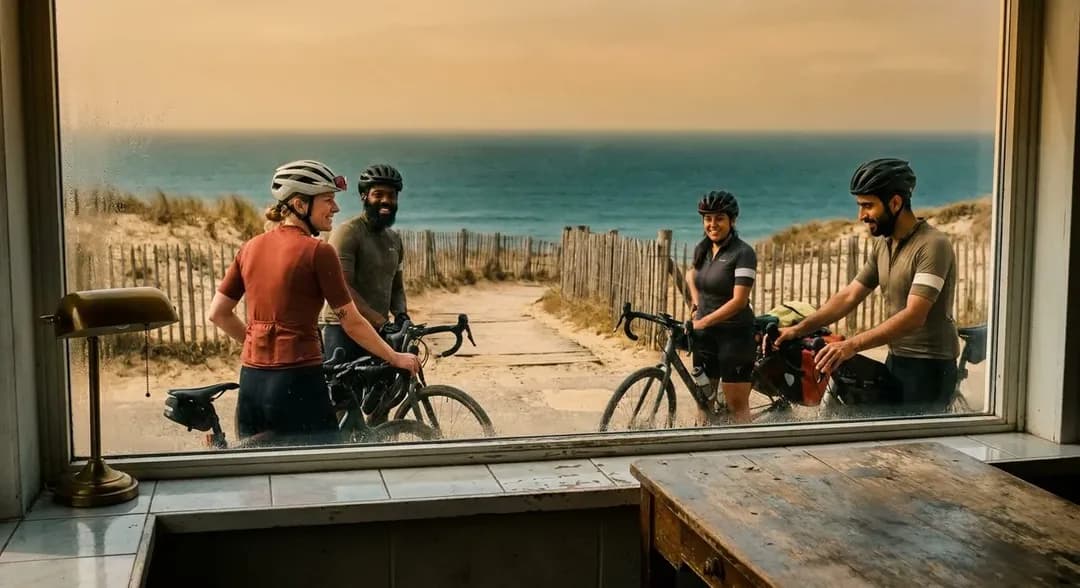
The transition happens gradually, then suddenly. Packed sand becomes loose sand becomes the kind of sand that swallows skinny tires whole. Most riders dismount somewhere along the sandy paths leading to the beach and walk. There's no shame in this; you'll see roadies in full kit doing the same, cleats clicking uselessly. The trick some use: ride the tire tracks left by Park Service vehicles, which compact the sand into something approaching firmness. These tracks often run closest to the dune line. Time your ride for morning low tide if possible—the hard sand near the waterline provides another option, though you'll need to dodge the occasional fishing line and the territorial piping plovers that nest here spring through summer. Budget extra time for this section. Your calves will remind you of it the next day.
The batteries and what they guard
Battery Harris East is the more accessible of the two structures, its entrance facing the area most visitors reach. Walk your bike up the concrete ramp and you're standing where soldiers once tracked threats from the sea. The graffiti here is surprisingly sophisticated—a rotating gallery that changes seasonally. Someone might paint elaborate murals across the curved ceilings; by next season, they've been tagged over with new geometric patterns. The tunnels connect in a maze that's easy to navigate with a phone flashlight but genuinely disorienting without one. Visitors sometimes leave chalk arrows for newcomers, though these fade quickly in the salt air. Battery Harris West, down the beach, is less visited and more atmospheric—its tunnels flood during high tides, creating shallow pools that reflect light in strange ways. Don't store your bike inside either structure; the sand is too deep and you'll spend time digging it out.
The beach protocol
Fort Tilden Beach operates on an honor system that assumes competence. No lifeguards means you're responsible for your own swimming judgment. The rip currents here are real—stay cautious and aware. If you're not a strong swimmer, stay shallow. The beach faces south-southwest, catching swells that make it popular with surfers in cooler months. In summer, the water is surprisingly clear for New York—you can see your feet at waist depth. Stake your claim early; the limited shade from the old bunkers fills by noon on weekends. The western end, near the old Coast Guard station, gets less foot traffic. The eastern end is more exposed to wind. Bring a tarp to sit on; the sand is coarse enough to work its way into every zipper and pocket.
Practical notes
Fort Tilden is located at the western end of the Rockaway Peninsula, part of Gateway National Recreation Area. Access via the Rockaway/Jamaica Bay Greenway network. The site is open daily dawn to dusk, free admission. No food vendors, limited water fountains (last reliable sources are along the developed boardwalk sections east of Fort Tilden), no bike repairs on site. The Q35 bus serves the Rockaways if you need an exit strategy. Parking lot at Fort Tilden fills early on summer weekends; bike parking is available. Cell service is unreliable. Portable toilets are available near the parking area—bring hand sanitizer. Best months: May, September, October (fewer crowds, more rideable conditions). Avoid July-August weekends unless you enjoy company. Budget several hours round-trip plus beach time depending on your starting point and pace.
Tags: #FortTilden #RockawayGreenway #NYCBiking #BikeNYC #BeachBiking #AbandonedNYC #GatewayNationalRecreation #RockawayBeach #BikePacking #NYCHiddenSpots #FatTireBiking #UrbanExploration #TheLongWayHome
All trademarks are the property of their respective owners.
Ask Karpo for more information.
Keep reading
- Best Trick or Treating Neighborhoods Near Me: Park Slope
 Best Trick or Treating Neighborhoods Near Me: Carroll Gardens
 Best Trick or Treating Neighborhoods Near Me: West Village