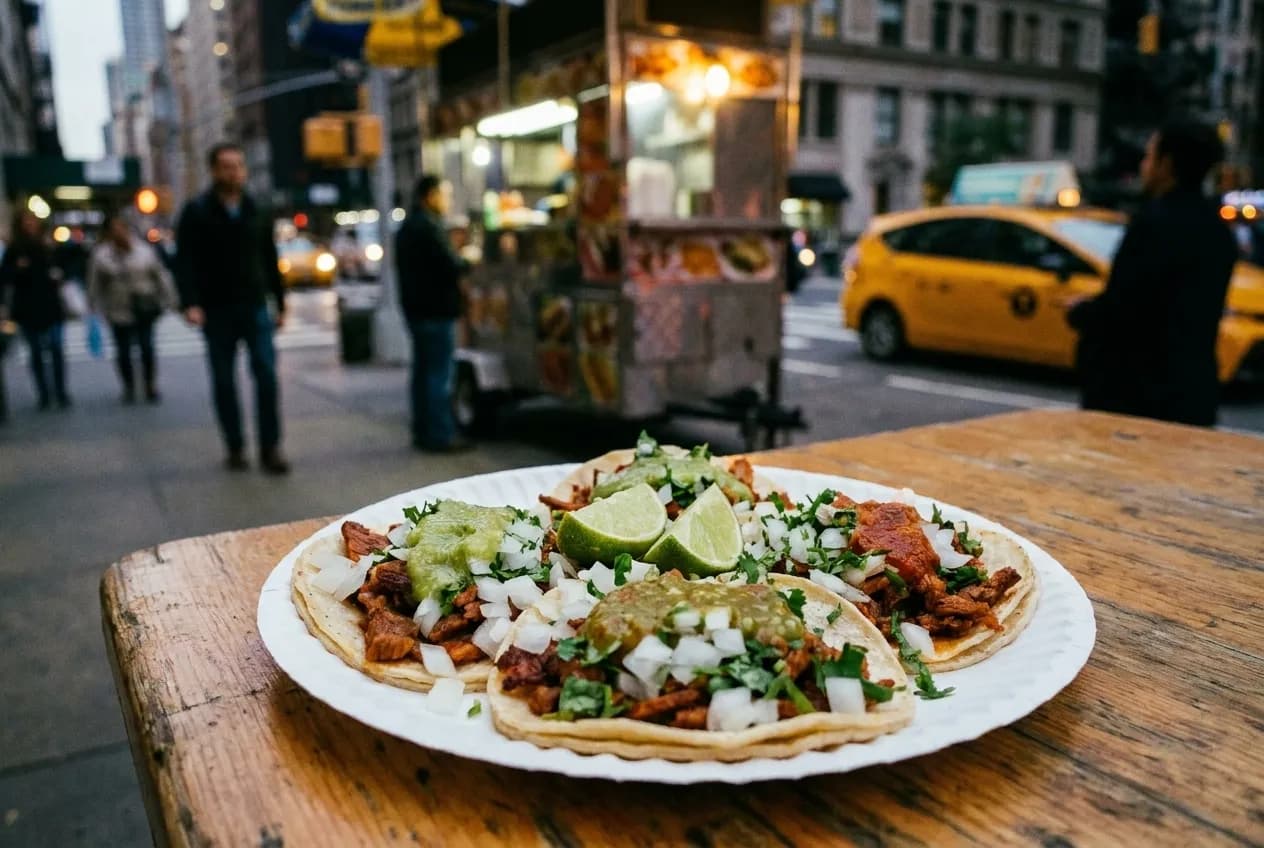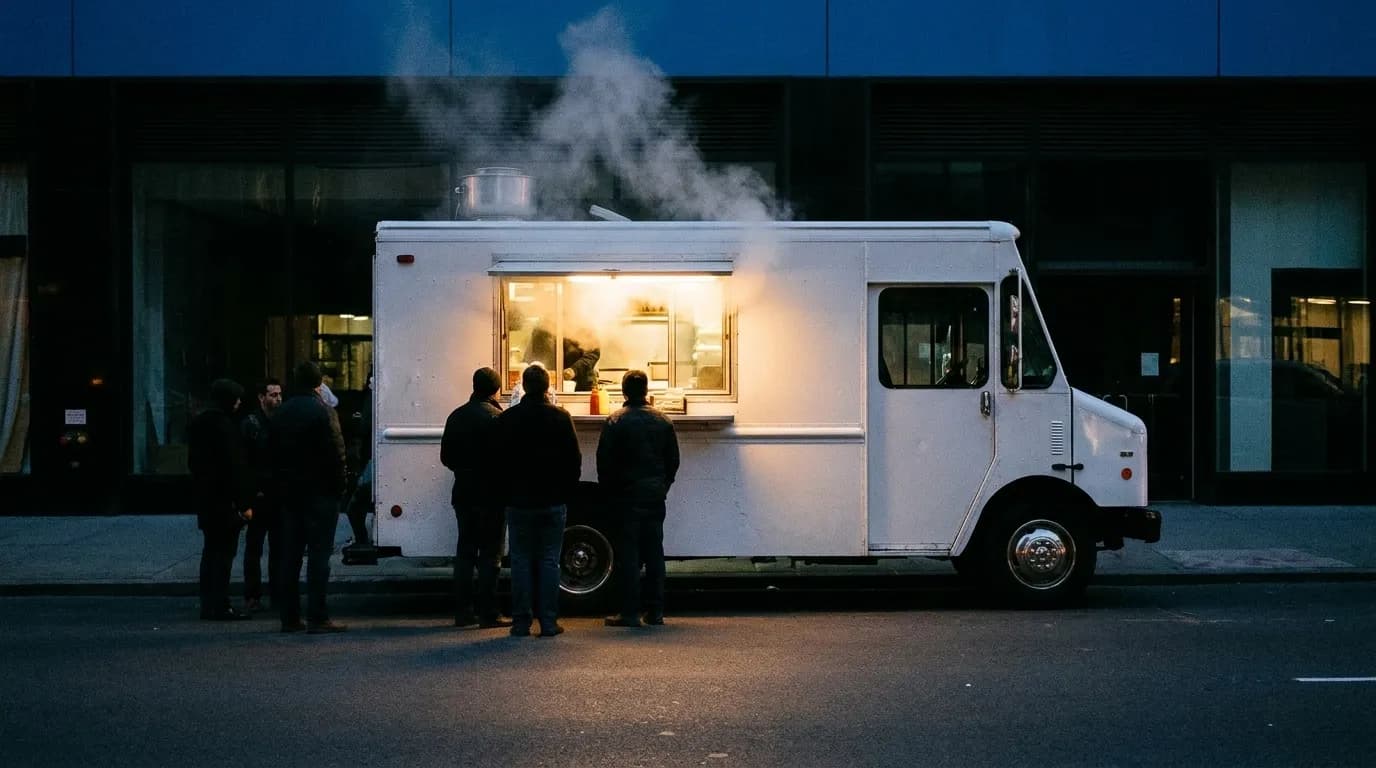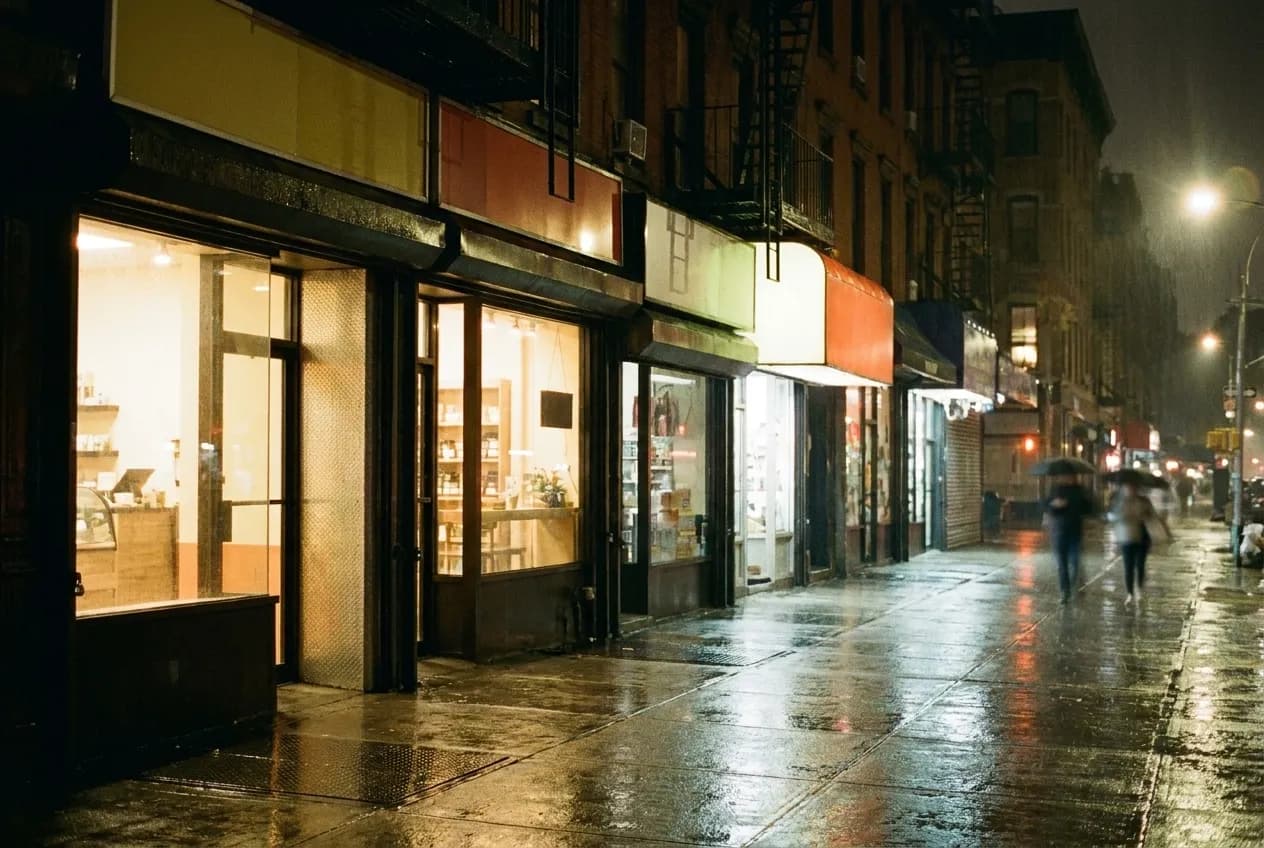
One in the morning is a genuinely distinct hour in the East Village, and it is worth understanding why. It is the last point in the night when you can still be seated at a table, handed a menu and served something that a cook made to order. After roughly two, the neighbourhood converts almost entirely to counters, windows and slices. Searching food open near me at 1:05am and at 2:05am returns two completely different kinds of evening, and the map does not tell you which one you are about to have.
One in the morning is the last hour with real kitchens on. Ask Karpo which East Village rooms are still cooking to order near you, and how many minutes are left before the neighbourhood switches to counters.
The 24-hour East Village is gone, and the map has not caught up
The neighbourhood's reputation was built on rooms that never closed, and that reputation is now roughly a decade out of date. Veselka, the Ukrainian diner at Second Avenue and 9th Street that anchored the idea, ran around the clock for years; the pandemic ended that and it has not gone back. It is still one of the best things in the neighbourhood and still open late, but it is no longer the 4am safety net that older advice assumes.
This matters because a lot of what you will read about late-night East Village dining was written against the old hours and never revised. Treat any source that promises you a 24-hour anything here with suspicion, and check rather than walk. The honest current shape of the neighbourhood is: very well served until one, thinly served until three, and after that it is 7th Street Burger, pizza counters and bodegas.
What is actually cooking at one
St Marks Place between Second and Third is the densest concentration of genuinely late kitchens in Manhattan, and it is late for a structural reason — it is a Japanese izakaya block, and izakaya are drinking restaurants whose entire format assumes food arriving after midnight. Yakitori Taisho and Kenka have been running that stretch for decades, both cheap, both loud, both serving grilled skewers and small plates well past the point where the rest of the island has stopped.
Off the block, Bua Bar keeps a kitchen going until roughly 2am nightly, which makes it one of the few places where you can order food rather than order around the food. 7th Street Burger runs to about 3am Friday through Sunday and is the smash-burger backstop for the entire neighbourhood. Ramen shops are the other reliable category — a bowl is a fifteen-minute proposition for the kitchen, which is why noodle rooms outlast almost every other format at this hour.
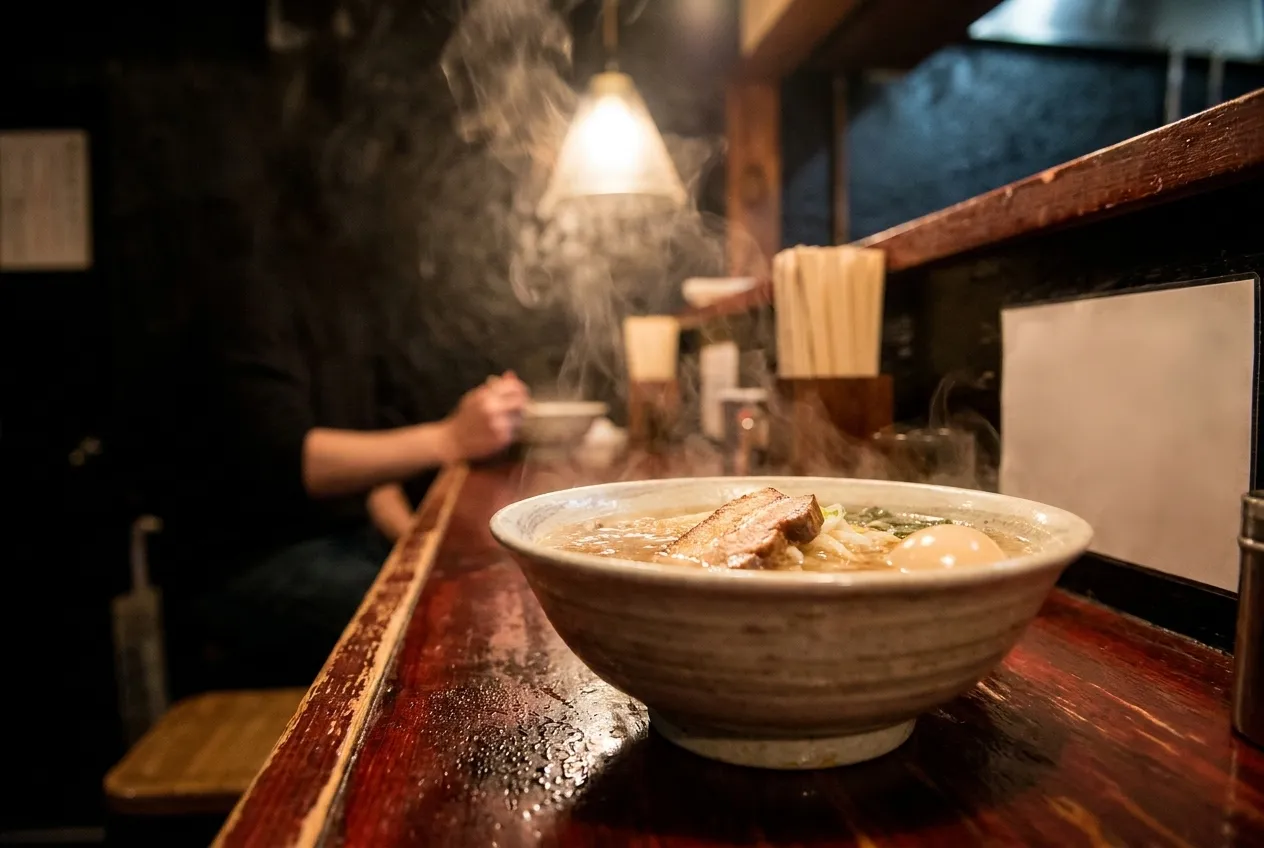
The hour changes the menu, not just the hours
Something people learn slowly: a kitchen that is technically open at 1am is frequently not running its full menu. Anything involving a long cook, a fryer that has been drained, or a section that has already broken down is quietly unavailable, and the server will not always volunteer that until you have chosen. The reliable late orders are the ones that live on a single station — grilled skewers, noodles, a burger, rice dishes, anything that comes off a flat-top or out of a broth pot.
The corollary is that the late menu is often the better value. Kitchens at this hour are cooking a short list very repetitively, which is exactly the condition under which food is most consistent. A 1am bowl of ramen in the East Village is likely to be closer to the platonic version of that dish than the same bowl at 7pm, when the room is full and the station is juggling twelve tickets.
Reading a room from the door at one in the morning
Two signals tell you almost everything. The first is whether the front-of-house is still seating or merely allowing people already inside to finish. If chairs are up anywhere in the room, the kitchen has closed and you are being tolerated rather than served. The second is the fryer — if you can hear it, food is available; if the kitchen has gone quiet, whatever is left is whatever is already made.
The third and most reliable signal is who else is eating. Late East Village rooms fill with two populations: people leaving bars, and restaurant workers coming off shift. The second group is the one to follow. Cooks eat where the kitchen is still genuinely working, they eat at a predictable hour, and they do not queue. A room with four people in kitchen clogs at the bar at 1:15am is open in every sense that matters.
The last signal is the deli. Every avenue down here has a bodega or a deli running far later than any restaurant, most with a grill at the back that will make a sandwich at any hour, and they are the genuine backstop underneath everything else in this article. They are not a consolation prize — an egg sandwich made to order at 2:30am on Avenue A is a perfectly good thing to eat, costs a fraction of a restaurant meal, and is available every night of the year including the ones when the neighbourhood's kitchens have all quietly closed early.
Practical notes
Last order on this side of town is typically thirty minutes before the posted close, and on a slow Tuesday a room may simply stop early — hours here contract in bad weather and in the middle of the week more than almost anywhere else in Manhattan. Cash is worth carrying for the St Marks izakaya block. Solo and pairs get seated instantly at this hour while a group of six will struggle anywhere. And if it is already past two and you want to sit down, the honest answer is to go north to the Union Square perimeter or accept a counter — the East Village at 2:30am is a very good place to eat standing up and a poor one to eat sitting down.
Tags: #FoodOpenNearMe #EastVillage #NYCLateNight #NewYorkCity #StMarksPlace #AfterMidnight #LateNightEats #ManhattanFood #Izakaya #NYCEats #OpenLate #SecondAvenue #NightlifeNYC #HiddenGems
All trademarks are the property of their respective owners.
Ask Karpo first
It is quarter past one and you want to sit down rather than eat off a paper plate. Ask Karpo which East Village kitchens are still taking orders around you, which are down to a short late menu, and how long you have before the neighbourhood turns into counters.