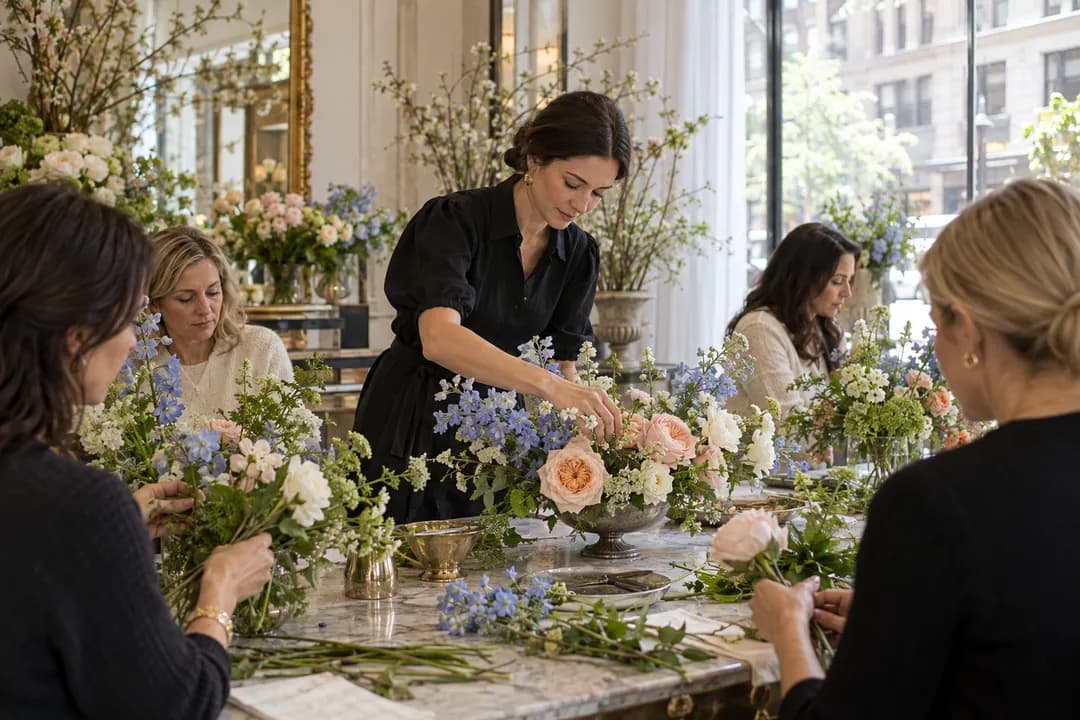
 Petal+Eon Flower Arranging Workshop: $45 Midtown BloomFrame
Weekend Plans
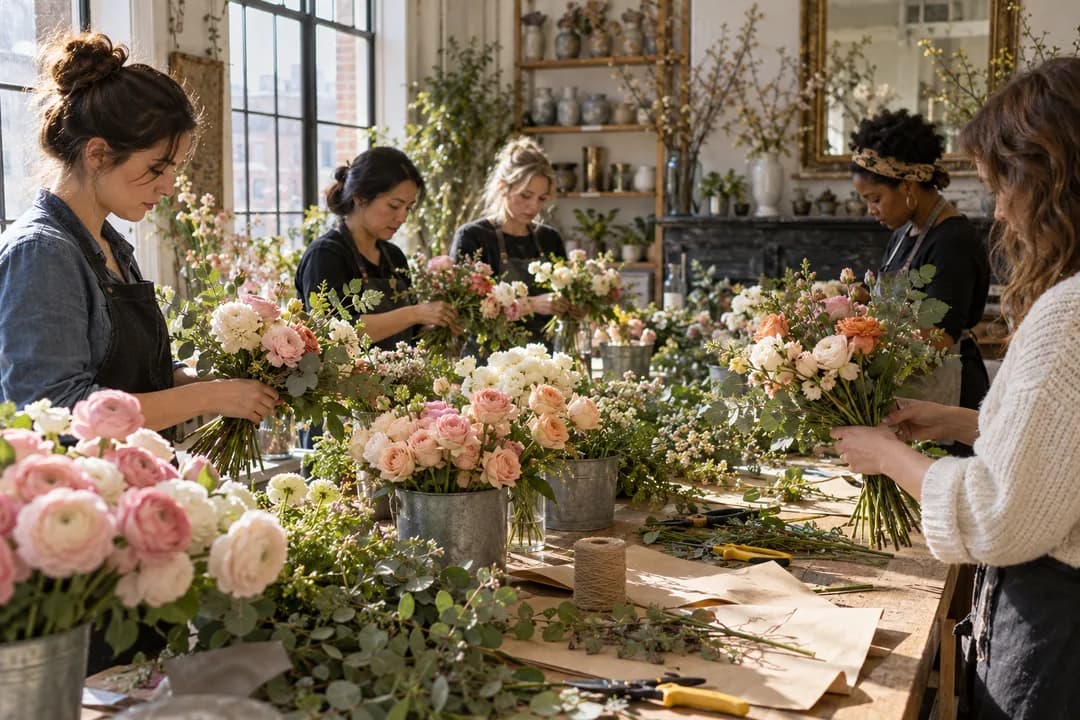
Flower Arranging Workshop at FlowerSchool: Chelsea Weekday
FlowerSchool at 253 W 28th St offers Chelsea flower arranging workshops with florist-led lessons in structure, color and mechanics for beginners.
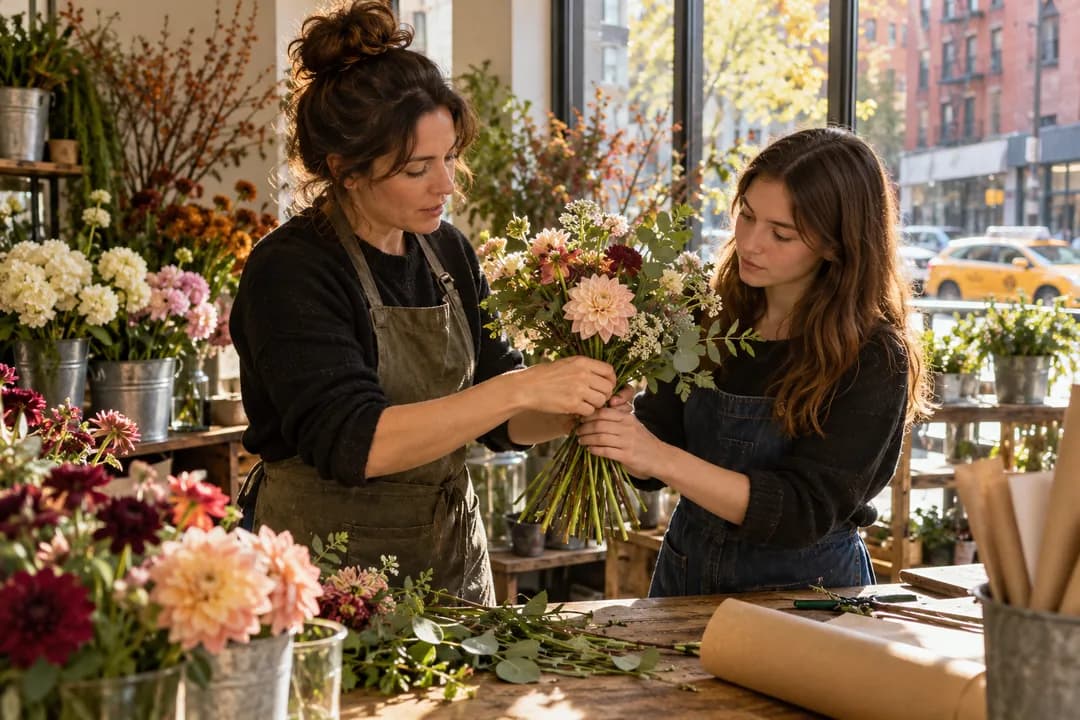
FlowerSchool New York is at 253 W 28th St, New York, NY 10001, in the Flower District’s working rhythm rather than a quiet destination studio. Its official master-class page presents hands-on floral education, so the useful distinction is that you are learning from a florist-led curriculum, not simply buying a bouquet and copying its shape. The keyword flower arranging workshop fits here because the work happens at the table: stems, mechanics, proportion and the decisions that make an arrangement hold together.
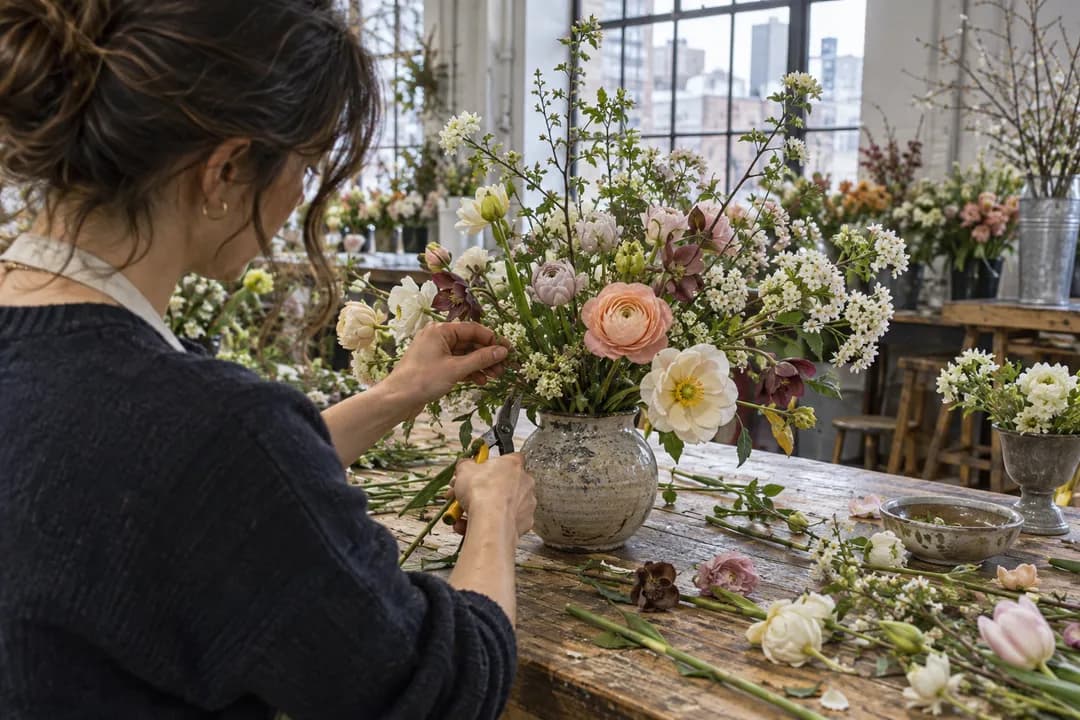
Choosing the Chelsea Classroom
The strongest reason to choose this school is the range. A beginner can start with an introductory class, while a more serious student can move toward weekend florist training or a master class. The school’s own program language treats floral design as a craft with technique, not just a pretty afternoon. That changes what you should expect: bring curiosity about why a stem is cut, angled or grouped, rather than expecting a one-hour craft project with a fixed result.
The address puts you close to the wholesalers and studios that give the Flower District its particular energy. The practical advantage is visual comparison. Before class, you can walk the blocks around Sixth Avenue and look at how commercial bouquets use line, mass and negative space. Keep that walk short and arrive with time to find the entrance; a workshop becomes much more useful when you are seated before the instructor starts demonstrating.
In the classroom, watch the first demonstration with your hands still. Beginners often rush to grab the most dramatic bloom, then discover that the arrangement has no center of gravity. Let the instructor explain the recipe of the day before choosing stems. The repeatable lesson is to build from structure outward: establish the shape, add the focal flowers, then use smaller blooms and foliage to close the gaps without packing every opening.
How the Lesson Actually Works
The school is also a good place to notice professional habits that are easy to miss in a retail shop. Stems are cleaned before they touch water, tools stay in one place, and the worktable is kept clear enough that you can rotate the arrangement. Those small rules are not decoration. They make it easier to see a leaning stem or a congested cluster before you have spent another ten minutes adding flowers.
If you have never arranged flowers, ask for the simplest possible explanation of mechanics. Terms can sound intimidating when you first hear them, but the useful questions are concrete: where does the water line sit, which stems carry the outline, and which flowers should be protected from pressure? A good workshop lets you ask those questions without turning the session into a lecture, and FlowerSchool’s education-first format is built for that kind of attention.
The best take-home skill is editing. Most first arrangements need fewer flowers, not more. Stand the vase at eye level, turn it slowly and remove one stem every time the silhouette feels crowded. That habit is more valuable than memorizing a single seasonal recipe because it works with supermarket flowers, market bunches and the expensive stems you may buy in the district later.
What to Do Around FlowerSchool
For a weekday visit, schedule the workshop as the center of the outing rather than squeezing it between appointments. Floral classes involve water, snips and loose petals; you will be happier in clothes that can handle a little mess and shoes that are comfortable on hard floors. A reusable tote is useful for transporting a finished arrangement, especially if the class ends with a full vase rather than a compact hand-tied bouquet.
The honest tradeoff is that a school setting is less spontaneous than dropping into a florist and asking for an impromptu lesson. You are paying for instruction and a focused table, not just materials. That is the right choice if you want to repeat the technique at home. It is the wrong choice if your only goal is to leave with a gift in ten minutes; buy the finished bouquet instead.
After class, make the Flower District walk part of the review. Compare the outline you learned with the large-scale designs outside nearby shops, then continue toward Herald Square if you want a busier Midtown finish. The route works because it moves from deliberate classroom composition to the city’s commercial abundance. You can see how the same principles change when the brief is a hotel lobby, a wedding entrance or a single vase at home.
For food, keep the post-class stop simple so the arrangement is not jostled. A quick meal or coffee nearby is more practical than a long reservation across town. If you want to extend the creative afternoon, browse stationery and design shops around Midtown, but leave room in your tote. Flowers are fragile, and a packed bag can flatten the very silhouette you spent the workshop learning to build.
The class also suits a pair of friends who want an activity with a visible result but do not want a competitive format. You can compare choices without making identical bouquets. One person may prefer a strict vertical line while the other builds an airy garden shape; both approaches can be correct if the stems have room and the focal point reads from across the table.
Use Karpo APP to find a nearby coffee stop, a lunch option or a second design-minded detour after the workshop. The useful question is not only where to take a class, but what fits around it: a quiet place to carry flowers, a route with fewer stairs, or a nearby shop when your arrangement needs water before the subway ride home.
Practical Notes: FlowerSchool New York lists its classroom at 253 W 28th St, New York, NY 10001. The official source is flowerschoolny.com, especially the Classes and Programs section. The school’s master-class page is the right place to read the current class descriptions and booking requirements; no street-level walk-in assumption is needed. Wear comfortable clothes, allow time to arrive, and plan a direct trip home for the flowers.
The final test is whether you can explain your arrangement without pointing to the instructor’s example. If you can say which stems create the line, which flower carries the focus and where the eye is meant to rest, the workshop has done its job. That is why FlowerSchool belongs on a NYC flower arranging workshop shortlist: it turns a pretty object into a set of decisions you can make again.
Ask Karpo for more information.
Keep reading
- Petal+Eon Flower Arranging Workshop: $45 Midtown BloomFrame
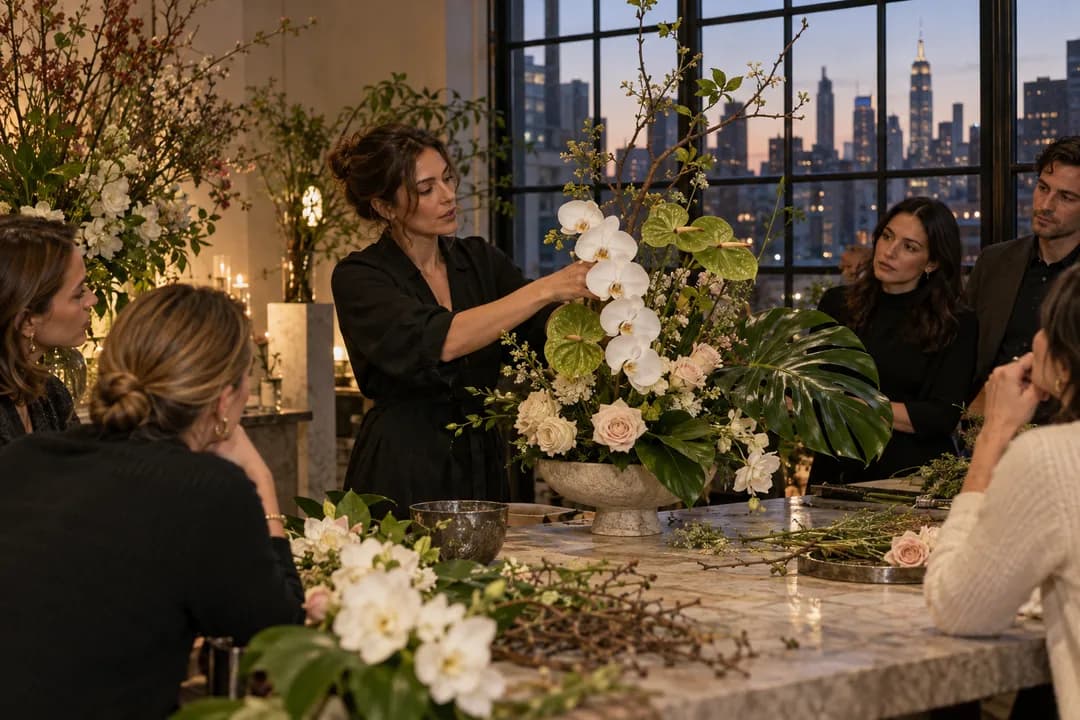 Dream x Floral Flower Arranging Workshop: Saturday Sessions
 Scotts Flowers Flower Arranging Workshop: Beginner Class