 Fort Greene Holiday Market Browsing Guide for Young Shoppers
Weekend Plans
NYC Flower Arranging Workshop: Ikebana Class Planning Guide
Brooklyn Botanic Garden’s Art of Ikebana class at 990 Washington Ave runs 6–9 PM and requires registration. Its $154 ticket includes materials.
Brooklyn Botanic Garden’s Art of Ikebana is a three-hour flower arranging workshop at 990 Washington Ave, Brooklyn, NY 11225. The official fall listing sets the class from 6:00 to 9:00 PM, marks the September 24, 2026 session waitlist only, and prices it at $154, or $147 for members, with a $75 materials fee included. Registration is the practical first step; this is a taught class, not a drop-in table where you choose stems and leave.
Ikebana as a Slow, Hands-On Practice
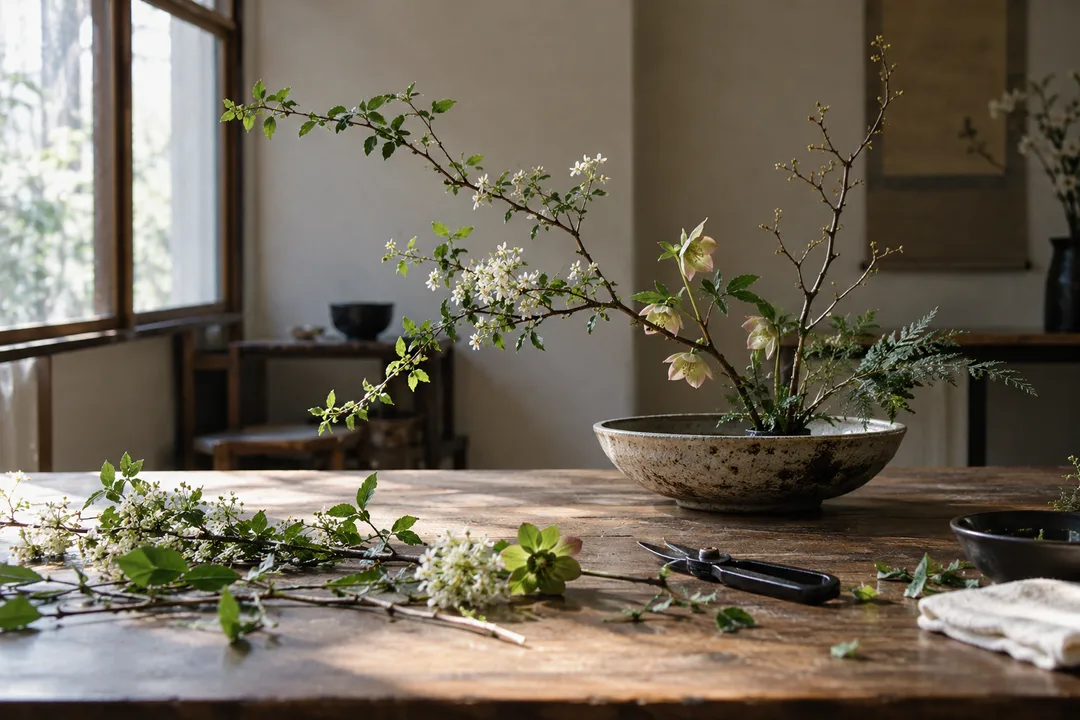
The description is unusually clear about the purpose: this is not a race to make a dense bouquet. The workshop explores intentional movement, form and emptiness, then sends participants home with flowers and branches to continue practicing. That makes it a strong answer for anyone searching for a flower arranging workshop but wanting a quieter, more contemplative format than a social craft night.
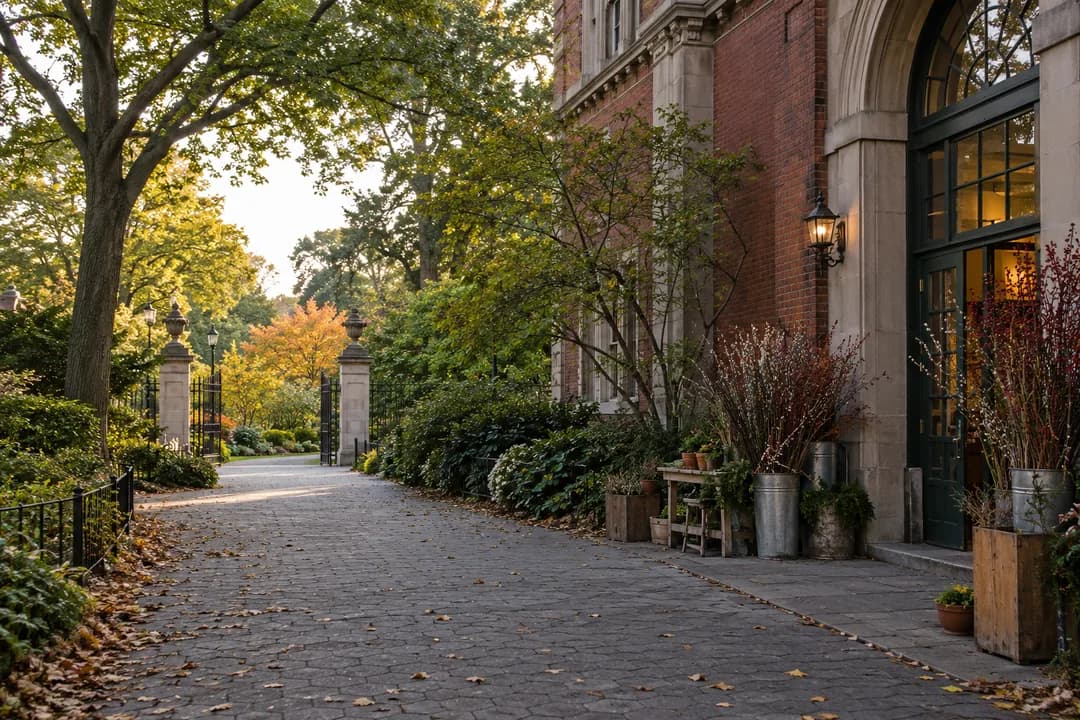
The garden setting changes the way you arrive. Instead of treating the venue as a neutral classroom, give yourself time to walk the grounds and notice how branches create lines against open space. The lesson’s central idea is easier to understand when you have just seen a tree silhouette, a path opening or a single plant holding attention without competing with everything around it.
At the table, resist the urge to make the arrangement symmetrical. Ikebana often begins with a small number of decisive lines, and the official workshop description emphasizes the relationship between form and emptiness. Let the first branch establish direction. Add the second to create tension or balance, then ask whether the flowers support that structure. If they do not, removing one is a design decision, not a failure.
What the Materials Fee Buys
The $75 materials fee matters because it tells you what the ticket includes: the workshop is not just tuition with a shopping list attached. Seasonal flowers and natural elements are part of the experience, and the class gives you material chosen for the exercise. That lets a beginner concentrate on placement and movement instead of wondering whether the grocery-store bunch on the way in is suitable.
The three-hour schedule rewards patience. Use the first part to watch, the middle to build, and the final part to edit. A hurried arrangement often has too many flowers because the maker is trying to fill silence. In a longer class, you can leave the piece alone for a minute, look again and discover that the strongest version may use less material and more space around each stem.
This is also a useful workshop for people who dislike disposable crafts. The take-home flowers and branches remain a practice prompt, not a one-night prop. Photograph the arrangement before you move it, then try a second version at home using the same directional idea. Even if the materials change, you can repeat the lesson: one line, one counter-line, one place for the eye to pause.
A Garden-Centered Brooklyn Afternoon
A quiet class still has rules. Keep tools arranged so the next person can find them, avoid leaning over a neighbor’s work and listen when the instructor explains how a stem is supported. Ikebana mechanics can be delicate, especially when a branch is asked to hold a wide angle. The room becomes more enjoyable when everyone treats the shared table as part of the practice.
The date listed for this workshop is waitlist only, so the honest planning point is to register early for the next floral-design offering rather than expecting a walk-in seat. Brooklyn Botanic Garden’s continuing-education pages also list other floral design classes, including dried arrangements and tablescapes. The garden’s calendar is therefore more useful than a generic promise that a class runs every weekend.
After class, the best neighborhood walk is short and botanical. Move through the garden areas that remain open to your ticket, then head toward Prospect Heights or Crown Heights for a simple meal. Carry the arrangement upright and avoid a packed train if the branches are wide. A calm route is part of the experience because the work is intentionally made to be seen from several sides.
Skip the idea that Ikebana is only for people already familiar with Japanese culture. The official listing welcomes beginners, and the teaching premise is accessible: look carefully, make deliberate choices and leave room. You do not need to know every school or vocabulary term before class. You need the willingness to slow down and accept that a small shift in angle can change the whole piece.
For a friend’s birthday or a solo reset, the class works because the result is personal without requiring a performance. There is no need to match someone else’s arrangement. One participant may create a high, spare form while another builds a lower composition with a strong horizontal branch. The useful comparison is not which is prettier, but which choices feel intentional when you explain them.
Use Karpo APP to find a nearby meal before the evening workshop, a coffee stop for the walk to the garden or a low-stress route home afterward. Ask for options that leave space for flowers and do not force a long transfer. A thoughtful itinerary keeps the contemplative mood intact instead of ending the class with a frantic subway sprint.
Practical Notes: Brooklyn Botanic Garden lists the address as 990 Washington Ave, Brooklyn, NY 11225. Its Art of Ikebana listing gives a 6:00–9:00 PM session, a $154 standard price or $147 member price, and a $75 materials fee included in the ticket. The official page states that the class is hands-on, beginner-friendly and sends participants home with flowers and branches. Registration is required.
Choose this Brooklyn flower arranging workshop when you want the city to recede for a few hours. The garden, the limited materials and the emphasis on form and emptiness all point toward the same reward: a calmer eye. You may leave with fewer flowers than you expected, but you will understand more clearly why each one is there.
Ask Karpo for more information.
Keep reading
- Fort Greene Holiday Market Browsing Guide for Young Shoppers
 DUMBO Holiday Market Browsing Guide for Gifts to Mail Home
 Midtown East Holiday Market Browsing Guide for Commuters