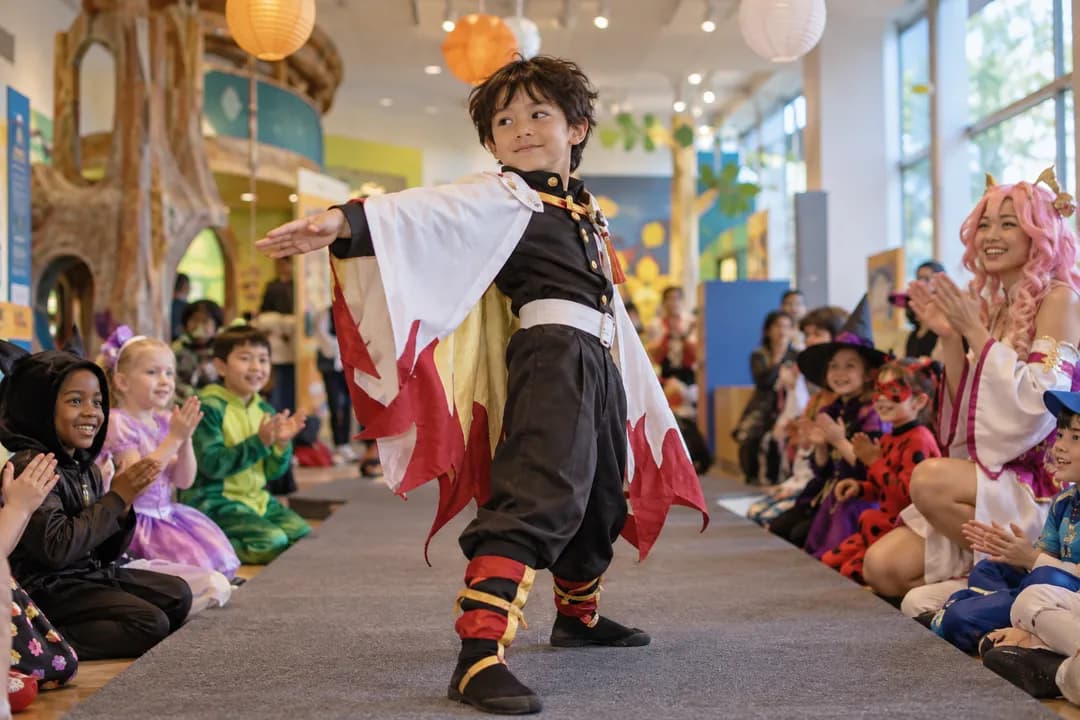
 Halloween Events for Kids Near Me: Anime Halloween at Brooklyn Children's Museum
Weekend Plans

First Snow in Central Park: The Two-Hour Window When Everything Stops
Between 6:47 AM and the first jogger's footprint across Sheep Meadow, there exists a version of Manhattan that doesn't advertise itself. You have to set an alarm for it.
The alarm goes off at 6:15
You check the National Weather Service radar, not the app everyone else uses. The band of precipitation has already passed Yonkers. Central Park's official measurement station—the one near Belvedere Castle that's been recording since 1869—will log it as "measurable" if it hits 0.1 inches. You're out the door by 6:35, before the sanitation trucks make their first pass down Central Park West.
The dog walkers know this rhythm better than anyone. They're already at the 72nd Street entrance when you arrive, unleashing their animals onto something the dogs don't quite understand yet. A regular in a worn work jacket—always with two rescue greyhounds—positions himself near the Ladies Pavilion. He's learned that the stone structure creates a microclimate; the snow accumulates differently on the western side, undisturbed by wind off the reservoir. His dogs leave the only tracks between here and the Ramble for the first hour.
Bow Bridge belongs to the early risers

You can count them if you're there before seven. The bridge—cast iron spanning The Lake, appearing in more films than most actors—becomes something else entirely under first snow. The photographers arrive in waves: someone who shoots only in black and white, a student documenting the same angle for a thesis project, someone with a medium format camera who never speaks to anyone.
They've worked out an unspoken system. The east side of the bridge, looking toward the San Remo towers, belongs to the first hour. The west view, with The Lake and the city disappearing into white, opens up after the light shifts. Stand at the bridge's apex, at the center point. The snow on The Lake hasn't been disturbed by wind yet. It sits on the water's surface in a way that violates what you thought you knew about physics.
A park maintenance worker drives through in a small utility vehicle, checking the bridges for ice. He'll wave if you step aside.
The Bethesda Fountain equation
The Angel of the Waters statue accumulates snow differently depending on wind direction from the north. When it's calm—a few times each winter—the snow builds on the angel's wings symmetrically, adding to the wingspan illusion as the morning progresses. The fountain basin, drained since November, becomes a perfect acoustic chamber.
You can hear conversations from the Loeb Boathouse, closed for the season, carrying across the Terrace in a way that's impossible any other morning. Someone's voice discussing coffee. A laugh that sounds like it's coming from everywhere at once. The transverse traffic is suspended; even the taxis haven't figured out the snow is here yet.
The best position is on the western stairs, a few tiers up, where you can see both the fountain and The Lake beyond. The benches are terrible—the memorial ones with the brass plaques—because they face the wrong direction. Everyone makes this mistake. When the sun attempts to break through near the horizon line, the entire Terrace glows with reflected light that has no clear source.
When the footprints arrive

The joggers ruin it, but they're predictable. The first one appears on the East Drive before eight, usually from the south, usually wearing too little. The serious runners—the ones training for something—know better than to risk the unplowed paths, but there's always one who thinks they've discovered something by being out here.
Sheep Meadow holds the snow longest because of how the land sits. The fifteen acres remain unmarked until mid-morning, when the dog walkers finally migrate south from their northern territories. You want to be at the meadow's northwest corner early. Bring nothing to sit on; the snow is dry enough. From here you can watch the progression of footprints begin from different entry points simultaneously, like a time-lapse of the city waking up and remembering what it's supposed to do.
The Cedar Hill sledders arrive later, but by then the window has closed. You can feel it end before you see it—a shift in the air pressure, the sound of a sanitation truck's backup beeper on the transverse, someone's phone call that's too loud and too ordinary.
The Ramble exception
If you know the Ramble's unmarked paths—and you should, because the Audubon Society runs winter bird walks that teach them—there's a ravine section near the Gill that stays pristine well into the morning. The entrance is across from the Azalea Pond, but you have to approach from the west or you'll miss it entirely.
The trick is the stone bridge that most people don't register as a bridge. It's more of an elevated path, built in the nineteenth century, that crosses a stream bed that only flows during heavy rain. In first snow, this section becomes a tunnel of white. The trees arch overhead in a way that blocks the accumulation on the path itself but allows it to build on the surrounding rocks and low vegetation.
A regular—a retired teacher from the neighborhood—brings a thermos of coffee and sits on the stone wall here every first snow, and has for years. She'll offer you some if you're quiet about it. The coffee is terrible, but the company and the location excuse it. She once saw a snowy owl here during first snow. Once, in all those years. She keeps coming back.
Practical notes
Central Park has eighteen official entrances, but for first snow you want the 72nd Street entrance on Central Park West or the East 72nd Street entrance near the Frick. Both position you within a short walk of Bow Bridge and Bethesda Fountain. The park is open 6 AM to 1 AM daily.
The National Weather Service updates its Central Park snow measurement at 7 AM during active precipitation. Check their official site for accurate timing. First light in winter is around 7:10 AM; arrive before this.
Dress in layers you can shed. The initial cold feels worse than it is, and you'll be stationary for longer than you think. Waterproof boots with grip; the stone paths and bridges become glass. Bring nothing valuable—there's nowhere to set anything down that won't get wet or stolen.
The 6 train to 77th Street or the B/C to 72nd Street both work. The crosstown M72 bus is unreliable in snow. If you're walking from the Upper West Side, add time to whatever Google Maps tells you. The park feels twice as large in snow.
No admission fee. No reservations. No guaranteed snow accumulation. The window closes when it closes.
Tags: #CentralPark #NYCSnow #FirstSnow #BowBridge #BethesdaFountain #ManhattanWinter #UpperWestSide #UpperEastSide #TheRamble #NYCParks #WinterInNYC #SecretNewYork #EarlyMorningNYC #CentralParkWinter #RightOnTime
Sources consulted: centralparknyc.org
All trademarks are the property of their respective owners.
Ask Karpo for more information.
Keep reading
- Halloween Events for Kids Near Me: Anime Halloween at Brooklyn Children's Museum
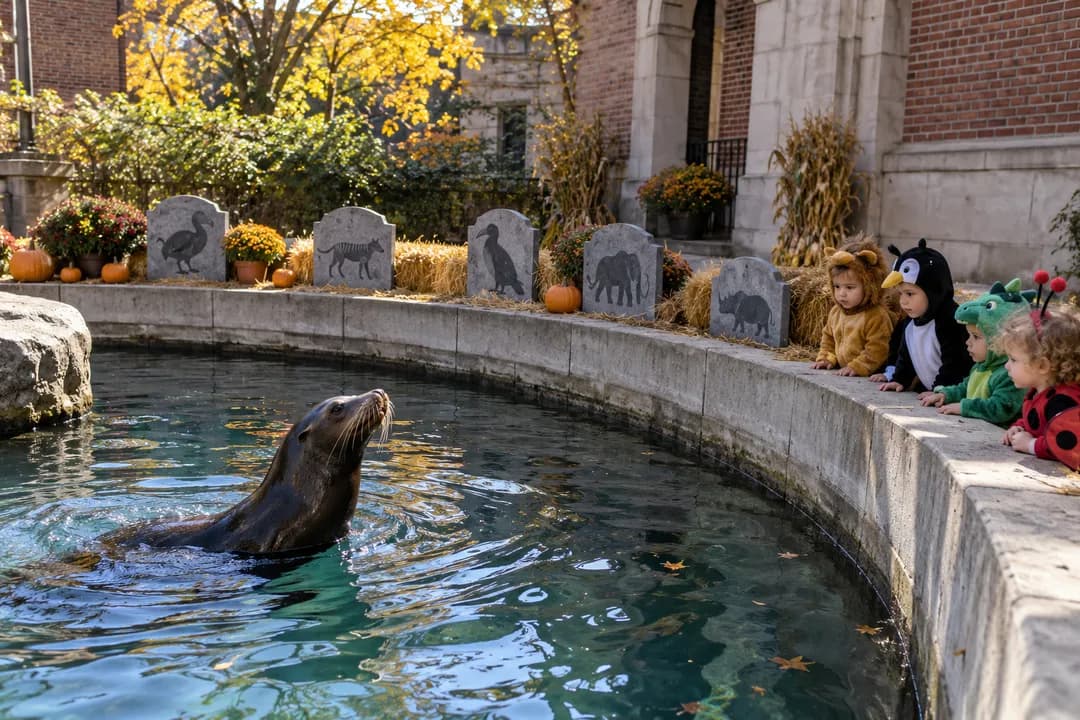 Halloween Events for Kids Near Me: Spooktober at Prospect Park Zoo
 Halloween Events for Kids Near Me: Boo at the Zoo in the Bronx