 Chelsea Consignment Shop Crawl Planner for Your First Studio
Hidden Gems & Odd Finds
Luster Film Lab: East Village Drop-Off Without Guesswork
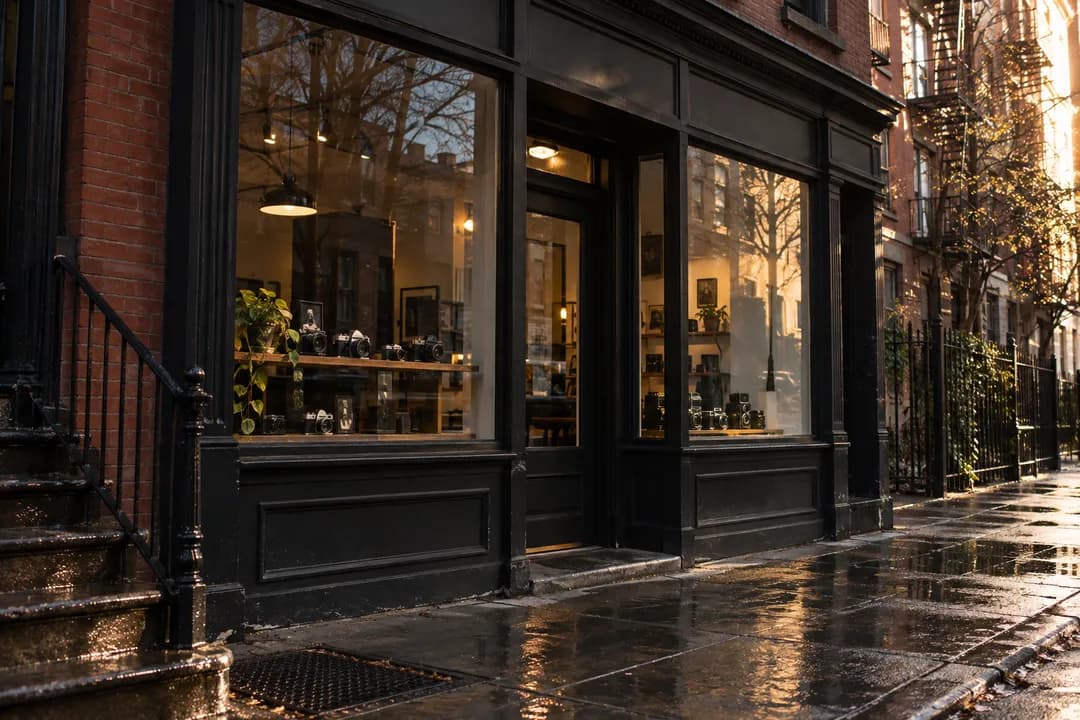
Luster Photo & Digital at 433 E 9th Street is an East Village film lab for careful drop-off, scanning, and analog workflow planning in one compact stop.
Luster Photo & Digital is a useful film lab near me answer when you want a real neighborhood errand rather than a mail-in mystery. The shop is at 433 E 9th St, New York, NY 10009, in the East Village, and its official home is lusterphoto.com. Bring the roll, the format, and the result you want in your head: a proofing scan for a quick share, a fuller scan for editing, or a physical print that deserves more care. That short brief makes the counter conversation faster and gives the lab a clear starting point.
Start With the East Village Counter
The address changes the way you should plan the visit. You are entering a dense East Village block where a camera bag, a tote of exposed rolls, and a coffee can easily become too much to juggle. Put each roll in a small sleeve before leaving home, write the roll number on a note, and keep the note with the cartridge. If you are dropping off several formats, separate them by type instead of handing over a mixed bundle. A clean handoff protects your own memory and lets the person behind the counter ask useful questions.
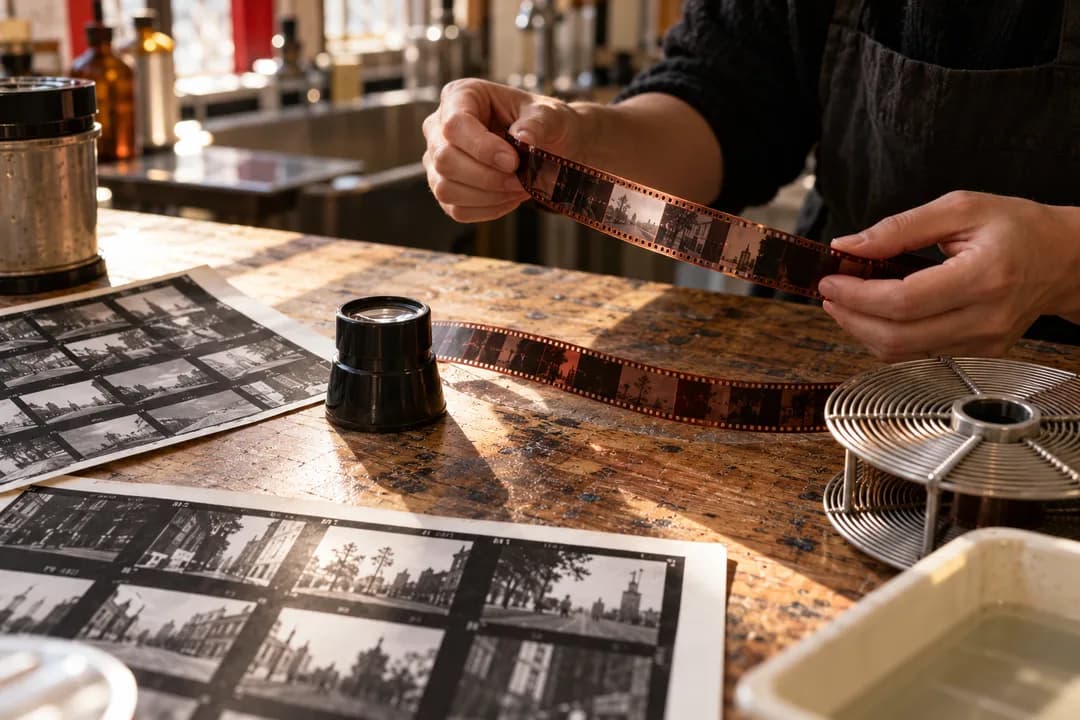
A film lab's most important choice is not a glamorous one; it is the relationship between the original roll and the file you want back. Tell Luster whether the roll is ordinary color negative film, black-and-white work, or a specialty stock you do not want treated like a casual snapshot. Say whether you need a practical contact view or a scan you expect to crop and print. That language is more useful than simply asking for 'the best.' The best setting depends on how you will use the image after pickup.
Choose a Workflow Before You Hand Over the Roll
Ask one question about file delivery before you leave the counter: how the finished scans are organized, how long the download remains available, and whether the order is separated by roll. You do not need to invent a deadline, but you should give one if a trip, assignment, or screening depends on it. Keep your receipt or order note until every roll is accounted for. When you receive the files, compare the roll count with the note you made at drop-off before you start editing.
The shop is especially useful for photographers who want to learn by looking closely at their own negatives. A scan is not merely a digital replacement for film; it is a record of exposure, focus, dust, and the choices made during processing. Open one frame at full size, then look at the sequence as a group. If the density changes across a roll, mark the frame numbers for your next visit. A small, specific observation is more helpful than a vague request for brighter images.
Make the Scan Conversation Specific
Treat the counter like a working station rather than a photo museum. Have your name, contact detail, film type, and preferred output ready. Do not open an exposed cartridge in the shop, and do not set loose film beside another customer's order. If you are carrying a camera for a separate repair question, mention it after the film order is written down so the two conversations do not blur. Those habits take seconds and reduce mistakes when the queue is moving.
For a quieter visit, build your East Village walk around the lab instead of arriving with an overstuffed schedule. Start on E 9th Street, keep the drop-off as the fixed point, and leave a buffer for the counter conversation. Afterward, continue toward Tompkins Square Park for a visual reset or cut west through the side streets toward Astor Place. The point is not to turn processing into a scavenger hunt; it is to give the roll a calm beginning and a separate afternoon after you hand it over.
The Small Rules That Keep a Lab Visit Smooth
Luster also works as a decision point for photographers who are still choosing between a quick digital check and a more intentional print. If the roll contains family pictures, a short scan review may be enough to identify frames worth enlarging. If it is a street sequence, look for continuity across the whole set before selecting favorites. If it is a portrait session, note which skin tones or shadows need a careful conversation. Keep the request narrow so the lab can answer it precisely.
The honest reason to skip a rushed drop-off is simple: film carries information that cannot be recreated after the fact. If you are late for another appointment, do not improvise a complicated order at the counter. Make a basic handoff, save the more technical questions for a follow-up, and write down what you still need to decide. If the queue feels too tight, move the neighborhood walk to another day rather than making a hurried choice about scans you will keep for years.
Walk the Ninth Street Film Route
A practical backup is to use the East Village location as the first step and let Karpo APP plan the rest of the route around your actual constraint: a short lunch break, a low-carry walk, or a return trip after work. Name the roll format, the kind of output you want, and how much time you have. The useful answer is a sequence, not a generic list of camera shops. Luster is the anchor; the surrounding blocks are flexible.
Before leaving, check that the order note names every roll and the output you discussed, then store it away from the exposed film you still have at home. The address is 433 E 9th St, and the official reference is lusterphoto.com. That is enough information to make this film lab near me search concrete without guessing at a price or promising a turnaround the source does not state. Come with a clear question, leave with a clear next step, and the East Village becomes part of the workflow rather than a detour.
Use the official site, lusterphoto.com, as the source for the business reference and keep your own roll note as the source for the handoff. The address, 433 E 9th St, is the fixed point; every other East Village stop can remain optional.
Ask Karpo for more information.
Keep reading
- Chelsea Consignment Shop Crawl Planner for Your First Studio
 East Village Consignment Shop Crawl Planner: Leather Jackets
 Harlem Consignment Shop Crawl Planner for a Jazz Night Look