 Chelsea Consignment Shop Crawl Planner for Your First Studio
Hidden Gems & Odd Finds
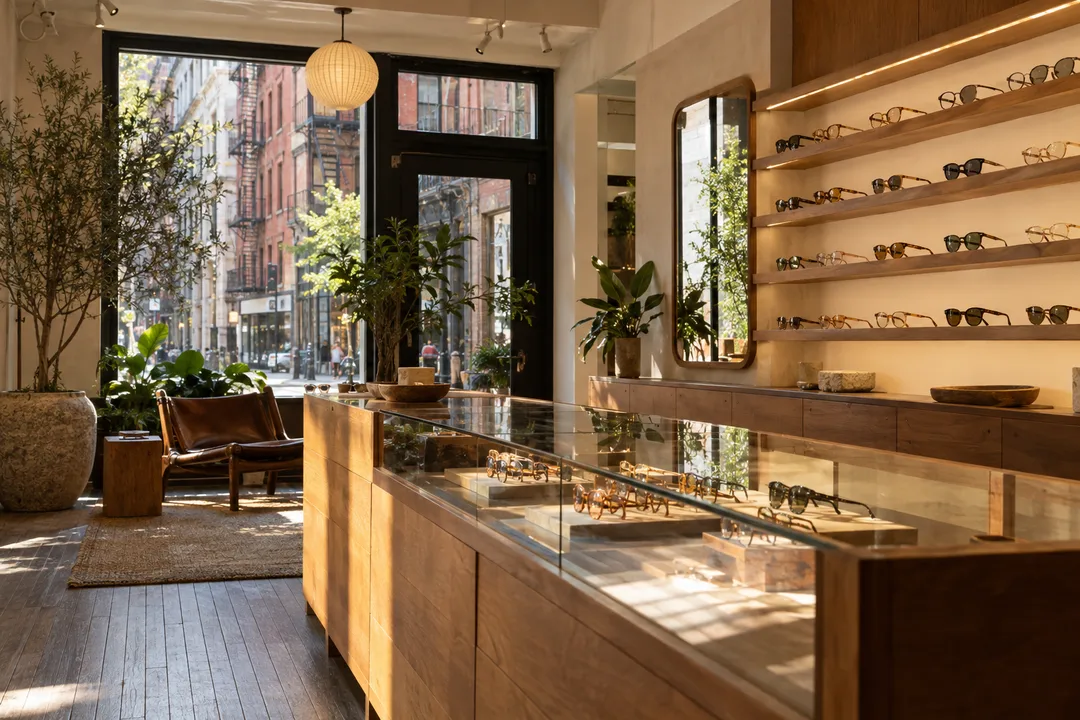
Eyewear Store Near Me in NYC: Garrett Leight on Mulberry Street
A Mulberry Street guide to Garrett Leight at 224 Mulberry Street, covering frame comparison, fitting questions, and an easy Nolita-to-Lower East Side neighborhood walk.
Garrett Leight at 224 Mulberry Street is a useful answer for an eyewear store near me search when you want a clean, contemporary frame but still prefer an in-person fitting. The location sits at the meeting point of Nolita and the Lower East Side, where a short retail visit can easily become a longer walk. The shop’s wood, glass, and daylight make it natural to slow down and compare details.
Mulberry As A Starting Point
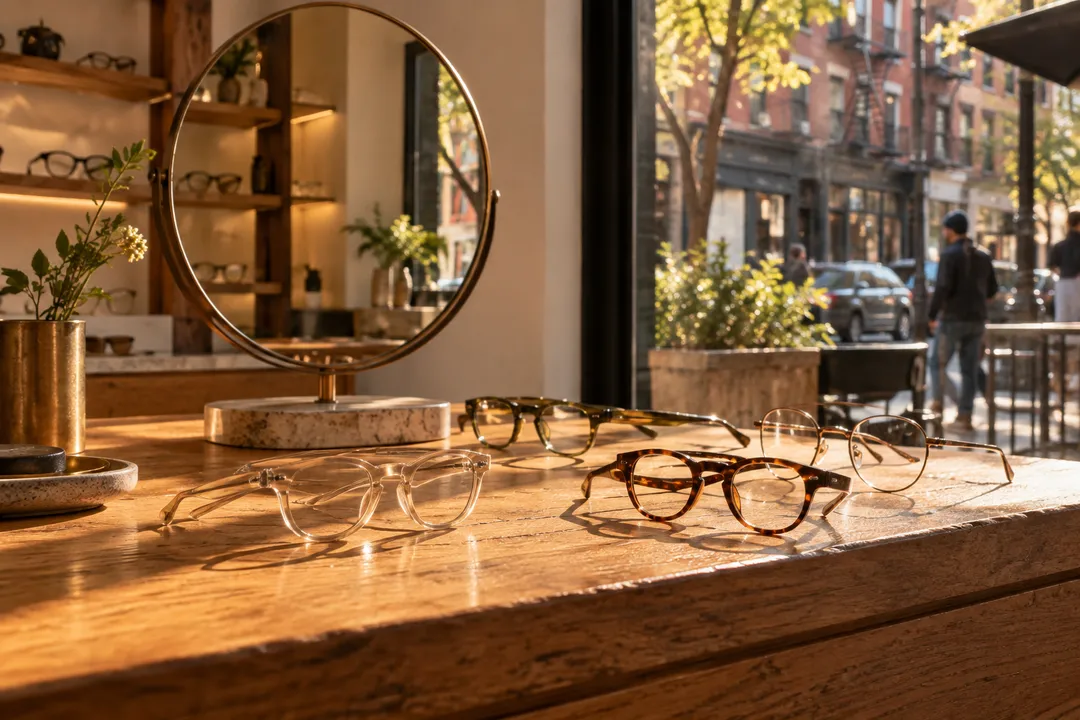
Start by deciding whether you want the frame to announce itself or disappear into your face. Try one lighter acetate, one stronger brow, and one metal or mixed-material option if available. Look at the upper edge first: it changes the apparent line of your eyes. Then check the lower edge, which affects whether the frame feels relaxed or formal. These comparisons are more useful than trying ten nearly identical colors.
Compare Curves Before Colors
Garrett Leight’s appeal is strongest when you notice the balance between West Coast ease and downtown practicality. A frame can have a relaxed color or softly rounded lens and still need exact proportions to work. Hold each finalist at arm’s length, then wear it while looking toward the shop entrance. If the frame remains legible without dominating your face, it has the kind of versatility that earns daily use.
A Relaxed Frame Still Needs Precision
Bring a clear brief to the staff. Explain whether you need prescription lenses, sunglasses, computer use, or a pair that can survive commuting. Mention where your current glasses fail: slipping, pressure, glare, or a lens that feels too narrow. Those specifics turn a broad assortment into a useful shortlist and help the fitting conversation stay grounded in how you actually move through New York.
Tell The Fitter How You Move
The Mulberry Street visit is easiest when you do not combine it with the busiest lunch and weekend windows. Earlier weekday hours give you more time at the mirror. If you encounter a crowd, take a quick walk toward Prince Street or Houston and return after the first rush. The neighborhood is close enough that waiting outside is not wasted time; it is a chance to see the frames in a different light.
The Best Window Is Earlier
Use the trays and return frames front-first, with both temples folded. Ask before opening any closed drawer, and keep your bag off the display counter. These habits make the shop easier to share and prevent a fitting from turning into a search for a missing pair. Good optical etiquette is simple: handle carefully, communicate clearly, and let the staff maintain the order that protects the collection.
Small Habits Keep The Browse Easy
A signature try-on should involve a frame with a gentle curve and a frame with a sharper line. The contrast shows whether you prefer the frame to echo your features or create tension against them. Pay attention to the bridge when you smile and to the temples when you look down. A pair that remains stable through those movements is a better candidate than one that only works in a portrait.
A Downtown Route After The Try-On
After the shop, walk north along Mulberry through Nolita, then turn east toward the small galleries and food counters around the Lower East Side. A southbound route toward Delancey gives the afternoon more street energy; a westbound route toward Broadway adds cast-iron facades and larger storefronts. Either way, the address is a practical anchor for an eyewear-and-neighborhood itinerary instead of an isolated errand.
Use The Street As Your Backdrop
Do the daylight test before you decide. Stand under open sky, near a storefront reflection, and in shade. Notice whether transparent acetate turns pale, whether a dark frame makes your eyes recede, and whether a lens tint changes the colors around you. The right pair should not need a perfect backdrop. It should make sense beside brick, denim, black coats, and the ordinary visual noise of the city.
Practical Notes For Mulberry Street
If a frame feels almost right, ask about a fitting adjustment before rejecting it. If the width is wrong, however, do not expect adjustment to solve the problem. Comfort is not a bonus feature; it is the reason to shop in person. A frame that pinches after five minutes will be a daily irritation, no matter how satisfying the color looks on the shelf.
One Final Comfort Pass
A chain store may be the practical alternative when you need a fast transaction or a predictable basic shape. Garrett Leight is a better choice for the shopper who wants a frame with a little more warmth and is willing to compare proportions carefully. Decide which kind of problem you are solving before entering: speed, fit, personality, or all three in that order.
A Good Match For Daily City Life
Practical Notes: the store is at 224 Mulberry Street, New York, NY 10012. Bring your prescription or current pair, wear the hairstyle you normally wear, and make a final comfort check before leaving. The official Garrett Leight website is the source for current collection and store information. Prices are omitted here because a fixed figure was not established from the supplied source.
Who this fits
The best visit has a clear rhythm: brief, compare, step outside, then return to one finalist. That rhythm keeps the experience useful even if you do not buy on the first trip. For anyone searching eyewear store near me in lower Manhattan, Garrett Leight is a strong Mulberry Street stop because it links a polished frame selection to a neighborhood that is easy to keep exploring.
Who this fits
Choose this stop if you want your glasses to feel relaxed without becoming anonymous. The frame should work at a desk, on a subway platform, and at dinner, but it should still have one detail you can identify when someone asks why you chose it. That is the practical promise of a good fitting: less fuss in the morning, more confidence when the day changes direction. A final practical check is to look down at a menu, look across a street, and turn toward a window. Those ordinary movements expose slipping and glare better than posing. If the frame passes them, you have evidence it belongs in your routine, not only in the carefully lit moment when you first noticed it.
Ask Karpo for more information.
Keep reading
- Chelsea Consignment Shop Crawl Planner for Your First Studio
 East Village Consignment Shop Crawl Planner: Leather Jackets
 Harlem Consignment Shop Crawl Planner for a Jazz Night Look