 Noodle Bar Near Me in Chelsea Market: Very Fresh Noodles' Hand-Torn Bowls
Restaurants
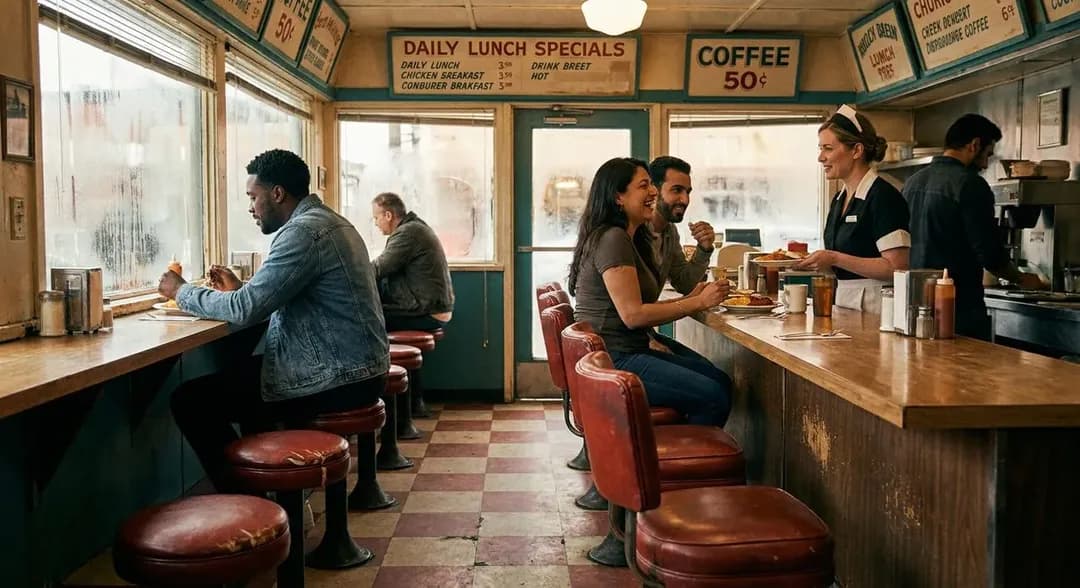
The Flatiron Lunch Counter Where You Sit Elbow to Elbow
At a narrow sandwich counter near Madison Square Park, regulars claim their swivel stools by 11:30 sharp. The counterman never writes down orders—he remembers your face and your tuna on rye.
The geography of a proper counter
The lunch counter runs twenty-three feet along the west wall, fourteen swivel stools bolted to a brass footrail that's been polished smooth by a century of shoe leather. You enter from 23rd Street, just past the newsstand that still sells racing forms, and the counter appears immediately to your left—no vestibule, no host stand, just the smell of toasting bread and the sight of shoulders hunched over white plates. The stools are numbered, though the brass plaques have worn illegible. Regulars know them by position: third from the door catches the draft, ninth has the wobbly base, fourteenth sits directly across from where Tommy works the grill. You take what's open and you don't save seats. The counterman, whose name is actually Dennis but whom everyone calls Chief for reasons no one can quite remember, stands behind the bar in a white shirt and black apron, calling orders to the kitchen without writing anything down. He's been here nineteen years. The previous counterman, before him, worked thirty-one.
The 11:30 window
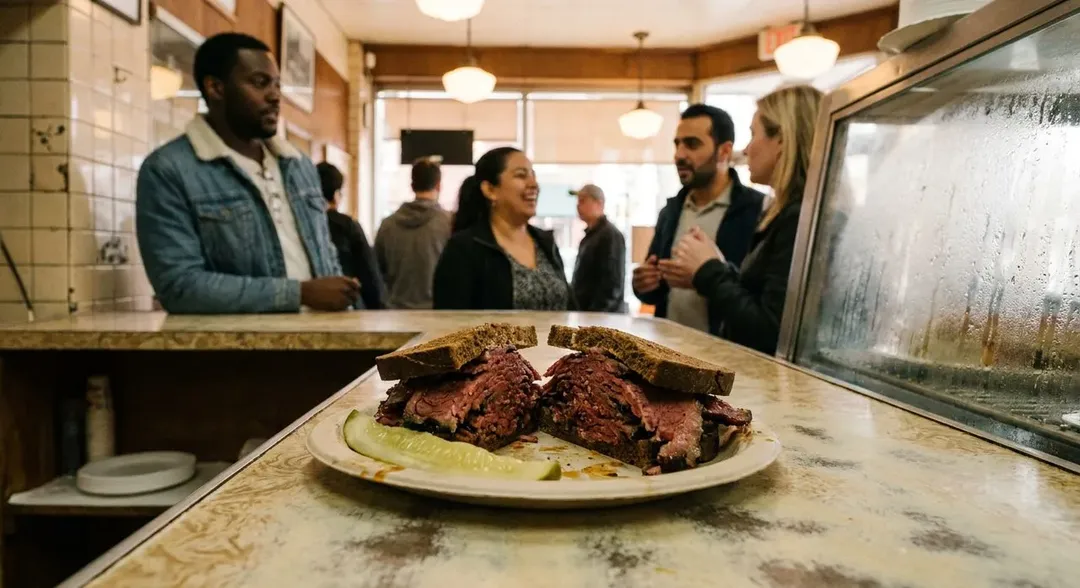
The line forms around 11:45, snaking past the newsstand toward Fifth Avenue, but the people who know come at 11:30. Not 11:25—that's too eager, and you'll stand there watching Chief prep the condiment station. Not 11:35—by then the first wave has claimed the prime real estate. At exactly 11:30, you can walk in, claim stool seven or eight (the sweet spot, equidistant from both the kitchen pass and the register), and have your sandwich in hand by 11:42. The regulars occupy this slot with religious precision: the lawyer from the building next door, the copy editor who works from the coffee shop across the street, the retired transit worker who lives in Kips Bay and takes the 6 train down specifically for this. You'll recognize them because they don't look at the menu board. They nod at Chief, he nods back, and twelve minutes later a sandwich appears on a white plate with two pickle spears and a handful of kettle chips. The transaction contains no unnecessary words.
What you order
The tuna on rye is the tell. It separates the regulars from the tourists, the people who know from the people who are still learning. Chief makes it with olive oil-packed tuna, diced celery so fine it's almost invisible, a suggestion of lemon, and just enough mayonnaise to bind it without making it wet. It comes on seeded rye from a bakery on Second Avenue that delivers twice daily, toasted until the caraway seeds release their smell. He doesn't ask if you want it toasted—of course you want it toasted. Lettuce and tomato come standard; you have to specifically request it without. The sandwich costs $14, which is somehow both expensive and reasonable, and it comes cut on the diagonal because Chief believes triangles taste better than rectangles. He's not wrong. The pastrami is also excellent, piled high enough that you have to compress the sandwich to bite it, but the pastrami people are a different tribe. They come at 12:15, after the tuna crowd has cleared out.
The architecture of proximity
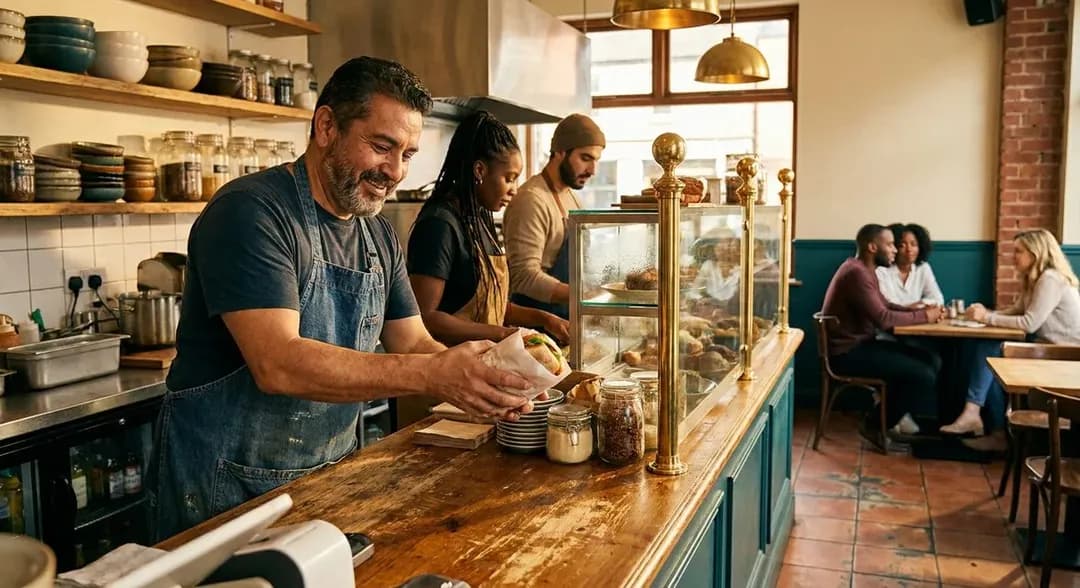
You sit close enough to read the text messages of the person next to you, close enough to hear them chewing, close enough that passing the napkin dispenser becomes a small act of neighborly cooperation. The counter is thirty inches wide. Your elbows will touch. This is not a design flaw; this is the design. In a city where restaurants increasingly sprawl across vast dining rooms with tables spaced for privacy, where "communal seating" means a twelve-foot table where everyone pretends not to see each other, this counter insists on a different contract. You are here together. You are eating lunch in public, in the oldest sense of that word. Sometimes people talk—about the weather, about the Knicks, about the construction that's been blocking 23rd Street for eight months. Sometimes they don't. But you are never eating alone, even if you came alone. The counter makes solitude impossible and loneliness obsolete.
The counterman's memory
Chief doesn't write down orders because Chief doesn't need to write down orders. You tell him what you want, he nods, and fifteen minutes later when your sandwich emerges from the kitchen, he knows it's yours. He tracks twelve orders simultaneously: who ordered what, who's been waiting longest, who asked for no onions, who wants their coffee regular. If you come often enough, he stops asking. You sit down, he says "tuna on rye," you nod, and the transaction is complete. This is not a trick or a performance. This is simply what happens when you do the same job in the same place long enough that the work becomes muscle memory. The kitchen staff rotates—there's always someone new working the grill, learning the rhythm—but Chief remains, the institutional memory of the lunch counter, the person who knows that stool eleven squeaks and that the lawyer from next door always wants extra pickles even though he never asks for them.
The inheritance of habit
The lunch counter opened in 1952, in the building's ground-floor retail space, serving office workers from the surrounding blocks. It has changed ownership three times but has never changed its name, never renovated beyond necessity, never expanded or contracted. The menu board is the same. The stools are the same. The brass footrail is the same. What changes are the people: the regulars age out, move away, stop coming, and new regulars take their place, inheriting the unwritten rules and the preferred seating and the knowledge that 11:30 is the time. You learn by watching. You learn by sitting next to someone who's been coming for fifteen years and noticing how they order, how they eat, how they leave exact change on the counter. The lunch counter doesn't explain itself. It simply persists, and if you're paying attention, it teaches you how to be a regular.
Practical notes
The counter is located at 15 West 23rd Street, between Fifth and Sixth Avenues, directly across from the southwest corner of Madison Square Park. Open Monday through Friday, 11:00 AM to 3:30 PM; closed weekends and major holidays. Cash only—there's an ATM at the corner deli if you forget. Most sandwiches run $12-16; coffee is $2.50, refills free. The nearest subway stops are 23rd Street on the N/R/W or the 6 train. If you're coming from the Flatiron Building itself, it's a three-minute walk north. Seating is counter-only, fourteen stools, no tables, no takeout containers (technically they'll pack it if you insist, but you'll get a look). The bathroom is for customers only and requires asking Chief for the key. Peak lunch rush runs 12:00-1:15 PM; the early slot at 11:30 remains your best bet. Expect to spend thirty minutes from door to door if you time it right, forty-five if you don't.
Tags: #PullUpAChair #FlatironDistrict #LunchCounter #NYCEats #MadisonSquarePark #ClassicNYC #SandwichSpot #CounterCulture #TunaOnRye #LocalsOnly #ManhattanLunch #OldSchoolNYC #23rdStreet #DinerCulture #CashOnly
Sources consulted: The Infatuation · Eater · Time Out New York
All trademarks are the property of their respective owners.
Ask Karpo for more information.
Keep reading
- Noodle Bar Near Me in Chelsea Market: Very Fresh Noodles' Hand-Torn Bowls
 Noodle Bar Near Me on Forsyth Street: Spicy Village's Big Tray Chicken
 Noodle Bar Near Me in Chinatown: Super Taste's Lanzhou Hand-Pulled Noodles